

The Rise of Content-Driven Governance: Trump 2nd Term Clicktatorship
Explore the 'Trump 2nd term clicktatorship' where social media perception dictates US policy. Insights from Don Moynihan on how Elon Musk and X are reshaping the presidency into a content engine.
Politics is no longer a public service; it's a content play. Don Moynihan, a professor of public policy at the University of Michigan, describes the current administration as a clitcktatorship. It's a form of government where social media worldviews merge with authoritarian tendencies, making policy decisions based on online perception rather than objective reality.
Trump 2nd Term Clicktatorship: From TV to X
While Donald Trump's first term was a 'TV presidency' defined by Fox News, his 2nd term has evolved into an 'X or Truth Social presidency.' Moynihan argues that the Trump 2nd term clicktatorship treats everything as content—from immigration raids shared by the DHS to the literal dismantling of federal agencies based on online conspiracies.

The most striking example is the elimination of USAID, a decision reportedly influenced by Elon Musk's belief in unfounded online theories. Moynihan warns that the human cost of such 'content-driven' policy could be in the millions. Policymakers are no longer just manipulating social media; they are being manipulated by the very algorithms they inhabit.
The Musk-State Interdependence
The relationship between X and the federal government has become dangerously blurred. As the richest man in the world and the president's largest donor, Elon Musk has turned his platform into an extension of the state, while the state increasingly serves his business interests. This 'clicktatorship' thrives on creating images of chaos to justify the abuse of authority.
Authors
Related Articles
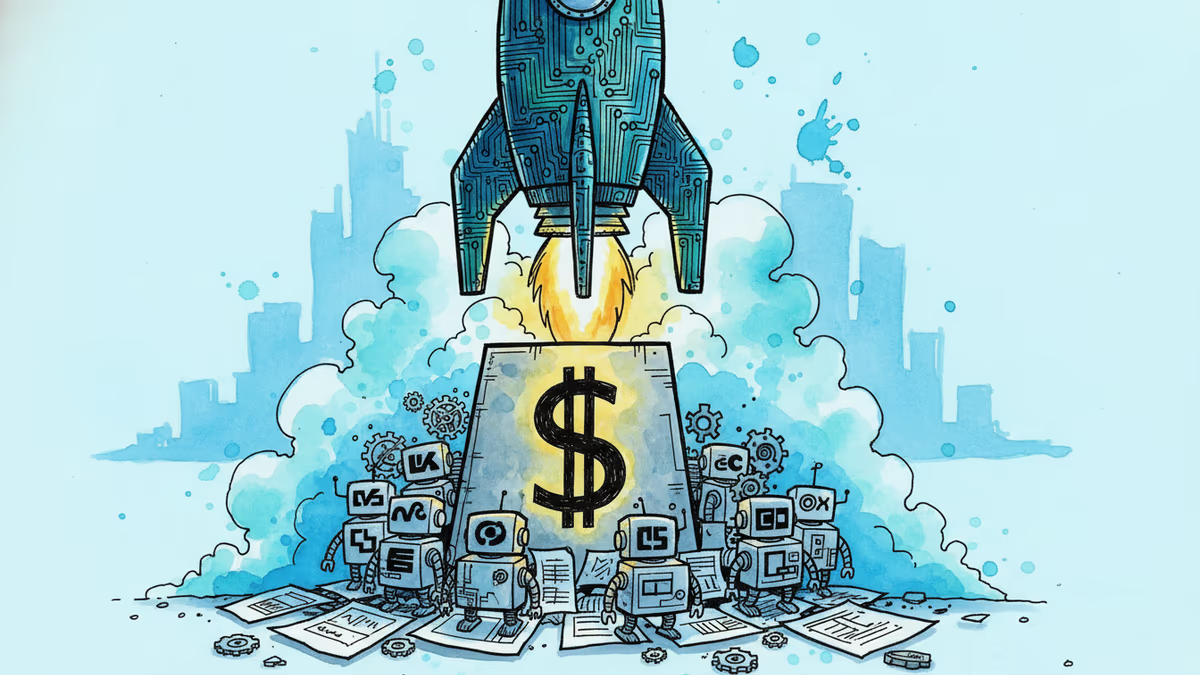
SpaceX's IPO filing puts AI at the center, claiming a $26.5 trillion market opportunity. But can Grok compete with OpenAI and Anthropic for enterprise customers?
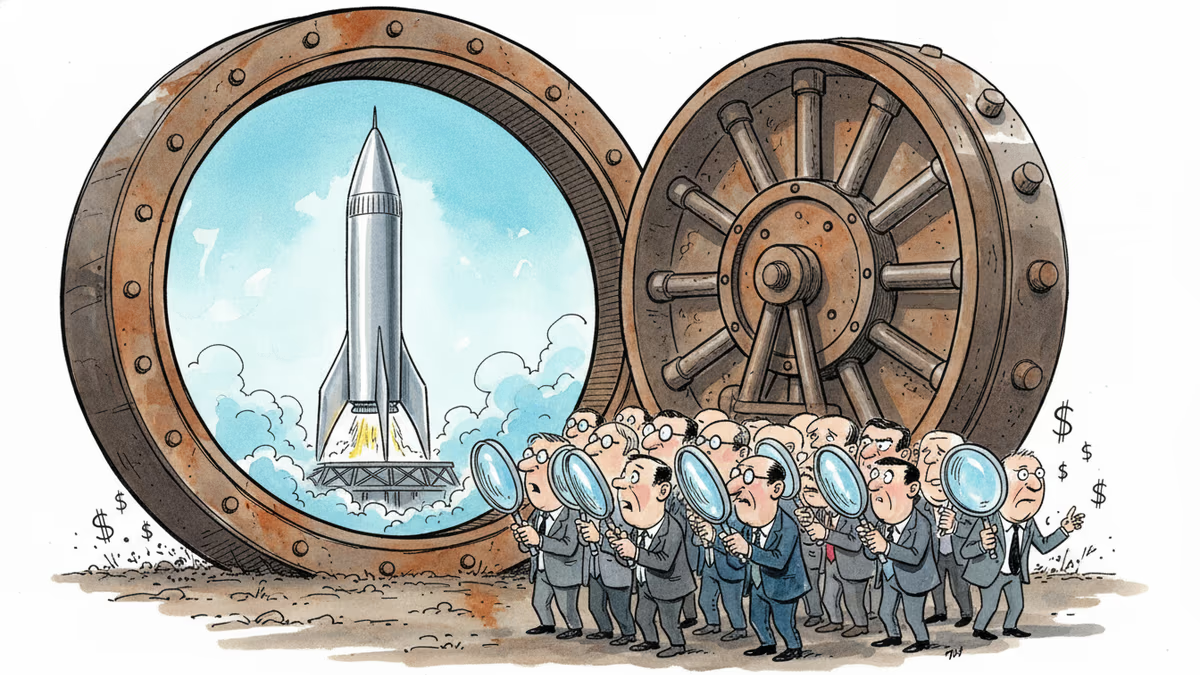
SpaceX filed a nearly 400-page S-1 with the SEC, targeting an IPO as early as June 12. Here's what the filing reveals—and what it doesn't.
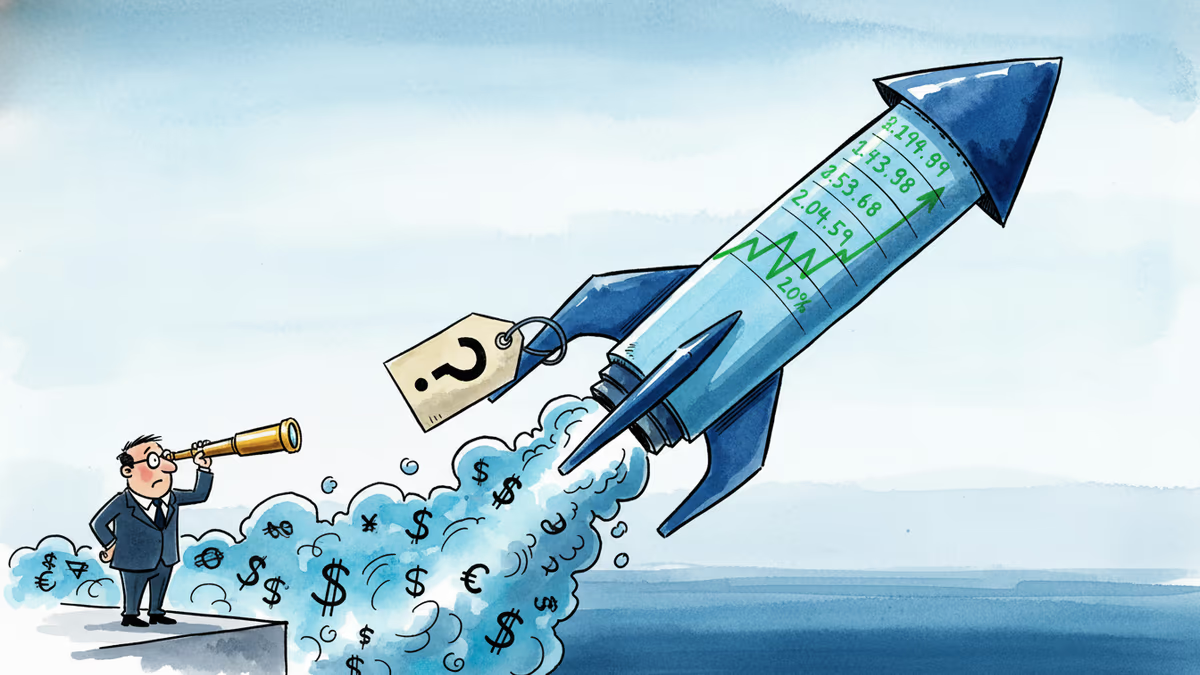
SpaceX has filed its S-1 with the SEC, targeting the Nasdaq under ticker SPCX. With $18.67B in revenue but a $4.9B loss, the IPO forces investors to answer one hard question.
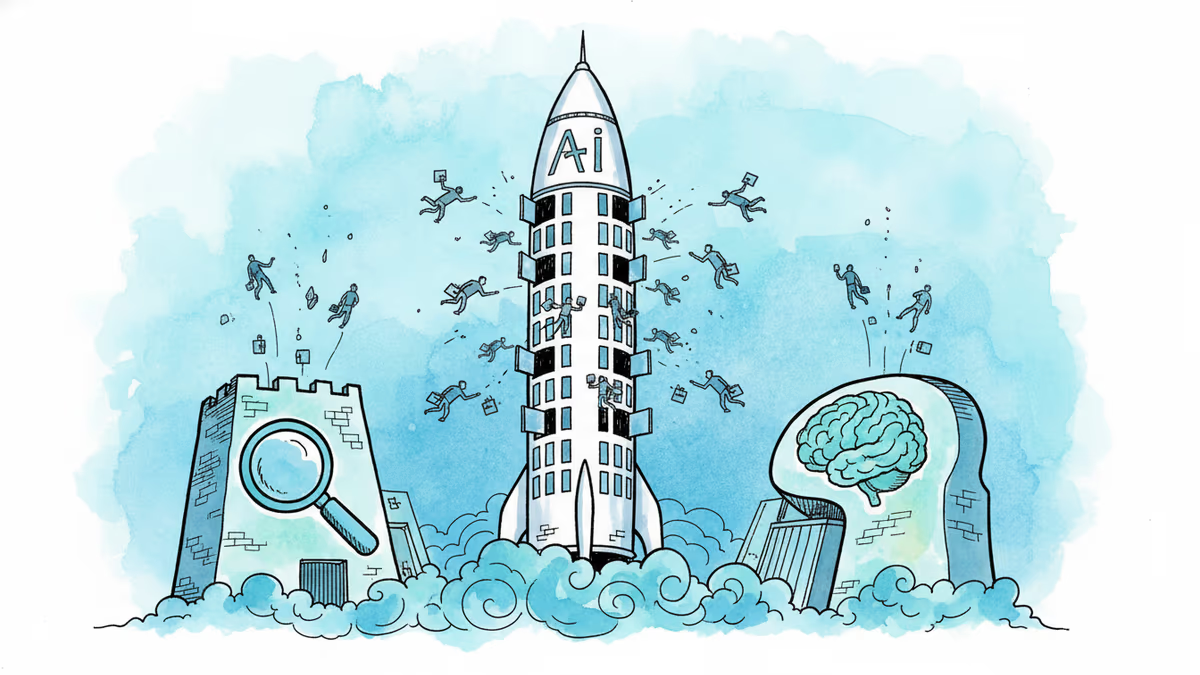
Over 50 researchers and engineers have left SpaceXAI since February's merger. With the pre-training team nearly gutted, questions mount about whether Musk's AI ambitions can survive his management style.
SpaceX's IPO filing puts AI at the center, claiming a $26.5 trillion market opportunity. But can Grok compete with OpenAI and Anthropic for enterprise customers?
SpaceX filed a nearly 400-page S-1 with the SEC, targeting an IPO as early as June 12. Here's what the filing reveals—and what it doesn't.
SpaceX has filed its S-1 with the SEC, targeting the Nasdaq under ticker SPCX. With $18.67B in revenue but a $4.9B loss, the IPO forces investors to answer one hard question.
Over 50 researchers and engineers have left SpaceXAI since February's merger. With the pre-training team nearly gutted, questions mount about whether Musk's AI ambitions can survive his management style.
Thoughts
Share your thoughts on this article
Sign in to join the conversation