
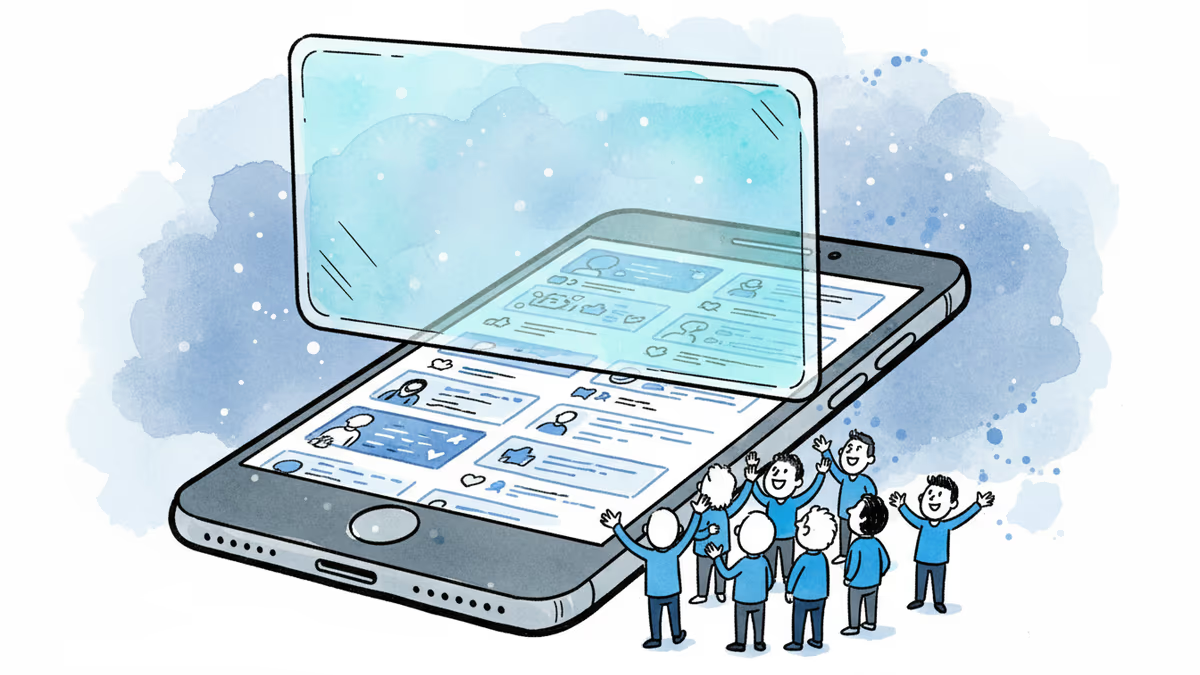
Why X Finally Added Ad Labels (And What It Really Means)
X introduces 'Paid Partnership' labels 7 years after Instagram. This isn't just about compliance—it's about platform survival in the creator economy.
Seven Years Late to the Transparency Party
While Instagram creators have been cleanly labeling sponsored posts since 2017, X users were stuck with clunky hashtags like #ad and #paidpartnership. Now X has finally introduced a proper "Paid Partnership" toggle that creators can flip to add a clean disclosure label below their content.
This isn't just about catching up—it's about survival. The Federal Trade Commission has required clear sponsorship disclosures since 2017, and X was essentially forcing its creators to operate in a regulatory gray area. That's not exactly a recipe for attracting top talent.
The Creator Perspective: Relief Mixed with Skepticism
Nikita Bier, X's head of product, framed this as protecting "authentic pulse on humanity," arguing that "undisclosed promotions hurt the integrity of the product and lead people to distrust content." He's right, but the creator community's response tells a more complex story.
Many creators have already migrated to Instagram, YouTube, and TikTok where monetization tools are more mature. "It's nice to have," says one micro-influencer with 50K followers, "but X still feels like a news platform, not a place to sell products."
Yet there's cautious optimism too. The feature works retroactively—creators can add labels to old posts they forgot to mark. And in an era where Instagram's Threads ditched hashtags entirely, X's cleaner approach feels timely.

The Bigger Play: Trust as a Business Strategy
This move coincides with X's broader authenticity push. Last week, the platform restricted API access for programmatic replies, targeting LLM-generated spam that could artificially boost sponsored content with fake customer testimonials.
The timing isn't coincidental. Since Elon Musk's acquisition, X has hemorrhaged major advertisers. The platform desperately needs to prove it can maintain content quality while building creator-friendly monetization tools. It's walking a tightrope: encourage business activity without becoming a spam-filled marketplace.
X has tried multiple creator incentives—viral content payouts, ad revenue sharing, creator subscriptions—but struggled against platforms purpose-built for visual content and shopping. The partnership label is less about innovation and more about removing friction for creators who do want to work within X's ecosystem.
The Regulatory Reality Check
Beyond business strategy, this is about legal compliance. The FTC's 2017 guidance wasn't a suggestion—it's enforceable law. Influencers who fail to disclose sponsorships face potential fines and legal action. By not providing proper tools, X was essentially asking its creators to shoulder regulatory risk.
Instagram expanded its partnership tools last year to include paid testimonials in comments. TikTok has robust creator marketplace features. X was becoming the odd platform out, and that's a dangerous position when creators are your content engine.
Authors
Related Articles
Jack Dorsey's six-word post launched a platform that shaped elections, movements, and media. Two decades later, Twitter is now X — and the story gets stranger.
X is experimenting with recommendation links beneath posts mentioning companies. A Starlink ad appeared under a Starlink mention - could this reshape social media advertising?
Elon Musk's X revamped its creator monetization with exclusive threads, new paywalls, and partnership labels. It's not just feature updates — it's a bid to reshape the creator economy.
EA introduces creator marketplace in The Sims 4 with new in-game currency 'Moola.' A bold experiment in virtual economies that could reshape gaming monetization.
Jack Dorsey's six-word post launched a platform that shaped elections, movements, and media. Two decades later, Twitter is now X — and the story gets stranger.
X is experimenting with recommendation links beneath posts mentioning companies. A Starlink ad appeared under a Starlink mention - could this reshape social media advertising?
Elon Musk's X revamped its creator monetization with exclusive threads, new paywalls, and partnership labels. It's not just feature updates — it's a bid to reshape the creator economy.
EA introduces creator marketplace in The Sims 4 with new in-game currency 'Moola.' A bold experiment in virtual economies that could reshape gaming monetization.
Thoughts
Share your thoughts on this article
Sign in to join the conversation