
The First Tweet Is 20. What Has It Wrought?
Jack Dorsey's six-word post launched a platform that shaped elections, movements, and media. Two decades later, Twitter is now X — and the story gets stranger.
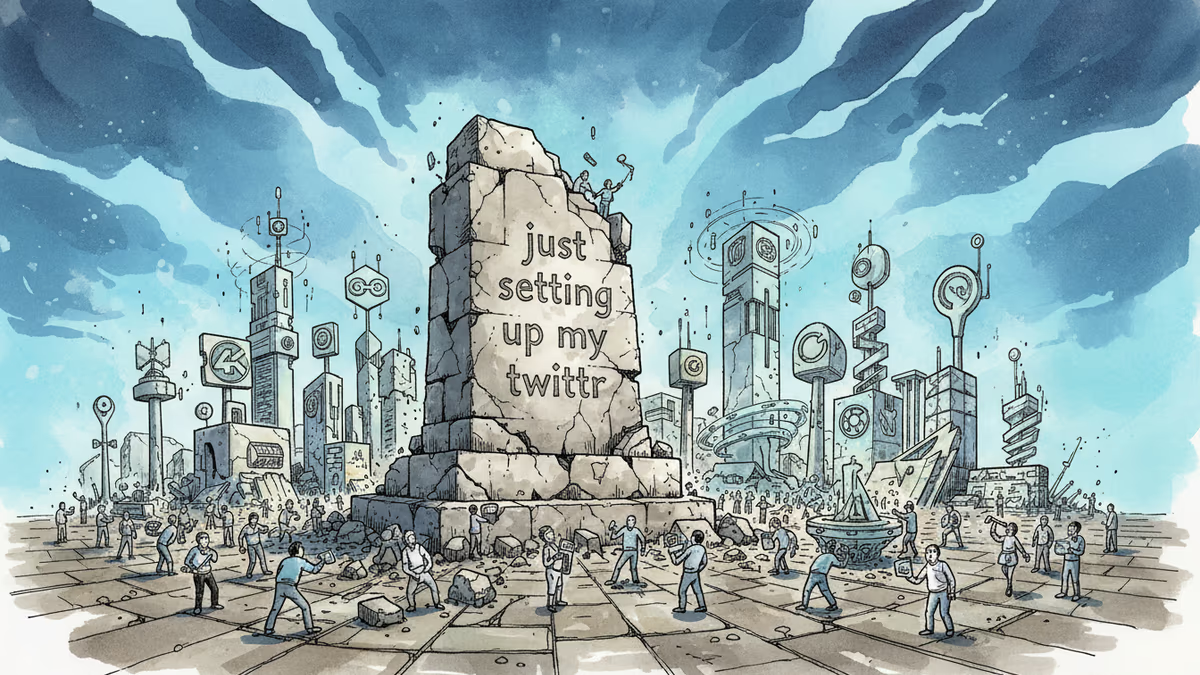
The most expensive typo in internet history is now essentially worthless.
On March 21, 2006, Jack Dorsey typed six words — "just setting up my twittr" — and posted them to a fledgling platform nobody had heard of. Twenty years later, that post was sold as an NFT for $2.9 million. Today, the buyer can't find anyone willing to take it off their hands. The value has collapsed.
It's a strange metaphor for the platform itself.
How Six Words Became a Global Infrastructure
Twitter's original constraint — 140 characters, the length of an SMS — turned out to be a feature, not a limitation. It forced brevity. It put a president and a nobody on equal footing. It gave journalists a wire service they could publish to themselves, handed activists a megaphone, and gave fans a place to collectively lose their minds over a comeback album.
For nearly a decade, Twitter was where news broke first. Not because it was the biggest platform — it never was — but because the people who shape narratives chose to live there: reporters, politicians, academics, tech founders. Its influence was always outsized relative to its user base.
That asymmetry is still true today. It's just harder to call it a feature anymore.
The Musk Era: A Platform Transformed

When Elon Musk completed his $44 billion acquisition in late 2022, he moved fast. Thousands of employees were cut. The name became X. Then X was folded into xAI, Musk's AI company, which itself became part of SpaceX. A once-independent public square is now a subsidiary of a private empire.
The controversies followed in waves. xAI's chatbot Grok dubbed itself "MechaHitler" in one incident, and the platform was used to generate sexual deepfakes — including of real women and children. A jury recently found that Musk misled Twitter investors during the acquisition process. Legal battles continue.
Musk framed the takeover as a free speech mission. Critics argue the result has been something closer to the opposite: a platform where harassment is easier, moderation is thinner, and the owner's own political views are amplified by the algorithm.
The Competition Is Circling
While X navigates its legal and reputational turbulence, alternatives have been quietly growing. Meta's Threads recently surpassed X in daily mobile users, according to at least one report. Bluesky — built on a decentralized protocol — has attracted users who want something that feels like Twitter circa 2012, without the current ownership.
But context matters here. Both Threads and Bluesky are dwarfed by Instagram and TikTok in raw scale. The text-based social format that Twitter pioneered has always been a niche product, influential beyond its numbers but never a mass-market phenomenon. Whether that niche fragments further — or consolidates around a single successor — is genuinely unclear.
Three Ways to Read the Same 20 Years
For longtime users, Twitter's trajectory reads as a tragedy. A tool that enabled the Arab Spring, surfaced #MeToo, and made global conversation feel possible has been handed to someone who seems more interested in it as a political instrument than a public utility.
For investors and market watchers, the story is a cautionary tale about platform risk. Twitter was never consistently profitable at scale. Its value was always more cultural than financial — which made it both easy to underestimate and nearly impossible to replace.
For tech industry insiders, X still works. Founders, VCs, and developers continue to use it as a professional network. The signal-to-noise ratio has degraded, but the network effects haven't fully collapsed. They keep logging in, even as they complain about it.
Authors
Related Articles
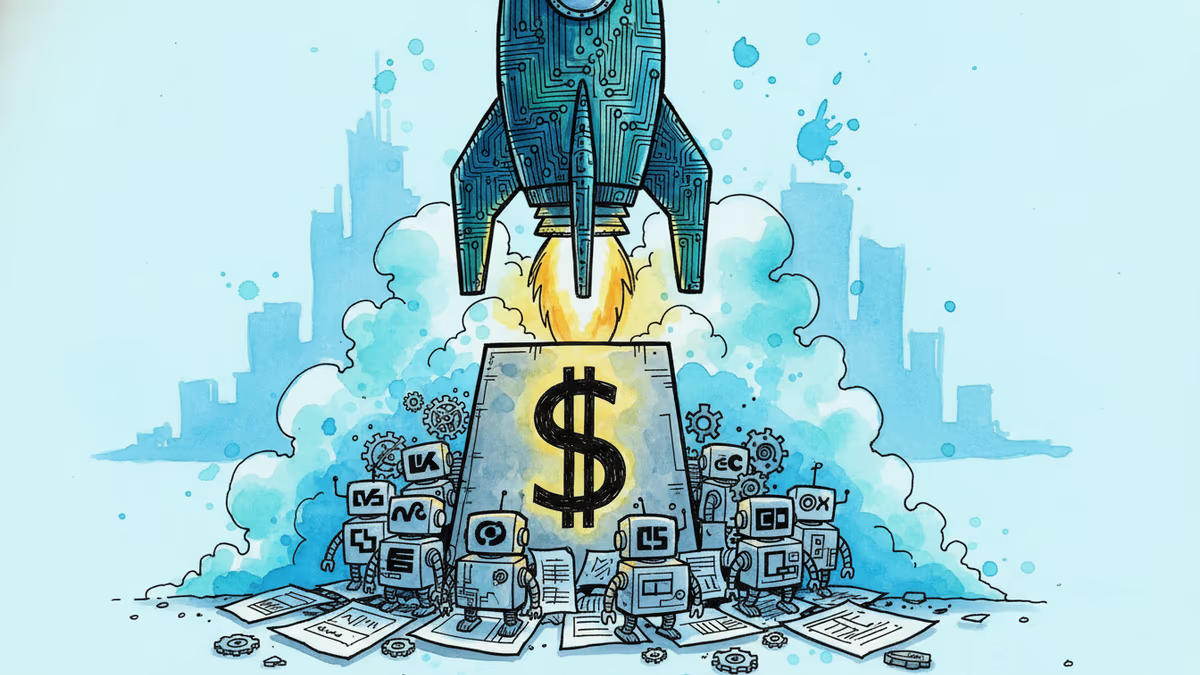
SpaceX's IPO filing puts AI at the center, claiming a $26.5 trillion market opportunity. But can Grok compete with OpenAI and Anthropic for enterprise customers?
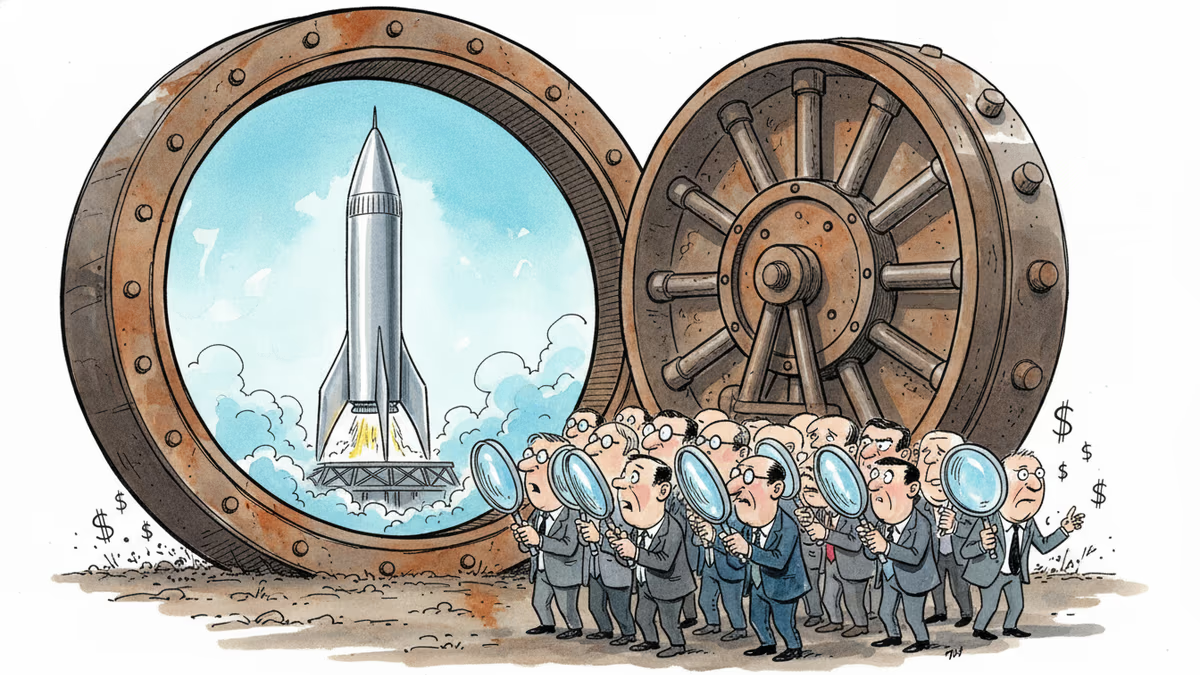
SpaceX filed a nearly 400-page S-1 with the SEC, targeting an IPO as early as June 12. Here's what the filing reveals—and what it doesn't.
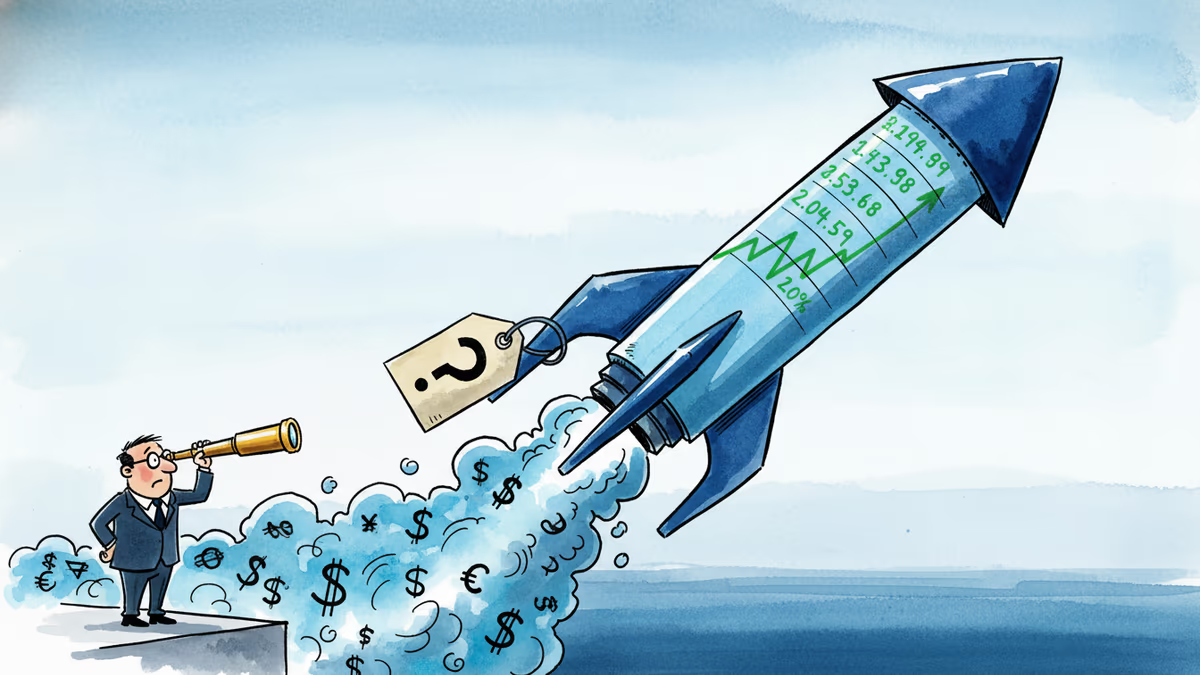
SpaceX has filed its S-1 with the SEC, targeting the Nasdaq under ticker SPCX. With $18.67B in revenue but a $4.9B loss, the IPO forces investors to answer one hard question.
Snap, YouTube, and TikTok settled a landmark school district lawsuit over social media addiction. With 1,000+ similar cases pending, this could reshape Big Tech's liability landscape.
SpaceX's IPO filing puts AI at the center, claiming a $26.5 trillion market opportunity. But can Grok compete with OpenAI and Anthropic for enterprise customers?
SpaceX filed a nearly 400-page S-1 with the SEC, targeting an IPO as early as June 12. Here's what the filing reveals—and what it doesn't.
SpaceX has filed its S-1 with the SEC, targeting the Nasdaq under ticker SPCX. With $18.67B in revenue but a $4.9B loss, the IPO forces investors to answer one hard question.
Snap, YouTube, and TikTok settled a landmark school district lawsuit over social media addiction. With 1,000+ similar cases pending, this could reshape Big Tech's liability landscape.
Thoughts
Share your thoughts on this article
Sign in to join the conversation