

The Billionaire's Diet: What Peter Thiel's Food Rules Reveal About Power
New Epstein files reveal Peter Thiel's bizarre dietary restrictions and continued meetings after 2008 conviction. What does this say about Silicon Valley's moral compass?
2,200 times. That's how often Peter Thiel's name appears in the latest batch of Jeffrey Epstein files released by the Department of Justice. But perhaps more revealing than the frequency is what these communications actually contain: detailed dietary restrictions for a billionaire who continued meeting with a convicted sex offender.
The newly released documents paint a picture of Silicon Valley's moral flexibility that goes far beyond awkward networking dinners. They show how Epstein maintained his grip on tech's elite even after his 2008 guilty plea for solicitation of prostitution involving minors—and how some of the industry's most influential figures seemed remarkably comfortable with that arrangement.
The Peculiar Protocol of Power
Among the mundane scheduling emails between Thiel and Epstein from 2014 to 2017, one message stands out for its absurd specificity. Alisa Bekins, Thiel's former chief of staff, sent a "CONFIDENTIAL" email detailing her boss's dietary restrictions for a meeting with Epstein.
The list reads like a Silicon Valley parody: 24 approved types of sushi and animal protein, 14 approved vegetables, and exactly zero approved fruits. Ketchup, mayonnaise, and soy sauce were forbidden. Only "egg whites or greens/salad with some form of protein" qualified as an acceptable breakfast.
This wasn't just dietary preference—it was a window into how power operates in tech circles. The level of accommodation, the confidential nature of the communication, the forwarding directly to Epstein himself. Every detail screams of someone whose preferences matter enough to warrant this level of attention.
The $40 Million Question
The relationship wasn't merely social. In 2015 and 2016, Epstein invested $40 million in two funds managed by Thiel's investment firm, Valar Ventures. This financial entanglement continued well after Epstein's conviction became public knowledge.

Even more telling is an audio recording where Epstein tells former Israeli Prime Minister Ehud Barak that he's hoping to meet Thiel and speculates about putting Barak on Palantir's board. Ironically, Epstein mispronounces the company name as "Pallentier" while claiming familiarity with it—a small detail that reveals the performative nature of these relationships.
"I've never met Peter Thiel, and everybody says he sort of jumps around and acts really strange, like he's on drugs," Epstein said in the recording. Yet this didn't stop him from pursuing the relationship or Thiel from engaging.
Silicon Valley's Moral Bankruptcy
The Epstein files expose something deeper than individual bad judgment—they reveal Silicon Valley's systematic moral flexibility when money and influence are involved. Thiel, who has positioned himself as a contrarian thinker and moral philosopher, apparently saw no issue continuing relationships with a convicted sex offender.
This isn't unique to Thiel. The files show Epstein cultivated an extensive network throughout Silicon Valley, suggesting the tech industry's supposed commitment to "making the world a better place" has some rather glaring exceptions when it comes to their own social circles.
The timing matters too. These meetings occurred during Thiel's most influential period—as Facebook board member, Trump supporter, and Palantir leader. His decisions weren't made in a vacuum; they sent signals about acceptable behavior throughout the tech ecosystem.
The Enablement Economy
What's perhaps most disturbing is how normal these interactions appear in the files. The casual tone of scheduling emails, the accommodation of dietary preferences, the financial investments—all suggest a relationship that both parties viewed as routine business.
This normalization of association with Epstein reflects a broader Silicon Valley problem: the belief that wealth and innovation provide moral immunity. The same industry that lectures about ethical AI and responsible innovation apparently struggles with basic ethical decision-making in their personal networks.
Authors
Related Articles
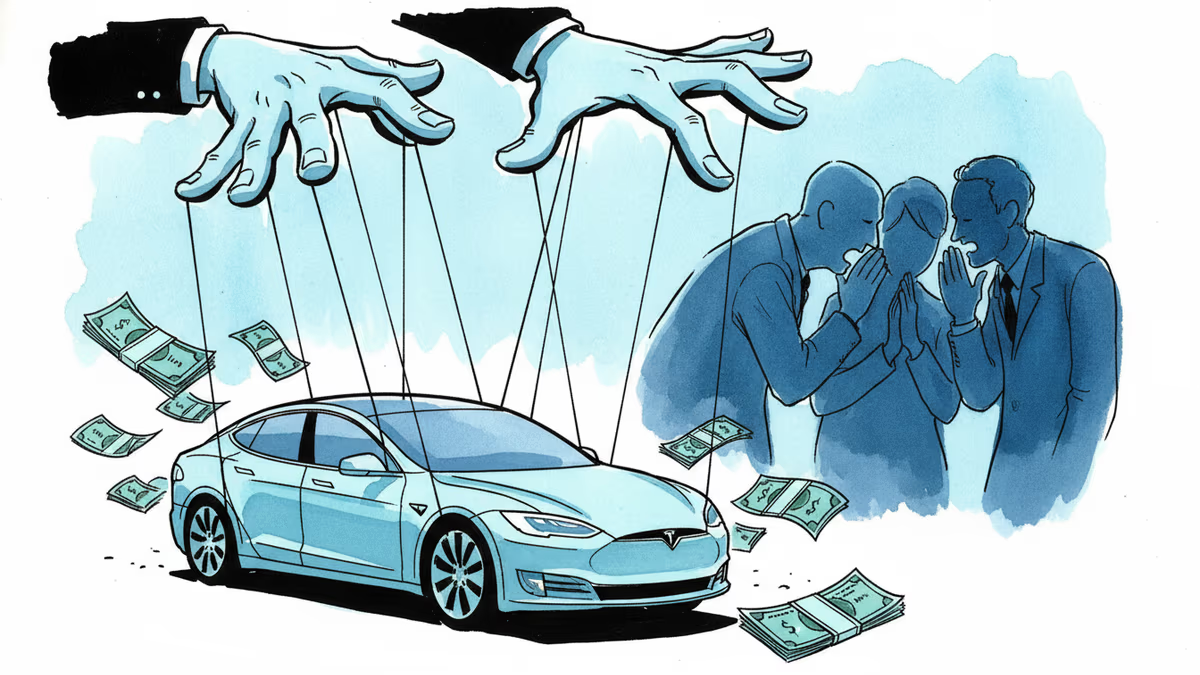
Newly released DOJ files reveal Jeffrey Epstein's behind-the-scenes role in Elon Musk's failed 2018 Tesla privatization attempt, from Saudi funding to board recommendations.

Epic Games confirms the Jeffrey Epstein-linked Fortnite account was fake, highlighting how quickly conspiracy theories spread through gaming communities.
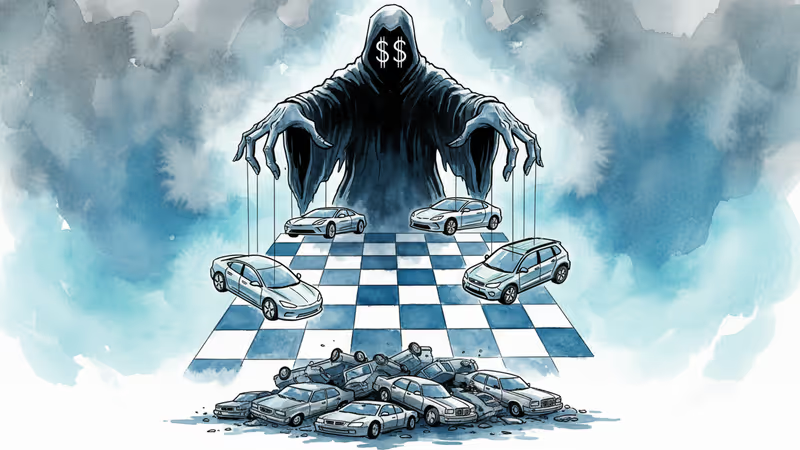
Newly released DOJ documents reveal Jeffrey Epstein's attempts to invest in Lucid Motors, Faraday Future, and Canoo through mysterious intermediary David Stern.

DOJ releases 3.5 million pages of Epstein documents revealing extensive tech industry connections. What do these relationships tell us about power networks?
Newly released DOJ files reveal Jeffrey Epstein's behind-the-scenes role in Elon Musk's failed 2018 Tesla privatization attempt, from Saudi funding to board recommendations.
Epic Games confirms the Jeffrey Epstein-linked Fortnite account was fake, highlighting how quickly conspiracy theories spread through gaming communities.
Newly released DOJ documents reveal Jeffrey Epstein's attempts to invest in Lucid Motors, Faraday Future, and Canoo through mysterious intermediary David Stern.
DOJ releases 3.5 million pages of Epstein documents revealing extensive tech industry connections. What do these relationships tell us about power networks?
Thoughts
Share your thoughts on this article
Sign in to join the conversation