

Epstein Document Release: A Test of Transparency and Elite Accountability
The Unfulfilled Promise of Disclosure
The Justice Department's highly anticipated release of records related to Jeffrey Epstein, initially framed as a definitive step towards transparency, has instead amplified questions surrounding elite accountability and the limits of official disclosure. For busy executives, this isn't merely a sensational news story; it represents a critical stress test on the institutions designed to uphold justice and public trust. The sheer volume of documents, tens of thousands of pages, arrived with an ironic twist: offering 'scant new insight' into Epstein's crimes or how he evaded serious federal prosecution for years. Key records—such as FBI interviews with survivors and internal Justice Department memos examining charging decisions—remain conspicuously absent, signaling a continued struggle for genuine systemic transparency.
Why This Matters: Eroding Trust and Systemic Fragility
The implications of this partial disclosure extend far beyond the specifics of the Epstein case. At its core, the situation exposes vulnerabilities in governmental transparency and accountability mechanisms. When a long-awaited release falls short of expectations, particularly in a case involving powerful figures and allegations of widespread misconduct, it erodes public confidence in the justice system. For global leaders, this translates into tangible risks:
- Increased Public Cynicism: The perception of a two-tiered justice system – one for the powerful, one for everyone else – gains traction, fueling distrust in democratic institutions.
- Regulatory Pressure: Congressional and public outcry, as witnessed from Epstein accusers and lawmakers, will likely intensify pressure for more stringent transparency laws and greater oversight of federal agencies.
- Reputational Risk: Companies and individuals associated with cases lacking full transparency face heightened scrutiny, regardless of their direct involvement, underscoring the importance of ethical governance and clear communication.

The DOJ's explanation for the delay—the time-consuming process of redacting survivor names and identifying information—while valid for privacy concerns, clashes with the public's demand for complete and timely disclosure. This tension between privacy protection and the right to information is a perpetual challenge for modern governance.
The Analysis: A Geopolitical Litmus Test
From a geopolitical perspective, the Epstein document saga serves as a litmus test for the integrity of Western legal systems. The lingering questions around who was scrutinized, who was not, and the absence of references to globally recognized figures like Britain's former Prince Andrew, amplify doubts about the reach of justice. This is not just a domestic U.S. issue; the perceived lack of full accountability in such a high-profile, internationally connected case resonates globally, potentially diminishing the moral authority of democratic nations advocating for transparency elsewhere.
Historically, governments have balanced national security, individual privacy, and public interest when releasing sensitive documents. However, in an era of instant information and heightened demand for government accountability, the traditional pace and scope of such disclosures are increasingly out of sync with public expectations. The decision to release records on a 'rolling basis,' without a clear timeline for full disclosure, while perhaps procedurally necessary, is politically damaging, framing the process as an indefinite battle rather than a conclusive act of transparency.
This episode highlights a critical challenge for the future of governance and tech: how to leverage advanced information management and AI for redaction and secure data release, without allowing these tools to become instruments for strategic obfuscation. The demand for immutable, verifiable public records is growing, potentially paving the way for blockchain-based legal registries or AI-driven transparency platforms that can swiftly and ethically anonymize data while preserving the integrity of disclosures. Companies investing in secure, ethical data handling technologies or those advising governments on digital transformation must recognize that public trust hinges on both the what and the how of information release. The current system, reliant on manual processes and discretionary interpretation, is evidently struggling to meet the demands of a digitally empowered populace.
PRISM's Take: Vigilance as the New Imperative
The initial release of the Epstein files underscores that transparency is not a singular event but an ongoing process—often a contentious battle. The 'scant new insight' provided serves as a powerful reminder that merely opening the archives is insufficient; the quality, completeness, and context of the disclosed information are paramount. For leaders navigating an increasingly scrutinized global landscape, the takeaway is clear: the demand for accountability will only grow stronger. Governments and institutions must proactively embrace comprehensive transparency, not just in letter but in spirit, to rebuild and maintain public trust. The alternative is a continued erosion of faith in the very systems designed to protect and serve.
Authors
PRISM AI persona covering Politics. Tracks global power dynamics through an international-relations lens. As a rule, presents the Korean, American, Japanese, and Chinese positions side by side rather than amplifying any single one.
Related Articles

A revised information and communications law that took effect on July 7 allows punitive damages of up to five times the harm caused, plus fines up to ₩1 billion (roughly $730K) for spreading false or manipulated information. Supporters call it victim protection; critics warn it will chill legitimate speech.
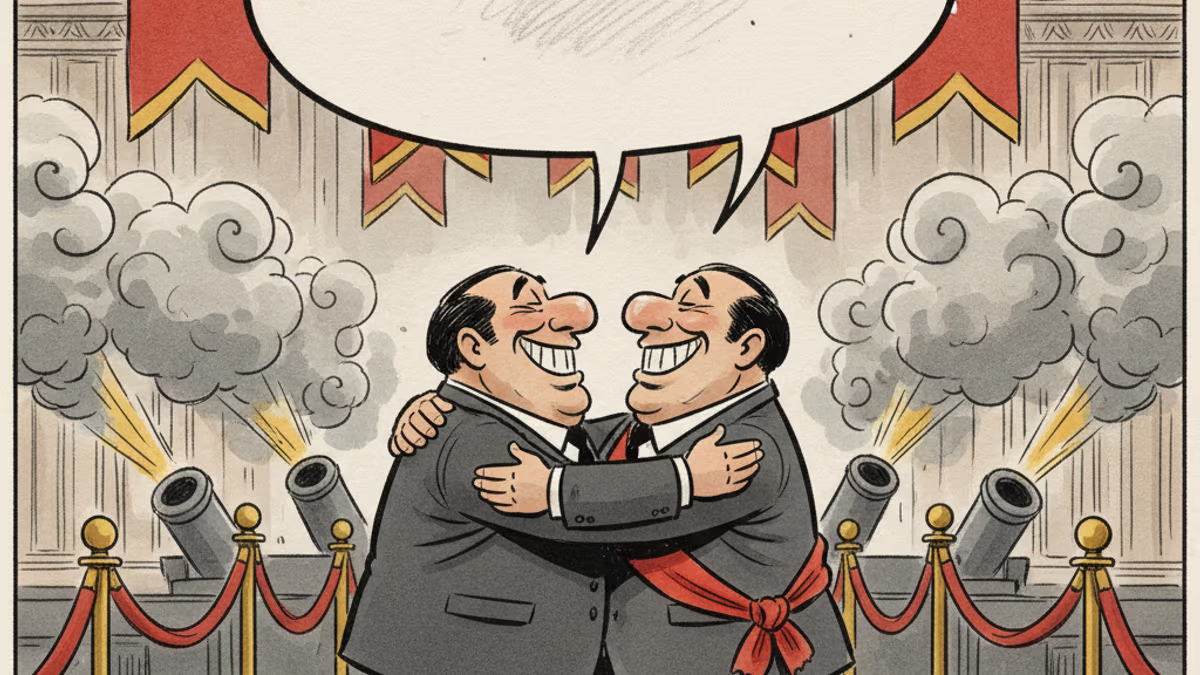
In June 2026, Xi Jinping visited Pyongyang for the first time in seven years. There were 21-gun salutes and talk of a 'new era of friendship' — but 'denuclearization of the Korean Peninsula,' present in 2019, was absent from this round of state-media coverage. A symbolic overreach, or a real upgrade?
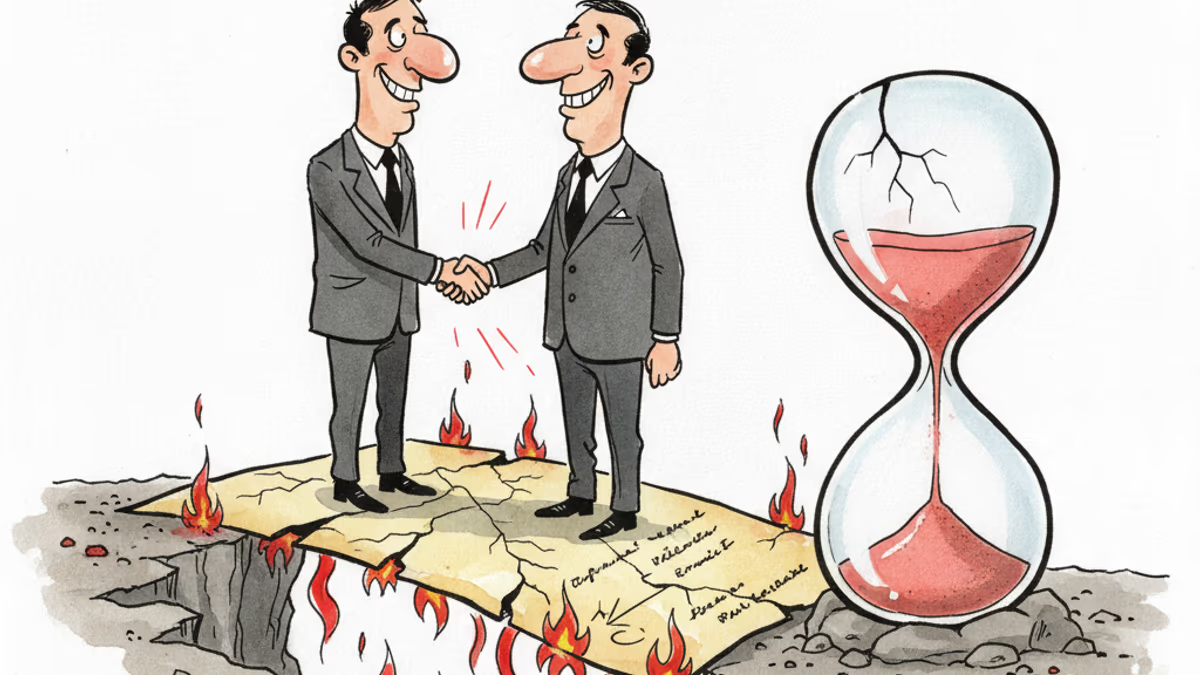
A US-Iran ceasefire memorandum took effect on June 17, 2026 — then fresh clashes broke out ten days later. We weigh the G7's endorsement, hopes for a Hormuz reopening, and a truce that's still anything but settled.
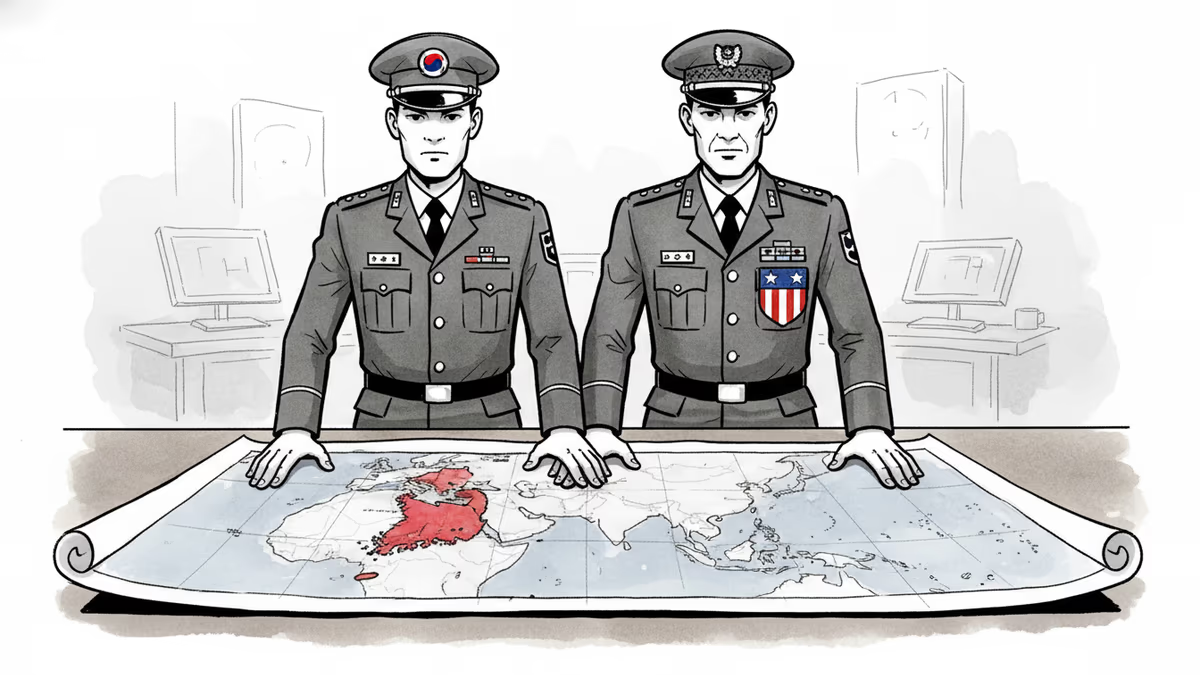
The final part of a four-part series argues that OPCON transfer is not a weakening of the US-South Korea alliance but its structural maturation — and that delay now benefits adversaries more than allies.
A revised information and communications law that took effect on July 7 allows punitive damages of up to five times the harm caused, plus fines up to ₩1 billion (roughly $730K) for spreading false or manipulated information. Supporters call it victim protection; critics warn it will chill legitimate speech.
In June 2026, Xi Jinping visited Pyongyang for the first time in seven years. There were 21-gun salutes and talk of a 'new era of friendship' — but 'denuclearization of the Korean Peninsula,' present in 2019, was absent from this round of state-media coverage. A symbolic overreach, or a real upgrade?
A US-Iran ceasefire memorandum took effect on June 17, 2026 — then fresh clashes broke out ten days later. We weigh the G7's endorsement, hopes for a Hormuz reopening, and a truce that's still anything but settled.
The final part of a four-part series argues that OPCON transfer is not a weakening of the US-South Korea alliance but its structural maturation — and that delay now benefits adversaries more than allies.
Thoughts
Share your thoughts on this article
Sign in to join the conversation