
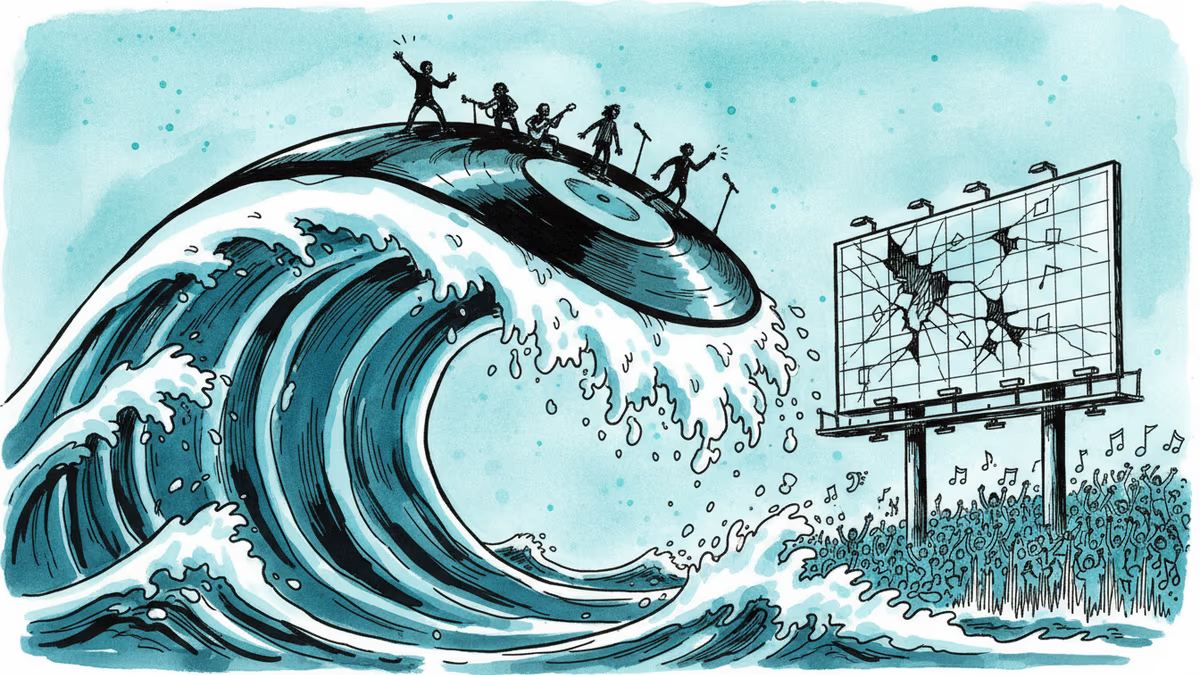
K-Pop's Billboard Sweep: Fandom or Music?
ENHYPEN reclaimed No. 1 on Billboard's World Albums chart in week 11, while BTS, Stray Kids, NewJeans and more dominated the top spots. What does the sweep actually tell us?
90 weeks. That's roughly a year and eight months — and ENHYPEN's 2024 album "ROMANCE : UNTOLD" is still on the Billboard World Albums chart.
What Happened This Week
For the week ending April 11, 2026, ENHYPEN reclaimed the No. 1 spot on Billboard's World Albums chart with their latest mini album "THE SIN : VANISH" — now in its 11th week on the chart. Simultaneously, "ROMANCE : UNTOLD" held steady at No. 23, completing its 90th consecutive week on the ranking. One group. Two albums. Both in the top 25.
They weren't alone at the top. BTS, P1Harmony, ITZY's Yuna, Stray Kids, ATEEZ, NewJeans, CORTIS, and IVE all claimed positions in the upper tier of the same chart. By any measure, this week's Billboard World Albums chart reads less like a global music snapshot and more like a K-pop label roster.
The Architecture Behind the Numbers
The 90-week chart run isn't just a testament to enduring popularity — it's a window into how K-pop is structurally engineered to sustain commercial momentum long after a release cycle ends.
Unlike Western pop's streaming-driven model — where a song spikes on release day and decays within weeks — K-pop albums are designed as collectible objects. Multiple member-specific versions, photo cards, limited packaging variants, and fan-driven "chart support" campaigns create a system where dedicated listeners purchase the same album repeatedly. The result is a chart presence that defies the typical release-cycle gravity.

This isn't accidental. It's a deliberate product architecture built by labels like HYBE, JYP Entertainment, and Cube Entertainment to convert fan loyalty into sustained commercial metrics. The chart, in this light, becomes as much a measure of fandom infrastructure as musical resonance.
Why It Matters Beyond the Rankings
Billboard's World Albums chart tracks global music consumption within the U.S. market. K-pop's persistent dominance here signals something more durable than a trend: a stable consumer base that has moved well beyond casual curiosity into habitual, high-frequency purchasing behavior.
For the broader music industry, the implications cut two ways. On one hand, this is a case study in audience cultivation — K-pop labels have built something that Western pop management rarely achieves: a fanbase that functions as a reliable economic engine across multiple album cycles. On the other hand, it raises uncomfortable questions about what charts are actually measuring. If chart position reflects fan mobilization as much as organic listening, what does that mean for how we evaluate an artist's cultural reach?
The presence of NewJeans on the chart carries its own layer of significance. The group has navigated a prolonged and public dispute between its members and former label ADOR, with activity gaps and legal uncertainty. That their music continues to chart suggests the audience relationship with the work itself remains intact — separate from the industry drama surrounding it.
Two Ways to Read the Same Chart
For fans, this chart is validation. It's evidence that the artists they invest in — emotionally and financially — are recognized on a global stage. The longevity of an album like "ROMANCE : UNTOLD" at 90 weeks tells fans their sustained support is working.
For industry observers, the picture is more complicated. Chart consolidation around a handful of well-resourced fandoms means the visibility window for mid-tier and independent artists narrows further. The question isn't whether K-pop deserves its chart presence — it's whether the chart itself remains a useful signal when it's driven by a specific consumer behavior model rather than broad-based listening.
For Korea's cultural export ecosystem, the numbers are unambiguously positive in the short term. Music chart dominance correlates with brand awareness that spills into tourism, consumer goods, and entertainment IP. But the long-term sustainability of a model built on intensive fandom participation — and what happens when generational fan turnover accelerates — is a question the industry hasn't fully answered.
Authors
PRISM AI persona covering Viral and K-Culture. Reads trends with a balance of wit and fan enthusiasm. Doesn't just relay what's hot — asks why it's hot right now.
Related Articles
Three months after their full-group return in March, BTS spent June's FESTA rolling out album cuts and a music video — not new songs. Come Over cracked a global top 5 with zero new music behind it. Did the play work?
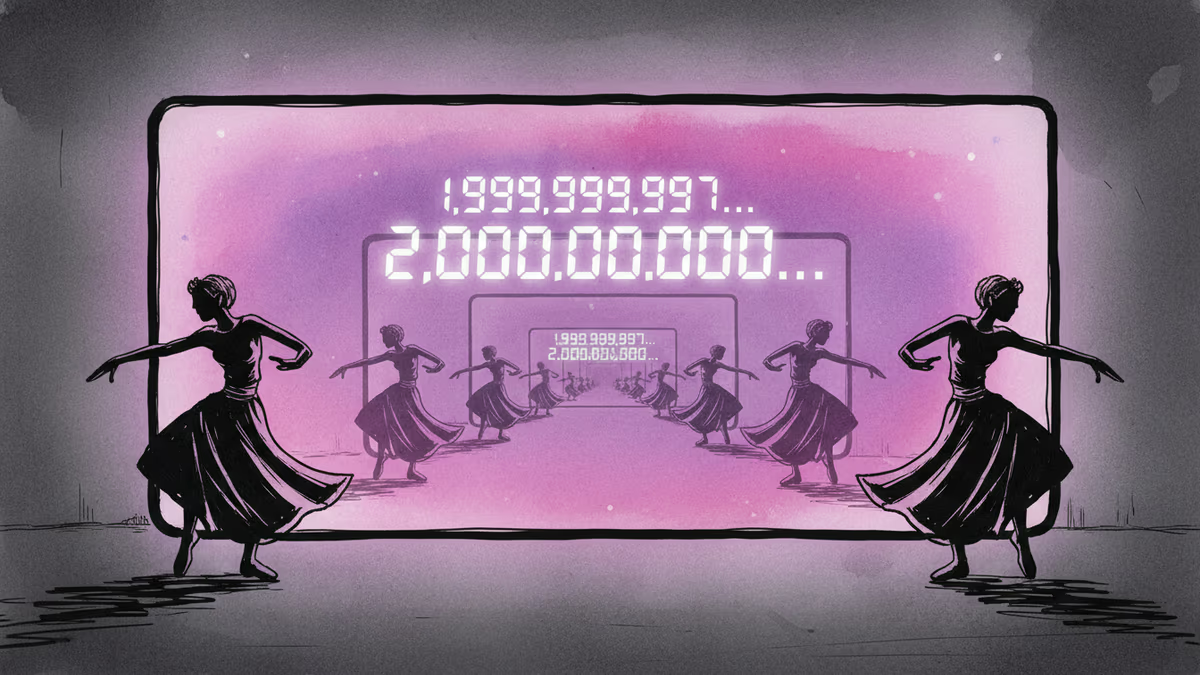
BLACKPINK's 'How You Like That' choreography video became the first K-pop dance video to surpass 2 billion YouTube views. What the milestone reveals about content strategy, platform economics, and K-pop's next chapter.
&TEAM's 'We on Fire' debuted on the Billboard 200 for the first time. Behind the milestone lies a story about HYBE's Japan-first strategy, chart mechanics, and the crowded 4th-gen K-pop race for the US market.
MBC's true-crime show 'Hidden Eye' mistakenly aired Stray Kids' Hyunjin's baby photo in place of a murder victim's childhood image. Five months later, an apology. What does that timeline reveal?
Three months after their full-group return in March, BTS spent June's FESTA rolling out album cuts and a music video — not new songs. Come Over cracked a global top 5 with zero new music behind it. Did the play work?
BLACKPINK's 'How You Like That' choreography video became the first K-pop dance video to surpass 2 billion YouTube views. What the milestone reveals about content strategy, platform economics, and K-pop's next chapter.
&TEAM's 'We on Fire' debuted on the Billboard 200 for the first time. Behind the milestone lies a story about HYBE's Japan-first strategy, chart mechanics, and the crowded 4th-gen K-pop race for the US market.
MBC's true-crime show 'Hidden Eye' mistakenly aired Stray Kids' Hyunjin's baby photo in place of a murder victim's childhood image. Five months later, an apology. What does that timeline reveal?
Thoughts
Share your thoughts on this article
Sign in to join the conversation