
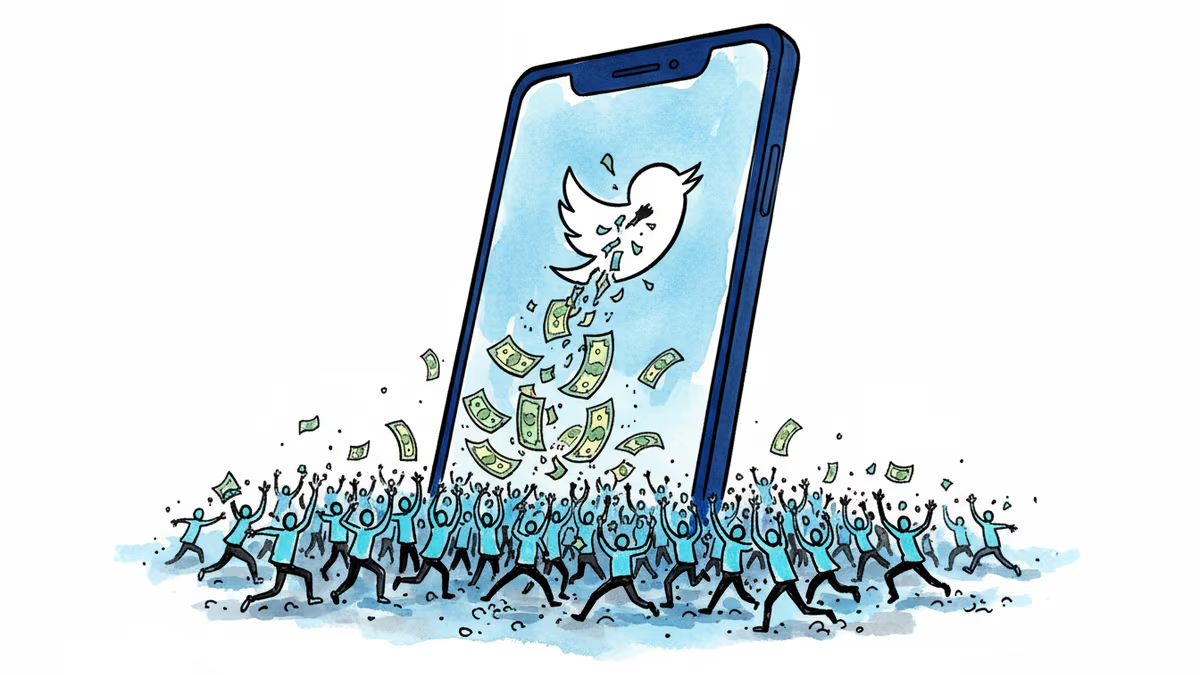
Musk's Tweets Cost Him Billions. Now What?
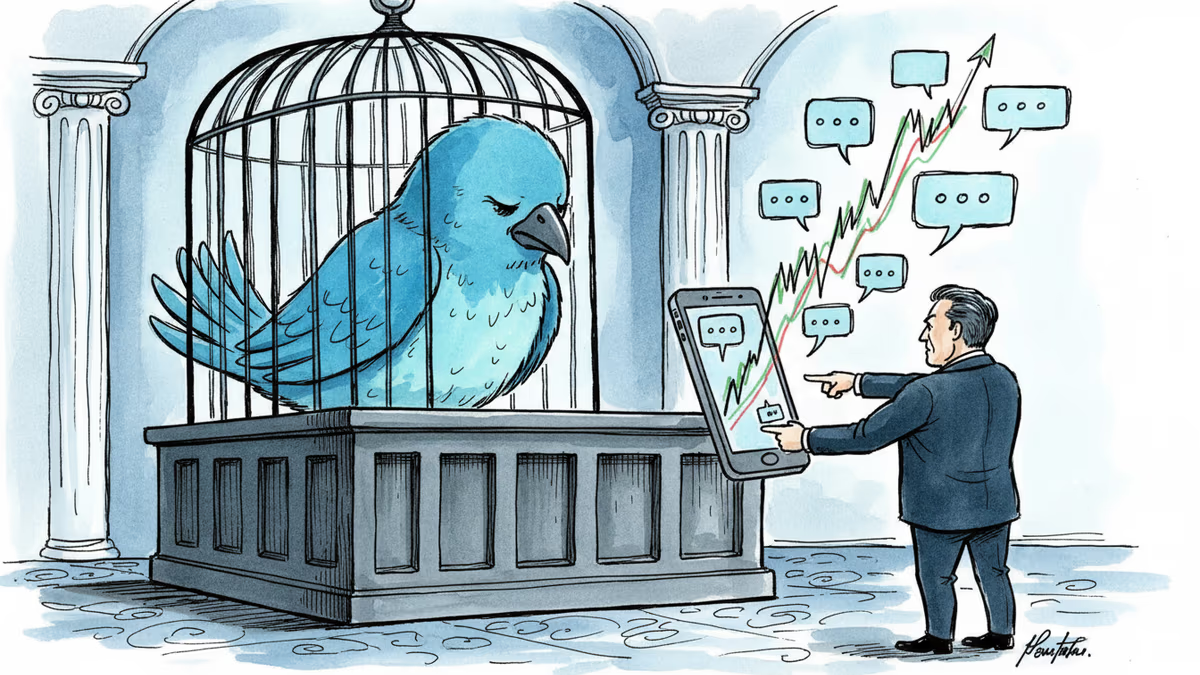
A California jury found Elon Musk liable for misleading investors with public statements before his Twitter acquisition. Damages could reach billions. The verdict sets a new bar for CEO accountability in the social media age.
A Few Tweets. Potentially Billions of Dollars.
In the months before Elon Musk completed his $44 billion acquisition of Twitter in 2022, he did something unusual for a buyer: he publicly questioned the value of what he was buying. On the platform itself and during a podcast appearance, he repeatedly raised concerns about the prevalence of bot accounts on Twitter. Markets listened. The stock dropped. Nervous investors sold at depressed prices.
On March 21, 2026, a California jury delivered its verdict: those statements misled investors, and Musk is liable.
Because the lawsuit was certified as a class action, the pool of affected investors is enormous. Final damages could run into the billions of dollars—a number that, even for the world's wealthiest person, is not trivial.
What the Jury Said—and Didn't Say
The plaintiffs argued two things. First, that Musk's statements were false and caused them financial harm. Second, that those statements were part of a deliberate scheme to artificially suppress Twitter's stock price so Musk could acquire the company at a discount.
The jury accepted the first argument. It rejected the second.
That distinction matters enormously. Musk was not found to have orchestrated a broader conspiracy. But his public statements—tweets and podcast comments—were found to have defrauded investors in a legally meaningful sense. The world's most-followed social media user made statements on a social media platform that a jury has now deemed investor deception.
This is not Musk's first collision with securities law. In 2018, a single tweet about taking Tesla private at $420 a share led to a $20 million SEC settlement. That was a regulatory slap. This is a jury verdict in a class action. The legal weight is different.

Why This Verdict Lands Differently
For years, regulators and legal scholars have wrestled with a deceptively simple question: when a CEO tweets, is it a press release? A personal opinion? Or something in between that existing law wasn't built to handle?
The SEC has pushed for clearer rules on social media disclosures. Courts have handled scattered individual cases. But a class action jury verdict of this scale, focused specifically on tweets and podcast statements made during a high-profile corporate transaction, is a different kind of signal.
For investors, the verdict affirms that market manipulation doesn't require a boardroom conspiracy. Careless—or calculated—public statements by powerful figures can constitute fraud, and the legal system can hold them accountable.
For corporate lawyers advising CEOs and founders, this is a five-alarm warning. Every public statement made during an active deal is now more clearly in scope for legal scrutiny.
Who's Watching, and Why
Retail investors who sold Twitter shares during the period in question will be watching the damages phase closely. Class action payouts are often smaller per person than plaintiffs hope, but the principle—that their losses were caused by someone else's misleading words—has been legally validated.
Other tech CEOs with large social media followings are almost certainly reassessing their communications strategies. The line between authentic public engagement and legally actionable market influence has just been redrawn, in court, with real consequences.
Musk's legal team will almost certainly appeal. The rejection of the broader conspiracy theory gives them some ground to work with—if the jury didn't find a deliberate scheme, the argument that the statements were reckless rather than fraudulent may resurface in appellate proceedings.
Regulators at the SEC may find this verdict useful. A jury, not a bureaucrat, drew the line. That's a harder outcome to dismiss as regulatory overreach.
Authors
Related Articles
The Musk vs. Altman OpenAI trial opened with a jury selection crisis. Prospective jurors called Musk a 'world-class jerk' on official court forms. What does that tell us?
Jack Dorsey's six-word post launched a platform that shaped elections, movements, and media. Two decades later, Twitter is now X — and the story gets stranger.
A California jury ruled Elon Musk intentionally misled Twitter investors with a 2022 tweet about bots. Damages could reach $2.6 billion — and the verdict raises bigger questions about CEO speech in the social media era.
Elon Musk acknowledges his controversial tweet during Twitter acquisition was unwise as investors seek billions in damages for alleged market manipulation. Court battle reveals new challenges for social media CEOs.
The Musk vs. Altman OpenAI trial opened with a jury selection crisis. Prospective jurors called Musk a 'world-class jerk' on official court forms. What does that tell us?
Jack Dorsey's six-word post launched a platform that shaped elections, movements, and media. Two decades later, Twitter is now X — and the story gets stranger.
A California jury ruled Elon Musk intentionally misled Twitter investors with a 2022 tweet about bots. Damages could reach $2.6 billion — and the verdict raises bigger questions about CEO speech in the social media era.
Elon Musk acknowledges his controversial tweet during Twitter acquisition was unwise as investors seek billions in damages for alleged market manipulation. Court battle reveals new challenges for social media CEOs.
Thoughts
Share your thoughts on this article
Sign in to join the conversation