
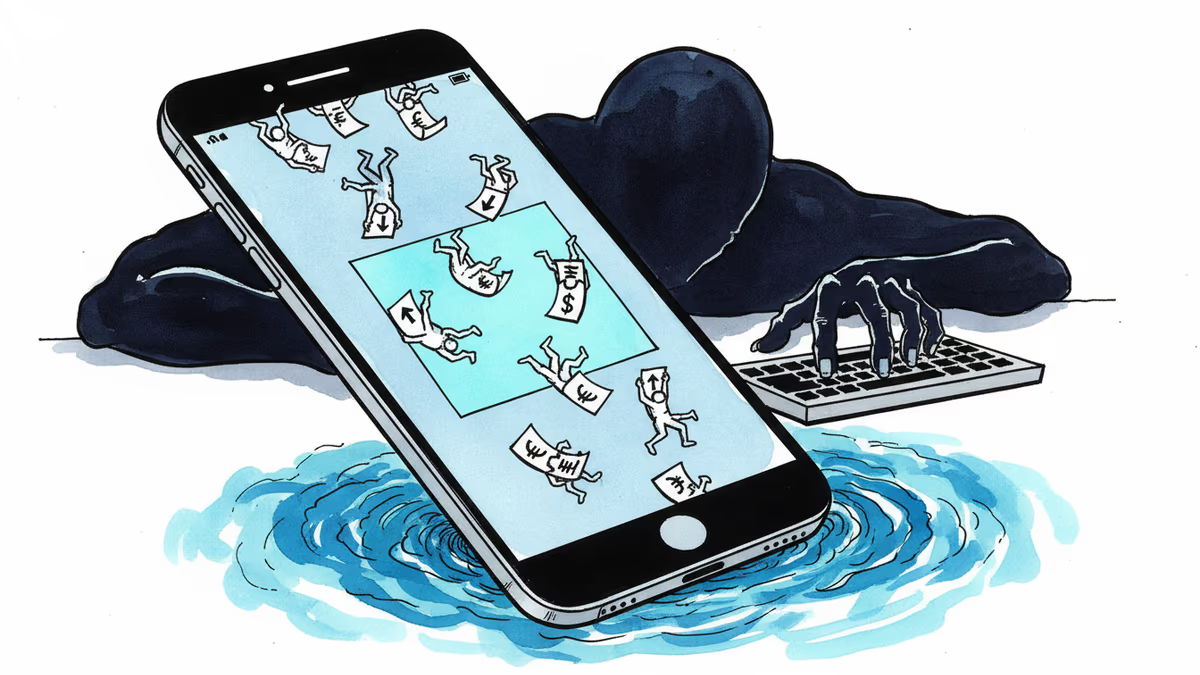
One Tweet. $2.6 Billion. Was It a Lie?
A California jury ruled Elon Musk intentionally misled Twitter investors with a 2022 tweet about bots. Damages could reach $2.6 billion — and the verdict raises bigger questions about CEO speech in the social media era.
On May 13, 2022, Elon Musk typed 22 words into a text box. By the time the markets closed, Twitter's stock had dropped 8%. By the time a California jury finished deliberating last Friday, those 22 words had become the basis for a potential $2.6 billion fraud verdict.
What the Jury Decided
The facts of the case aren't complicated. Musk had agreed to buy Twitter for $44 billion. Then he tweeted that the deal was "temporarily on hold" because he wanted verification that spam and fake accounts made up less than 5% of users. Twitter shares tanked. Musk later tried to walk away from the deal entirely. Twitter sued him. He completed the acquisition anyway.
But between the tweet on May 13 and the deal's close on October 4, a lot of ordinary investors sold their Twitter shares — at prices depressed by the uncertainty Musk had created. Investor Giuseppe Pampena filed a class-action lawsuit on their behalf, arguing that Musk hadn't raised a genuine concern. He had manufactured doubt, deliberately, to drive the price down.
Musk's legal team pushed back hard: these were legitimate questions about the platform's health, not market manipulation. The jury disagreed. Damages haven't been set yet, but Pampena's attorney told CNBC the number could reach $2.6 billion.
This Isn't His First Tweet-Related Courtroom
If this feels familiar, it should. In 2018, Musk tweeted that he had "funding secured" to take Tesla private at $420 per share. The SEC charged him with securities fraud. Musk had to testify under oath — among other things, that the $420 price was not a cannabis joke. He won that case. He won't win this one.

For context: Bloomberg estimates Musk's net worth at over $660 billion. Even at the maximum damages figure, this verdict costs him roughly 0.4% of his wealth. The financial pain is minimal. The legal and symbolic implications are not.
Three Very Different Reactions
For retail investors, this is the verdict they've wanted for years. The unspoken rule of the social media era has been that billionaire founders get to say whatever they want online, and if markets move, well — that's just the market reacting to information. This jury pushed back on that logic. If your words move markets, you own the consequences.
For corporate lawyers and compliance teams, the ruling is a quiet alarm. The line between "CEO commentary" and "material non-public information" has always been blurry on social media. After this verdict, that line gets a lot more expensive to misread. Expect more companies to tighten their social media policies for executives — and expect more friction when founders want to "just post."
For Musk's critics and supporters alike, the verdict lands differently. Critics see a pattern: a powerful man who treats legal and regulatory structures as inconveniences to be managed, not constraints to be respected. Supporters argue the bot concerns were real, the lawsuit opportunistic, and that the jury was swayed by anti-Musk sentiment rather than evidence. Both camps will find data points to support their priors.
Meanwhile, the Empire Keeps Expanding
While this verdict was being handed down, X — the platform formerly known as Twitter — had already been folded into xAI, Musk's AI company, which was valued at $113 billion after the merger. Last month, SpaceX merged with xAI as well, with Musk citing ambitions to build data centers in space. The legal exposure from 2022 hasn't slowed the consolidation of Musk's various ventures. If anything, the entities involved have grown more intertwined and harder to parse.
Authors
Related Articles
The Musk vs. Altman OpenAI trial opened with a jury selection crisis. Prospective jurors called Musk a 'world-class jerk' on official court forms. What does that tell us?
Two court losses in two days mark a turning point for Meta's legal exposure on child safety. The tobacco playbook is working — and thousands more cases are waiting.
Two US juries held Meta liable for hundreds of millions in damages for harming minors. The verdicts challenge Big Tech's long-standing legal shields—and could redraw the rules for every platform on earth.
A New Mexico jury found Meta willfully violated consumer protection laws, awarding $375M in fines. What this landmark verdict means for Big Tech, parents, and platform accountability.
The Musk vs. Altman OpenAI trial opened with a jury selection crisis. Prospective jurors called Musk a 'world-class jerk' on official court forms. What does that tell us?
Two court losses in two days mark a turning point for Meta's legal exposure on child safety. The tobacco playbook is working — and thousands more cases are waiting.
Two US juries held Meta liable for hundreds of millions in damages for harming minors. The verdicts challenge Big Tech's long-standing legal shields—and could redraw the rules for every platform on earth.
A New Mexico jury found Meta willfully violated consumer protection laws, awarding $375M in fines. What this landmark verdict means for Big Tech, parents, and platform accountability.
Thoughts
Share your thoughts on this article
Sign in to join the conversation