

Musk's Next Big Bet: SpaceX and xAI Merger Talks Begin
SpaceX and xAI are reportedly in merger discussions ahead of SpaceX's planned IPO, potentially creating space-based data centers. What does this mean for the future of AI and space tech?
With SpaceX's IPO planned for mid-June, Elon Musk is shuffling the deck once again. SpaceX and his AI company xAI are reportedly in merger discussions, according to Reuters, with the combined entity potentially launching data centers into space.
Space-Based Computing: Genius or Madness?
The merger's centerpiece is SpaceX's ambitious plan to deploy data centers in orbit. By combining xAI's Grok AI capabilities with SpaceX's rocket technology, Musk envisions breaking free from Earth-bound computing limitations.
The physics make sense on paper. Space offers 24/7 solar power, natural cooling in the vacuum, and no real estate costs. Current AI data centers consume massive amounts of electricity and require expensive cooling systems. A space-based solution could theoretically solve both problems.
But theory meets harsh reality in orbit. Cosmic radiation damages electronics, maintenance requires costly spacewalks, and communication delays could cripple real-time applications. The upfront investment would be astronomical, even by Musk's standards.
Why Now? The IPO Connection

The timing isn't coincidental. SpaceX is eyeing a mid-June IPO, and the xAI merger story could be exactly what investors want to hear. In an AI-obsessed market, the narrative of space-based artificial intelligence could drive valuations sky-high.
There's also defensive strategy at play. xAI faces regulatory scrutiny over Grok's controversial outputs and data usage practices. Folding into SpaceX could provide political cover and shift focus from AI ethics to space innovation.
Market Implications Beyond the Hype
If successful, this merger could reshape cloud computing entirely. Amazon's AWS, Microsoft's Azure, and Google Cloud would face a competitor with literally unlimited expansion potential. The implications for data sovereignty are staggering – whose laws govern an AI running in international waters of space?
For investors, the risk-reward calculation is extreme. SpaceX already commands a $200 billion valuation. Adding xAI's potential could push it higher, but technical failures or regulatory pushback could crater both companies.
The semiconductor industry watches nervously. Space-hardened chips require different specifications, potentially disrupting established supply chains. Companies like Intel and NVIDIA might need to completely rethink their product roadmaps.
Authors
Related Articles
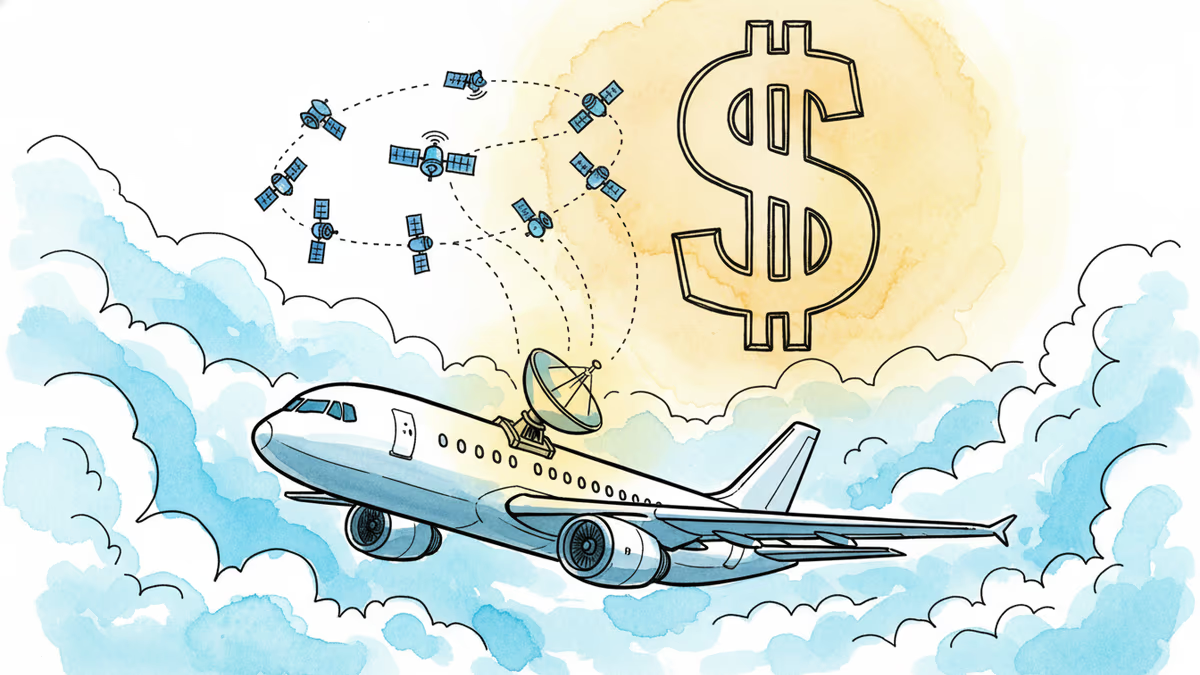
American Airlines just signed Starlink for 500+ aircraft. It's not just about faster inflight internet — it's a calculated move in the run-up to what could be the largest IPO in history.
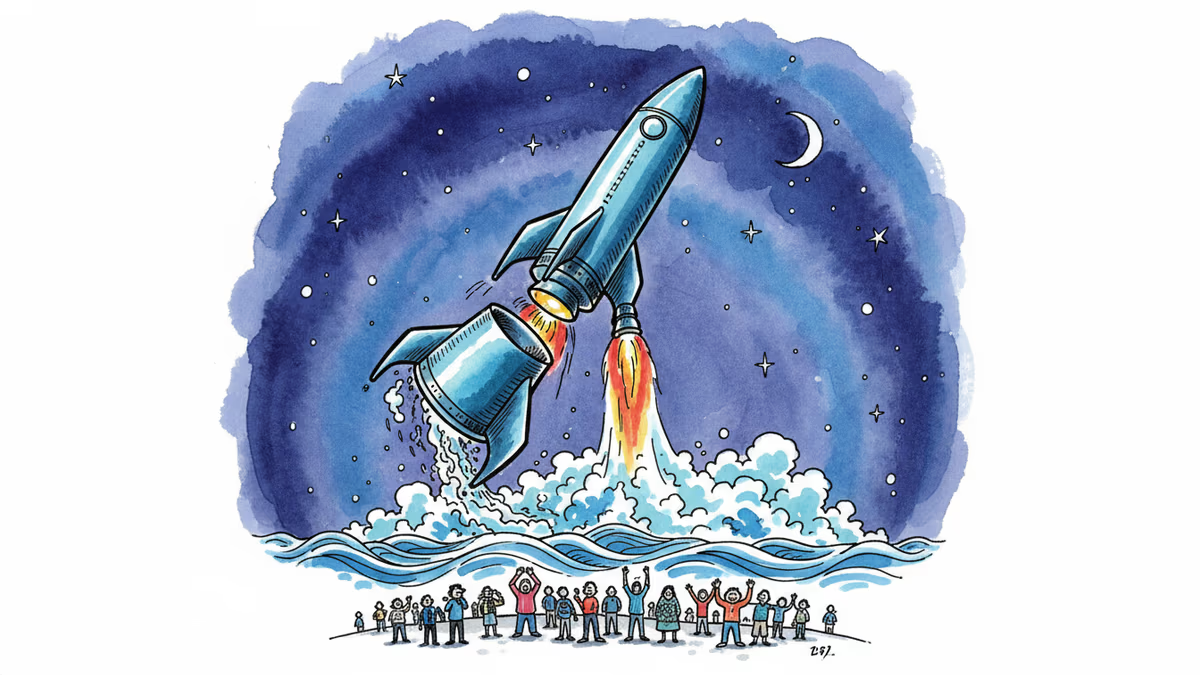
SpaceX's upgraded Starship V3 completed its first test flight, deploying 20 Starlink simulators but losing the Super Heavy booster. With an IPO weeks away, the stakes just got higher.
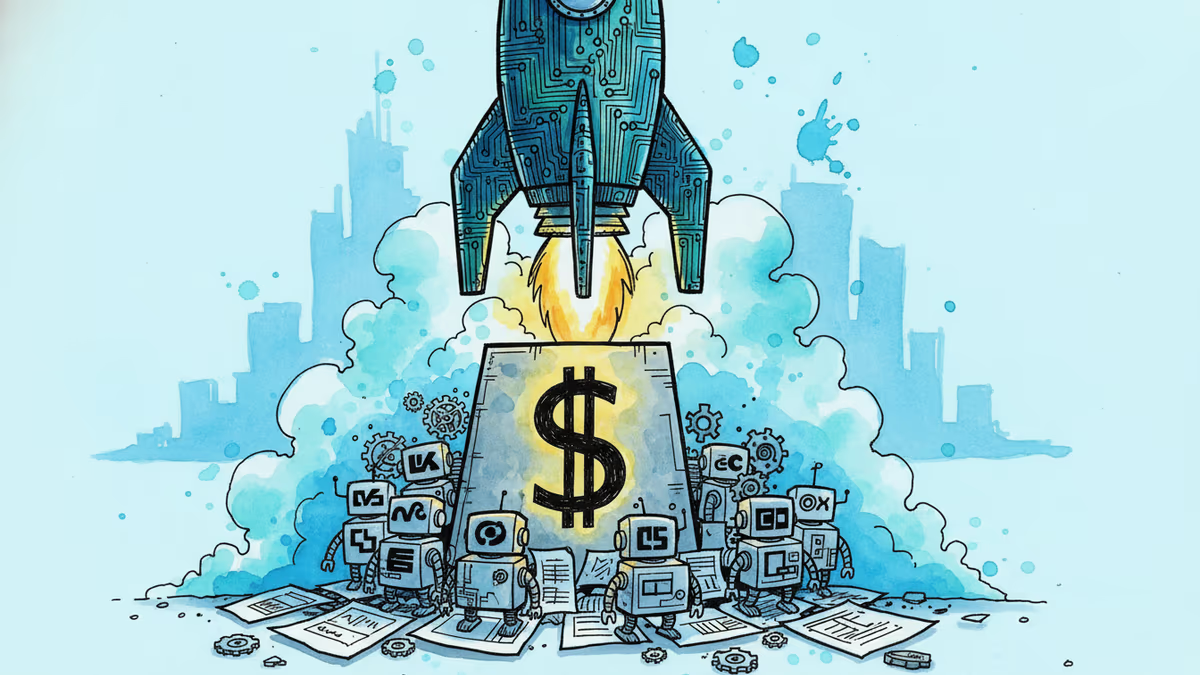
SpaceX's IPO filing puts AI at the center, claiming a $26.5 trillion market opportunity. But can Grok compete with OpenAI and Anthropic for enterprise customers?
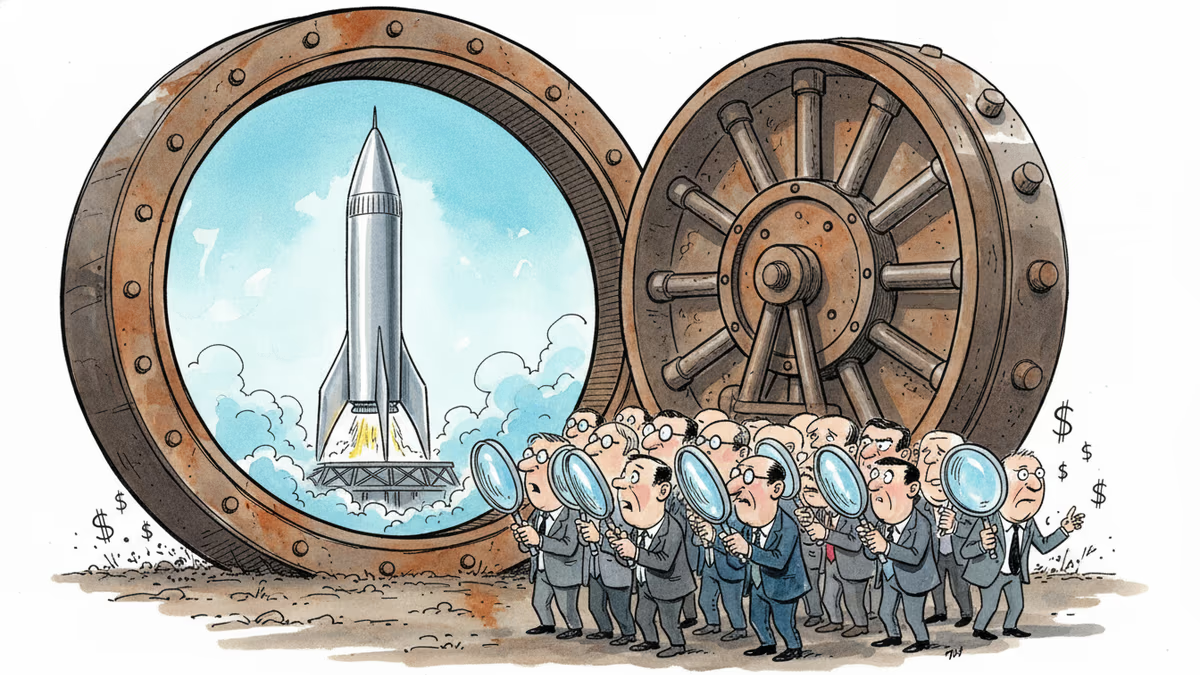
SpaceX filed a nearly 400-page S-1 with the SEC, targeting an IPO as early as June 12. Here's what the filing reveals—and what it doesn't.
American Airlines just signed Starlink for 500+ aircraft. It's not just about faster inflight internet — it's a calculated move in the run-up to what could be the largest IPO in history.
SpaceX's upgraded Starship V3 completed its first test flight, deploying 20 Starlink simulators but losing the Super Heavy booster. With an IPO weeks away, the stakes just got higher.
SpaceX's IPO filing puts AI at the center, claiming a $26.5 trillion market opportunity. But can Grok compete with OpenAI and Anthropic for enterprise customers?
SpaceX filed a nearly 400-page S-1 with the SEC, targeting an IPO as early as June 12. Here's what the filing reveals—and what it doesn't.
Thoughts
Share your thoughts on this article
Sign in to join the conversation