
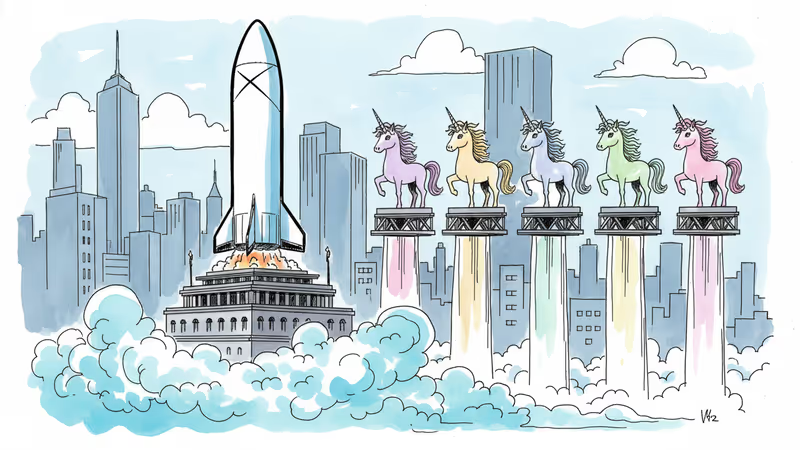
SpaceX's $1.5T IPO Dream Could Reshape Market Reality
SpaceX lines up Wall Street banks for 2026 IPO at potential $1.5 trillion valuation. Could this trigger an IPO cascade among late-stage unicorns? Here's what investors need to know.
$800 billion. That's what SpaceX is worth today after completing its latest tender offer. But the company has its sights set much higher – a potential $1.5 trillion valuation when it goes public in 2026.
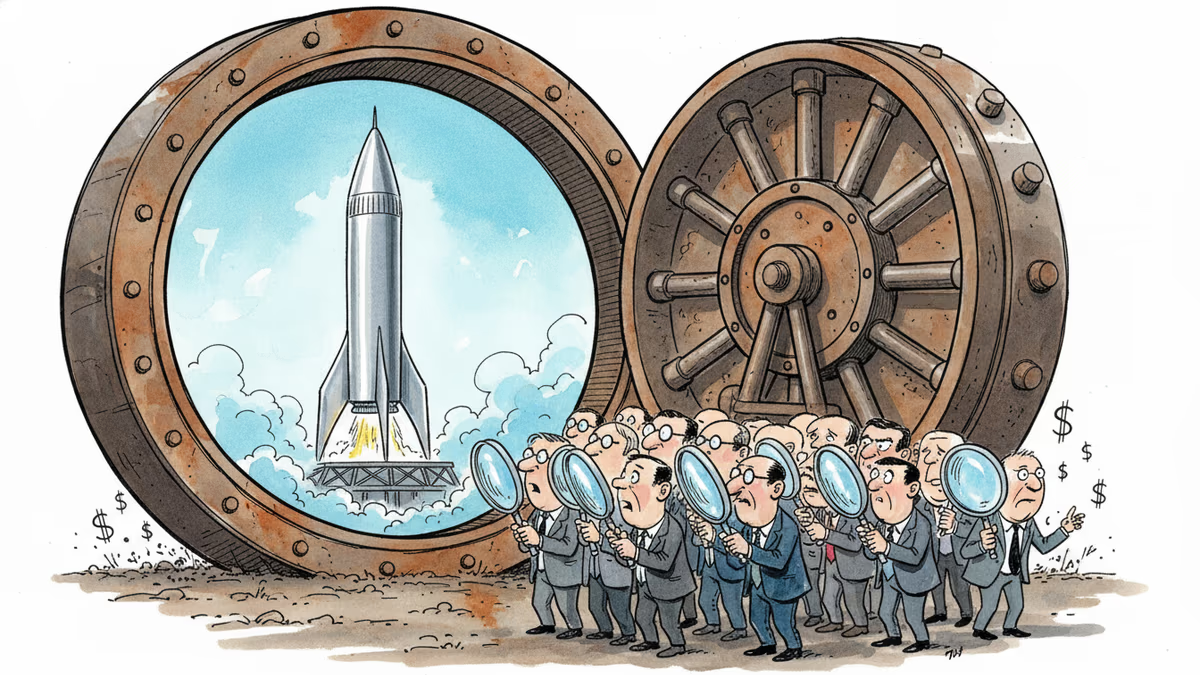
Four major Wall Street banks are reportedly already lined up to underwrite what could be the largest IPO in history. More importantly, this move might finally break the dam that's been holding back other late-stage unicorns from going public.
Why Now Makes Perfect Sense
The timing isn't coincidental. Secondary market demand for SpaceX shares has been "through the roof," according to industry sources. Investors who've been locked out of the private markets are hungry for exposure to the space economy.
Starlink, the company's satellite internet service, now serves over 4 million subscribers across 70+ countries. Unlike many tech companies that went public with promises of future profitability, SpaceX has multiple revenue streams already generating cash: satellite launches, Starlink subscriptions, and NASA contracts worth $4.2 billion.
This represents a stark shift from Elon Musk's previous stance. He's long insisted that going public would be a distraction. But with Tesla shares underperforming and the X acquisition creating financial pressure, the calculus has clearly changed.
The Unicorn Stampede Awaits
If SpaceX successfully goes public at anywhere near its target valuation, it could trigger what analysts are calling an "IPO cascade." OpenAI, valued at $157 billion in its latest funding round, Stripe at $65 billion, and Databricks at $43 billion have all been waiting for the right market conditions.

The IPO market has been essentially frozen since 2021. Last year saw just 165 IPOs in the US – the lowest since 2009. But a successful SpaceX debut could reset investor appetite for risk and growth stories.
The question is whether the market can handle a $1.5 trillion valuation. That would make SpaceX the second-most valuable company globally, behind only Apple at $3.5 trillion. For context, that's larger than the entire GDP of most countries.
What This Means for Investors
For retail investors, a SpaceX IPO represents unprecedented access to the space economy. Until now, this has been largely the domain of institutional investors and accredited individuals who could participate in private funding rounds.
But there's a broader implication: we're potentially witnessing the emergence of a new asset class. Space companies aren't just about launches anymore – they're building the infrastructure for a $400 billion industry that includes satellite communications, space tourism, asteroid mining, and manufacturing in zero gravity.
The risk, of course, is that we're in another bubble. The $1.5 trillion target values SpaceX at roughly 30 times its estimated 2026 revenue. That's ambitious even by tech standards.
The Regulatory Wild Card
One factor that could complicate the IPO timeline is regulatory scrutiny. SpaceX operates in a heavily regulated industry, with the FAA, FCC, and Department of Defense all having oversight roles. Any changes in space policy or international tensions could impact the company's operations and valuation.
There's also the Elon Musk factor. His other ventures and public statements have sometimes created volatility for Tesla shareholders. Public market investors will need to decide whether they're comfortable with that level of unpredictability.
Authors
Related Articles
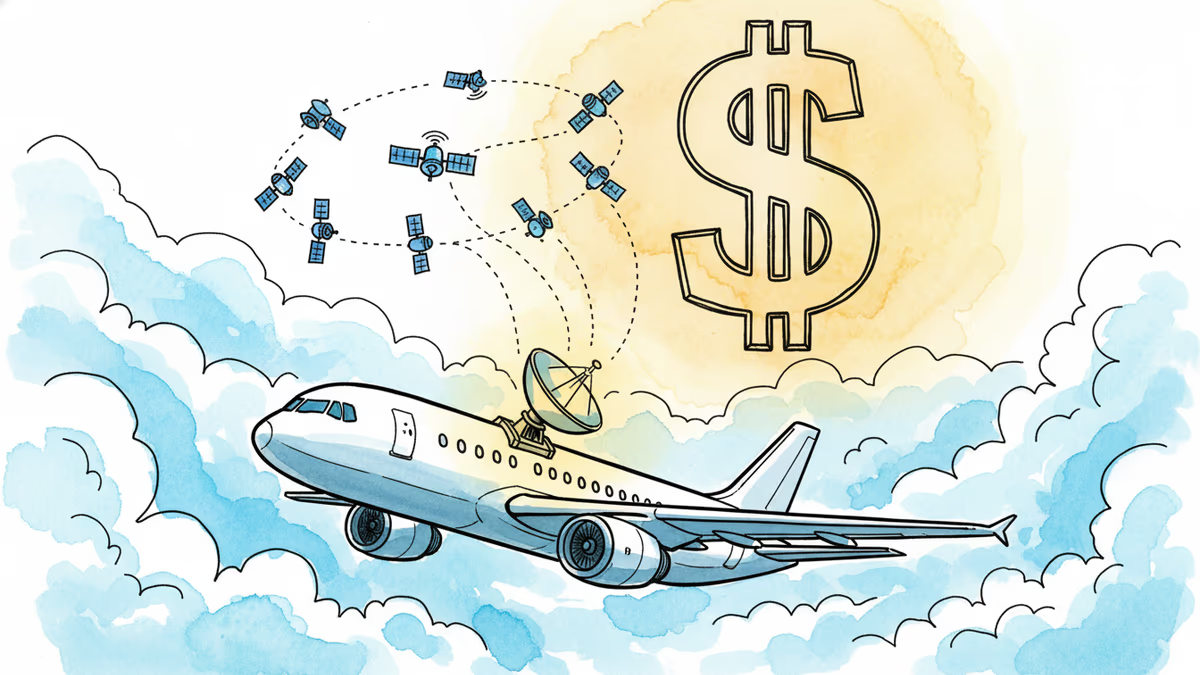
American Airlines just signed Starlink for 500+ aircraft. It's not just about faster inflight internet — it's a calculated move in the run-up to what could be the largest IPO in history.
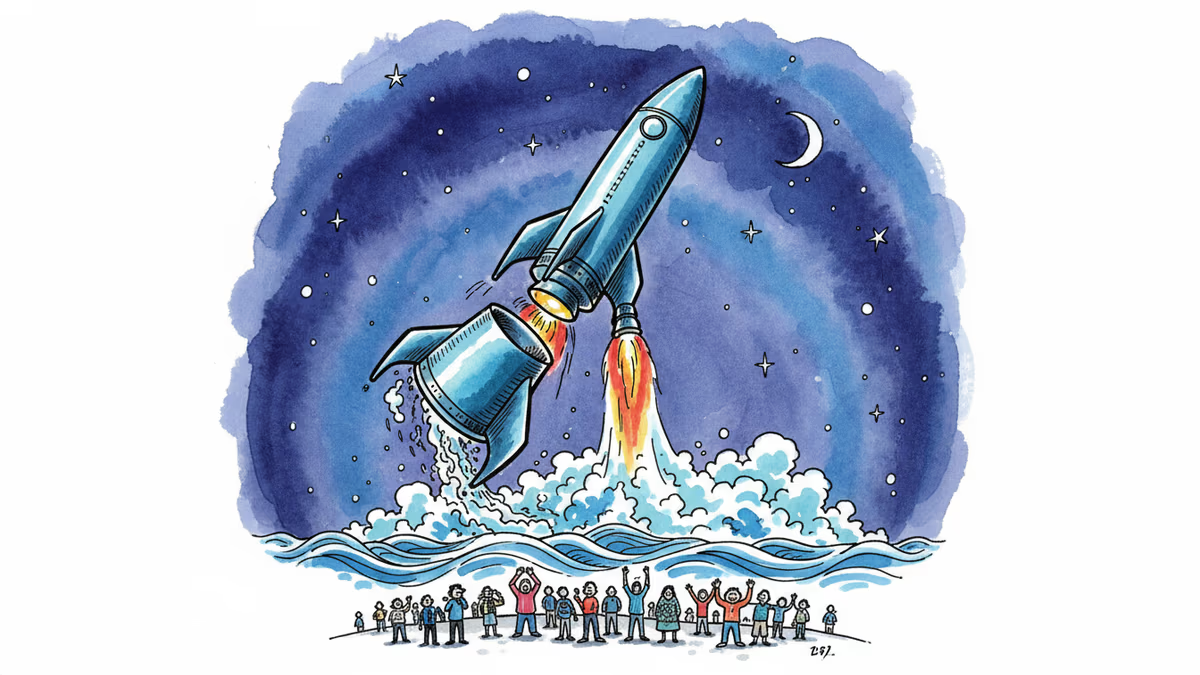
SpaceX's upgraded Starship V3 completed its first test flight, deploying 20 Starlink simulators but losing the Super Heavy booster. With an IPO weeks away, the stakes just got higher.
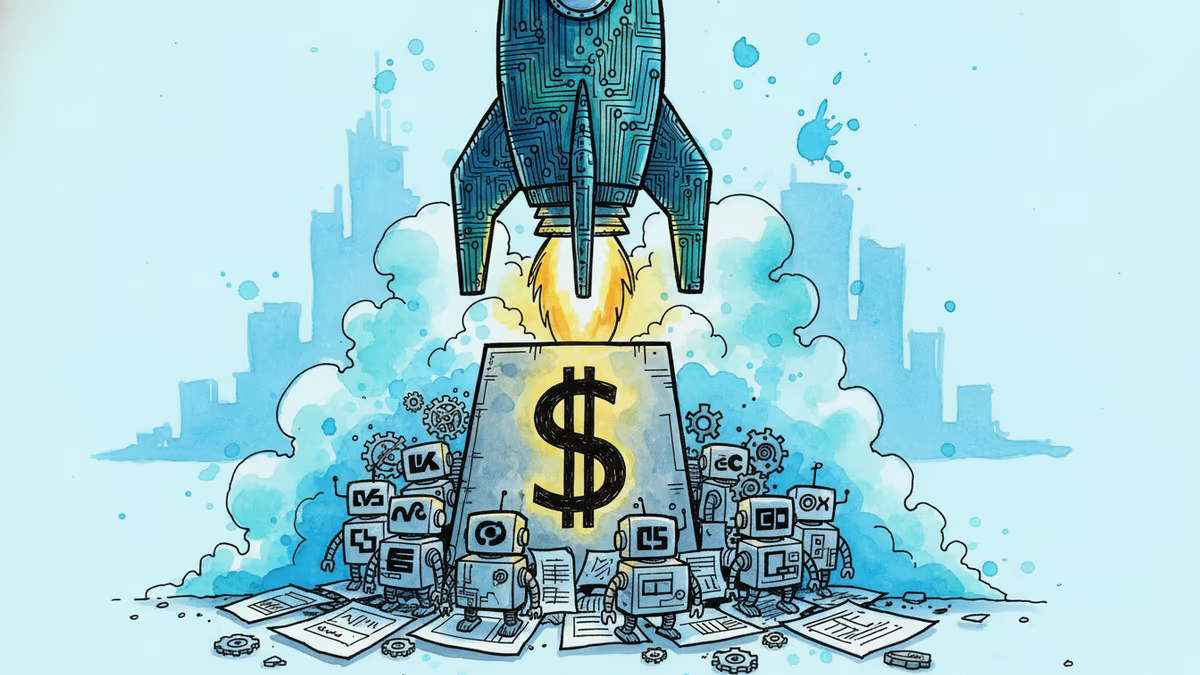
SpaceX's IPO filing puts AI at the center, claiming a $26.5 trillion market opportunity. But can Grok compete with OpenAI and Anthropic for enterprise customers?
SpaceX filed a nearly 400-page S-1 with the SEC, targeting an IPO as early as June 12. Here's what the filing reveals—and what it doesn't.
American Airlines just signed Starlink for 500+ aircraft. It's not just about faster inflight internet — it's a calculated move in the run-up to what could be the largest IPO in history.
SpaceX's upgraded Starship V3 completed its first test flight, deploying 20 Starlink simulators but losing the Super Heavy booster. With an IPO weeks away, the stakes just got higher.
SpaceX's IPO filing puts AI at the center, claiming a $26.5 trillion market opportunity. But can Grok compete with OpenAI and Anthropic for enterprise customers?
SpaceX filed a nearly 400-page S-1 with the SEC, targeting an IPO as early as June 12. Here's what the filing reveals—and what it doesn't.
Thoughts
Share your thoughts on this article
Sign in to join the conversation