
Shadowfax Stumbles 9% on Debut as Client Concentration Worries Investors
Indian logistics firm Shadowfax fell 9% on its trading debut despite raising $208M in IPO, as investors questioned its heavy reliance on major e-commerce clients for 74% of revenue.
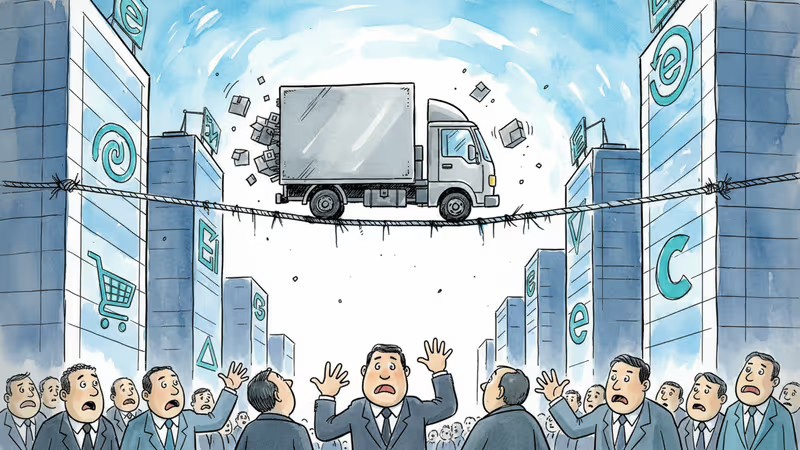
When 74% of your revenue comes from just a handful of clients, even a successful IPO can feel like walking a tightrope. Shadowfax learned this lesson the hard way on Wednesday, as shares tumbled 9% from their offer price of ₹124 to ₹112.60 despite raising $208 million in what seemed like a well-subscribed public offering.
The Double-Edged Sword of Big Tech Partnerships
Founded in 2015, Shadowfax has positioned itself as the backbone of India's e-commerce boom, handling last-mile deliveries for giants like Flipkart, Meesho, Zepto, and Zomato. The Bengaluru-based company operates across 14,700 pin codes with 3.5 million square feet of logistics infrastructure—an impressive scale that speaks to India's rapid digital commerce expansion.
But here's the catch: when your largest clients account for nearly three-quarters of your revenue, you're essentially betting your entire business on their continued growth and loyalty. It's a strategy that works beautifully during boom times—Shadowfax reported 68% revenue growth to ₹18.06 billion in the six months ended September 2025. However, it also means that any shift in client strategy, contract renegotiation, or competitive pressure could dramatically impact the bottom line.
India's Logistics Gold Rush Reality Check

The timing of Shadowfax's IPO reflects the broader maturation of India's logistics sector. The company's debut comes more than three years after larger rival Delhivery went public in 2022. While Delhivery reported significantly higher revenue of ₹89.3 billion for the year ended March 2025, its growth has slowed to the low teens—a potential preview of what awaits Shadowfax as the market matures.
This contrast highlights a fundamental tension in the Indian logistics space. The sector is undoubtedly benefiting from rising internet penetration, urbanization, and demand for faster deliveries. Quick-commerce platforms promising same-day or even 10-minute deliveries have created unprecedented opportunities for third-party logistics providers. Yet this growth comes with strings attached—namely, the power dynamics that favor large platform clients over their logistics partners.
The Founders' Century-Long Vision vs. Market Realities
CEO Abhishek Bansal's declaration that "we are building this for the next century" reflects admirable long-term thinking. The founders chose not to participate in the share sale, retaining about 20% of the company post-listing—a signal of confidence in their vision. The IPO proceeds will fund network expansion, new sorting centers, and potential acquisitions.
But investors appear more focused on near-term fundamentals. The company's profit more than doubled year-over-year to ₹210.37 million, yet this remains closely tied to demand from that concentrated client base. The question isn't whether Shadowfax can grow—it's whether it can diversify its revenue streams and reduce client concentration risk while maintaining its growth trajectory.
Authors
Related Articles
American Airlines just signed Starlink for 500+ aircraft. It's not just about faster inflight internet — it's a calculated move in the run-up to what could be the largest IPO in history.
SpaceX's upgraded Starship V3 completed its first test flight, deploying 20 Starlink simulators but losing the Super Heavy booster. With an IPO weeks away, the stakes just got higher.
SpaceX's IPO filing puts AI at the center, claiming a $26.5 trillion market opportunity. But can Grok compete with OpenAI and Anthropic for enterprise customers?
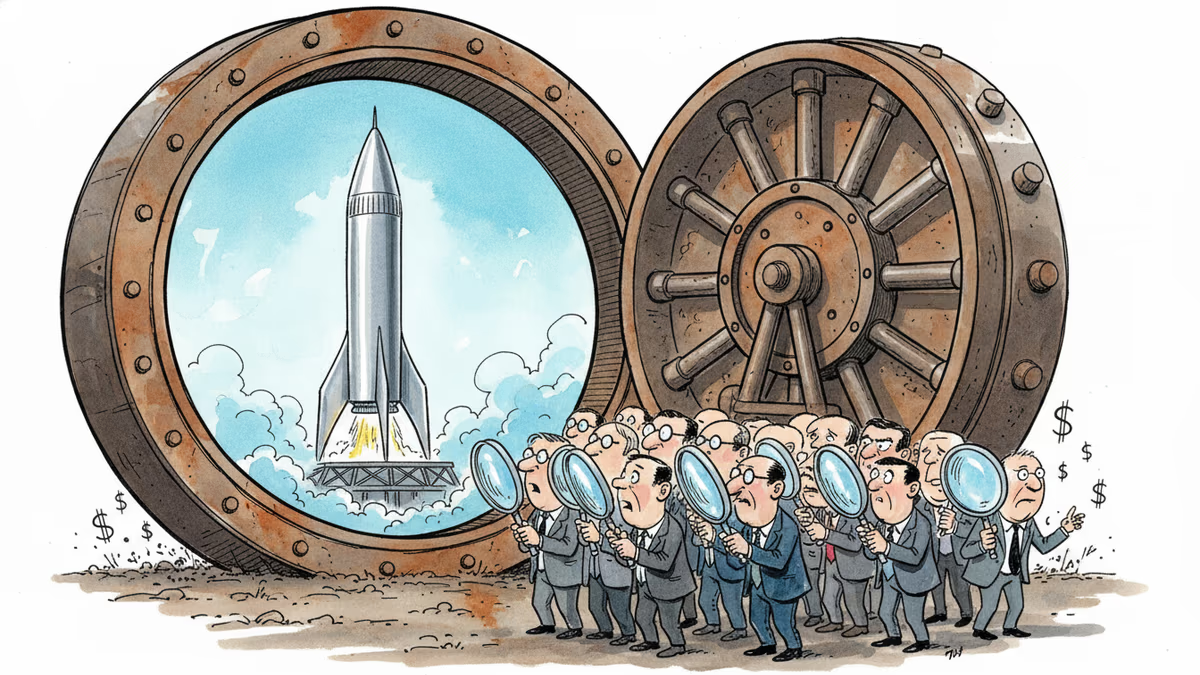
SpaceX filed a nearly 400-page S-1 with the SEC, targeting an IPO as early as June 12. Here's what the filing reveals—and what it doesn't.
American Airlines just signed Starlink for 500+ aircraft. It's not just about faster inflight internet — it's a calculated move in the run-up to what could be the largest IPO in history.
SpaceX's upgraded Starship V3 completed its first test flight, deploying 20 Starlink simulators but losing the Super Heavy booster. With an IPO weeks away, the stakes just got higher.
SpaceX's IPO filing puts AI at the center, claiming a $26.5 trillion market opportunity. But can Grok compete with OpenAI and Anthropic for enterprise customers?
SpaceX filed a nearly 400-page S-1 with the SEC, targeting an IPO as early as June 12. Here's what the filing reveals—and what it doesn't.
Thoughts
Share your thoughts on this article
Sign in to join the conversation