
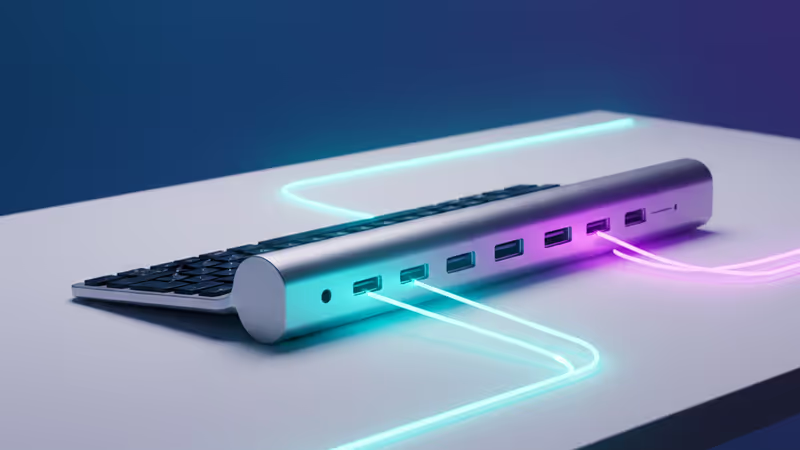
HP EliteBoard G1a Windows Keyboard-PC: A Professional Take on a Classic Form Factor
HP launches the EliteBoard G1a, a Windows-based keyboard-PC aiming to disrupt the market dominated by Raspberry Pi. Learn how it compares to the Pi 500 series.
The nostalgic keyboard-PC is back, but this time it's built for business. HP announced the EliteBoard G1a today, offering a more accessible Windows-based alternative to the hobbyist-dominated space. While the 1980s Commodore 64 made the concept famous, modern iterations have mostly been the playground of Linux enthusiasts until now.
HP EliteBoard G1a Challenges the Raspberry Pi Monopoly
For years, the Raspberry Pi has held the crown for single-board computers inside keyboards. Starting with the $100 Raspberry Pi 400 in 2019, the lineup has evolved into the 64-bit Raspberry Pi 500 and the high-end 500+ model. The latter features a low-profile mechanical keyboard and NVMe SSD storage for $200. However, these devices often require a steep learning curve due to their Linux-native OS.

According to HP, the EliteBoard G1a focuses on familiarity. By integrating a full Windows system into a functioning membrane keyboard, it targets users who need a compact setup without the complexities of DIY hardware. It provides a seamless desktop experience with built-in USB, HDMI, and Ethernet ports, bridging the gap between niche hobbyist tools and mainstream productivity devices.
Specs and Market Positioning of EliteBoard G1a
The device's membrane keyboard design makes it a durable and accessible choice compared to the pricier mechanical alternatives. While the Raspberry Pi 500 series appeals to tinkerers, HP is betting on the corporate and educational sectors where 'plug-and-play' functionality is paramount. It's a strategic move to capitalize on the increasing demand for minimalist and space-saving hardware solutions.
Authors
Related Articles

AI is everywhere now—but is it helping or hurting? MIT Technology Review diagnoses a new mood: not excitement, not panic, just a creeping, uncomfortable uncertainty.

As loneliness hits crisis levels, a new wave of friendship apps is pulling in $16M and 4.3M downloads in the US alone. But can technology actually solve a human problem?

Palmer Luckey's retro gaming startup ModRetro is seeking funding at a $1 billion valuation. What does it mean when the man building autonomous weapons also wants to make the perfect Game Boy?

A philosophy professor turned a $50 prototype into a global hardware empire. PopSockets proves you don't need venture capital to build a consumer hardware giant—just smart bootstrapping.
AI is everywhere now—but is it helping or hurting? MIT Technology Review diagnoses a new mood: not excitement, not panic, just a creeping, uncomfortable uncertainty.
As loneliness hits crisis levels, a new wave of friendship apps is pulling in $16M and 4.3M downloads in the US alone. But can technology actually solve a human problem?
Palmer Luckey's retro gaming startup ModRetro is seeking funding at a $1 billion valuation. What does it mean when the man building autonomous weapons also wants to make the perfect Game Boy?
A philosophy professor turned a $50 prototype into a global hardware empire. PopSockets proves you don't need venture capital to build a consumer hardware giant—just smart bootstrapping.
Thoughts
Share your thoughts on this article
Sign in to join the conversation