

How PopSockets Sold 290M Units Without VC Money
A philosophy professor turned a $50 prototype into a global hardware empire. PopSockets proves you don't need venture capital to build a consumer hardware giant—just smart bootstrapping.
The $50 Prototype That Changed Everything
In 2012, University of Colorado philosophy professor David Barnett was lying in bed, tablet in hand, when his wrist started aching. So he grabbed two buttons, stuck them together with adhesive, and created a makeshift grip. That $50 prototype would become PopSockets.
Eleven years later, the company has sold 290 million products across 115 countries—all built on less than $500K in initial capital. No institutional investors. No venture capital treadmill. Just a philosophy professor's determination and a different approach to hardware entrepreneurship.
Silicon Valley's Hardware Gospel
The conventional wisdom is clear: consumer hardware companies need serious VC backing to survive. Manufacturing costs, inventory management, global distribution—it all requires massive upfront capital. Most hardware startups raise $10-50 million in Series A funding alone.
But Barnett chose a different path. He started with crowdfunding, grew through revenue, and kept dilution minimal. The result? A global brand that proves the bootstrapped route isn't just viable—it might be superior.
Consider the alternative: Juicero raised $120 million from top-tier VCs and collapsed within two years. Theranos raised nearly $1 billion before its spectacular fraud revelation. Meanwhile, PopSockets quietly built a sustainable empire.
The Bootstrap Advantage
PopSockets' success formula reveals something important about consumer hardware:

- Simple problem, elegant solution: Phone grip that doubles as a stand
- Low manufacturing costs: Under $1 per unit
- High margins: Over 80% gross profit
- Viral marketing: Perfectly timed with Instagram selfie culture
Without VC pressure for hockey-stick growth, Barnett could focus on fundamentals. Each product iteration was funded by previous sales. Each market expansion was profitable from day one. No burn rate anxiety, no pivot pressure, no exit timeline.
The Hidden Costs of VC Money
Venture capital isn't free money—it's expensive money with strings attached. VCs expect 10x returns within 7-10 years. That means constant pressure to scale fast, often at the expense of profitability or product quality.
For hardware companies, this creates a dangerous dynamic. You're burning cash on inventory while racing to hit growth targets. One supply chain hiccup or demand miscalculation can be fatal. PopSockets avoided this entirely by growing organically.
The numbers tell the story: 90% of VC-backed startups fail, while bootstrapped companies have significantly higher survival rates. When you're profitable from the start, you control your destiny.
When Bootstrap Works (And When It Doesn't)
Not every hardware company can follow the PopSockets model. If you're building electric vehicles, semiconductors, or complex medical devices, you'll need institutional capital. The physics of these industries demand massive upfront investment.
But for consumer accessories, lifestyle products, and simple electronics? The PopSockets playbook is worth studying. Especially in today's creator economy, where social media can replace traditional marketing spend.
The key is picking the right battle. PopSockets succeeded because it solved a universal problem with a low-cost solution. The product was inherently shareable, photogenic, and had network effects—every selfie was free advertising.
Authors
Related Articles

Palmer Luckey's retro gaming startup ModRetro is seeking funding at a $1 billion valuation. What does it mean when the man building autonomous weapons also wants to make the perfect Game Boy?
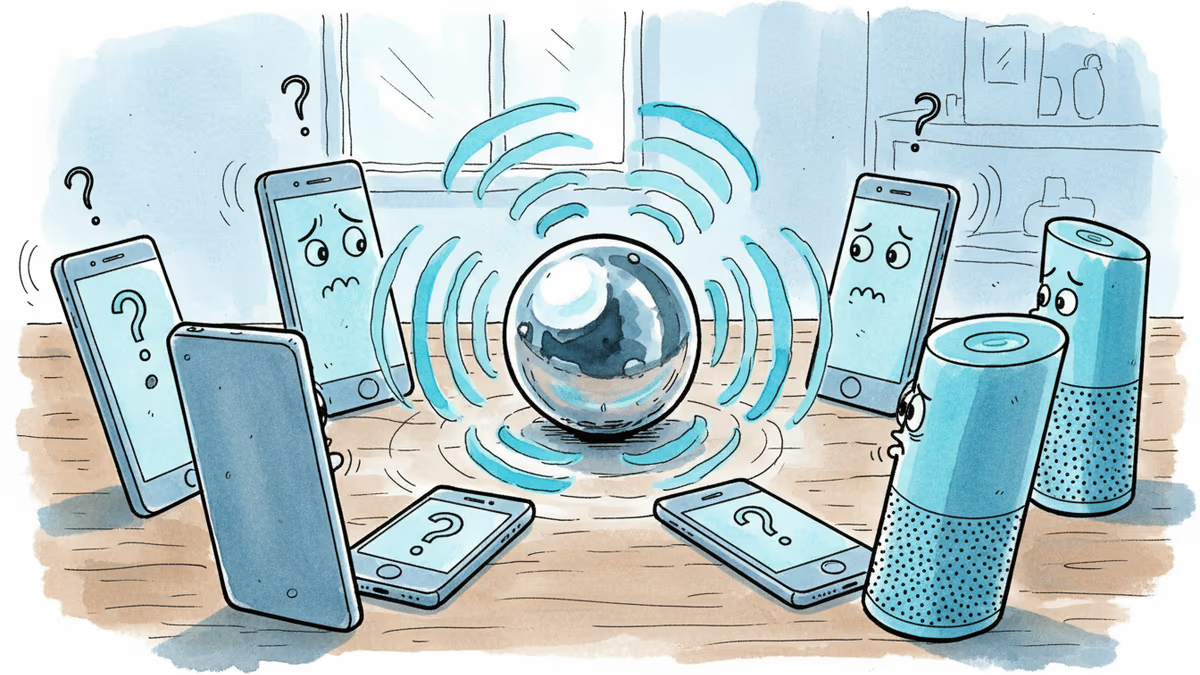
Harvard grad's AI-powered microphone jammer promises privacy protection but faces fierce technical skepticism. Why the debate reveals more than the device itself.
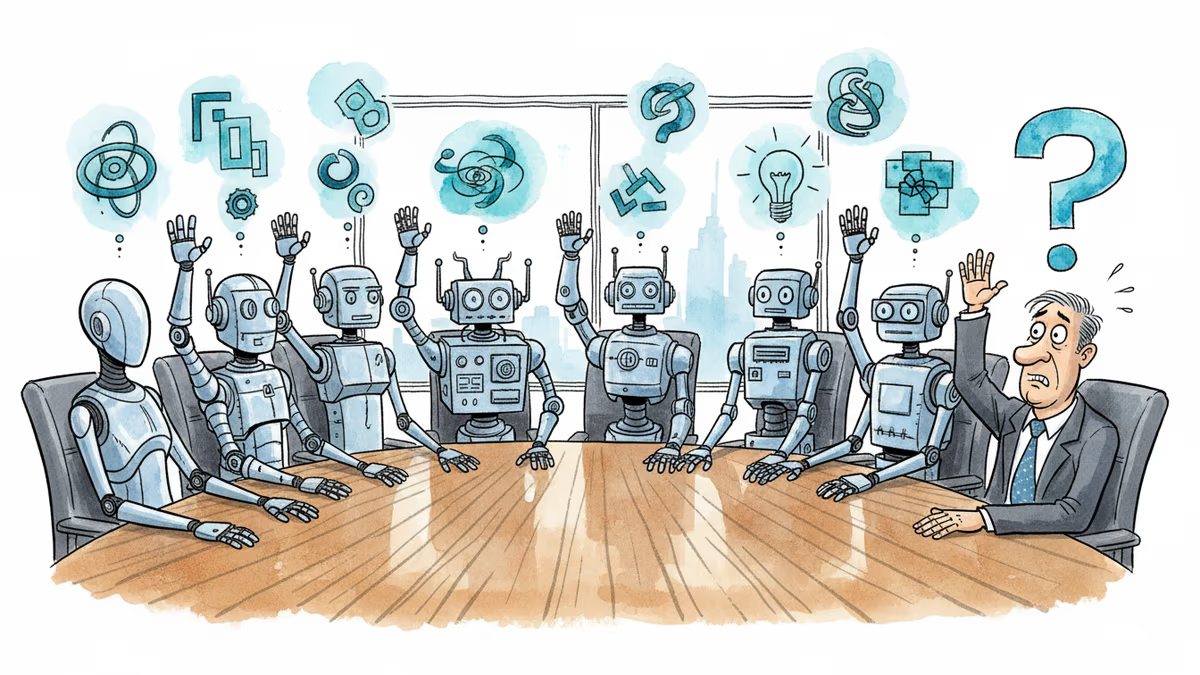
CollectivIQ tackles AI hallucinations by querying ChatGPT, Claude, Gemini, and 7 other models simultaneously. Is crowd-sourcing AI the solution to accuracy problems?
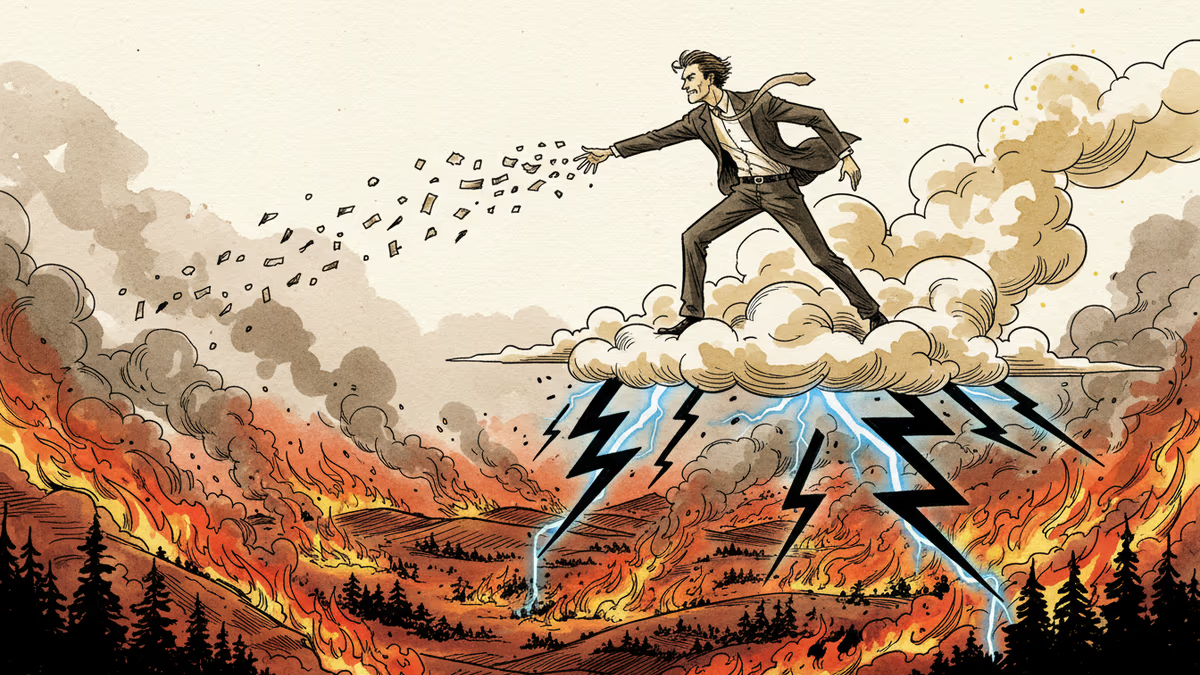
Skyward Wildfire raised millions claiming it can prevent wildfires by stopping lightning strikes. But is it just repackaging 60-year-old cloud seeding technology?
Palmer Luckey's retro gaming startup ModRetro is seeking funding at a $1 billion valuation. What does it mean when the man building autonomous weapons also wants to make the perfect Game Boy?
Harvard grad's AI-powered microphone jammer promises privacy protection but faces fierce technical skepticism. Why the debate reveals more than the device itself.
CollectivIQ tackles AI hallucinations by querying ChatGPT, Claude, Gemini, and 7 other models simultaneously. Is crowd-sourcing AI the solution to accuracy problems?
Skyward Wildfire raised millions claiming it can prevent wildfires by stopping lightning strikes. But is it just repackaging 60-year-old cloud seeding technology?
Thoughts
Share your thoughts on this article
Sign in to join the conversation