
When Gaming Hardware Becomes a Luxury Good
Steam Deck shortages reveal how memory and storage crises are reshaping gaming accessibility and forcing a fundamental shift in the handheld PC market.
The $399 Dream Just Died
Every Steam Deck configuration is sold out. Not just temporarily—permanently for some models. Valve's entry-level $399 LCD version has been officially discontinued, pushing the handheld's effective starting price to $549. That's a 38% jump for anyone hoping to enter PC gaming on the go.
This isn't just about one product. It's a canary in the coal mine for an industry grappling with memory and storage shortages that began cascading through the PC market in late 2025.
Valve has already delayed its upcoming Steam Machine desktop and Steam Frame VR headset. The reason? The same component shortages now making existing products disappear from shelves.
Gamers vs. AI: The Battle for Silicon
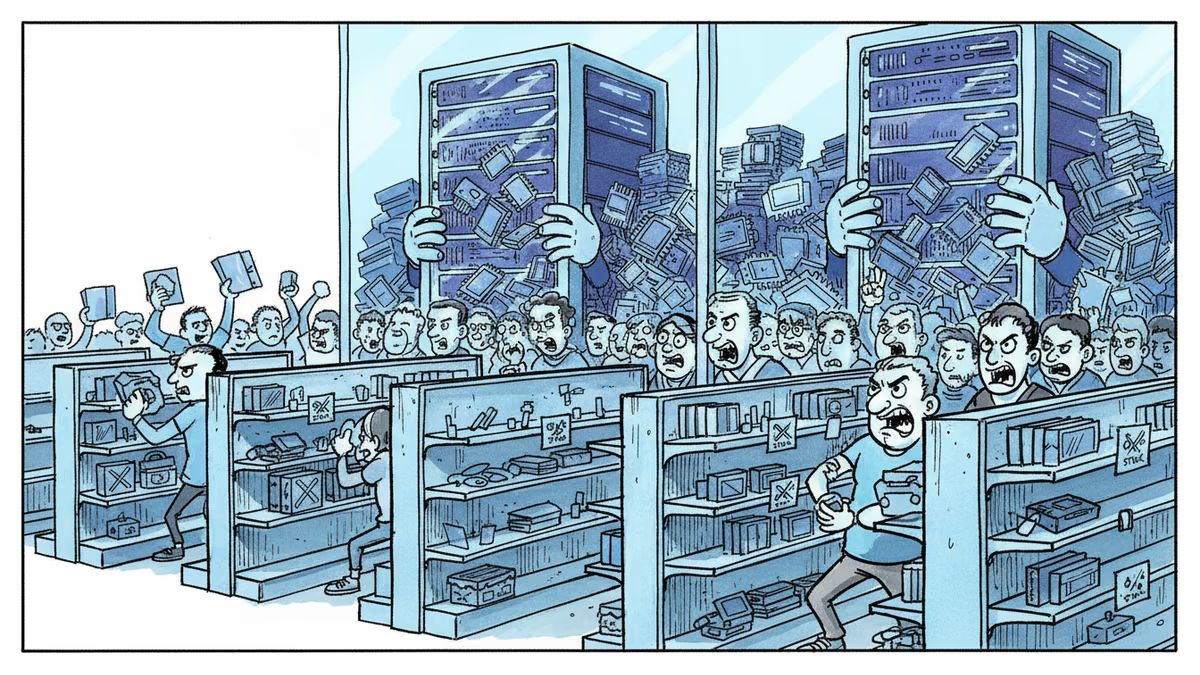
The Steam Deck shortage exposes a uncomfortable truth: gaming hardware is now competing directly with AI infrastructure for the same components. And it's losing.
"High-performance memory that used to go into gaming laptops and handhelds is now being diverted to data centers," explains Mike Howard from SellsideTech Research. "The margins are simply better on enterprise sales."
Memory prices have jumped 35% year-over-year, according to industry data. Storage components aren't far behind. For manufacturers like Valve, this creates an impossible choice: absorb the cost increases or pass them to consumers.
Valve chose a third option—discontinue the cheapest model entirely.

The Ripple Effect Across Gaming
The shortage isn't isolated to Steam Deck. ASUS ROG Ally and other handheld competitors face similar constraints. Even desktop gaming PCs are feeling the squeeze, with some manufacturers quietly raising prices or reducing production runs.
Consider the broader implications: if $549 becomes the new entry point for handheld PC gaming, how many potential gamers get priced out? The democratization of PC gaming—a trend that Steam Deck helped accelerate—suddenly faces a major roadblock.
Smaller gaming hardware companies are particularly vulnerable. Unlike Valve, which has Steam revenue to cushion hardware losses, pure hardware players must choose between profitability and accessibility.
Three Scenarios for 2026
Scenario 1: The Premium Pivot Gaming hardware manufacturers embrace higher price points, focusing on premium features to justify costs. Gaming becomes more exclusive but potentially more innovative.
Scenario 2: The Cloud Escape Component shortages accelerate adoption of cloud gaming services. Why buy expensive hardware when you can stream games? This benefits companies like Microsoft (Xbox Cloud) and NVIDIA (GeForce Now).
Scenario 3: The Supply Rebalance AI demand stabilizes by late 2026, allowing consumer electronics to reclaim supply chain priority. Prices normalize, but the industry learns to diversify component sourcing.
What This Means for You
If you're in the market for gaming hardware, the message is clear: buy now or pay more later. The $399Steam Deck was likely the last sub-$500 handheld PC we'll see for years.
For the industry, this crisis forces a reckoning with accessibility. Gaming has always had premium tiers, but basic entry shouldn't require premium pricing.
Authors
Related Articles

Taiwan's Thunder Tiger became the first Asian firm to win US military drone clearance with a China-free supply chain. As Trump meets Xi, the drone arithmetic reshapes defense strategy.
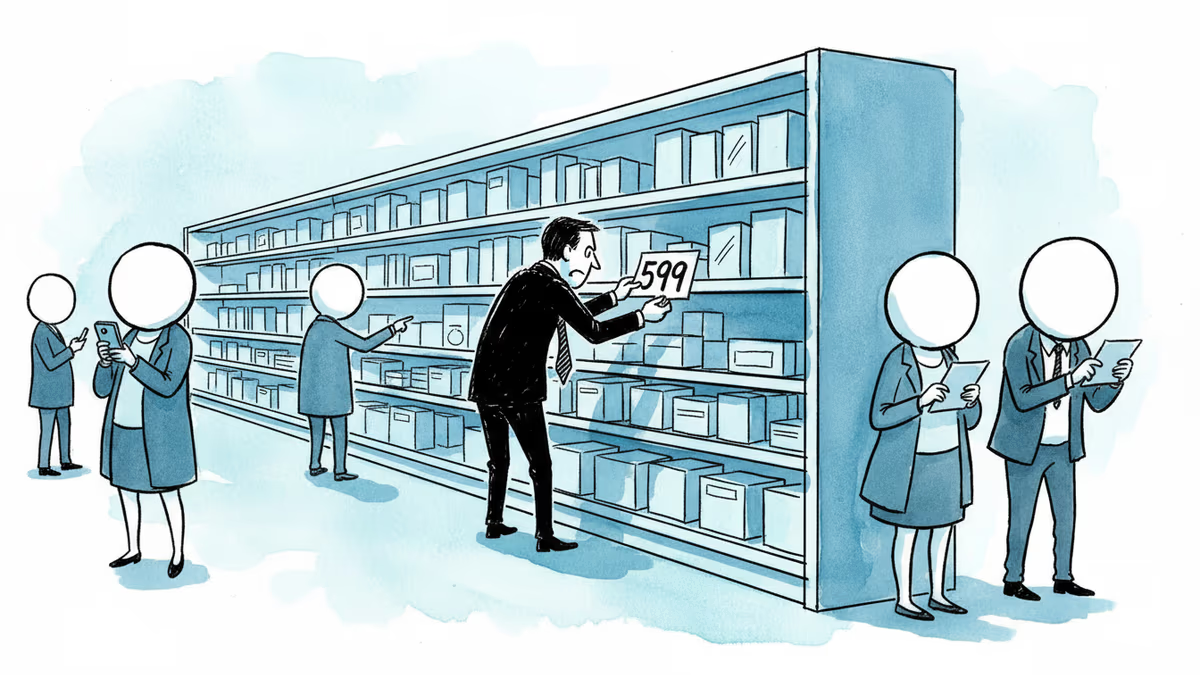
Apple quietly removed the entry-level $599 Mac Mini, raising the starting price to $799 — just one day after Tim Cook warned of chip supply constraints on the earnings call.
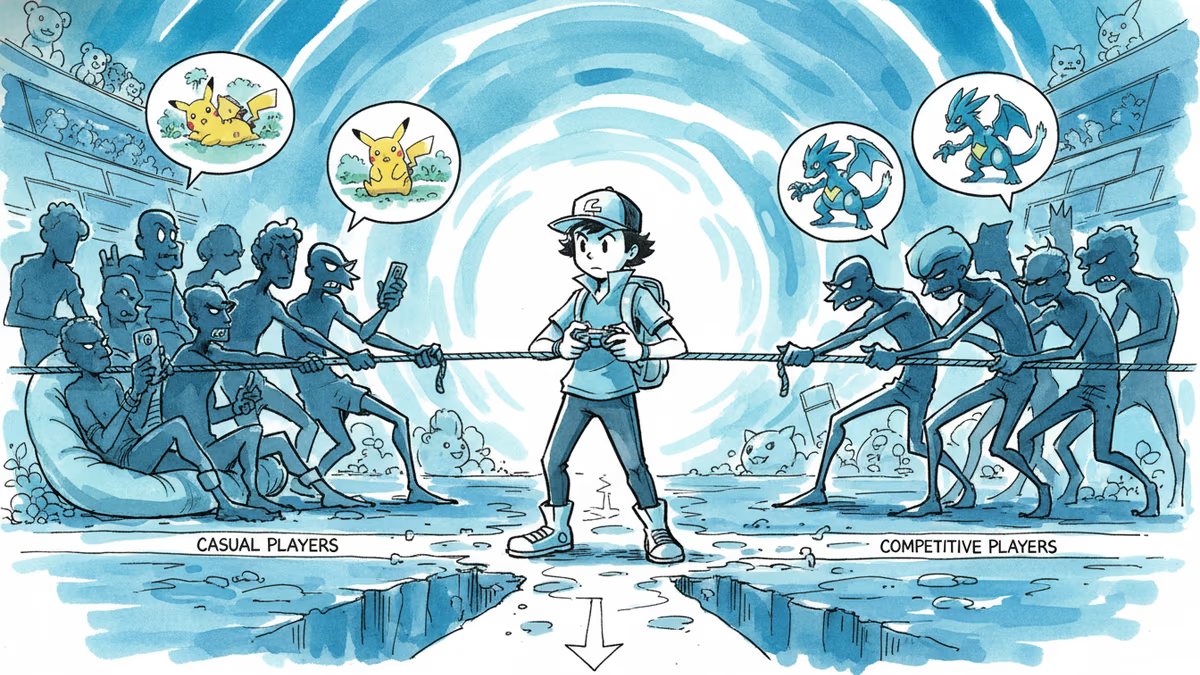
Pokémon Champions launched on Switch with bugs breaking core battle mechanics. But the deeper issue isn't the bugs — it's whether a game trying to please all players can satisfy any of them.
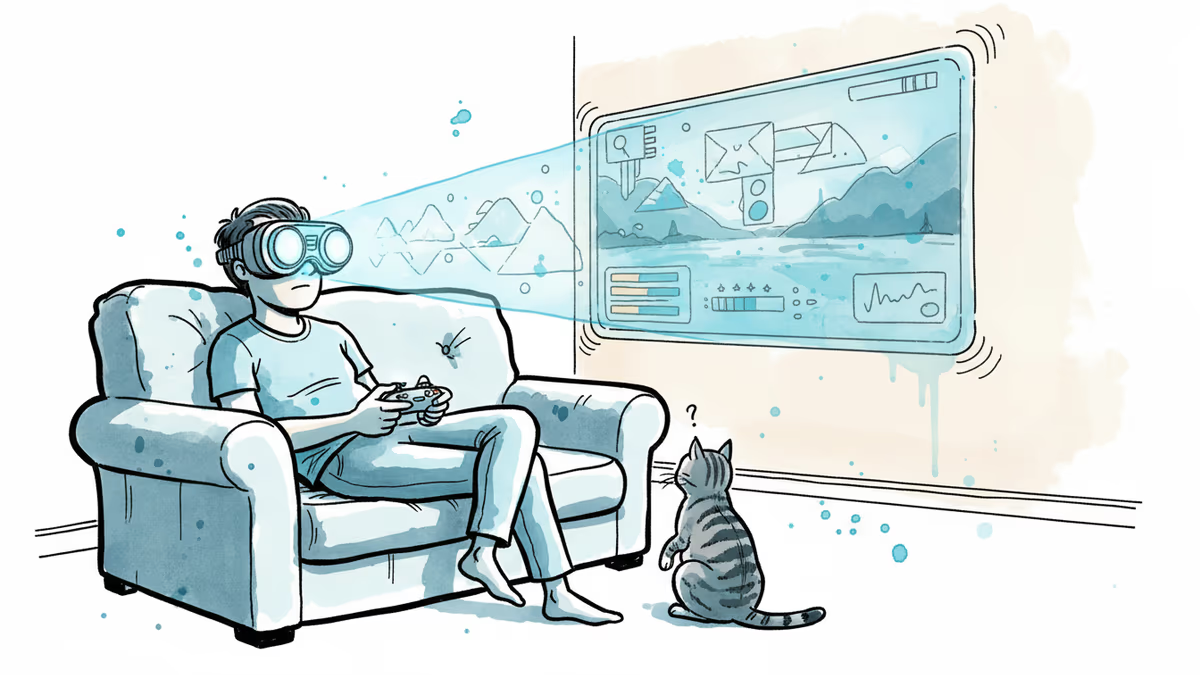
Xreal and Viture's latest AR glasses all do a few things well and a few things poorly. Here's what the best pair would look like — and why none of them are there yet.
Taiwan's Thunder Tiger became the first Asian firm to win US military drone clearance with a China-free supply chain. As Trump meets Xi, the drone arithmetic reshapes defense strategy.
Apple quietly removed the entry-level $599 Mac Mini, raising the starting price to $799 — just one day after Tim Cook warned of chip supply constraints on the earnings call.
Pokémon Champions launched on Switch with bugs breaking core battle mechanics. But the deeper issue isn't the bugs — it's whether a game trying to please all players can satisfy any of them.
Xreal and Viture's latest AR glasses all do a few things well and a few things poorly. Here's what the best pair would look like — and why none of them are there yet.
Thoughts
Share your thoughts on this article
Sign in to join the conversation