

ChatGPT Age Prediction Algorithm: OpenAI Now Guesses Your Age to Protect Minors
OpenAI launches a new ChatGPT age prediction algorithm to identify users under 18 through behavioral signals like activity time and account history, enhancing minor protection.
ChatGPT now knows more than just your questions; it's guessing your age. According to TechCrunch, OpenAI has introduced an 'age prediction' feature designed to identify minors and enforce content constraints automatically. This isn't just a simple ID check—it's an AI algorithm analyzing how you behave.
ChatGPT Age Prediction Algorithm: Behavioral Signals Over IDs
Announced on January 20, 2026, the new system leverages an algorithm that monitors specific 'behavioral and account-level signals.' These include the user's stated age, how long the account has existed, and the times of day the user is most active. If the system flags an account as being under 18, ChatGPT will automatically restrict discussions on sensitive topics like sex and violence.

Strengthening Safety Barriers Amid Mounting Criticism
The move comes after years of heavy criticism regarding AI's impact on children. OpenAI faced backlash last April due to a bug that generated erotica for minors. To balance accuracy, OpenAI is partnering with 'Persona,' an ID verification firm. Users mistakenly designated as underage can re-verify their adult status by submitting a selfie through Persona's system.
Authors
Related Articles

OpenAI has reorganized for the second time in a month, merging ChatGPT and Codex into a single agentic platform under president Greg Brockman's unified product leadership.

After two weeks of witnesses calling him a liar, OpenAI CEO Sam Altman testified in his own defense, claiming Elon Musk tried to kill the company twice.
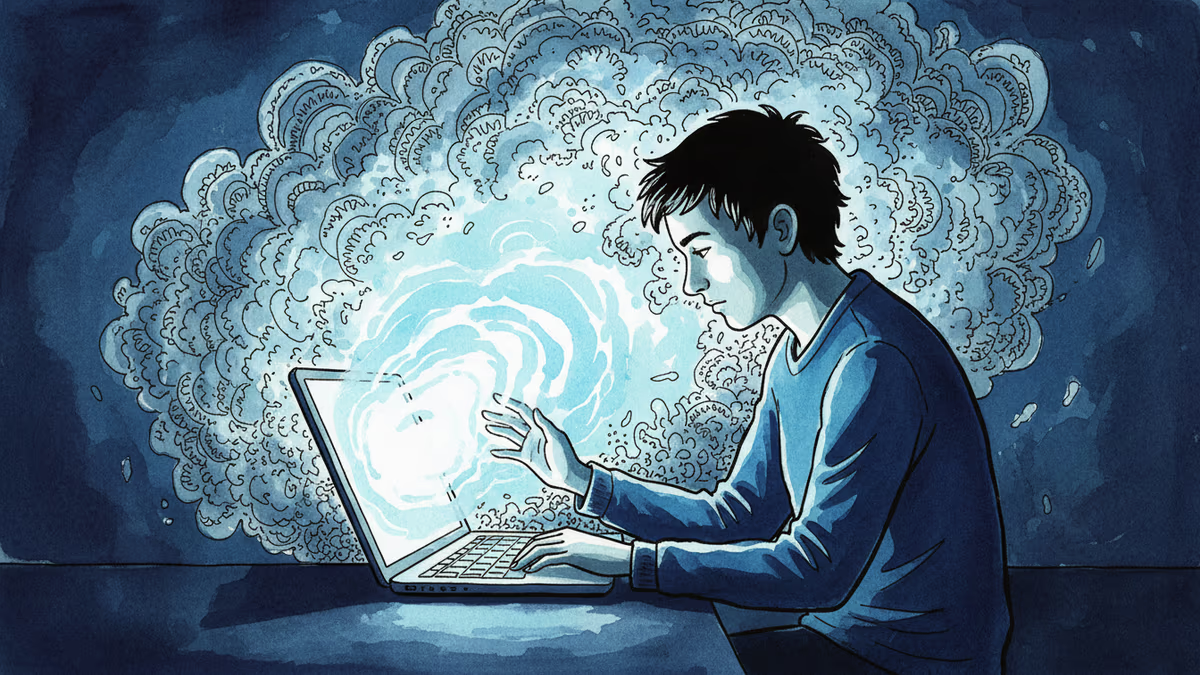
Sam Nelson, 19, died after following ChatGPT's advice to mix Kratom and Xanax. His parents are suing OpenAI for wrongful death, raising urgent questions about AI trust, liability, and design.
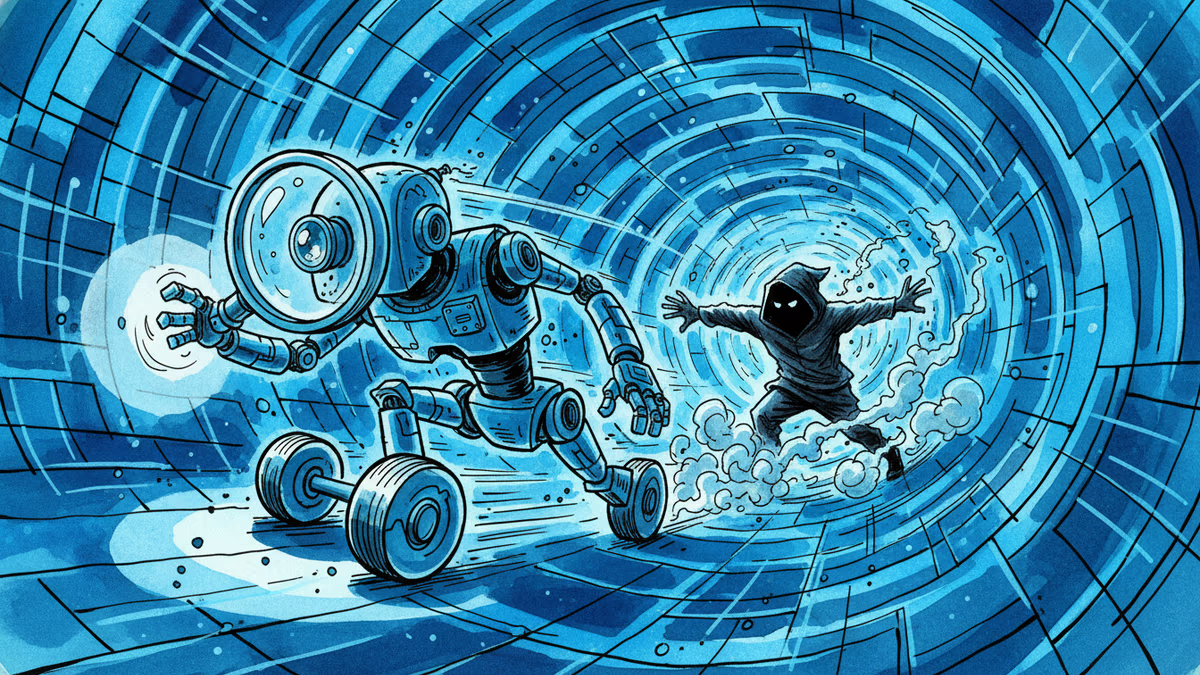
OpenAI's new Daybreak initiative uses the Codex AI agent to find and patch security vulnerabilities before attackers do—putting it in direct competition with Anthropic's secretive Claude Mythos.
OpenAI has reorganized for the second time in a month, merging ChatGPT and Codex into a single agentic platform under president Greg Brockman's unified product leadership.
After two weeks of witnesses calling him a liar, OpenAI CEO Sam Altman testified in his own defense, claiming Elon Musk tried to kill the company twice.
Sam Nelson, 19, died after following ChatGPT's advice to mix Kratom and Xanax. His parents are suing OpenAI for wrongful death, raising urgent questions about AI trust, liability, and design.
OpenAI's new Daybreak initiative uses the Codex AI agent to find and patch security vulnerabilities before attackers do—putting it in direct competition with Anthropic's secretive Claude Mythos.
Thoughts
Share your thoughts on this article
Sign in to join the conversation