
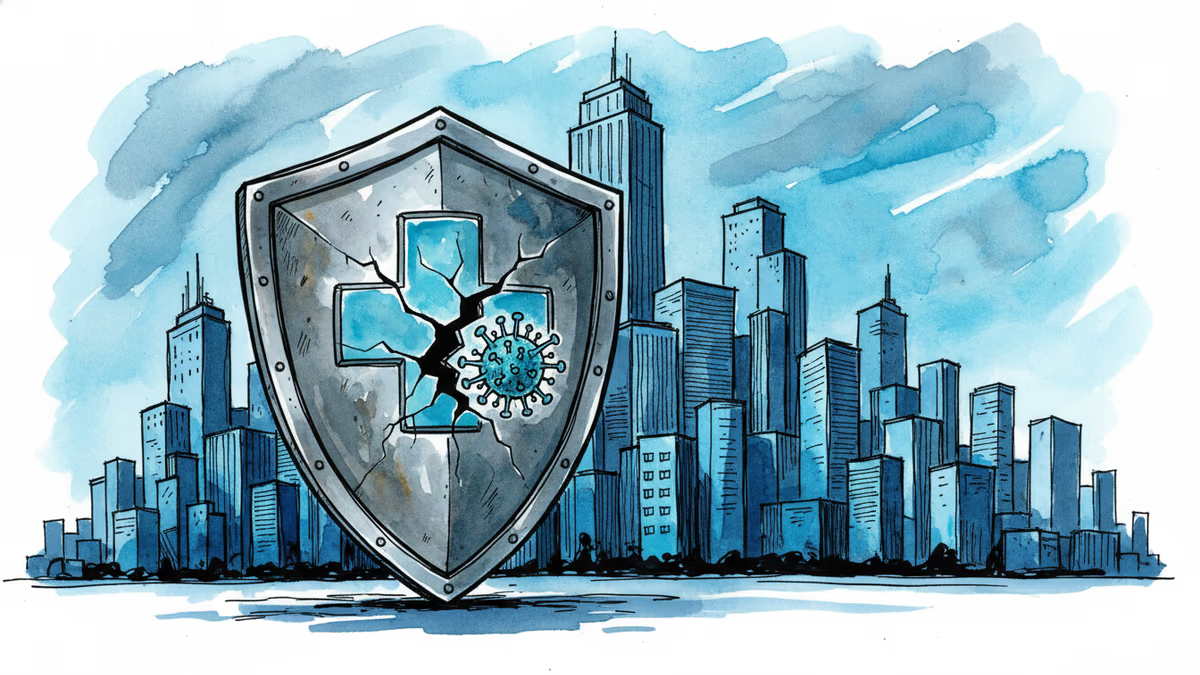
The Ebola Strain the World Has No Vaccine For
The WHO declared an Ebola emergency in May 2026. But this outbreak is caused by the Bundibugyo strain — and no approved vaccine or treatment exists for it. Here's why that changes everything.
The world has an Ebola vaccine. It just doesn't work on this Ebola.
On May 17, 2026, the World Health Organization declared the Ebola outbreak spreading across the Democratic Republic of Congo and Uganda a "public health emergency of international concern" — the organization's highest alert level. The same day, the U.S. Centers for Disease Control and Prevention began evacuating Americans exposed to the virus in Congo. One American doctor, classified as high-risk, was flown to Germany. By May 18, the U.S. had banned entry to anyone who had recently traveled to affected countries.
The numbers at the time of declaration: 246 suspected cases, 80 deaths. And no approved vaccine. No approved treatment.
A Familiar Name, a Different Threat
Ebola isn't a single virus. It's a family — six known species grouped under orthoebolaviruses — and three cause most major outbreaks: Zaire, Sudan, and Bundibugyo. Over the past decade, the world built its defenses around Zaire, the most common. The licensed vaccine Ervebo targets it. So do the monoclonal antibody treatments developed in the wake of the 2014–2016 West Africa outbreak that killed more than 11,000 people.
This outbreak is caused by the Bundibugyo virus. First identified in Uganda in 2007, it has triggered only three documented outbreaks in recorded history. This one is the largest.
The problem isn't just that Bundibugyo is rare. It's that its genetic structure diverges significantly from other orthoebolaviruses — enough that scientists flagged it as a vaccine design challenge back when it was first described. An immune response trained against Zaire is unlikely to protect against Bundibugyo. Experimental vaccines have shown promise in primates, but none have cleared human trials. When this outbreak was declared, the medical toolkit was essentially empty.
The Outbreak That Grew in the Dark
The most alarming feature of this crisis isn't the virus — it's how large it had already grown before anyone knew what they were dealing with.

The WHO didn't identify Bundibugyo as the cause until May 15. By then, 246 cases had already been recorded. For context, recent Zaire outbreaks were often declared with only a handful of community deaths. This one had been spreading invisibly for weeks.
The reason is technical and consequential: the rapid field tests used for frontline screening are calibrated for the Zaire species. Early samples in this outbreak tested negative for Ebola. It took genomic sequencing at a reference laboratory in Kinshasa to identify the actual strain. When an outbreak spreads undetected, contact tracing is always running one step behind the virus.
Geography made things worse. Ituri province, the epicenter, shares porous borders with Uganda and South Sudan and sits in the middle of a prolonged humanitarian and security crisis driven by armed conflict. Mining towns with constant worker turnover are among the hot spots. The population moves — and so does the virus.
Then came the detail that shifted the outbreak from a regional concern to a global one: cases reached Kampala, Uganda's capital, home to more than 1.5 million people and a major international airport. Public health officials have long distinguished between outbreaks that stay rural — containable — and those that reach transit hubs. Kampala is a transit hub. That distinction may no longer apply here.
What Happens When the Playbook Doesn't Apply
With no approved vaccine or antiviral, the response falls entirely on classic outbreak control: early detection, case isolation, contact tracing, safe burials, infection control, community engagement. These methods work. They are also labor-intensive, relationship-dependent, and fragile in conflict zones where health workers can't always safely operate.
A revealing early detail: among the first confirmed cases were four health workers, who died within days. Transmission inside health facilities — the classic pattern when protective equipment and infection-control protocols break down — was present from the start.
Supportive care still saves lives. Fluids, blood pressure management, oxygen — even without a targeted drug, these interventions improve survival. But their effectiveness scales with the quality of the health system delivering them, and Ituri's system is under severe strain.
Some epidemiologists have raised a harder question: did cuts to global health funding slow early detection of this outbreak? The delay between first cases and strain identification is the kind of gap that surveillance infrastructure is supposed to close. Whether budget decisions contributed to that gap is, for now, an open question — but not an irrelevant one.
The Americans evacuated from Congo are, in one sense, a reassuring sign: the system caught them, assessed their risk, and moved them. In another sense, they're a reminder of something more structural. The Ebola defense the world spent a decade building was designed around one species of a virus that comes in several. That's not a failure of science — it's a reflection of how outbreak preparedness gets prioritized. Vaccines get funded for the threats that have already proven catastrophic at scale. Bundibugyo hadn't, until now.
This content is AI-generated based on source articles. While we strive for accuracy, errors may occur. We recommend verifying with the original source.
Related Articles
The MV Hondius hantavirus outbreak isn't the real story. The real story is how media fear-framing is obscuring the slow collapse of the global public health system designed to protect us.
The UK's generational tobacco ban—permanent for anyone born after 2009—isn't just a health policy. It reveals how decades of 'grudging toleration' quietly build the case for outright bans, with implications for social media and gambling apps.
Trump withdrew Casey Means's surgeon general nomination, signaling the limits of the MAHA movement. What happens when wellness culture tries to become public health policy?
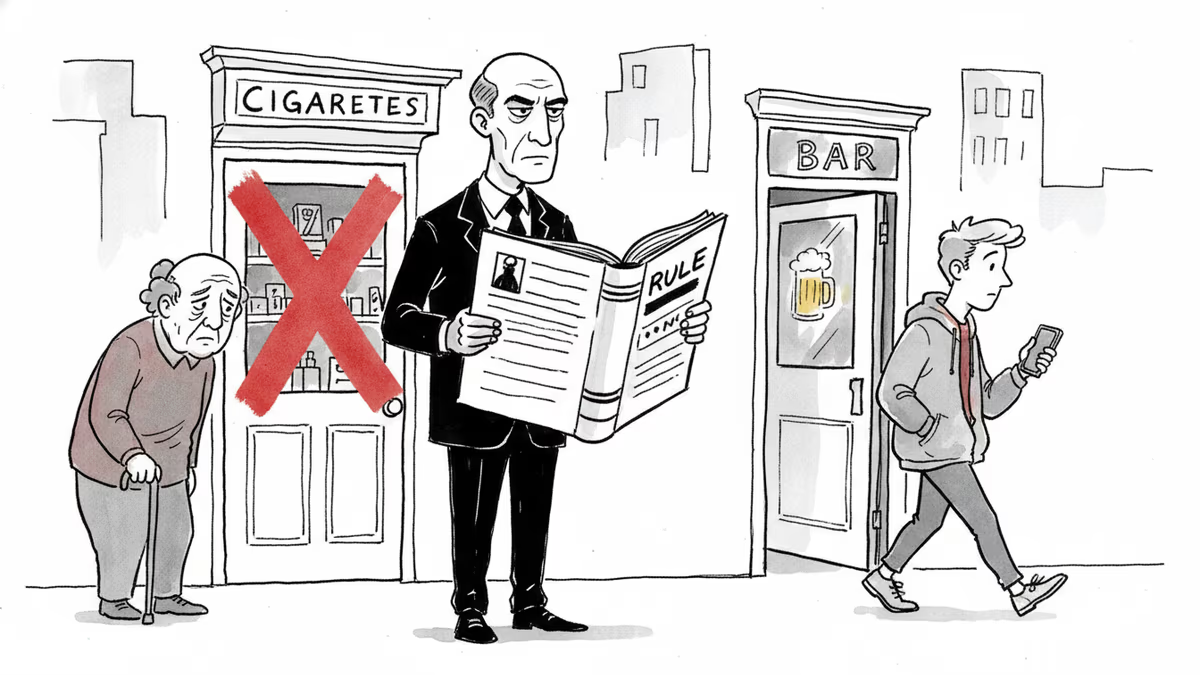
The UK just banned tobacco sales to anyone born after 2009, forever. It's framed as a public health win. But what happens when good intentions collide with bedrock liberties?
The MV Hondius hantavirus outbreak isn't the real story. The real story is how media fear-framing is obscuring the slow collapse of the global public health system designed to protect us.
The UK's generational tobacco ban—permanent for anyone born after 2009—isn't just a health policy. It reveals how decades of 'grudging toleration' quietly build the case for outright bans, with implications for social media and gambling apps.
Trump withdrew Casey Means's surgeon general nomination, signaling the limits of the MAHA movement. What happens when wellness culture tries to become public health policy?
The UK just banned tobacco sales to anyone born after 2009, forever. It's framed as a public health win. But what happens when good intentions collide with bedrock liberties?
Thoughts
Share your thoughts on this article
Sign in to join the conversation