
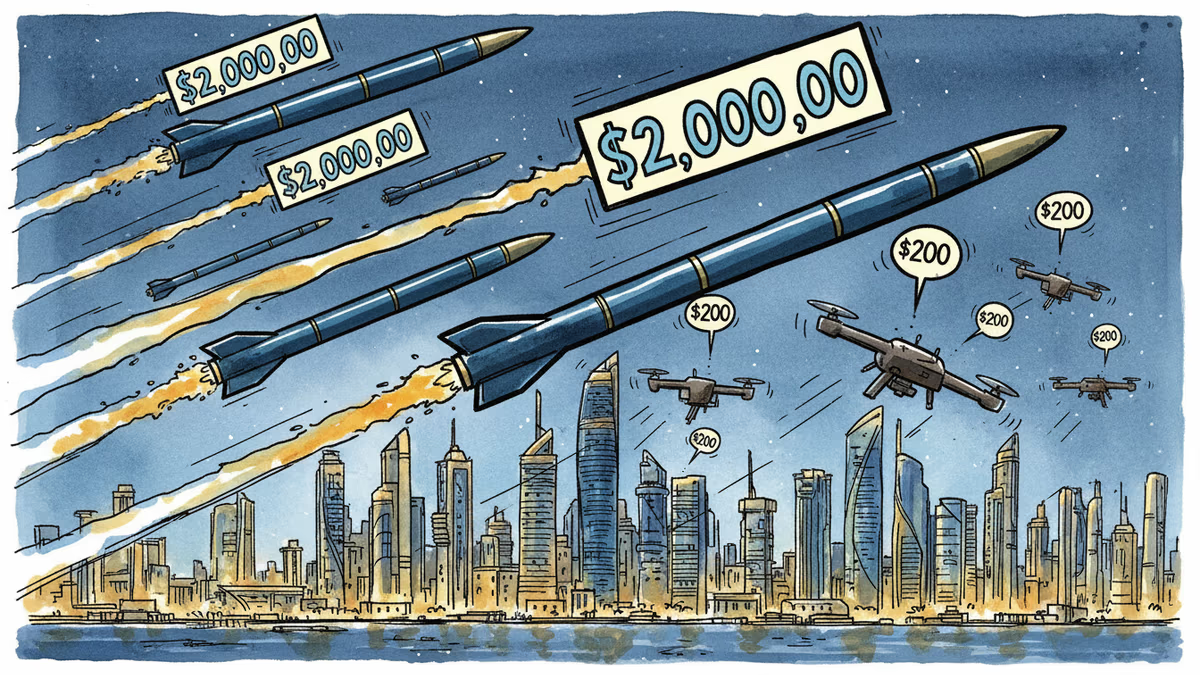
When $Million Interceptors Meet $Thousand Drones
Gulf states' missile defense systems faced their biggest test as Iran launched hundreds of projectiles. High interception rates couldn't prevent all casualties—revealing the economics of modern warfare.
The Night Sky Became a Battlefield—And Everyone Filmed It
Across the Gulf last week, residents watched missiles and drones streak through darkness, followed by brilliant flashes as defense systems engaged them. In Dubai and Abu Dhabi, interception videos spread rapidly on social media, making normally invisible security architecture suddenly visible to millions.
Authorities quickly urged people to stop filming, warning that such footage could reveal sensitive defense information. But the damage was done—the world had witnessed the largest real-time test of Gulf missile defense systems in recent history.
Iran launched waves of missiles and drones at several Gulf countries, retaliating for US-Israeli strikes that killed Supreme Leader Ali Khamenei. The attacks triggered coordinated air defense responses across the region, from the UAE to Kuwait and Bahrain.
The results reveal both the capabilities and limitations of modern missile defense.
The UAE's Layered Shield: Impressive, But Not Perfect
The UAE operates perhaps the most sophisticated air defense network in the Gulf. At high altitude, THAAD systems from Lockheed Martin intercept ballistic missiles through direct impact—no explosive warhead needed, just kinetic energy. Lower down, Patriot batteries from Raytheon provide another defensive layer.
The numbers look impressive: 196 ballistic missiles detected, 181 intercepted—a 92% success rate. But two missiles still reached UAE territory, killing three people and injuring 78 others, mostly from falling debris rather than direct hits.
Amazon Web Services facilities in the UAE and Bahrain were directly struck, causing structural damage and power disruptions—a reminder that even cloud infrastructure isn't immune to kinetic warfare.
"I would assess Gulf missile defense performance as tactically capable but strategically stressed," says Andreas Krieg, associate professor at King's College London's Department of Defense Studies.

The Economics Problem: David vs. Goliath, Reversed
Here's the strategic challenge: interceptor missiles cost millions of dollars each, while many attack drones cost a fraction of that amount. In prolonged conflicts, this math becomes unsustainable.
"Once you get into repeated raids, mixed salvos, and long-duration drone pressure, the limiting factor becomes magazine depth, resupply speed, and the economics of using very expensive interceptors against cheap, persistent threats," Krieg explains.
Saudi Arabia faced similar dynamics. The kingdom intercepted multiple waves of missiles and drones, but attacks on the Ras Tanura oil refinery still caused fires from falling debris. Days later, the complex was hit again—highlighting how even successful interceptions can't eliminate all risks.
Small States, Big Vulnerabilities
Qatar reported intercepting 98 out of 101 ballistic missiles—an impressive rate. But geography matters. In Bahrain, a drone struck a building in the capital Manama, killing one person. The island nation's small size leaves little buffer between interceptions and populated areas.
Kuwait also activated its Patriot systems, though falling debris from successful interceptions still caused damage and casualties. Even when the technology works as designed, fragments from destroyed missiles can be deadly.
Oman took a different approach, relying on Norwegian NASAMS rather than US Patriot systems. The country's Duqm commercial port was hit by drone attacks, and oil tankers near the Strait of Hormuz were targeted—extending the conflict beyond military sites to critical economic infrastructure.
Integration vs. Independence
The Gulf's defense architecture shows both coordination and fragmentation. Early warning systems, like the AN/FPS-132 radar at Qatar's Al Udeid Air Base, contribute to region-wide threat detection. Intelligence flows freely between allies.
But when it comes to pulling the trigger, each country decides for itself. "Integration is strongest at the 'sense' and 'share' layers," Krieg notes. "Where gaps persist is at the 'shoot' layer—engagement authorities remain largely national decisions."
This creates coordination challenges when missiles cross multiple airspaces within minutes.
Authors
Related Articles
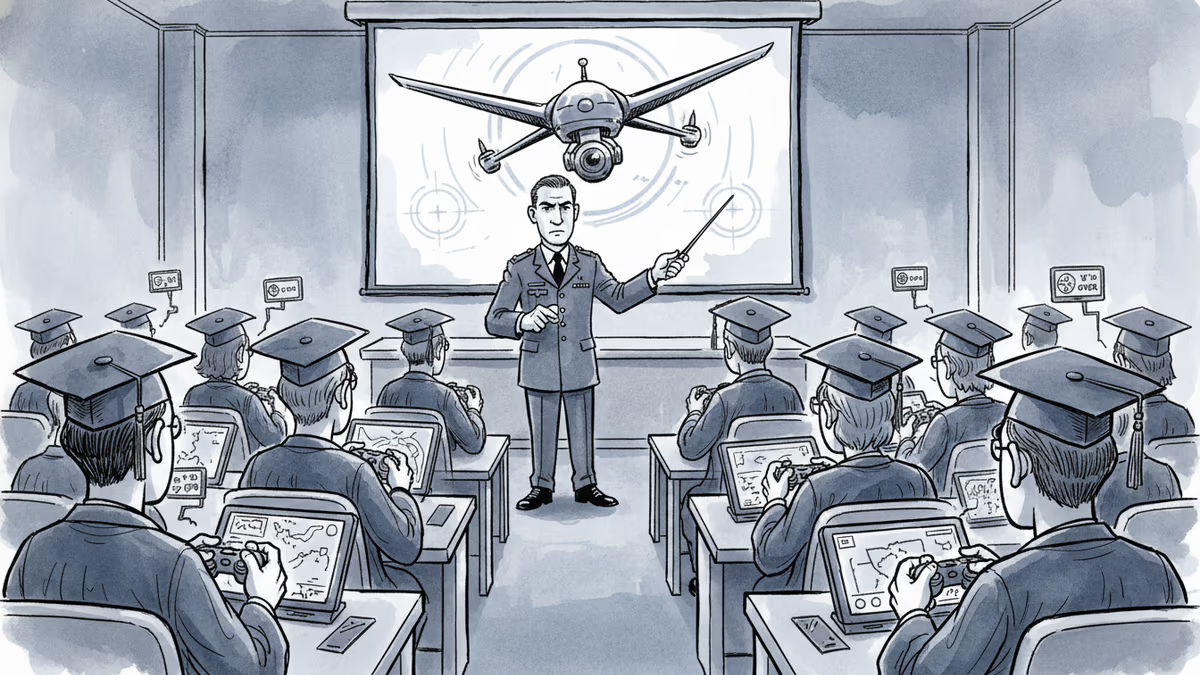
Over 270 Russian universities are offering students free tuition and up to $70,000 to serve as military drone pilots. Recruiters promise no frontline risk. The reality is more complicated.
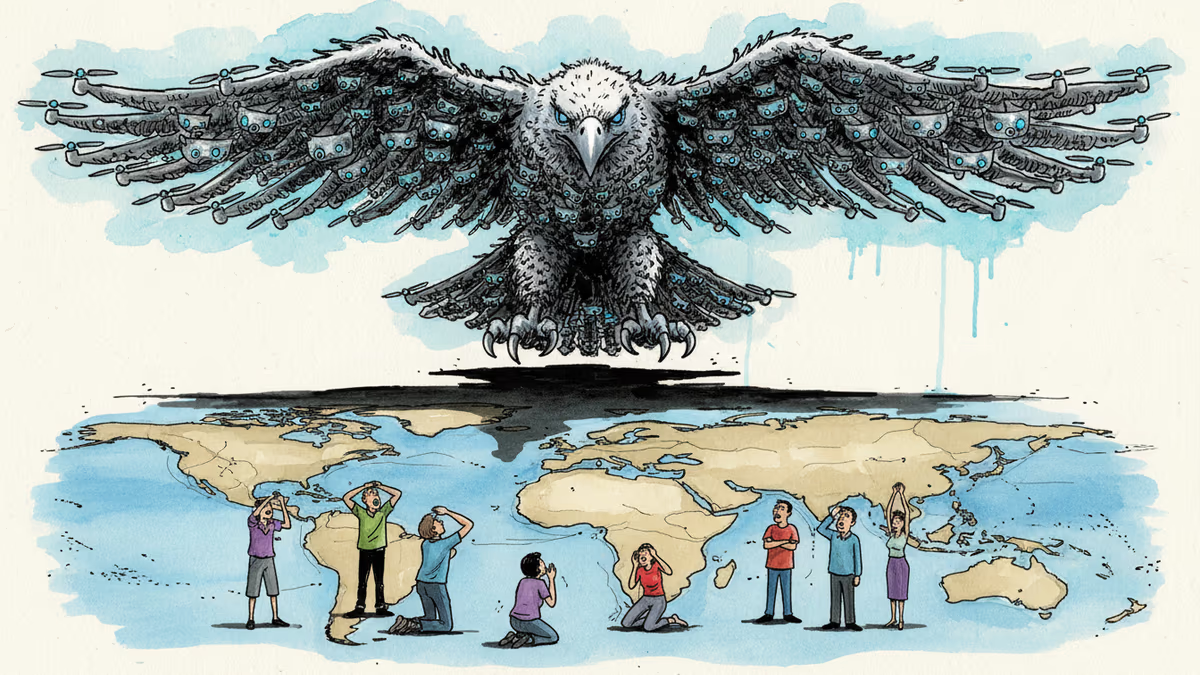
The US defense budget request for FY2027 includes $53.6 billion for drone and autonomous warfare—more than most nations spend on their entire military. What does this mean for global security and the future of war?
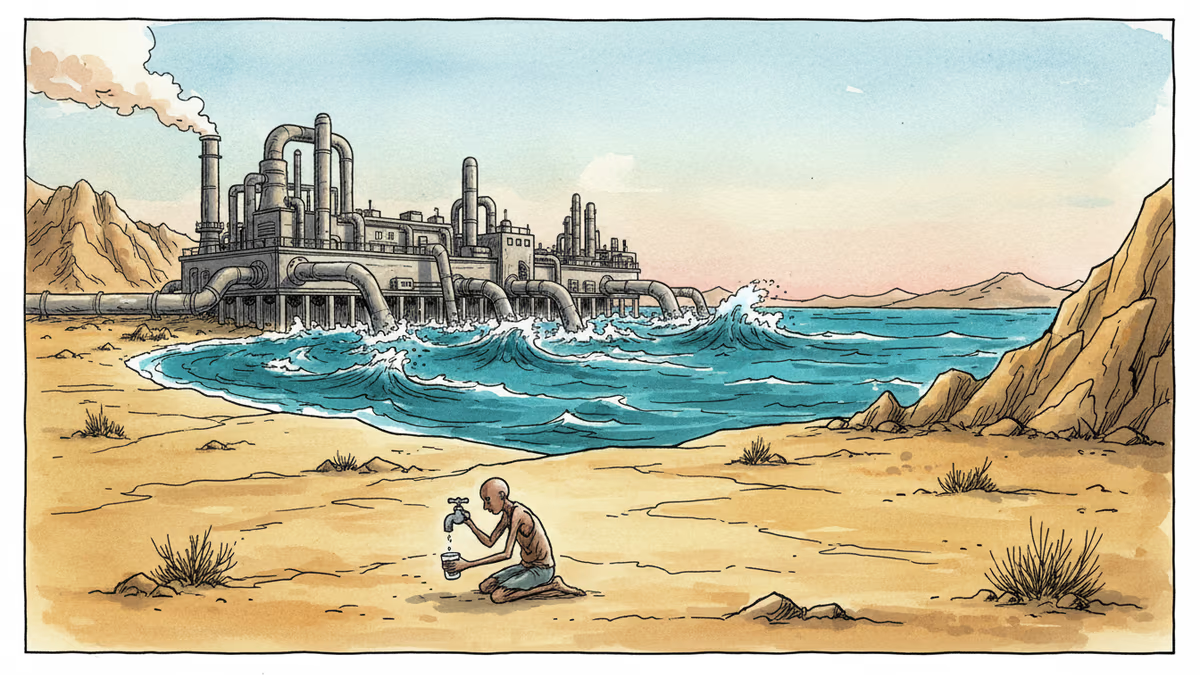
Qatar gets 99% of its drinking water from the sea. As the Middle East prepares to spend $25 billion expanding desalination capacity, this once-niche technology is becoming critical global infrastructure.
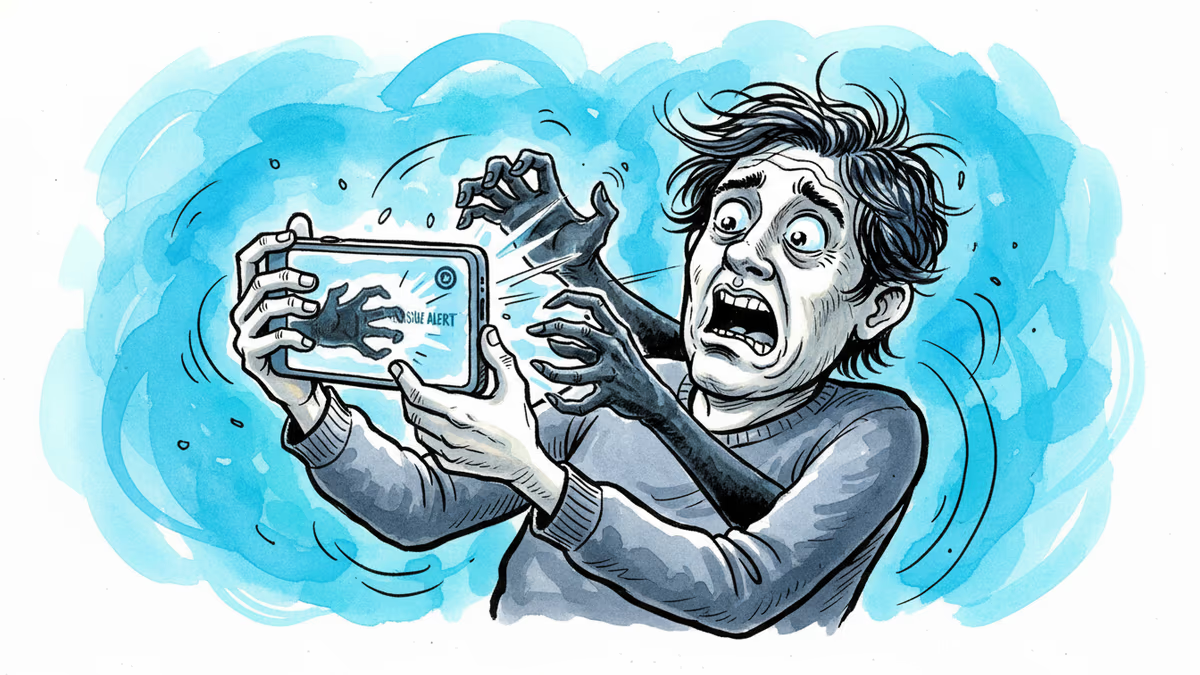
Fake shelter apps, death threats by text, and silent infrastructure attacks. The Iran-Israel-US cyber conflict is reshaping what war looks like in 2026.
Over 270 Russian universities are offering students free tuition and up to $70,000 to serve as military drone pilots. Recruiters promise no frontline risk. The reality is more complicated.
The US defense budget request for FY2027 includes $53.6 billion for drone and autonomous warfare—more than most nations spend on their entire military. What does this mean for global security and the future of war?
Qatar gets 99% of its drinking water from the sea. As the Middle East prepares to spend $25 billion expanding desalination capacity, this once-niche technology is becoming critical global infrastructure.
Fake shelter apps, death threats by text, and silent infrastructure attacks. The Iran-Israel-US cyber conflict is reshaping what war looks like in 2026.
Thoughts
Share your thoughts on this article
Sign in to join the conversation