

Big Tech Faces Its First Jury Trial Over Social Media Addiction
Meta and YouTube face their first jury trial over alleged social media addiction design. With 1,000+ lawsuits pending, this bellwether case could reshape how platforms operate and their liability for user harm.
Over 1,000 lawsuits are waiting in the wings. This week's trial could determine whether Meta and Google face billions in damages—or walk away unscathed.
Nineteen-year-old K.G.M. claims Meta and YouTube deliberately designed addictive features that pushed her toward depression, anxiety, self-harm, and suicidal thoughts. Her lawsuit argues that infinite scroll and autoplay weren't just convenient features—they were calculated tools to keep users hooked, regardless of the psychological cost.
For the first time, social media giants can't just apologize to Congress and promise to do better. They have to convince 12 jurors they didn't harm kids.
The Stakes Couldn't Be Higher
This "bellwether" case will set the tone for hundreds of similar lawsuits. If the jury sides with K.G.M., it won't just mean massive payouts—it could force platforms to fundamentally redesign how they capture and hold user attention.
Internal Meta documents have already revealed damaging evidence. The company knew about Instagram's negative effects on teens but continued developing more engaging features while downplaying the risks publicly. The question now is whether a jury will see this as corporate negligence or simply business as usual.
The legal strategy centers on "design defect" claims—arguing that platforms aren't neutral hosts but active architects of user behavior. If successful, this approach could shatter the traditional defense that platforms merely provide tools while users make their own choices.

Beyond Individual Harm
The implications stretch far beyond one teenager's experience. Public health advocates argue that social media addiction has become a societal crisis, with rising rates of teen depression and suicide correlating with smartphone adoption. Critics point to features like streak counts, push notifications, and algorithmic feeds as deliberately manipulative.
But platforms argue they've made significant investments in user safety, including time limits, content warnings, and mental health resources. They maintain that correlation doesn't prove causation—and that millions of users benefit from social connection and creative expression online.
The Regulatory Ripple Effect
A victory for plaintiffs could accelerate regulatory action worldwide. The EU's Digital Services Act already requires platforms to assess risks to minors. A US legal precedent establishing "design liability" could push lawmakers toward similar legislation domestically.
Investors are watching closely. If platforms face liability for user harm, it could fundamentally alter their business models. The attention economy—built on maximizing engagement time—might need to prioritize user wellbeing over ad revenue.
What's Really on Trial
This case isn't just about one company or one user. It's about whether the digital tools that shape modern life should be held to the same safety standards as cars, medicines, or toys. Should platforms that profit from user attention bear responsibility when that attention becomes compulsive?
Authors
Related Articles

Google's Gmail Live lets you ask your inbox questions out loud. Announced at I/O 2026, it's AI's pitch to skeptics — and a reminder of how much Google already knows about you.
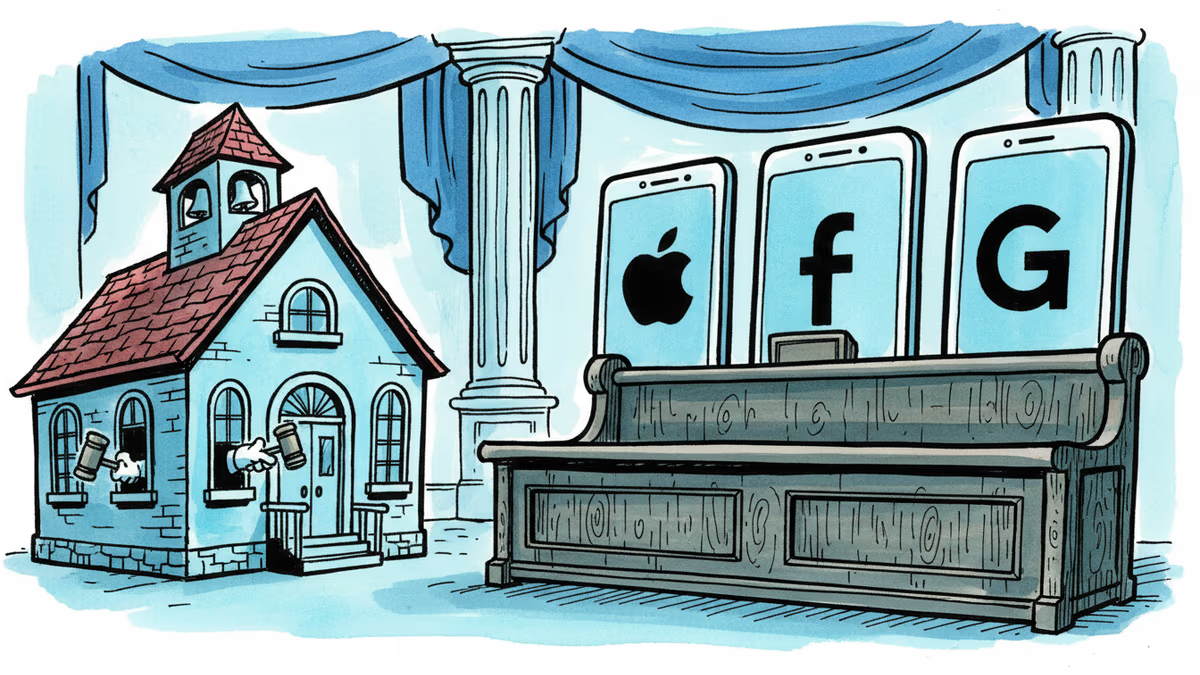
Snap, YouTube, and TikTok settled a landmark school district lawsuit over social media addiction. With 1,000+ similar cases pending, this could reshape Big Tech's liability landscape.

OpenAI has reorganized for the second time in a month, merging ChatGPT and Codex into a single agentic platform under president Greg Brockman's unified product leadership.
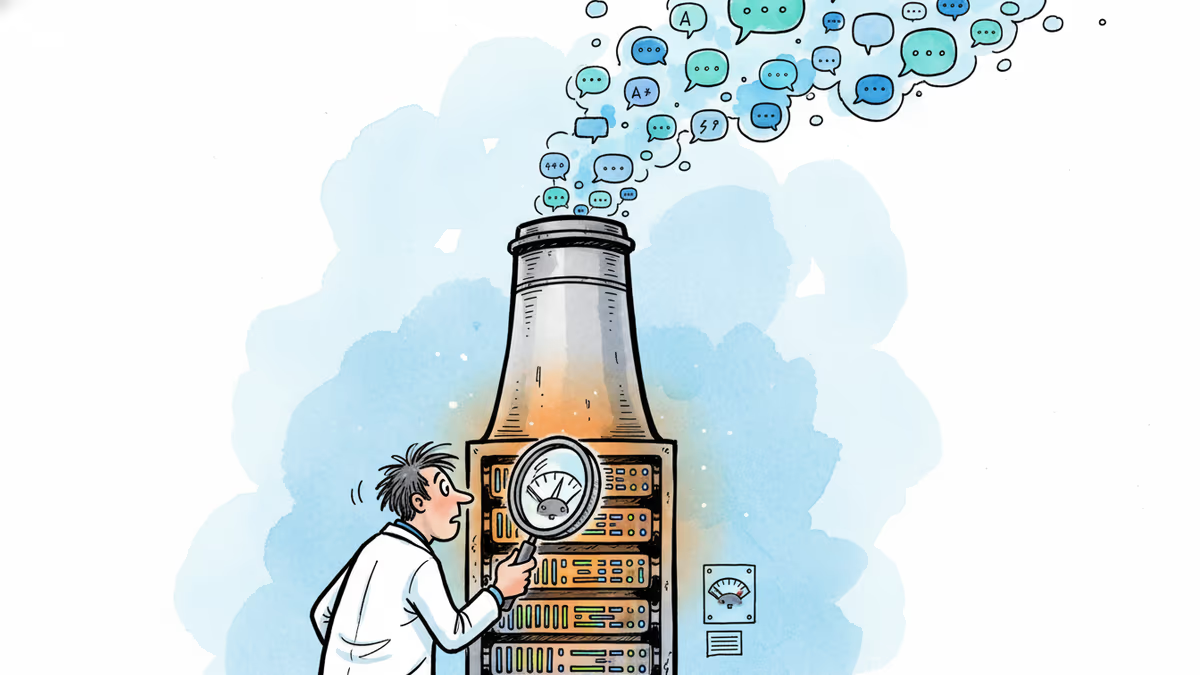
AI sustainability researcher Sasha Luccioni is launching a new venture to push for energy transparency in AI. Here's why Big Tech keeps the numbers hidden—and what's starting to change.
Google's Gmail Live lets you ask your inbox questions out loud. Announced at I/O 2026, it's AI's pitch to skeptics — and a reminder of how much Google already knows about you.
Snap, YouTube, and TikTok settled a landmark school district lawsuit over social media addiction. With 1,000+ similar cases pending, this could reshape Big Tech's liability landscape.
OpenAI has reorganized for the second time in a month, merging ChatGPT and Codex into a single agentic platform under president Greg Brockman's unified product leadership.
AI sustainability researcher Sasha Luccioni is launching a new venture to push for energy transparency in AI. Here's why Big Tech keeps the numbers hidden—and what's starting to change.
Thoughts
Share your thoughts on this article
Sign in to join the conversation