
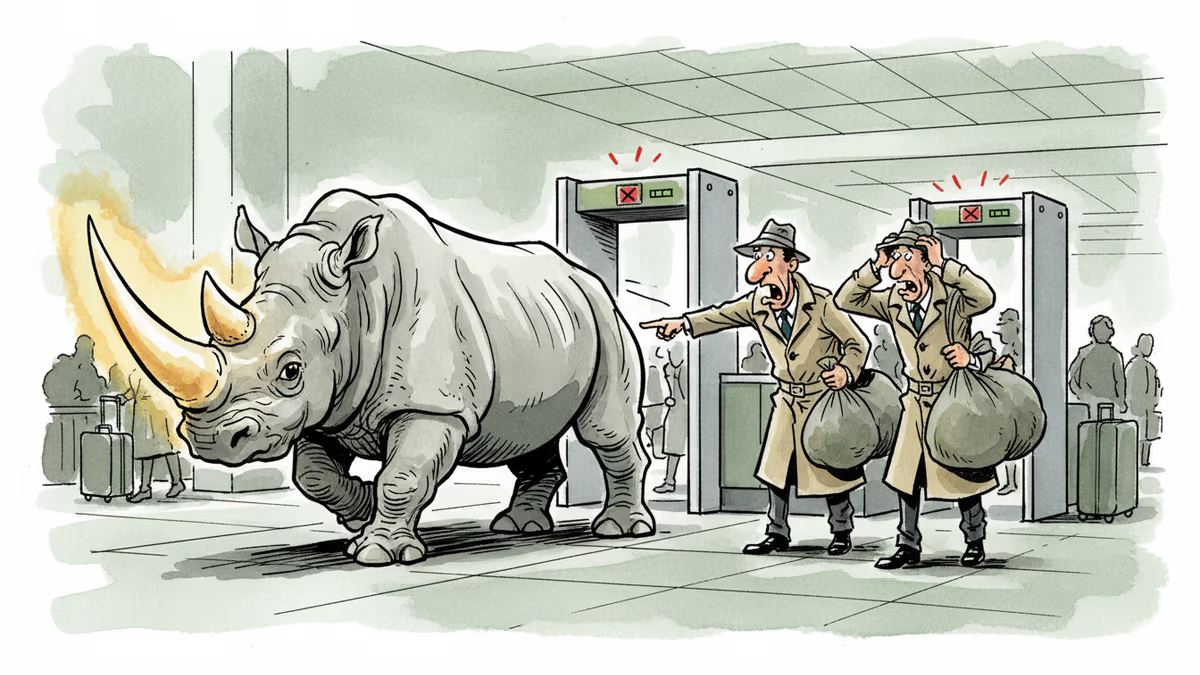
Why Conservationists Are Making Rhinos Radioactive
With poachers killing hundreds of rhinos annually and wildlife trafficking worth $20 billion, researchers are injecting radioactive isotopes into rhino horns. Can technology finally turn the tide against sophisticated criminal networks?
Every year, poachers shoot hundreds of rhinos. Fishing crews haul millions of sharks out of protected seas. Smugglers carry countless animals and plants across borders. With an annual value of $20 billion, according to Interpol, wildlife trafficking is the world's fourth-most-lucrative criminal enterprise after drugs, weapons, and human trafficking.
Now researchers in South Africa have a radical solution: make rhino horns radioactive.
Horns That Glow on Scanners
Scientists at the University of the Witwatersrand are injecting tiny amounts of radioactive isotopes directly into rhino horns. The goal is simple: make them detectable by radiation scanners at airports and ports worldwide. No matter how cleverly smugglers hide them, over 11,000 radiation detection devices globally can spot them.
The isotopes are harmless to rhinos but pose health risks to humans with prolonged exposure. For end consumers grinding horns into traditional medicine, it's a powerful deterrent message.
The team has already treated 20 rhinos with surprisingly little stress to the animals and no impact on horn growth.
David vs. Digital Goliath
But radioactive horns are just one weapon in an escalating tech war. The environmental guardians facing these criminal networks—scattered alliances of rangers, community groups, and law enforcement officers—have long been outgunned and underfunded.
Now technology is leveling the playing field:

- AI cameras detect poacher movements in real-time
- Drones patrol vast protected areas
- Satellite data tracks illegal fishing vessels
- DNA analysis traces seized animals back to their origins
Kenya Wildlife Service reported a 60% drop in poaching incidents after implementing AI systems.
The Human Cost of Innovation
Yet this tech revolution raises uncomfortable questions. Some animal rights groups call injecting rhinos with radioactive material "inherently abusive." Others worry it could trigger more violent responses from increasingly desperate smugglers.
There's also the economics. Rhino horn sells for $60,000 per kilogram in Asian markets—more expensive than gold. As long as such economic incentives exist, critics argue, technological solutions treat symptoms, not causes.
"Tech helps, but we need demand reduction through education," says a International Union for Conservation of Nature expert. "You can't engineer away human greed."
The Transparency Problem
What's often missing from these high-tech conservation stories is transparency about what actually works. Success rates are rarely published. Costs per animal saved aren't disclosed. The human labor behind "automated" systems—from drone operators to data analysts—remains invisible.
This mirrors broader issues in tech-driven solutions to complex social problems. The focus on gadgets can obscure the need for systemic change: addressing poverty that drives people to poaching, corruption that enables smuggling networks, and consumer cultures that create demand.
Authors
Related Articles
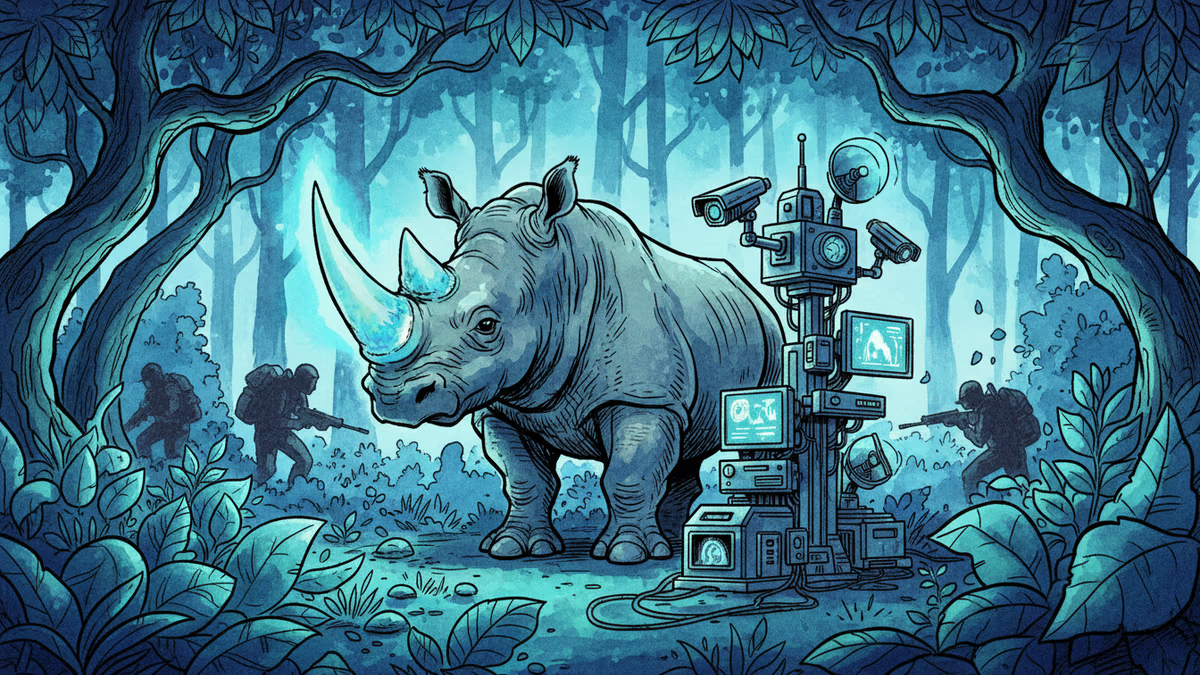
A $20 billion criminal industry meets cutting-edge tech. From radioactive rhino horns to instant DNA tests, five innovations changing how we protect wildlife from trafficking.

Colombian authorities discovered the world's first autonomous narco submarine, equipped with Starlink and AI navigation. What happens when drug trafficking meets cutting-edge technology?

Anthropic's Sonnet 4.6 launches with 1 million token context window. Why AI companies are shifting from intelligence competition to memory competition and what it means.

Gore Verbinski's new sci-fi film tackles humanity's relationship with screens. But can cinema cure what cinema helped create?
A $20 billion criminal industry meets cutting-edge tech. From radioactive rhino horns to instant DNA tests, five innovations changing how we protect wildlife from trafficking.
Colombian authorities discovered the world's first autonomous narco submarine, equipped with Starlink and AI navigation. What happens when drug trafficking meets cutting-edge technology?
Anthropic's Sonnet 4.6 launches with 1 million token context window. Why AI companies are shifting from intelligence competition to memory competition and what it means.
Gore Verbinski's new sci-fi film tackles humanity's relationship with screens. But can cinema cure what cinema helped create?
Thoughts
Share your thoughts on this article
Sign in to join the conversation