

The Future Defined: MIT 10 Breakthrough Technologies 2026 Unveiled
Discover the MIT 10 Breakthrough Technologies 2026 list, from Meta's nuclear power deals to zero-carbon aluminum fuel and global AI regulations.
Can technology still save the world? In an era often clouded by skepticism, MIT Technology Review has released its annual MIT 10 Breakthrough Technologies 2026 list. This selection marks 25 years of identifying innovations that are poised to fundamentally alter our reality and improve planetary health.
MIT 10 Breakthrough Technologies 2026: 25 Years of Innovation
Since its inception, the newsroom has identified 250 technologies as breakthroughs. Fabio Duarte, principal research scientist at MIT Senseable City Lab, points out that analyzing failed technologies is just as crucial as celebrating the winners. Understanding why certain 'breakthroughs' didn't pan out provides a roadmap for the complex evolution of tools that actually stick and make a difference.

Tech Pulse: Nuclear Ambitions and Global Restrictions
- 1st: WhatsApp (Reaches over 3 billion monthly users, nearly half the global population)
- 2nd: Meta (Partnered with 3 nuclear companies to fuel its growing AI infrastructure)
- 3rd: Wealth Tax Proposals (Silicon Valley billionaires face a proposed 5% tax, triggering industry panic)
The landscape isn't all about growth; regulation is tightening. Malaysia and Indonesia became the first countries to block Elon Musk's Grok due to deepfake concerns. Meanwhile, startup Found Energy is launching the largest real-world test of aluminum as a zero-carbon fuel, aiming to transform industrial waste into a power source.
Authors
Related Articles

Florida is investigating OpenAI over alleged links to a mass shooting. As AI firms quietly restrict their most powerful tools, a harder question is taking shape: who's legally responsible when AI helps someone plan violence?
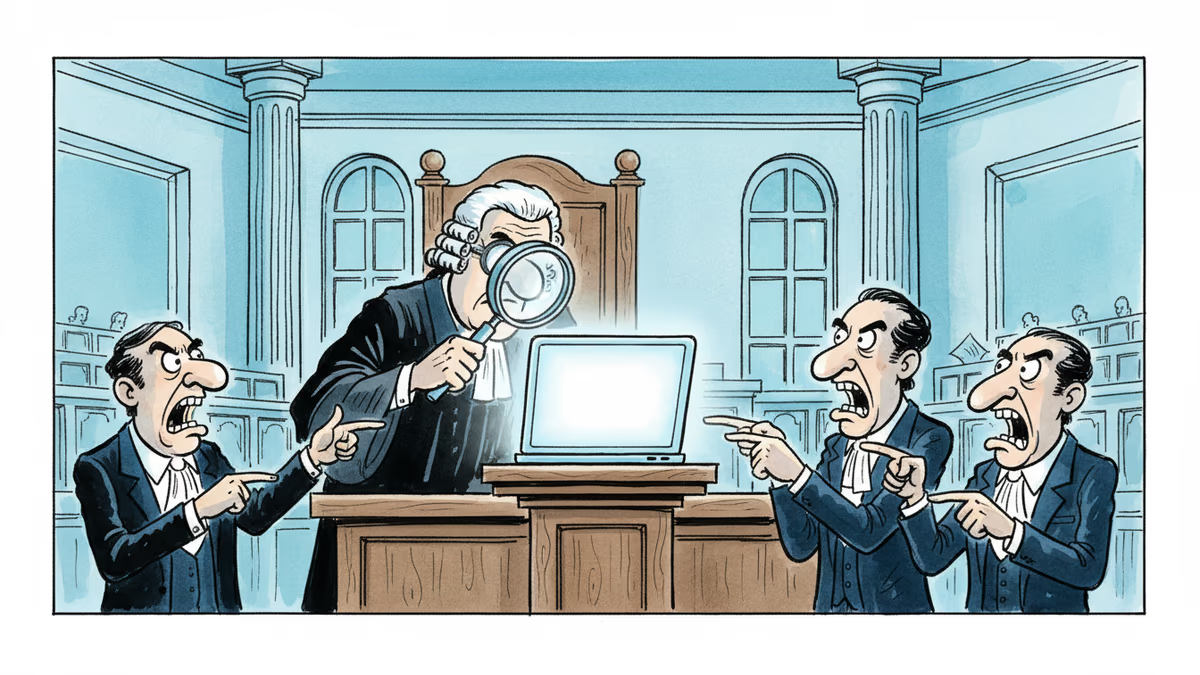
Florida's AG is investigating OpenAI over a campus shooting, child safety risks, and national security concerns. What it means for AI regulation in America.
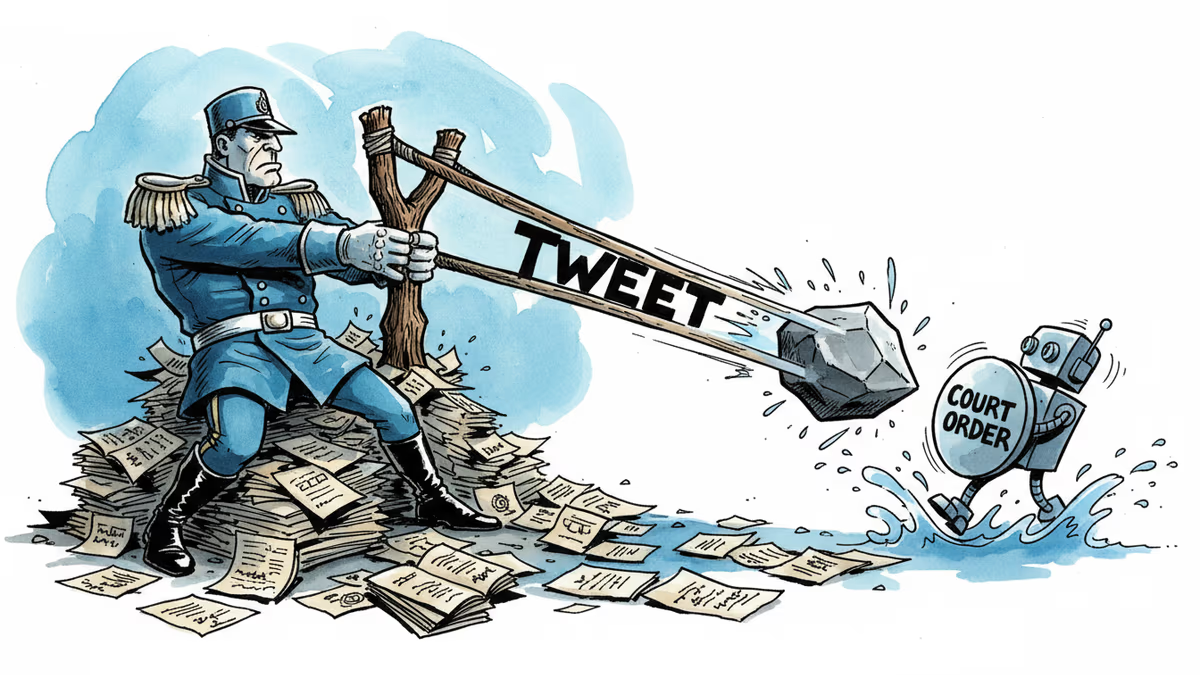
A California judge blocked the Pentagon from labeling Anthropic a supply chain risk. The 43-page ruling exposes a pattern: tweet first, lawyer later. What it means for AI governance and the limits of government leverage.

Three anonymous plaintiffs have filed a federal lawsuit against xAI, alleging Grok's image model generated sexual content from real photos of minors — and that the company skipped the safeguards every other major AI lab uses.
Florida is investigating OpenAI over alleged links to a mass shooting. As AI firms quietly restrict their most powerful tools, a harder question is taking shape: who's legally responsible when AI helps someone plan violence?
Florida's AG is investigating OpenAI over a campus shooting, child safety risks, and national security concerns. What it means for AI regulation in America.
A California judge blocked the Pentagon from labeling Anthropic a supply chain risk. The 43-page ruling exposes a pattern: tweet first, lawyer later. What it means for AI governance and the limits of government leverage.
Three anonymous plaintiffs have filed a federal lawsuit against xAI, alleging Grok's image model generated sexual content from real photos of minors — and that the company skipped the safeguards every other major AI lab uses.
Thoughts
Share your thoughts on this article
Sign in to join the conversation