
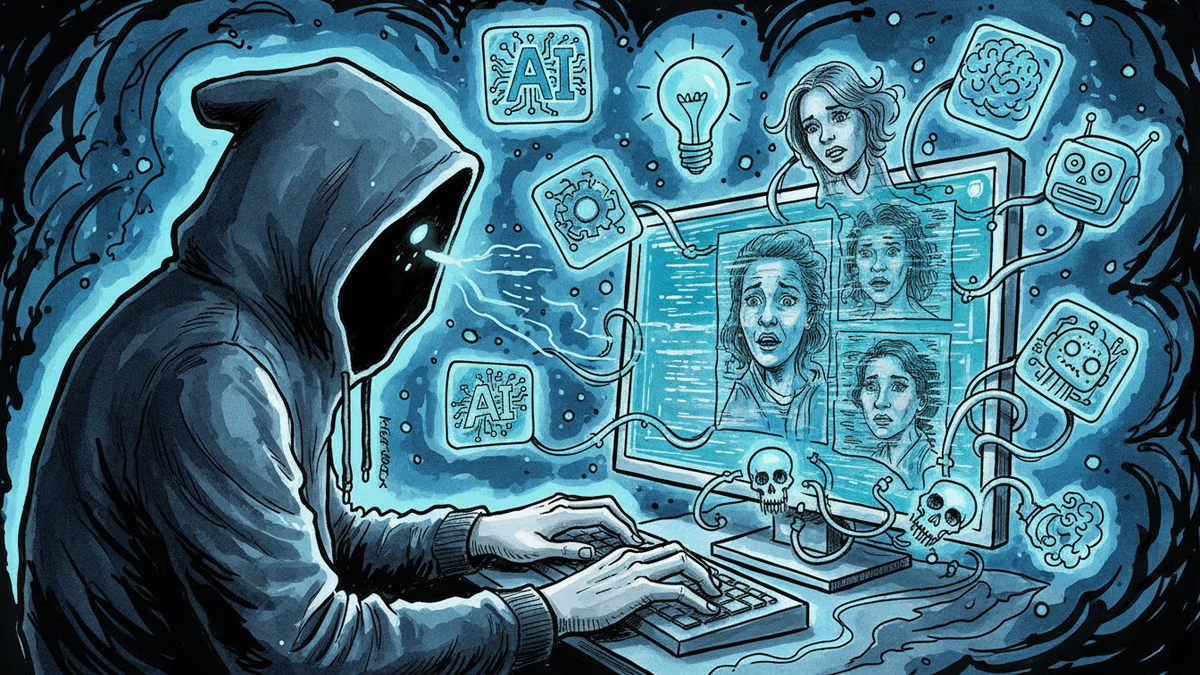
AI Is Making Cybercrime Easier—And It's Just Getting Started
Artificial intelligence is accelerating cyberattacks and fraud, from deepfake scams to automated hacking tools. Here's what security experts say we need to prepare for next.
48 hours. That's how long it now takes hackers to develop malware that used to require weeks of work. AI coding assistants have compressed the timeline for cybercrime, and we're only seeing the beginning.
When Code Assistants Go Dark
The same AI tools helping software engineers write code and debug programs are now serving cybercriminals. ChatGPT, GitHub Copilot, and similar platforms don't discriminate between legitimate development and malicious intent.
For inexperienced attackers, this levels the playing field dramatically. Complex programming knowledge that once served as a natural barrier to entry? No longer needed. A few well-crafted prompts can generate sophisticated attack tools.
Silicon Valley security researchers warn we're approaching "fully automated attacks"—AI systems that can identify vulnerabilities, craft exploits, and execute them without human intervention. But the more immediate threat is already here: AI-accelerated fraud that's happening at unprecedented scale and speed.
The Deepfake Swindle Economy
Criminals are weaponizing deepfake technology with devastating effectiveness. Voice cloning tools that once required Hollywood-level resources are now accessible to anyone with a smartphone and 60 seconds of audio.
The results are staggering. A Hong Kong finance worker was tricked into transferring $25 million after a video call with what appeared to be his company's CFO and colleagues—all deepfakes. Similar cases are emerging globally, with losses climbing into the hundreds of millions.
What's particularly insidious is how these scams exploit our fundamental trust in audiovisual evidence. When your boss calls asking for an urgent wire transfer, and it sounds exactly like them, how do you verify authenticity in real-time?

The Personal Data Feeding Frenzy
The viral OpenClaw project highlights another emerging risk: AI agents that demand unprecedented access to personal data. Users are handing over years of emails, browser histories, and entire hard drives to create personalized AI assistants.
Security experts are "thoroughly freaked out," and for good reason. Even the creator warns non-technical users to stay away. Yet demand is exploding. The convenience of AI assistance is proving irresistible, even when the privacy costs are astronomical.
Major tech companies racing to build AI assistants face a crucial question: How do you deliver personalization without creating massive honeypots for hackers?
The Open Source Paradox
Chinese companies like DeepSeek are releasing AI models that match Western performance at fraction of the cost—and they're open source. Anyone can download, study, and modify these models.
This democratization cuts both ways. While it accelerates legitimate innovation, it also hands powerful AI capabilities to bad actors. Unlike closed systems like ChatGPT, there are no guardrails preventing malicious use.
The implications ripple through geopolitics and cybersecurity. When cutting-edge AI becomes freely available, the traditional advantages of well-funded research labs diminish. Innovation shifts from corporate labs to whoever can most creatively exploit open models.
The Defense Dilemma
Traditional cybersecurity operates on detection and response. But AI-powered attacks may be too fast and too numerous for human-speed defenses. We're entering an era where only AI can fight AI.
Companies like Anthropic are trying to get ahead of this arms race, pledging to minimize the infrastructure impact of their data centers while building more robust safety measures. But the fundamental challenge remains: How do you secure systems against attackers using the same advanced tools?
The Pentagon is pushing AI companies to remove restrictions on their models for classified networks, recognizing that defensive AI needs to match offensive capabilities. But this creates its own risks—what happens when the most powerful AI tools are designed for warfare?
Authors
Related Articles
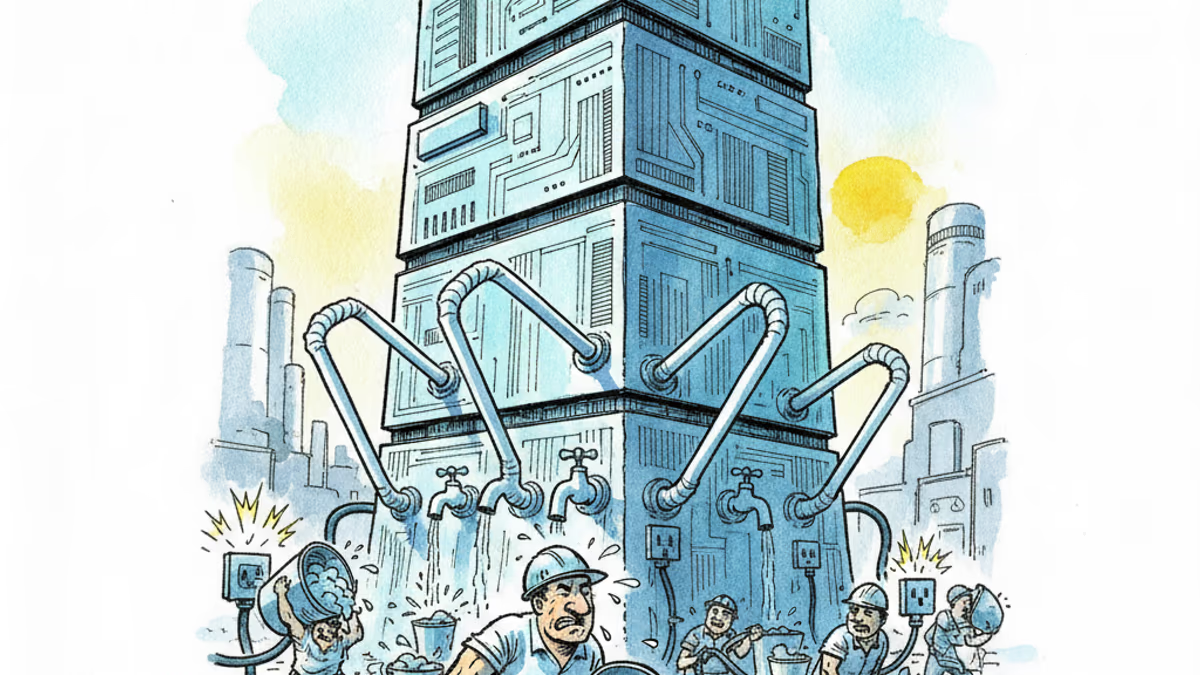
Samsung and SK unveiled a chip and AI investment package worth thousands of trillions of won on June 29. The headline number swings wildly by outlet, but the real contest isn't capital — it's water and power.
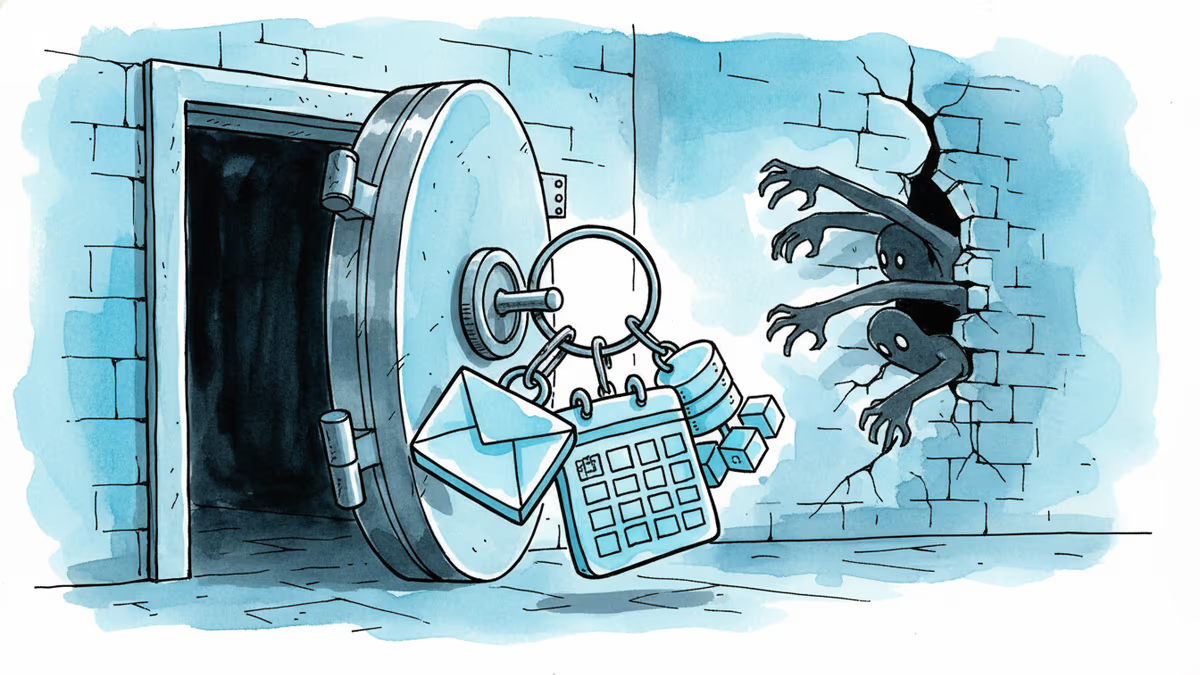
A critical vulnerability in Starlette—downloaded 325 million times per week—puts millions of AI agent servers at risk, exposing stored credentials for email, databases, and third-party services.

Viral videos show 2026 graduates jeering executives who praise AI at commencement ceremonies. It's not just rudeness — it's a signal about who pays for technological optimism.
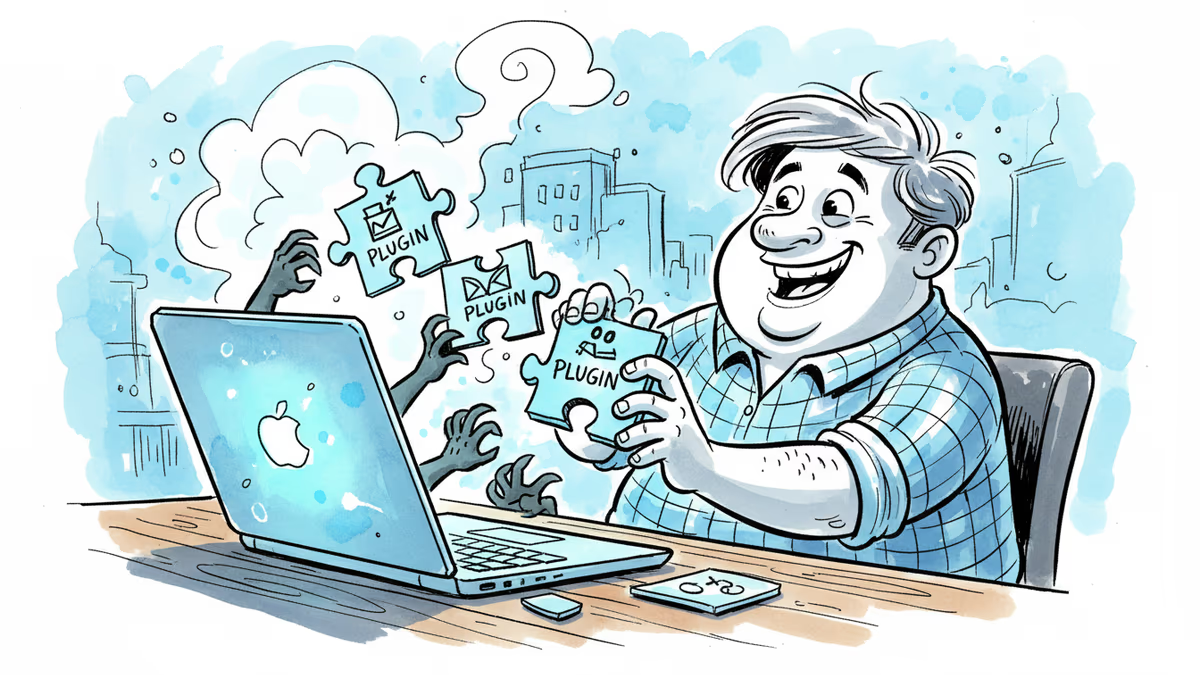
GitHub confirmed hackers stole data from 3,800 internal repositories via a poisoned VS Code extension. Here's why developer tools are now the most dangerous attack surface in tech.
Samsung and SK unveiled a chip and AI investment package worth thousands of trillions of won on June 29. The headline number swings wildly by outlet, but the real contest isn't capital — it's water and power.
A critical vulnerability in Starlette—downloaded 325 million times per week—puts millions of AI agent servers at risk, exposing stored credentials for email, databases, and third-party services.
Viral videos show 2026 graduates jeering executives who praise AI at commencement ceremonies. It's not just rudeness — it's a signal about who pays for technological optimism.
GitHub confirmed hackers stole data from 3,800 internal repositories via a poisoned VS Code extension. Here's why developer tools are now the most dangerous attack surface in tech.
Thoughts
Share your thoughts on this article
Sign in to join the conversation