
The First Human Age Reversal Trial Is About to Begin
A Harvard professor's startup just got FDA approval for the world's first targeted human age reversal experiment. Silicon Valley has invested hundreds of millions in 'reprogramming' technology.
$2.2 billion. That's how much Silicon Valley has poured into the quest for human immortality. And now, the first human trial is about to begin.
FDA Approves World's First Human Age Reversal Trial
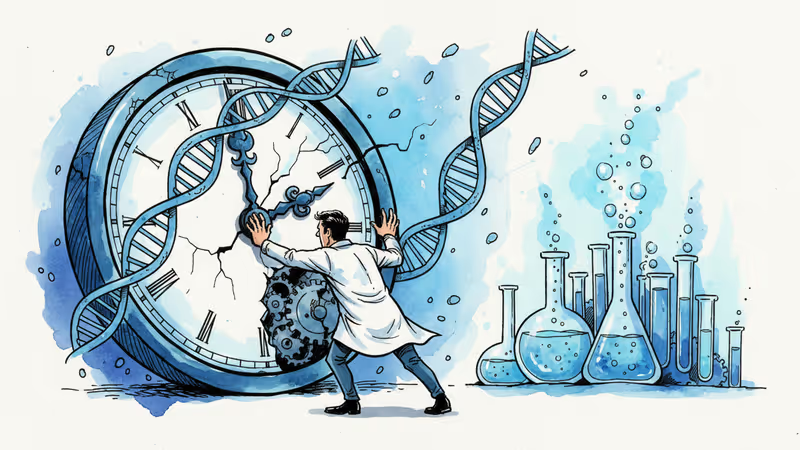
Life Biosciences, a Boston startup founded by Harvard professor and longevity evangelist David Sinclair, has secured FDA approval for humanity's first targeted age reversal experiment. The company plans to begin "shortly," attempting to treat eye disease using a radical concept called "reprogramming."
This isn't just another medical treatment. Reprogramming aims to reset cells to a younger state—like factory-resetting your phone, but for biology. The technology has attracted massive investment from Silicon Valley giants including Altos Labs, New Limit, and Retro Biosciences, backed by tech's biggest names.
In lab experiments, researchers have already restored vision in aged mice by reprogramming their eye cells. The question now is whether this cellular time machine works in humans.
The Science Behind Cellular Time Travel
Reprogramming works by activating specific genes that can erase cellular "age markers" and restore youthful function. Think of it as biological archaeology in reverse—instead of digging up the past, scientists are burying the present to uncover a cell's younger self.
The approach targets fundamental aging processes rather than just treating age-related diseases. If successful, it could shift medicine from managing decline to actively reversing it.
But there's a catch. The same mechanisms that make cells younger can also make them cancerous. It's like giving a car more horsepower—you might go faster, but you also increase the risk of losing control.

Silicon Valley's Longevity Gold Rush
This trial represents the culmination of Silicon Valley's obsession with defeating death. Tech billionaires who've conquered digital worlds are now setting their sights on biology's final frontier.
The investment surge reflects a broader shift in how we view aging. Where previous generations accepted decline as inevitable, today's tech leaders see it as just another engineering problem to solve.
Altos Labs alone has raised over $3 billion to pursue cellular reprogramming. Amazon's Jeff Bezos and Google's Sergey Brin are among the high-profile backers betting that aging is optional.
The Regulatory Tightrope
The FDA's approval is significant because it treats aging as a legitimate medical target, not just a cosmetic concern. By focusing on eye disease, Life Biosciences has found a regulatory pathway that sidesteps the thornier question of whether aging itself should be classified as a disease.
This strategic approach could pave the way for broader applications. If reprogramming proves safe and effective for vision, other organs might follow.
However, regulators remain cautious. The potential for unintended consequences—including cancer—means any human trials will be closely monitored and likely limited in scope initially.
Beyond the Hype: Real-World Implications
If successful, age reversal technology could fundamentally reshape society. Retirement might become obsolete if people can maintain youthful bodies and minds indefinitely. Social security systems designed around 20th-century lifespans would need complete overhauls.
But accessibility remains a crucial question. Will age reversal be available to everyone, or will it create a new form of inequality where the wealthy live forever while others age normally?
The technology also raises profound philosophical questions about what it means to be human. If we can reset our biological clocks at will, do we lose something essential about the human experience?
Authors
Related Articles
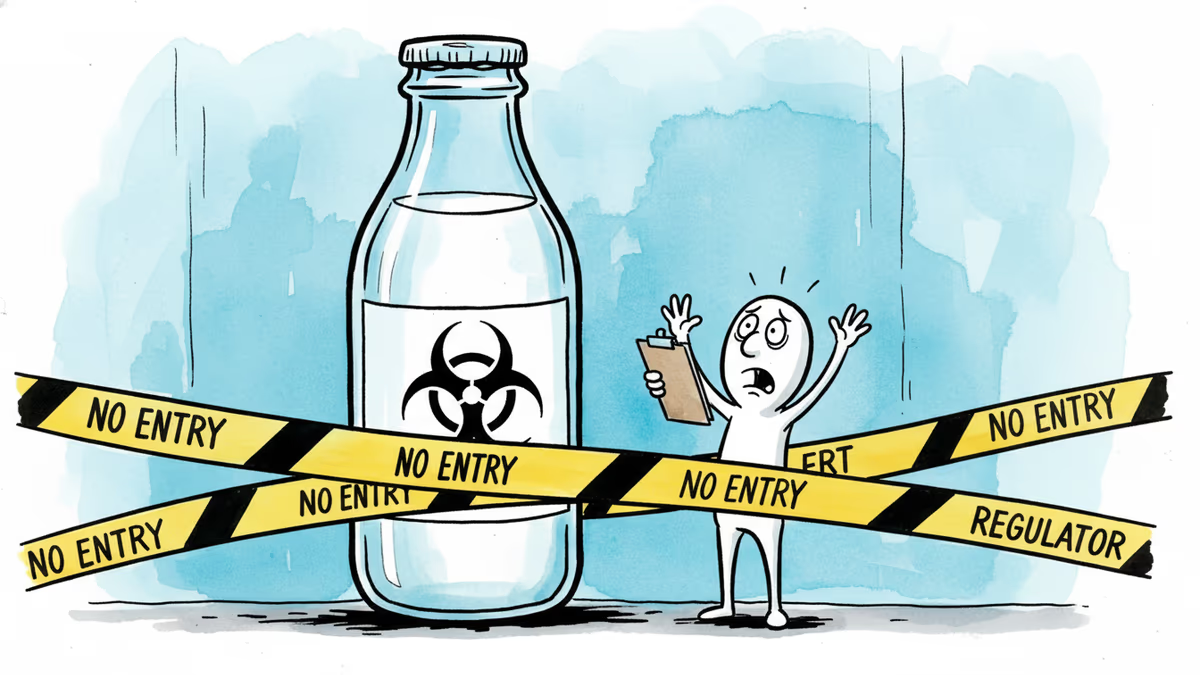
Nine people across three states have been sickened in an E. coli outbreak linked to Raw Farm's unpasteurized dairy. The company refuses to recall. What does this reveal about food safety systems?

A $7M quantum computing competition is testing whether today's noisy, limited quantum machines can actually help human health—before the powerful ones we've been promised ever arrive.
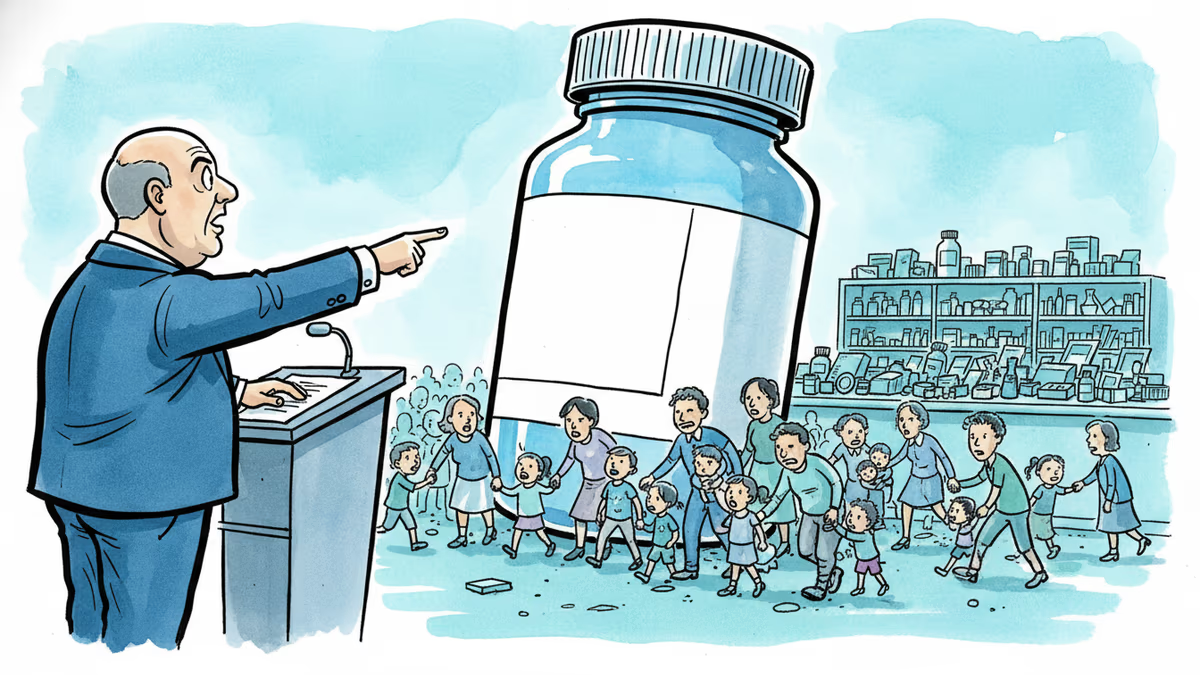
After Trump administration officials publicly promoted leucovorin as a potential autism treatment, new prescriptions for children surged 71% in three months. What happens when government rhetoric moves faster than science?
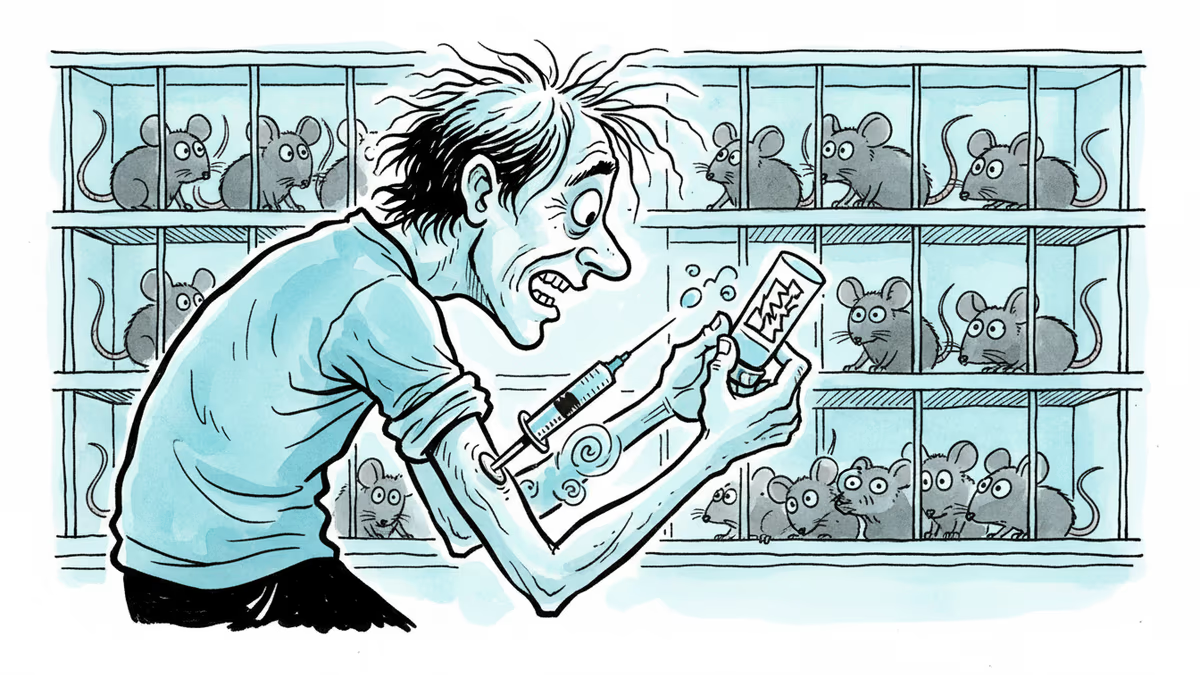
Experimental peptides flood the wellness market with animal data as evidence. Why millions inject unapproved compounds sold with research disclaimers, and what regulators plan to do about it.
Nine people across three states have been sickened in an E. coli outbreak linked to Raw Farm's unpasteurized dairy. The company refuses to recall. What does this reveal about food safety systems?
A $7M quantum computing competition is testing whether today's noisy, limited quantum machines can actually help human health—before the powerful ones we've been promised ever arrive.
After Trump administration officials publicly promoted leucovorin as a potential autism treatment, new prescriptions for children surged 71% in three months. What happens when government rhetoric moves faster than science?
Experimental peptides flood the wellness market with animal data as evidence. Why millions inject unapproved compounds sold with research disclaimers, and what regulators plan to do about it.
Thoughts
Share your thoughts on this article
Sign in to join the conversation