
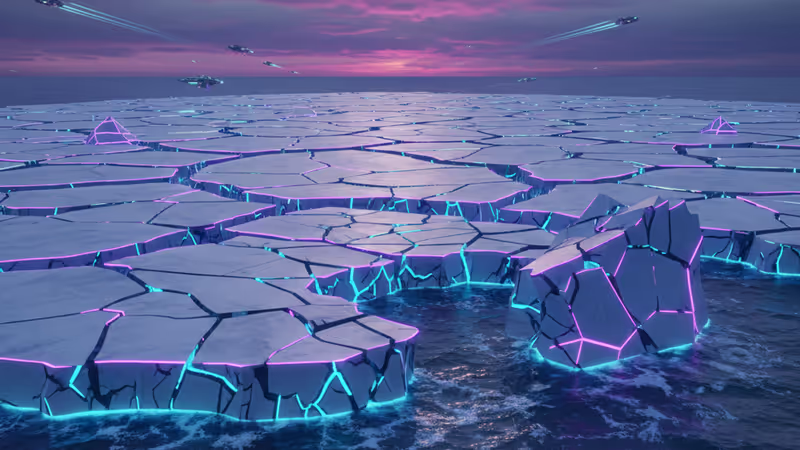
‘Doomsday Glacier’ Is Tearing Itself Apart, New Study Shows Startling Feedback Loop
A new study reveals Antarctica's 'Doomsday Glacier' is caught in a self-destructive feedback loop. Cracks are accelerating its flow, which in turn creates more cracks, speeding its path to collapse.
Antarctica's Thwaites Glacier, known as the “Doomsday Glacier” and one of the biggest unknowns in predicting global sea-level rise, is caught in a dangerous feedback loop, actively accelerating its own collapse. A new study from the International Thwaites Glacier Collaboration (ITGC) presents a detailed, alarming record of how the glacier's crucial eastern ice shelf is tearing itself apart from the inside out.
Researchers analyzing two decades of observational data (2002-2022) discovered that as cracks riddle the ice, the glacier's flow speeds up. This acceleration, in turn, generates even more cracks, creating a vicious cycle. According to the study, this process has effectively severed the ice shelf's connection to a stabilizing undersea ridge, transforming it from an anchor into a point of weakness.
A System Under Stress: The Damage in Numbers - Total Crack Length: Increased from ~165 km in 2002 to ~336 km in 2021. - Ice Structure Change: Instead of a few long cracks, the shelf is now fractured by numerous smaller ones, doubling the total fissure length and indicating widespread structural decay. - Collapse Propagation: During the winter of 2020, structural damage was observed propagating upstream at a rate of approximately 55 kilometers per year.

The study reveals the weakening happened in distinct phases. First, long cracks grew along the direction of ice flow. Then, a swarm of shorter, cross-flow cracks emerged, shattering the shelf's integrity. GPS devices placed on the ice between 2020 and 2022 directly recorded this feedback loop in action, confirming that weakening in one area rapidly destabilizes the ice far upstream.
The researchers warn this pattern could be a playbook for how other Antarctic ice shelves collapse. The complete disintegration of Thwaites holds enough ice to raise global sea levels by about 65 centimeters (over 2 feet). This new evidence of a self-reinforcing collapse suggests that existing timelines for its demise may be too conservative.
Authors
Related Articles
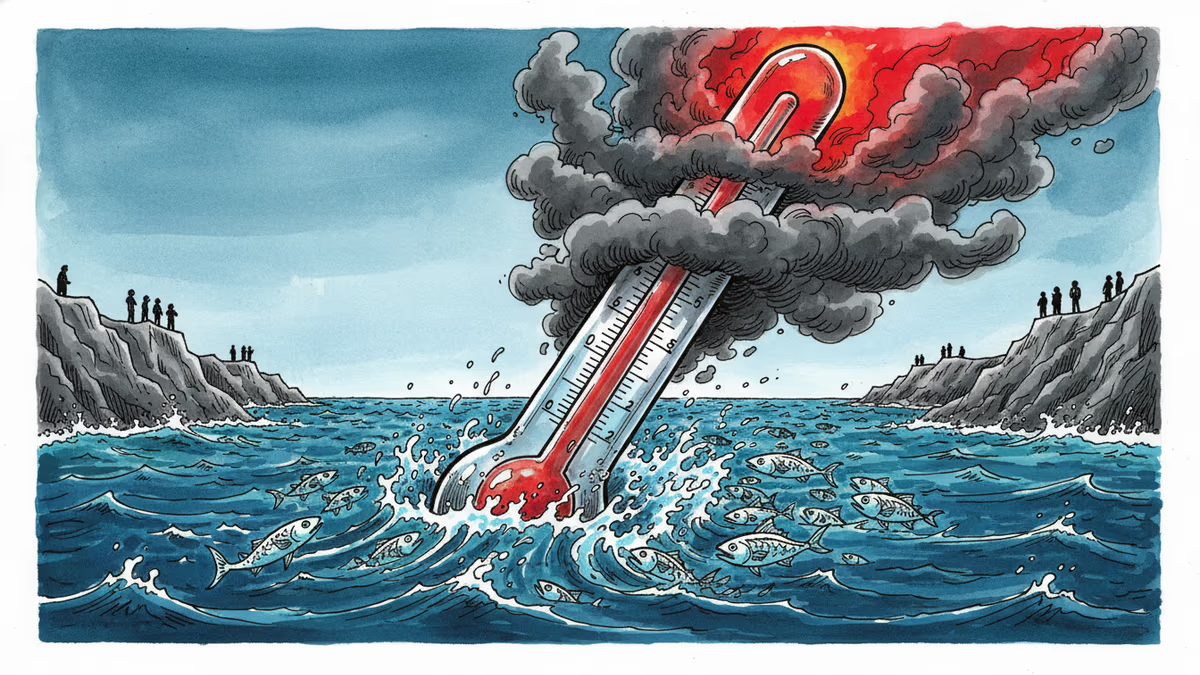
Scientists warn a strong El Niño could push Earth past the 1.5°C warming threshold within 12-18 months. What that means for weather, food, energy—and the politics of climate action.
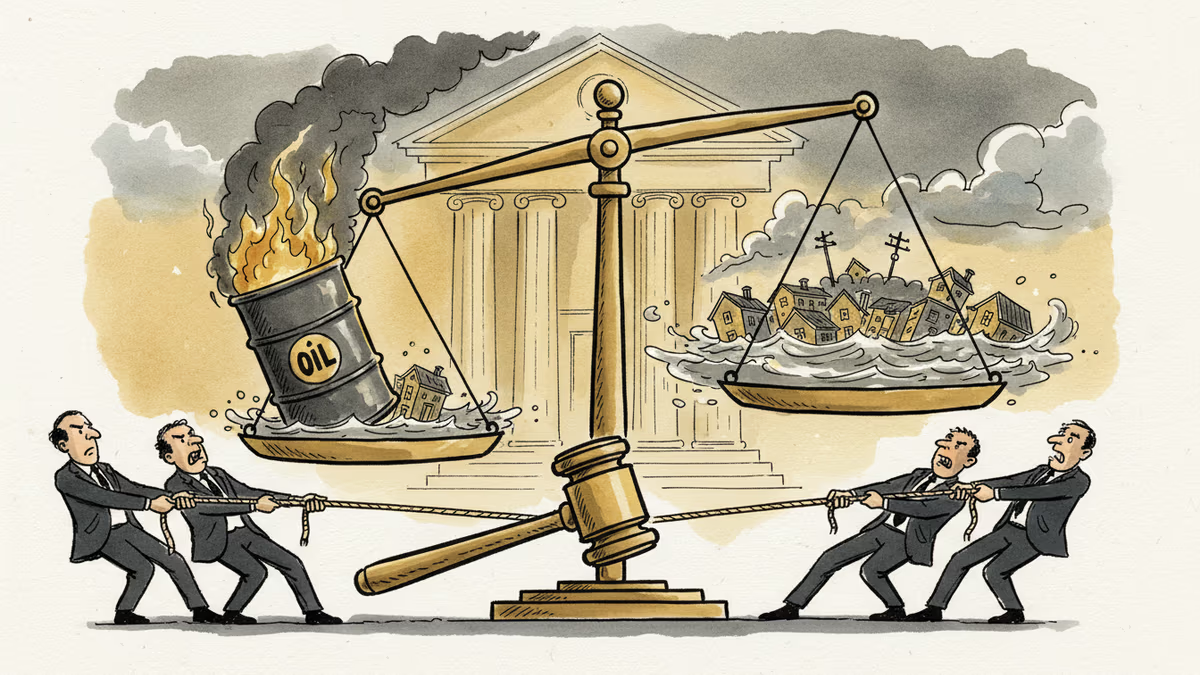
Republican lawmakers are pushing bills to shield fossil fuel companies from climate lawsuits—while cities, states, and individuals are suing those same companies for billions. A breakdown of the legal battle reshaping corporate accountability.
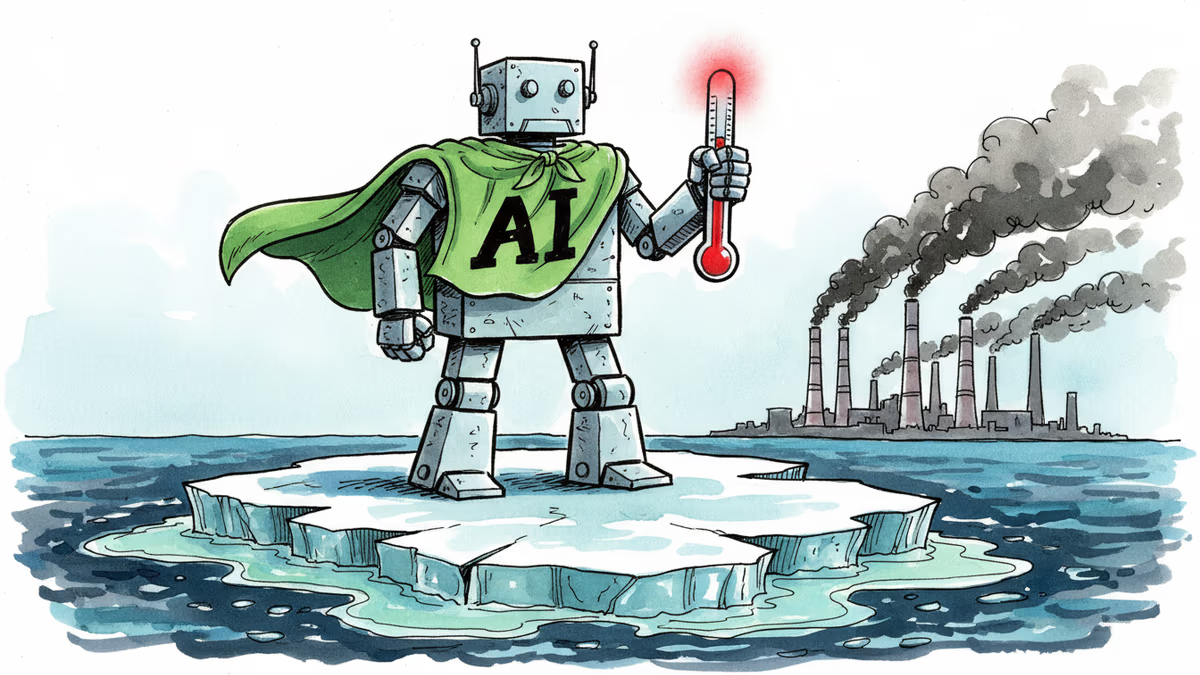
Google claimed AI could cut global emissions by 5-10%, but the source? A consulting firm's 'client experience.' How solid are tech giants' green AI promises?
The Trump administration's attempt to overturn 17 years of climate science collapsed under the weight of evidence. What this means for policy and business.
Scientists warn a strong El Niño could push Earth past the 1.5°C warming threshold within 12-18 months. What that means for weather, food, energy—and the politics of climate action.
Republican lawmakers are pushing bills to shield fossil fuel companies from climate lawsuits—while cities, states, and individuals are suing those same companies for billions. A breakdown of the legal battle reshaping corporate accountability.
Google claimed AI could cut global emissions by 5-10%, but the source? A consulting firm's 'client experience.' How solid are tech giants' green AI promises?
The Trump administration's attempt to overturn 17 years of climate science collapsed under the weight of evidence. What this means for policy and business.
Thoughts
Share your thoughts on this article
Sign in to join the conversation