
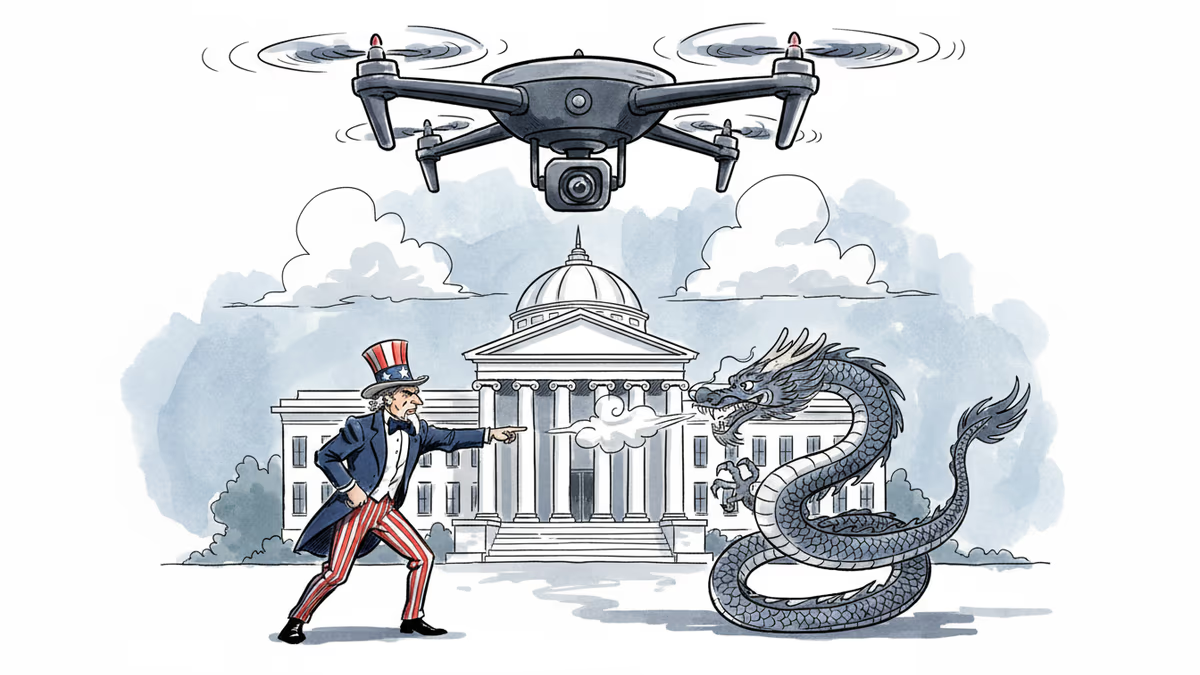
DJI Takes on Washington in High-Stakes Drone War
Chinese drone giant DJI challenges FCC's import ban in federal court, escalating US-China tech tensions into uncharted legal territory.
$15 Billion Company vs. Federal Regulators
The world's largest drone manufacturer just declared legal war on Washington. DJI, which controls 70% of the global consumer drone market, filed a federal court petition this week challenging the FCC's decision to ban imports of its China-made drones and components.
The December ruling didn't just block new DJI drones from entering the US market—it gave the FCC authority to retroactively disable existing drones' communication functions. For millions of American drone users, this could mean their devices become expensive paperweights overnight.
Security Theater or Legitimate Threat?
The Government's Case: DJI drones pose an "unacceptable risk" to national security. Officials worry about data collection capabilities and potential backdoors that could funnel sensitive information to Beijing.
DJI's Counterargument: The FCC "exceeded its statutory authority" by adding foreign-made drones to its Covered List—a designation originally intended for telecommunications equipment, not consumer devices.
But there's a subplot here that's harder to quantify: market dynamics. American drone companies have struggled to compete with DJI's combination of advanced technology and aggressive pricing. Skydio, the leading US manufacturer, has less than 5% market share despite significant venture funding.

The Precedent Problem
This case could reshape how America regulates foreign technology. If the FCC wins, it sets a precedent for blocking any device with communication capabilities based on national security concerns. Electric vehicles, smart appliances, even fitness trackers could face similar scrutiny.
European regulators are watching closely. The EU has taken a more measured approach, requiring data localization rather than outright bans. Industry observers wonder if America's binary approach—ban or allow—is too blunt an instrument for complex geopolitical realities.
Winners and Losers in the Drone Wars
Potential Winners: American drone manufacturers, defense contractors, and component suppliers who've been priced out by Chinese competition. Companies like Lockheed Martin and General Atomics could see increased demand for their higher-priced alternatives.
Immediate Losers: The 2 million Americans who own DJI drones, small businesses using them for agriculture and real estate, and the broader ecosystem of apps and services built around DJI's platform.
The irony? Many of DJI's components come from American suppliers like Qualcomm and Intel. The ban could hurt US tech companies that rely on Chinese manufacturers as customers.
Authors
Related Articles
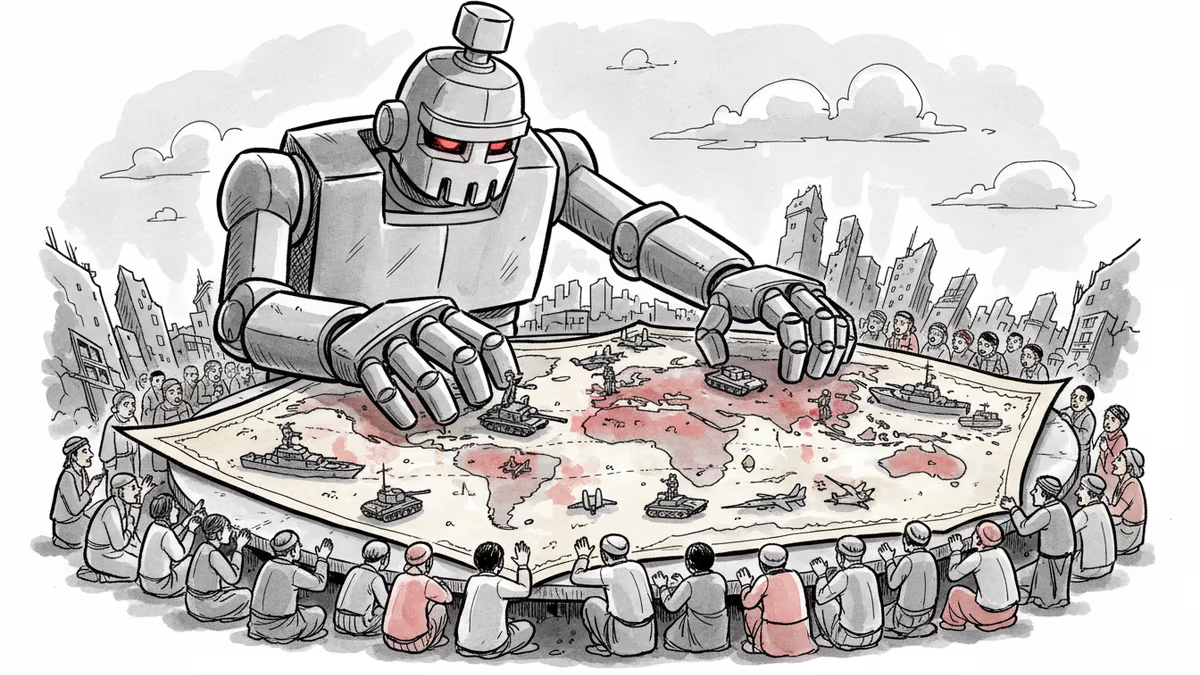
Middle East conflict reveals AI weapons reality. Claude AI selects targets, drones attack autonomously. 90% accuracy, zero regulation. The gap between deployment and governance widens.
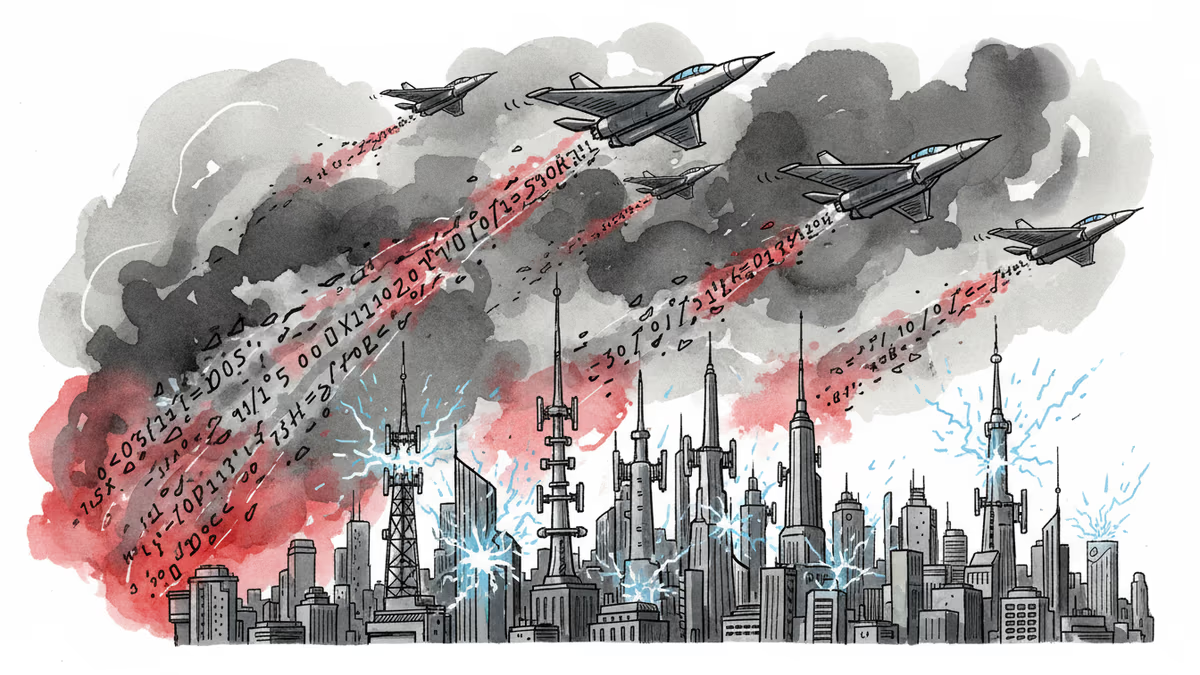
Cyber operations played a pivotal role in the U.S.-Israeli strikes against Iran, disrupting communications and hijacking broadcasts. A new era of warfare where code is as powerful as bombs.
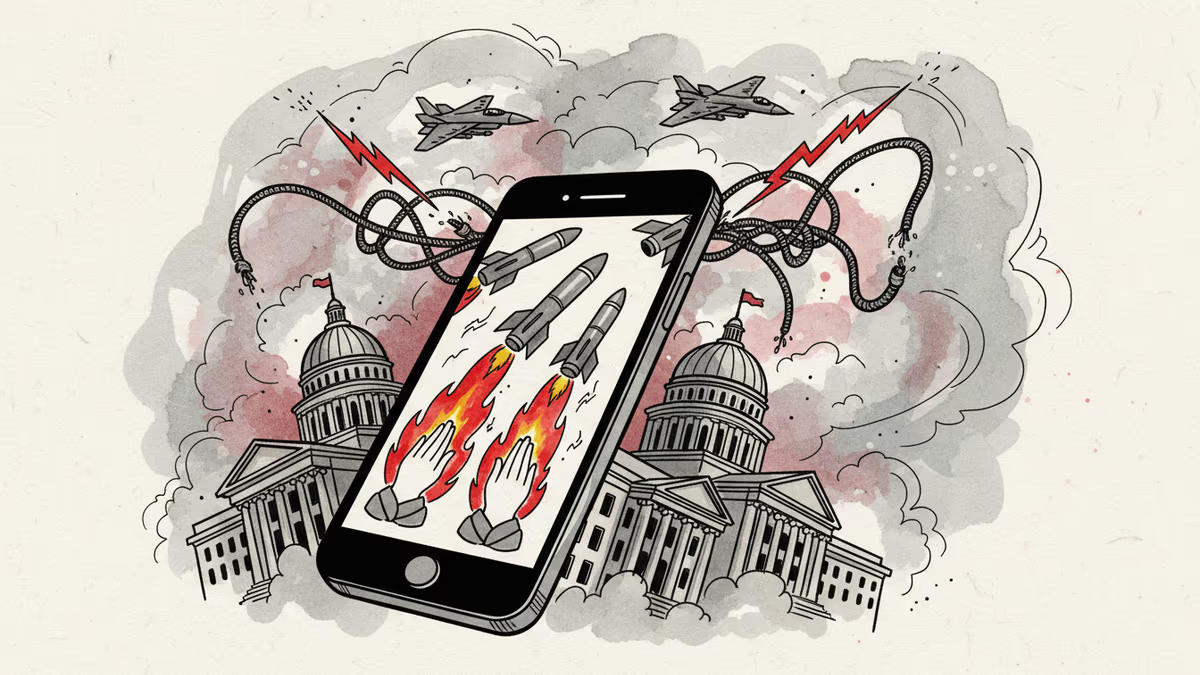
Iran's supreme leader killed in coordinated US-Israeli strikes paired with sophisticated cyber attacks. From prayer app hacks to internet blackouts, digital weapons merged with physical warfare in unprecedented ways.
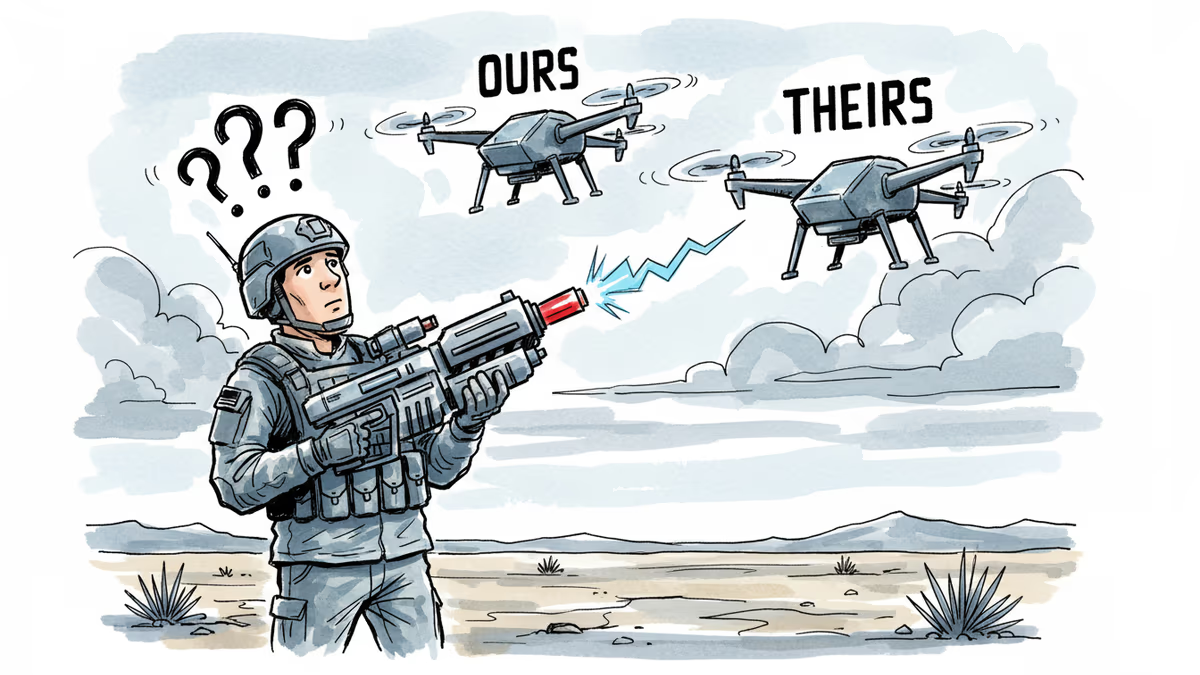
A US military laser system mistakenly destroyed a Border Patrol drone near Mexico, revealing the complex reality of modern border security technology
Middle East conflict reveals AI weapons reality. Claude AI selects targets, drones attack autonomously. 90% accuracy, zero regulation. The gap between deployment and governance widens.
Cyber operations played a pivotal role in the U.S.-Israeli strikes against Iran, disrupting communications and hijacking broadcasts. A new era of warfare where code is as powerful as bombs.
Iran's supreme leader killed in coordinated US-Israeli strikes paired with sophisticated cyber attacks. From prayer app hacks to internet blackouts, digital weapons merged with physical warfare in unprecedented ways.
A US military laser system mistakenly destroyed a Border Patrol drone near Mexico, revealing the complex reality of modern border security technology
Thoughts
Share your thoughts on this article
Sign in to join the conversation