
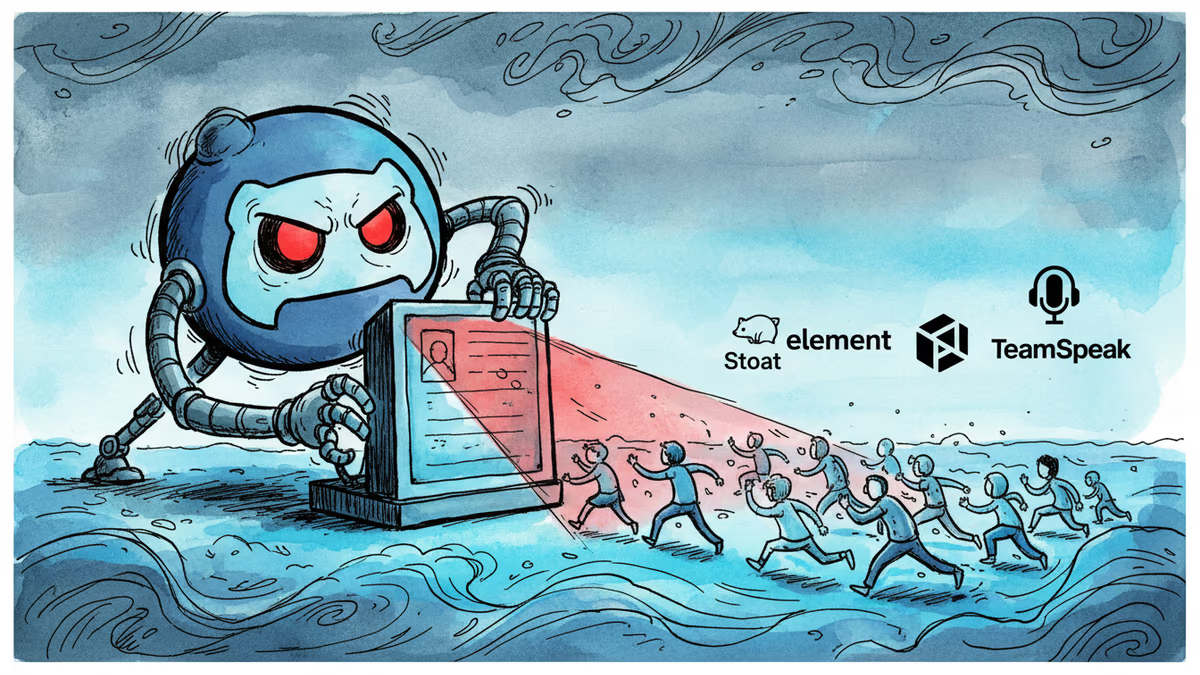
Discord's Age Verification Sparks User Exodus to Alternatives
Discord's mandatory age verification by late 2026 has users seeking privacy-focused alternatives. From open-source platforms to gaming-first solutions, here are the top contenders.
Would You Trust Your ID to a Platform That Leaked 70,000 Users' Data?
Discord's announcement hit like a bombshell: mandatory age verification by late 2026, requiring government IDs or face scans. The timing couldn't be worse—the platform suffered a security breach last year that exposed approximately 70,000 users' personal information.
Faced with user backlash, Discord quickly backpedaled, claiming 90% of users won't need verification. But the damage was done. Privacy-conscious users are already shopping for alternatives, and the migration has begun.
The Contenders: Privacy vs. Functionality Trade-offs
Stoat (Formerly Revolt): The Closest Clone
For users wanting Discord's experience without the baggage, Stoat delivers. This open-source platform mirrors Discord's interface almost perfectly—text channels, voice chat, community servers, the works.
The catch? Growing pains. Launched in 2021, Stoat struggles with server capacity during user surges and lacks Discord's polish. Recent server expansions show promise, but stability remains a concern for mission-critical communities.
Element: Maximum Privacy, Maximum Effort
Built on the decentralized Matrix protocol, Element offers what privacy advocates dream of: self-hosted servers, end-to-end encryption, and zero corporate data control. No single company owns your conversations.
The trade-off is complexity. Setting up Element requires technical know-how that casual users might find daunting. It's the Linux of communication platforms—powerful but not for everyone.

TeamSpeak: The Gamer's Workhorse
For competitive gamers prioritizing low-latency, high-quality voice chat, TeamSpeak remains unmatched. It's been the gold standard for esports teams and hardcore gaming communities for good reason.
But it's bare-bones elsewhere. No video calls, limited text features, and zero social media integration. TeamSpeak recently added "Frankfurt 3" and "Toronto 1" servers to handle increased demand, signaling renewed interest.
The Broader Implications: Platform Power vs. User Agency
This exodus isn't just about Discord—it's about the fundamental tension between platform safety and user autonomy. Discord's move reflects growing pressure on social platforms to implement stricter age controls, especially with pending legislation in multiple jurisdictions.
Slack and Microsoft Teams serve professional needs but lack gaming-focused features. Signal offers bulletproof privacy but isn't built for large communities. Each alternative forces users to choose what matters most: features, privacy, or community.
The Regulatory Domino Effect
Discord's age verification isn't happening in a vacuum. The EU's Digital Services Act, the UK's Online Safety Bill, and various US state laws are pushing platforms toward stricter age controls. Discord may be the first major gaming platform to implement comprehensive verification, but it won't be the last.
This regulatory pressure creates opportunities for smaller, privacy-focused platforms. As mainstream platforms add friction through verification requirements, nimble alternatives can capture frustrated users.
What's Really at Stake
The numbers tell the story: Discord hosts over 150 million monthly active users across millions of servers. Even a 5% migration represents millions of users—enough to make alternative platforms viable overnight.
For Discord, the calculation is stark: lose privacy-conscious users now or face regulatory penalties later. For users, it's equally clear: accept increased surveillance or rebuild communities elsewhere.
Authors
Related Articles

The FTC fined Cox Media and two ad firms $930,000 — not for actually eavesdropping on users, but for falsely claiming they could. The case raises uncomfortable questions about surveillance capitalism.

A Utah woman was sentenced to life in prison partly because of her Google searches and deleted texts. The Kouri Richins case reveals how digital footprints have become the courtroom's most reliable witness.

After 15 years of fragmented mobile messaging, Apple and Google are rolling out end-to-end encrypted RCS messaging between iPhones and Android devices. Here's what changed, why it took so long, and what it means for your privacy.
New Mexico already won $375 million from Meta. Now it wants something harder to give: a court order forcing Facebook, Instagram, and WhatsApp to redesign themselves. A three-week trial starts Monday.
The FTC fined Cox Media and two ad firms $930,000 — not for actually eavesdropping on users, but for falsely claiming they could. The case raises uncomfortable questions about surveillance capitalism.
A Utah woman was sentenced to life in prison partly because of her Google searches and deleted texts. The Kouri Richins case reveals how digital footprints have become the courtroom's most reliable witness.
After 15 years of fragmented mobile messaging, Apple and Google are rolling out end-to-end encrypted RCS messaging between iPhones and Android devices. Here's what changed, why it took so long, and what it means for your privacy.
New Mexico already won $375 million from Meta. Now it wants something harder to give: a court order forcing Facebook, Instagram, and WhatsApp to redesign themselves. A three-week trial starts Monday.
Thoughts
Share your thoughts on this article
Sign in to join the conversation