

Digital Censorship and Self-Censorship Research: The New Tools of Authority
New research in PNAS explores how digital censorship and self-censorship research reveal the psychological impact of surveillance tech like facial recognition and IP tracking.
Speak out or stay silent? Technology is tipping the scale for authoritarians. While free speech remains a cornerstone of democracy, new digital tools are enabling a more insidious form of control: making people silence themselves before a single word is even deleted.
The Impact of Digital Censorship and Self-Censorship Research
According to a study published in the Proceedings of the National Academy of Sciences (PNAS), individuals constantly balance their desire for dissent against the fear of punishment. Researchers observed that the way platforms handle moderation directly influences this psychological calculus.

Traditional boundaries between public and private speech have blurred. Technologies like facial recognition and moderation algorithms offer authoritarians powerful leverage. For instance, Weibo shifted from simple deletion to a more aggressive tactic: exposing users' IP addresses. This effectively turns dissenters into visible targets for state or social retaliation.
| Platform Approach | Impact on User |
|---|---|
| Hands-off Moderation | Higher willingness to speak out |
| Data Exposure (e.g., Weibo) | Intense self-censorship |
Authors
Related Articles
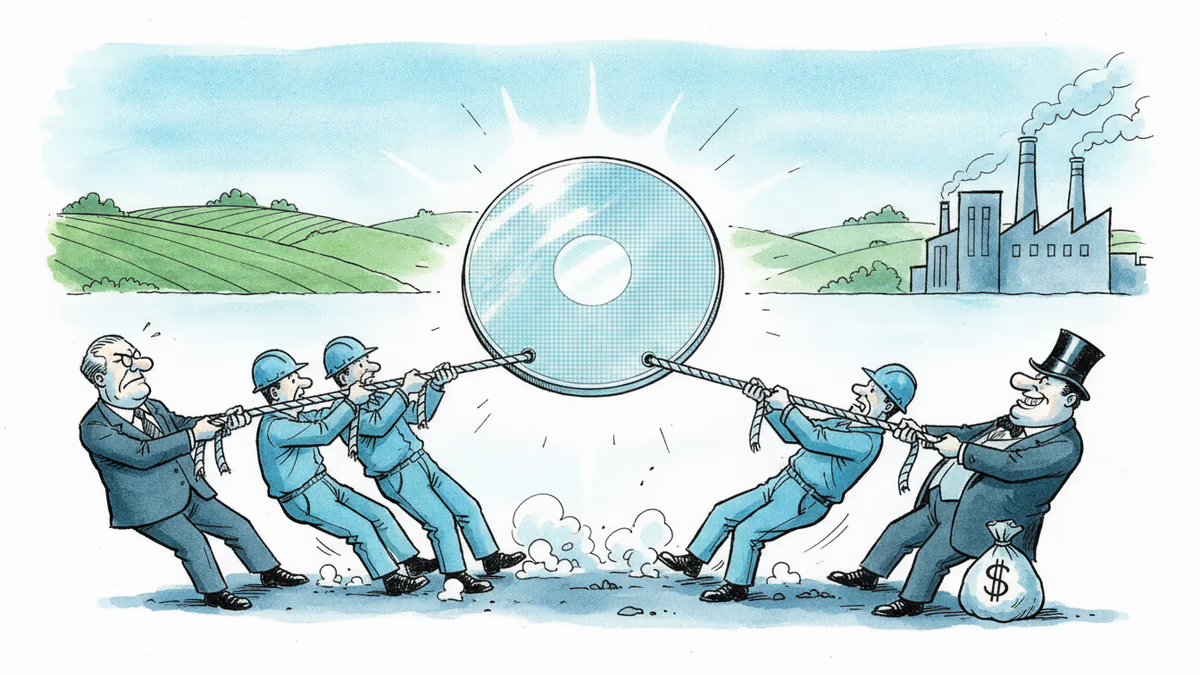
Samsung Electronics' union branch revealed that 84% of survey respondents oppose the government's roughly $290 billion (₩400 trillion) semiconductor megaproject in Gwangju. Government, management, the union and shareholders are all reading the same national project in sharply different ways.
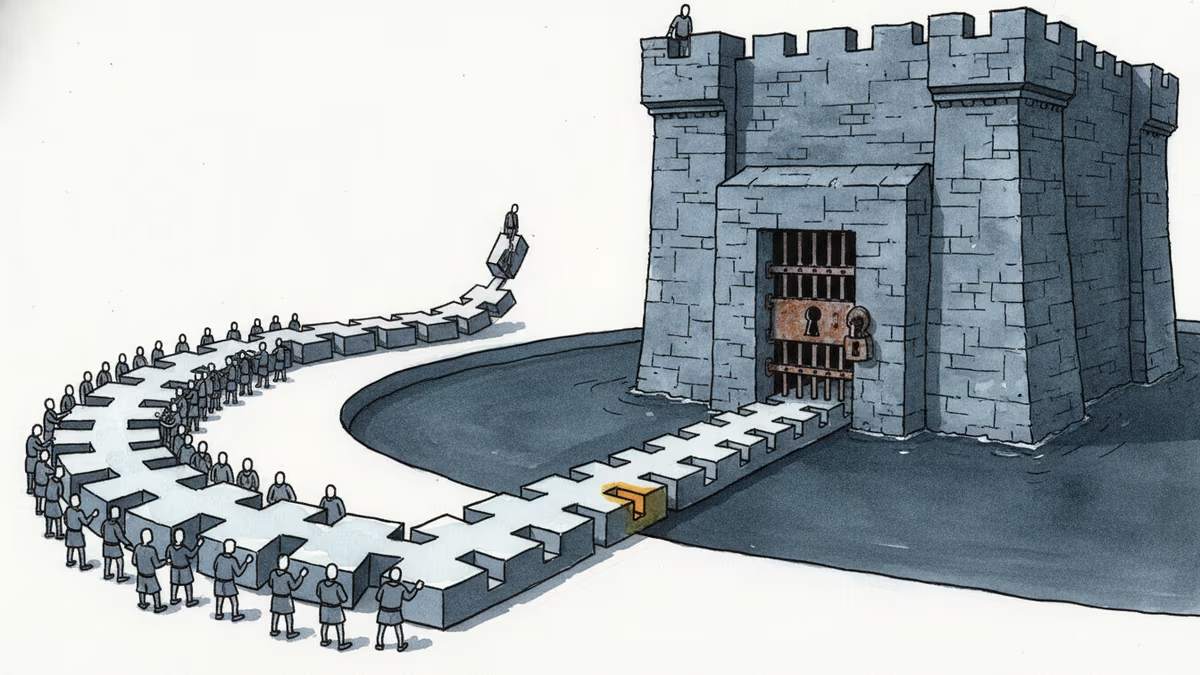
Nvidia shipped roughly a billion RISC-V cores in 2024, then announced it would run CUDA on the open standard. We break down how royalty-free instruction sets and open software stacks are trying to route around CUDA's lock-in. Part 2 of the Semiconductor Sovereignty series.
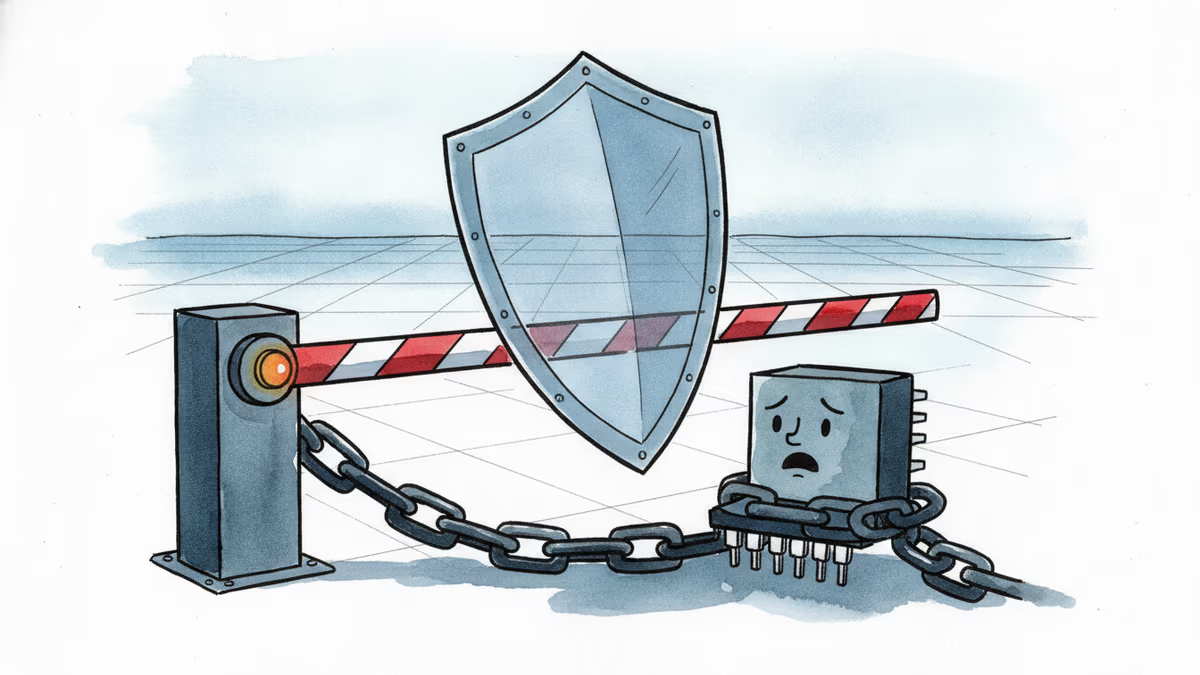
US AI-chip export controls split into three layers in the first half of 2026 — January easing, a May crackdown on circumvention, and a pending bill. Nvidia erased China from its guidance and still posted a record $81.6 billion quarter. A look at the export policy that both shields and cages it.

AMD's MI325X matches or beats Nvidia on memory and bandwidth — yet Nvidia's 86-92% share holds. The real moat is CUDA, 20 years in the making. Part 1 of 4.
Samsung Electronics' union branch revealed that 84% of survey respondents oppose the government's roughly $290 billion (₩400 trillion) semiconductor megaproject in Gwangju. Government, management, the union and shareholders are all reading the same national project in sharply different ways.
Nvidia shipped roughly a billion RISC-V cores in 2024, then announced it would run CUDA on the open standard. We break down how royalty-free instruction sets and open software stacks are trying to route around CUDA's lock-in. Part 2 of the Semiconductor Sovereignty series.
US AI-chip export controls split into three layers in the first half of 2026 — January easing, a May crackdown on circumvention, and a pending bill. Nvidia erased China from its guidance and still posted a record $81.6 billion quarter. A look at the export policy that both shields and cages it.
AMD's MI325X matches or beats Nvidia on memory and bandwidth — yet Nvidia's 86-92% share holds. The real moat is CUDA, 20 years in the making. Part 1 of 4.
Thoughts
Share your thoughts on this article
Sign in to join the conversation