
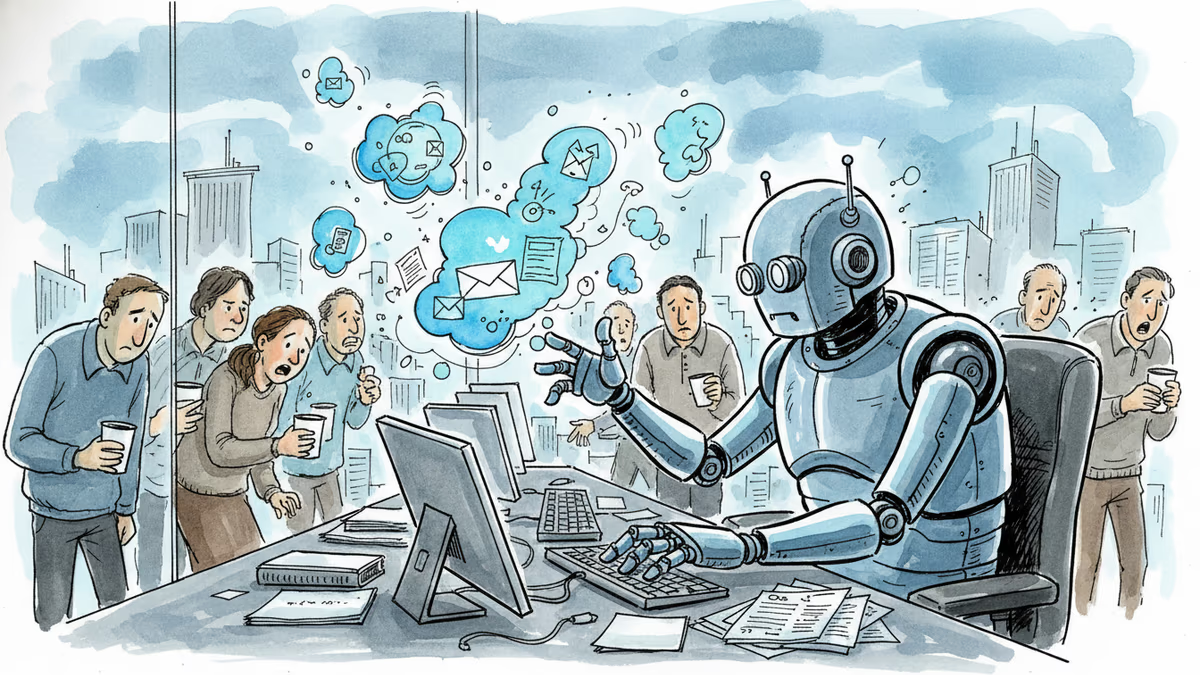
The End of Procurement Teams As We Know Them
Didero raises $30M to automate global manufacturing procurement with AI. Can artificial intelligence truly replace the human complexity of supplier relationships and negotiations?
When Pandemic Chaos Sparked a $30M Idea
Tim Spencer was drowning in procurement hell. Running e-commerce startup Markai across Asia during the pandemic, he watched his team struggle with thousands of suppliers and distribution across dozens of countries. "We had staff overwhelmed by the manual complexity of sourcing suppliers, negotiating pricing, tracking orders, and managing payments," Spencer told TechCrunch. "I found myself running this big team that was not really set up for success."
After selling Markai in 2023, Spencer didn't take a break. He saw generative AI emerging just as his procurement nightmares were fresh in memory. The timing felt perfect to tackle what he calls the "most time-consuming procurement hurdles" for manufacturers and distributors.
Enter Didero, co-founded with Lorenz Pallhuber (a McKinsey procurement veteran) and Tom Petit (former technical co-founder of Landis). The company just closed a $30 million Series A co-led by Chemistry and Headline, with participation from Microsoft's venture fund M12.
"Global Trade Runs on Natural Language"
Spencer's core insight cuts through the tech jargon: "Global trade runs on natural language communication. It's emails, WeChat, phone calls, purchase orders, and packing lists."
Until now, these fragmented communications required humans to manually chase suppliers and update systems. Procurement teams spent their days playing detective, trying to piece together order statuses from scattered conversations.
Didero claims its platform can ingest all that communication and put "a significant portion of the procurement workflow on autopilot." The system functions as an agentic AI layer sitting on top of existing ERP systems, reading incoming communications and automatically executing updates and tasks.
"The goal is to go from 'I need a good' to payment without having to lift a finger," Spencer explained.

The Supply Chain Focus
While companies like Levelpath, Zip, and Oro Labs use AI to streamline corporate purchasing, Didero targets the supply chain specifically. Instead of buying finished products, it focuses on manufacturers and distributors sourcing raw materials and inputs.
The competitive landscape includes Cavela and Pietra, which help brands source and negotiate with manufacturers. But Spencer argues these serve smaller companies and don't handle the full procurement process "from the first quote to the final payment."
Didero has dozens of customers but has only publicly named Footprint, a provider of sustainable, plant-based packaging.
The Human Element Question
Here's where it gets interesting: procurement isn't just about processing orders. It's about relationships, trust, and navigating cultural nuances across global supply chains. Can AI really handle the golf course handshake deals and the subtle art of supplier relationship management?
Manufacturing executives might love the efficiency gains, but they're also wondering: what happens to institutional knowledge when AI takes over? The veteran procurement manager who knows which suppliers deliver during Chinese New Year, or which ones cut corners during peak season – can that wisdom be coded?
There's also the vendor lock-in concern. As one independent developer noted about similar AI platforms: "We're trading manual complexity for algorithmic dependence." If Didero's AI becomes the brain of your supply chain, what happens when you want to switch?
The Bigger Manufacturing Shift
This funding round reflects a broader trend: AI is moving from consumer apps into the industrial backbone of the economy. Manufacturing and supply chain management – traditionally slow to adopt new tech – are suddenly prime targets for AI automation.
The timing makes sense. Supply chains are still recovering from pandemic disruptions, labor costs are rising, and companies are desperate for efficiency gains. AI procurement automation could be the difference between thriving and merely surviving in competitive manufacturing markets.
Authors
Related Articles
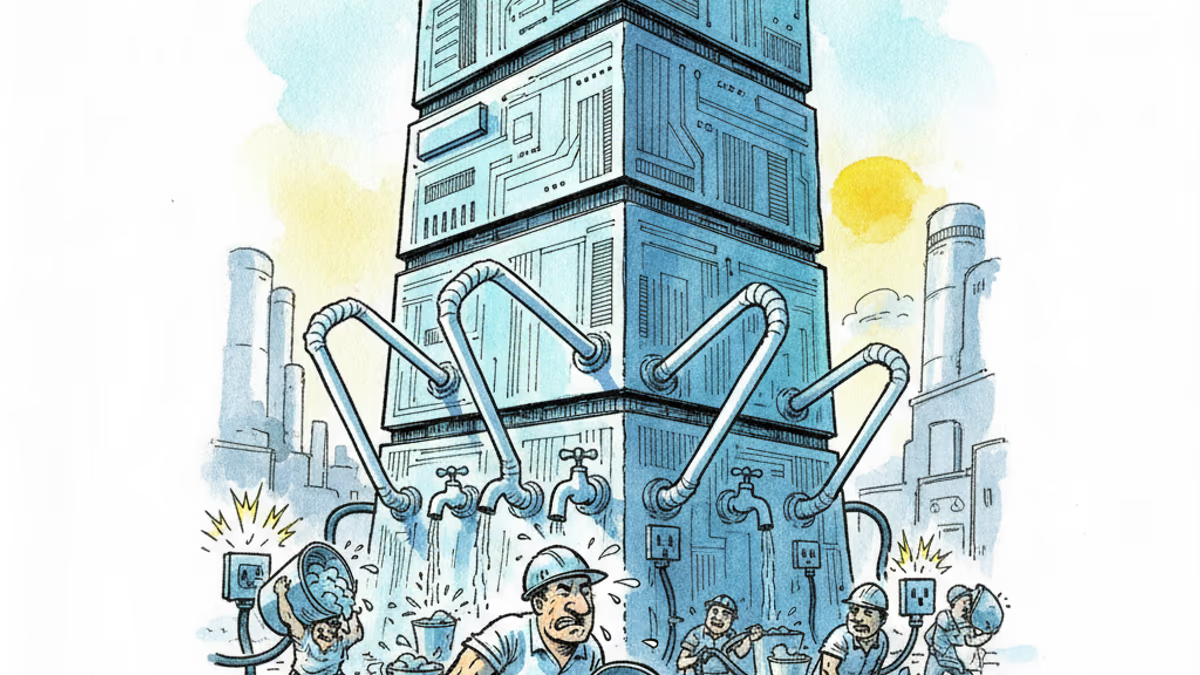
Samsung and SK unveiled a chip and AI investment package worth thousands of trillions of won on June 29. The headline number swings wildly by outlet, but the real contest isn't capital — it's water and power.
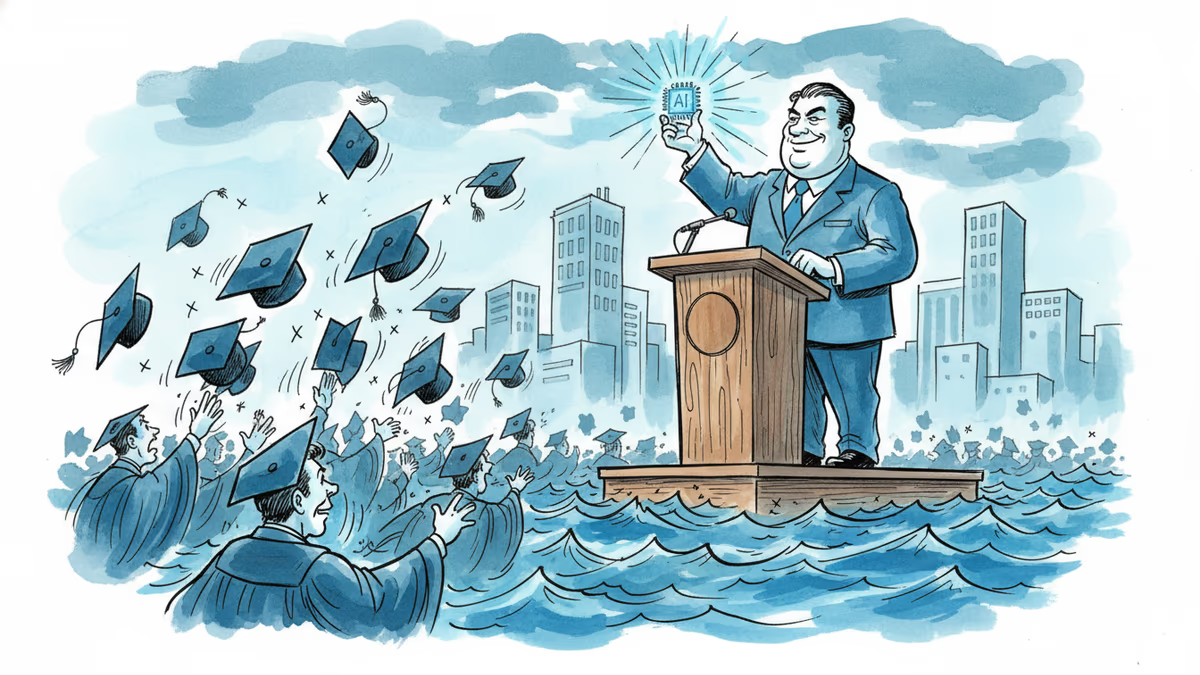
Viral videos show 2026 graduates jeering executives who praise AI at commencement ceremonies. It's not just rudeness — it's a signal about who pays for technological optimism.

Filipino virtual assistants using AI to ghost-manage LinkedIn profiles for executives is now a structured industry. 30 comments a day, fake engagement rings, and a platform struggling to tell real from fabricated.
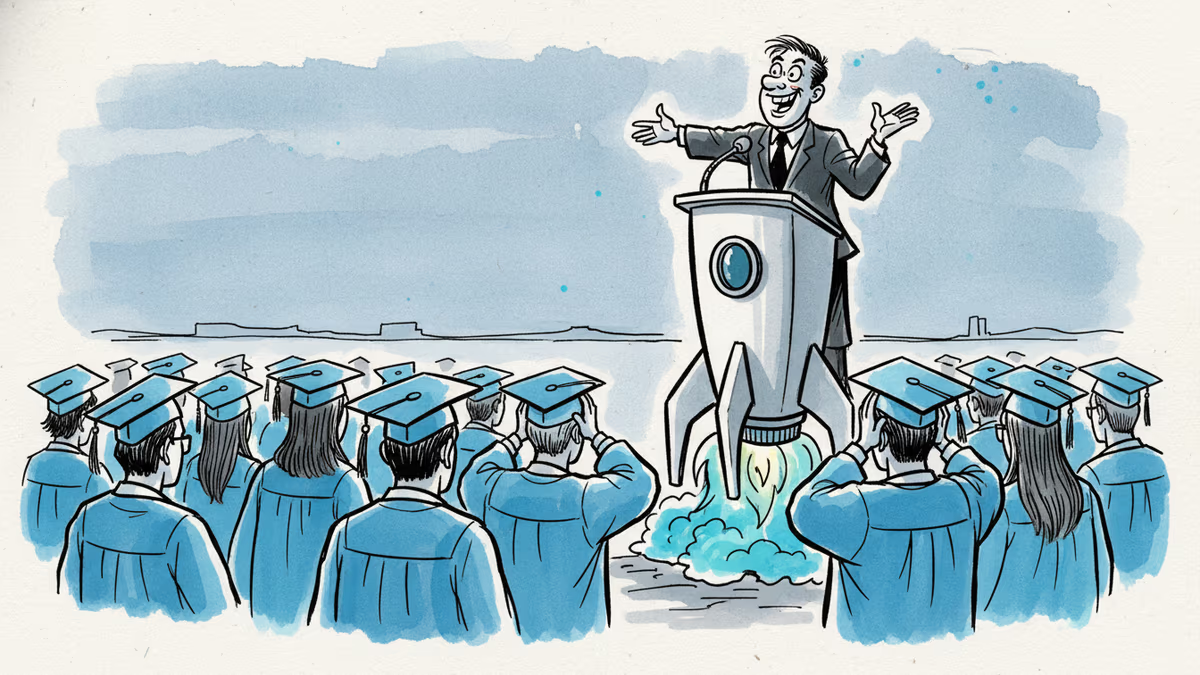
Two commencement speakers learned the hard way that AI enthusiasm doesn't land well with today's graduates. The backlash reveals a widening gap between tech optimism and Gen Z's economic reality.
Samsung and SK unveiled a chip and AI investment package worth thousands of trillions of won on June 29. The headline number swings wildly by outlet, but the real contest isn't capital — it's water and power.
Viral videos show 2026 graduates jeering executives who praise AI at commencement ceremonies. It's not just rudeness — it's a signal about who pays for technological optimism.
Filipino virtual assistants using AI to ghost-manage LinkedIn profiles for executives is now a structured industry. 30 comments a day, fake engagement rings, and a platform struggling to tell real from fabricated.
Two commencement speakers learned the hard way that AI enthusiasm doesn't land well with today's graduates. The backlash reveals a widening gap between tech optimism and Gen Z's economic reality.
Thoughts
Share your thoughts on this article
Sign in to join the conversation