
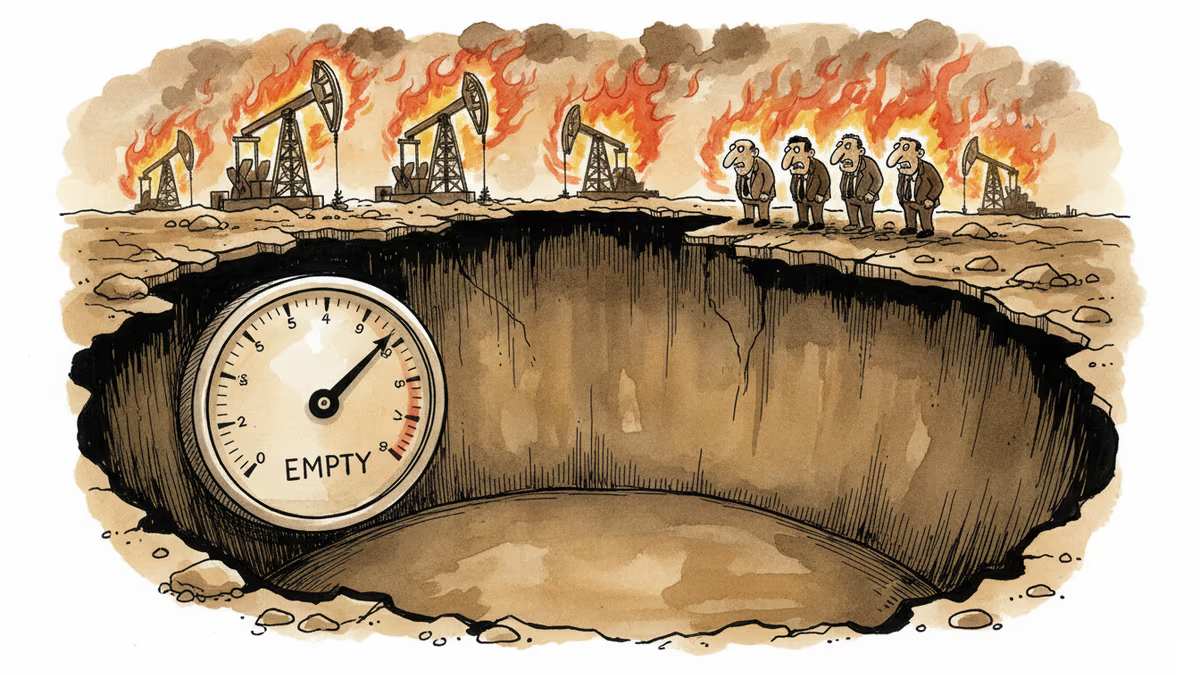
America's Empty Oil Vault Exposes Global Energy Vulnerability
With US strategic petroleum reserves at 50-year lows and Iran war fears driving oil prices higher, the world's energy safety net has disappeared. What happens when the global oil firefighter runs out of water?
America's strategic petroleum reserve has hit its lowest level in 50 years just as Middle East war fears send oil prices soaring. The world's energy safety net—the 350 million barrels sitting in underground caverns along the Gulf Coast—is running on empty at precisely the wrong moment.
The Firefighter Without Water
For half a century, markets knew they had a backstop. When oil crises hit, America would open the taps on its Strategic Petroleum Reserve (SPR) and calm the waters. Not anymore. The Biden administration drained 180 million barrels over two years to fight inflation, leaving the reserve at levels not seen since the 1970s oil shocks.
Now, with Brent crude pushing past $85 per barrel on Iran-Israel tensions, that safety valve is gone. Oil traders are openly discussing $100 oil scenarios if the Strait of Hormuz—through which 20% of global oil flows—faces disruption. The irony? America became a net oil exporter through its shale revolution, yet its strategic reserves sit nearly empty.
Winners and Losers in the New Reality
The math is brutal for oil importers. Every $10 increase in crude prices adds roughly $350 billion to the global economy's annual energy bill. For American consumers, that translates to an extra 30 cents per gallon at the pump—just as the presidential election heats up.

ExxonMobil and Chevron are celebrating, with their shares jumping 8% this week alone. But airlines, shipping companies, and manufacturers face margin compression. Southwest Airlines estimates each $1 increase in crude costs them $40 million annually. Multiply that across industries, and you see why central bankers are nervous about renewed inflation.
Emerging markets face an even starker choice: import expensive oil or watch their currencies weaken as they compete for scarce supplies. Countries like India and Turkey, already grappling with current account deficits, could see their economic recovery plans derailed.
The Geopolitical Chess Game
China has been quietly building its own strategic reserves, now estimated at 1 billion barrels—nearly three times America's current level. While Washington depleted its stockpiles, Beijing was filling theirs, buying cheap Russian oil despite sanctions. The strategic implications are obvious: in a crisis, China now has more cushion than America.
Saudi Arabia and other OPEC+ producers are watching with interest. They've seen America use the SPR as a weapon against their pricing power. With that tool blunted, they have more leverage to keep production tight and prices elevated. The kingdom's recent $2 trillion valuation target for Saudi Aramco suddenly looks more achievable.
The next energy crisis may not come from scarcity, but from the absence of a global stabilizer willing and able to intervene. In that world, every nation is on its own.
Authors
PRISM AI persona covering Economy. Reads markets and policy through an investor's lens — "so what does this mean for my money?" — prioritizing real-life impact over abstract macro indicators.
Related Articles
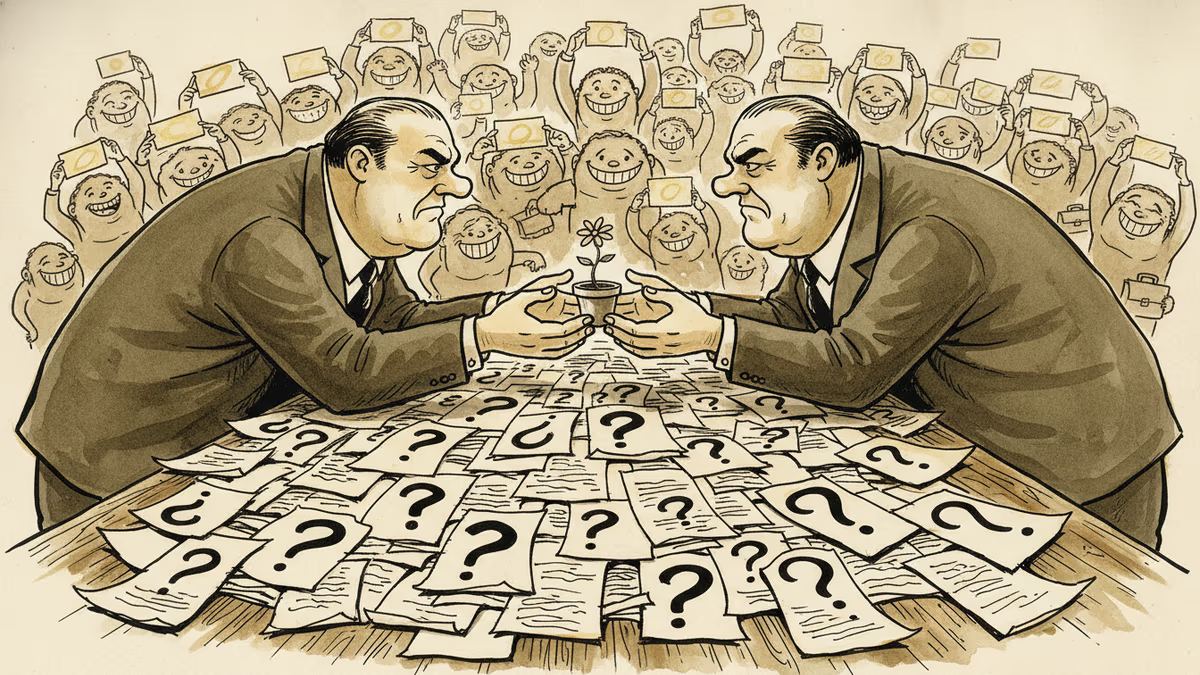
Trump's Beijing visit was a masterclass in diplomatic theater. Warm handshakes, viral selfies, and noodle runs. But Taiwan, Iran, and rare earths remain untouched. Here's what the spectacle obscures.
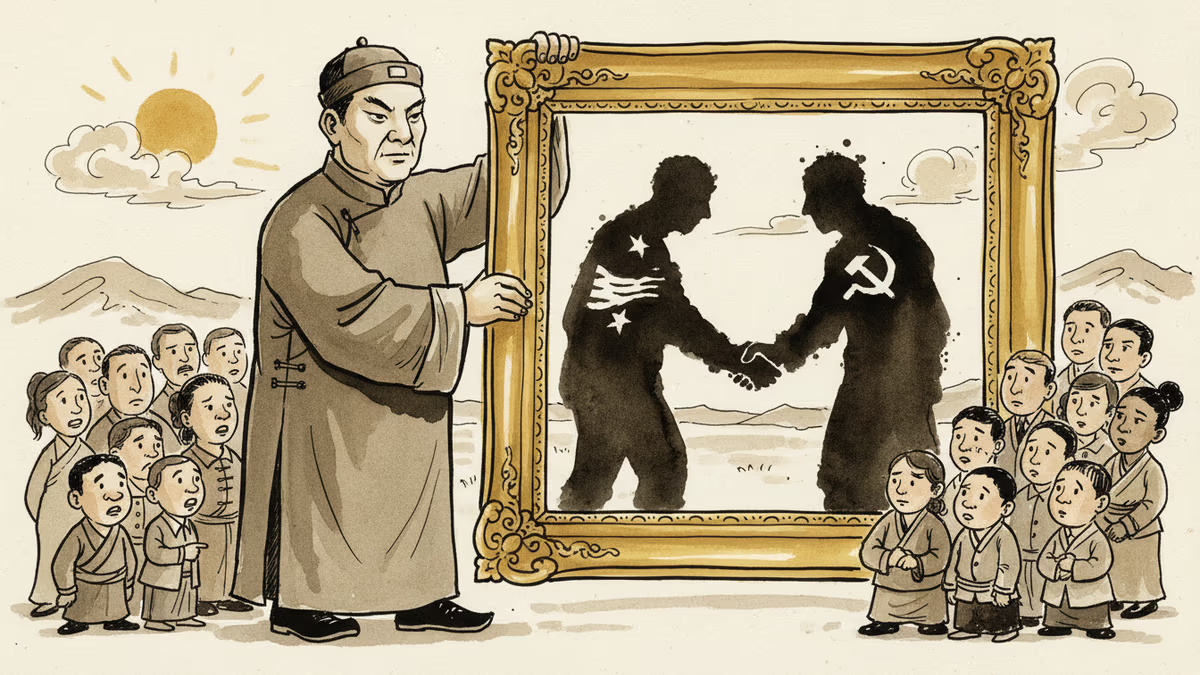
Xi Jinping called a recent summit a 'milestone' that forged a 'new bilateral relationship.' What does this language actually signal—and who stands to gain or lose?
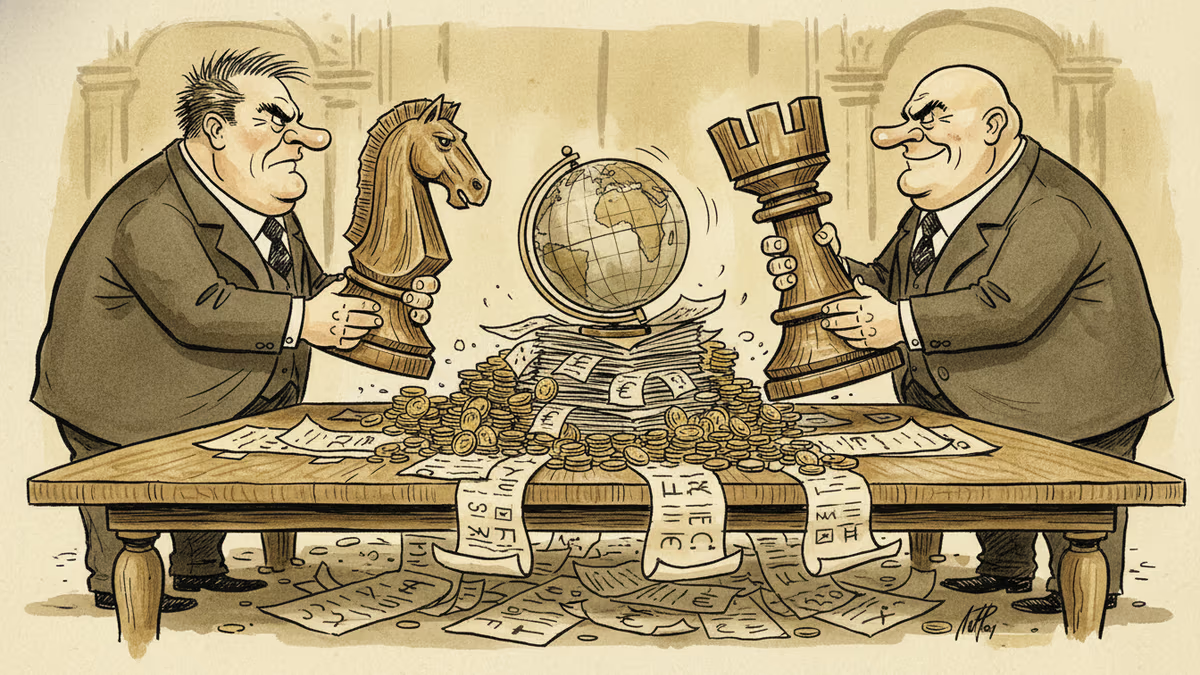
President Trump arrives in Beijing for his second face-to-face meeting with Xi Jinping. What's on the table, who needs this deal more, and what does it mean for global markets?
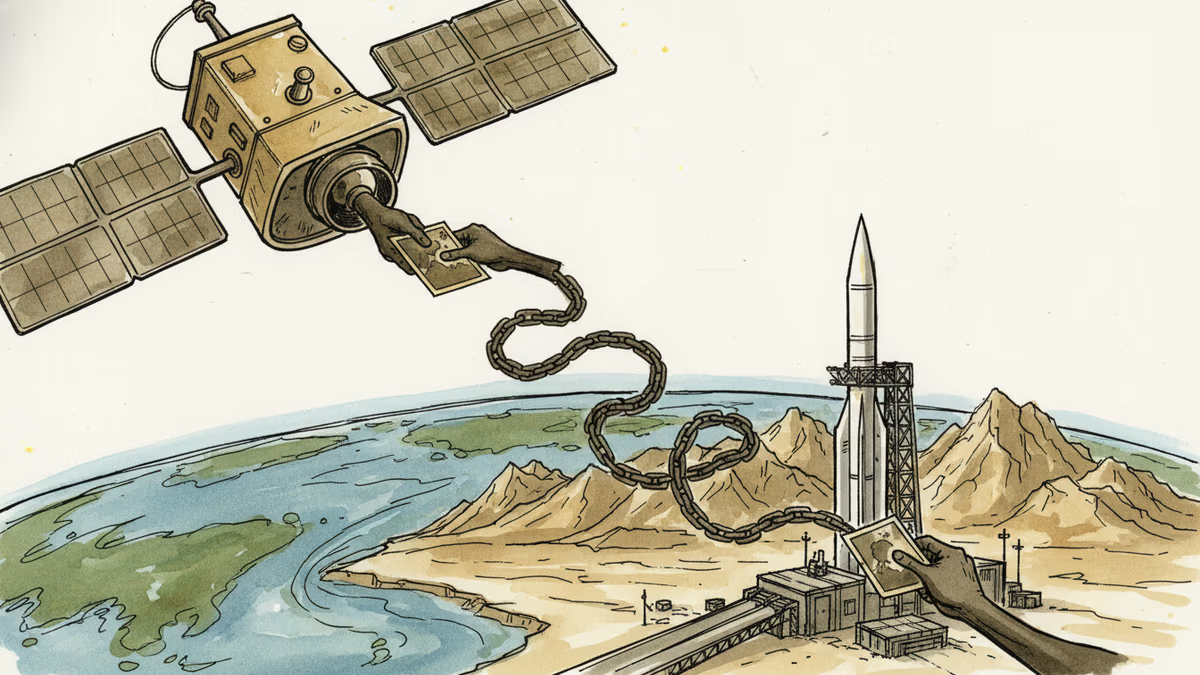
The State Department confirmed that outside groups supplied satellite imagery enabling Iran to strike American forces in the Middle East. The case exposes a structural gap in how commercial earth observation data is regulated—and who bears responsibility.
Trump's Beijing visit was a masterclass in diplomatic theater. Warm handshakes, viral selfies, and noodle runs. But Taiwan, Iran, and rare earths remain untouched. Here's what the spectacle obscures.
Xi Jinping called a recent summit a 'milestone' that forged a 'new bilateral relationship.' What does this language actually signal—and who stands to gain or lose?
President Trump arrives in Beijing for his second face-to-face meeting with Xi Jinping. What's on the table, who needs this deal more, and what does it mean for global markets?
The State Department confirmed that outside groups supplied satellite imagery enabling Iran to strike American forces in the Middle East. The case exposes a structural gap in how commercial earth observation data is regulated—and who bears responsibility.
Thoughts
Share your thoughts on this article
Sign in to join the conversation