

Elizabeth Warren Democratic Tech Policy 2026: Curbing Silicon Valley Influence
Senator Elizabeth Warren outlines a new vision for the Democratic Party in 2026, urging a shift away from Big Tech influence toward populist economic policies and working-class affordability.
Who really owns the Democratic Party? Senator Elizabeth Warren says it’s time to choose between billionaire donors and the working class. It's a high-stakes gamble to redefine the party's soul before the 2026 midterms.
Elizabeth Warren Democratic Tech Policy 2026: A Populist Pivot
According to The Verge, Senator Elizabeth Warren delivered a blunt message on Monday at the National Press Club in Washington, DC. She argued that the path to recovery after the 2024 defeat requires less Big Tech influence and a renewed focus on populist economic policies.

Warren didn't mince words when addressing the party's financial backers. She specifically called out LinkedIn co-founder Reid Hoffman, suggesting that Democrats must double down on affordability for working people—even if it alienates wealthy donors who despise such measures. The speech highlights a growing divide over how to win back voters in 2026.
The Roadmap to 2026
- Reducing the tech lobby's grip on legislative priorities.
- Prioritizing kitchen-table issues like housing and healthcare costs.
- Ignoring the veto power of Silicon Valley billionaires.
Authors
Related Articles

Google's Gmail Live lets you ask your inbox questions out loud. Announced at I/O 2026, it's AI's pitch to skeptics — and a reminder of how much Google already knows about you.

OpenAI has reorganized for the second time in a month, merging ChatGPT and Codex into a single agentic platform under president Greg Brockman's unified product leadership.
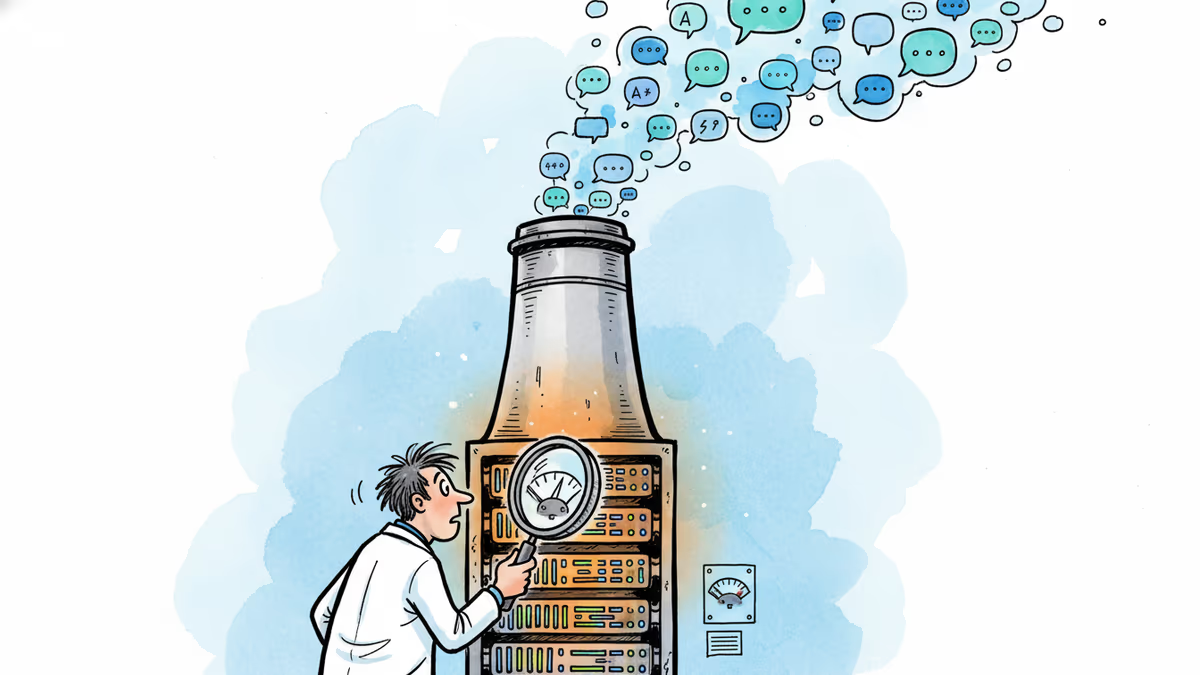
AI sustainability researcher Sasha Luccioni is launching a new venture to push for energy transparency in AI. Here's why Big Tech keeps the numbers hidden—and what's starting to change.
Emails revealed in the Musk v. Altman trial show Microsoft executives were deeply skeptical of OpenAI in 2017–2018. What actually changed their minds?
Google's Gmail Live lets you ask your inbox questions out loud. Announced at I/O 2026, it's AI's pitch to skeptics — and a reminder of how much Google already knows about you.
OpenAI has reorganized for the second time in a month, merging ChatGPT and Codex into a single agentic platform under president Greg Brockman's unified product leadership.
AI sustainability researcher Sasha Luccioni is launching a new venture to push for energy transparency in AI. Here's why Big Tech keeps the numbers hidden—and what's starting to change.
Emails revealed in the Musk v. Altman trial show Microsoft executives were deeply skeptical of OpenAI in 2017–2018. What actually changed their minds?
Thoughts
Share your thoughts on this article
Sign in to join the conversation