
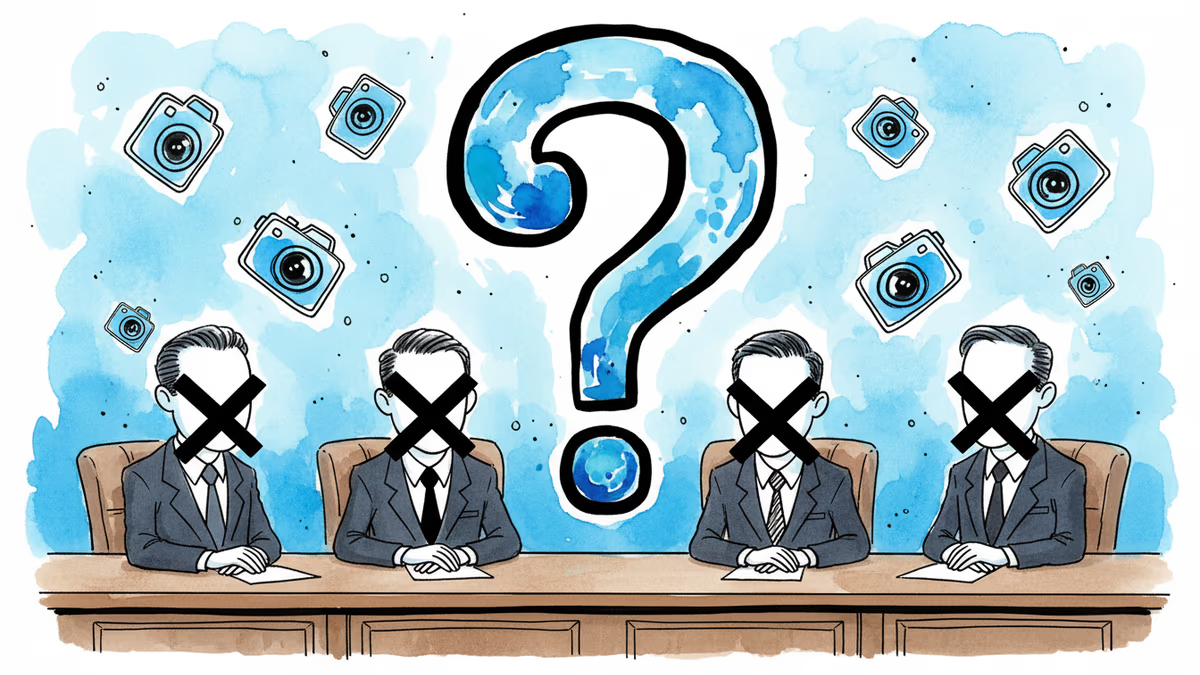
Why Samsung Executives Went Silent on AI Photo Ethics
Samsung's refusal to address AI photo editing concerns reveals the smartphone industry's deepest dilemma between innovation and truth.
The Question That Made Samsung Go Quiet
When The Verge reporter grabbed the microphone at Thursday's Samsung Q&A, they didn't waste time with softballs. The question cut straight to the heart of modern photography's biggest crisis: "How do you handle the divide between people who want AI to enhance their photos and those who believe AI is destroying photographic truth?"
Samsung was the world's largest smartphone maker until 2025, when Apple overtook them. They're still number two, meaning hundreds of millions of people capture reality through Samsung cameras every day. Their answer could signal where the entire industry is heading.
Instead, the four executives stayed silent.
When Metadata "Utterly Fails"
The reporter pressed further, pointing out that metadata solutions like C2PA (Coalition for Content Provenance and Authenticity) have "utterly failed" in practice. These tools are supposed to preserve information about whether a photo was AI-edited, but there's a catch: social media platforms strip this data during upload.
It's not an accident. Instagram, Facebook, TikTok, and others deliberately remove metadata to reduce file sizes and server costs. The result? Any trace that a photo was AI-enhanced vanishes the moment it hits social media—exactly where most photos end up.
Again, Samsung's executives offered no response.
The Industry's Impossible Choice

Samsung's silence isn't evasion—it's strategy. Smartphone makers are trapped in an impossible position that no amount of PR training can solve.
Marketing vs. Reality: AI photo features sell phones. "Night mode that turns darkness into daylight" and "zoom that captures the moon's craters" are marketing gold. But they also raise uncomfortable questions about what's real and what's algorithmic interpretation.
Technical Limitations: Even if Samsung supports C2PA metadata, it's useless if social platforms don't preserve it. The company can't solve a systemic problem alone.
Legal Liability: Taking a public stance on photo authenticity could create legal vulnerabilities. If Samsung claims their photos are "truthful," that statement could be weaponized in future deepfake or misinformation lawsuits.
The Broader Stakes
This isn't just about Samsung or even smartphones. The photography authenticity crisis touches everything from journalism to legal evidence to personal memories. When The New York Times or Reuters publishes a photo, readers assume it reflects reality. When that photo was captured on a device that automatically "enhances" scenes through AI, what does authenticity even mean?
Consumer surveys show the split is real. 67% of users want better photos from their phones, but 54% worry about AI manipulation in news and social media. The same people demanding computational photography are simultaneously concerned about its implications.
Regulators are taking notice. The EU's Digital Services Act includes provisions about synthetic media disclosure. California is considering similar legislation. But enforcement remains nearly impossible without industry cooperation.
The Innovation Trap
Samsung faces what economists call an innovation trap. Moving backward—removing AI features—would be competitive suicide. Moving forward—adding more AI—deepens the authenticity problem. Standing still means falling behind Apple, Google, and Chinese manufacturers who aren't hesitating to push AI boundaries.
The company's recent Galaxy S25 series includes even more aggressive AI photo processing than previous generations. Marketing materials celebrate "AI-powered night photography" and "intelligent scene optimization." But nowhere do they address whether these enhanced photos can still be called "photographs" in the traditional sense.
Authors
Related Articles
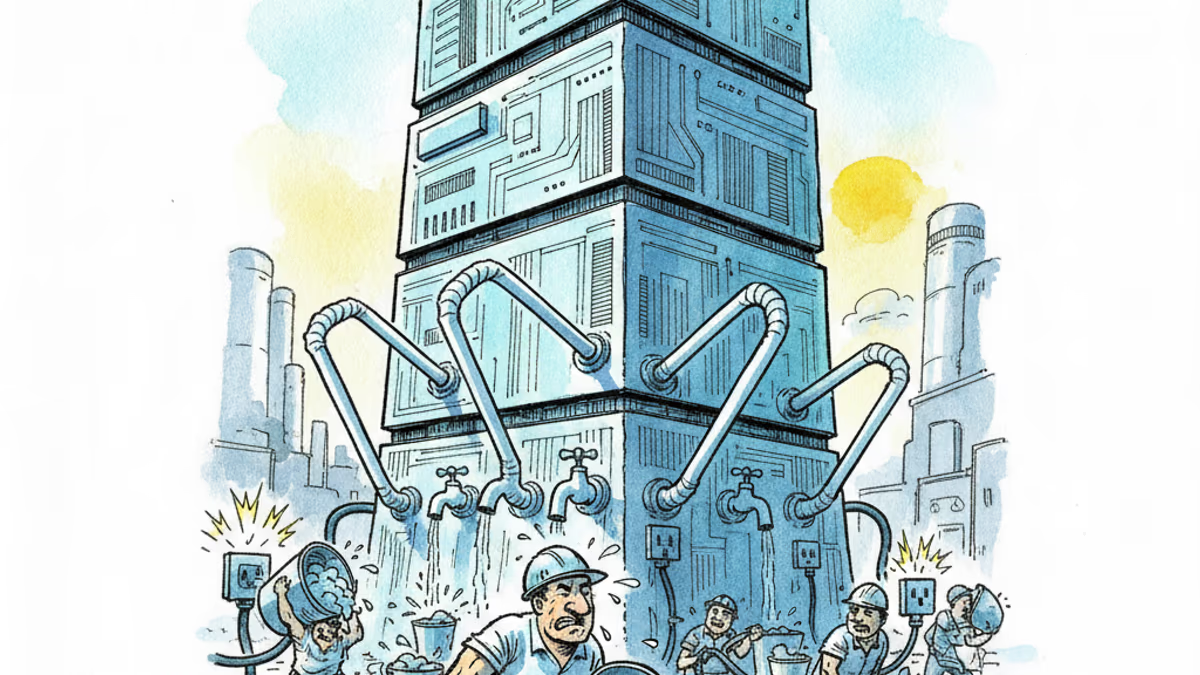
Samsung and SK unveiled a chip and AI investment package worth thousands of trillions of won on June 29. The headline number swings wildly by outlet, but the real contest isn't capital — it's water and power.
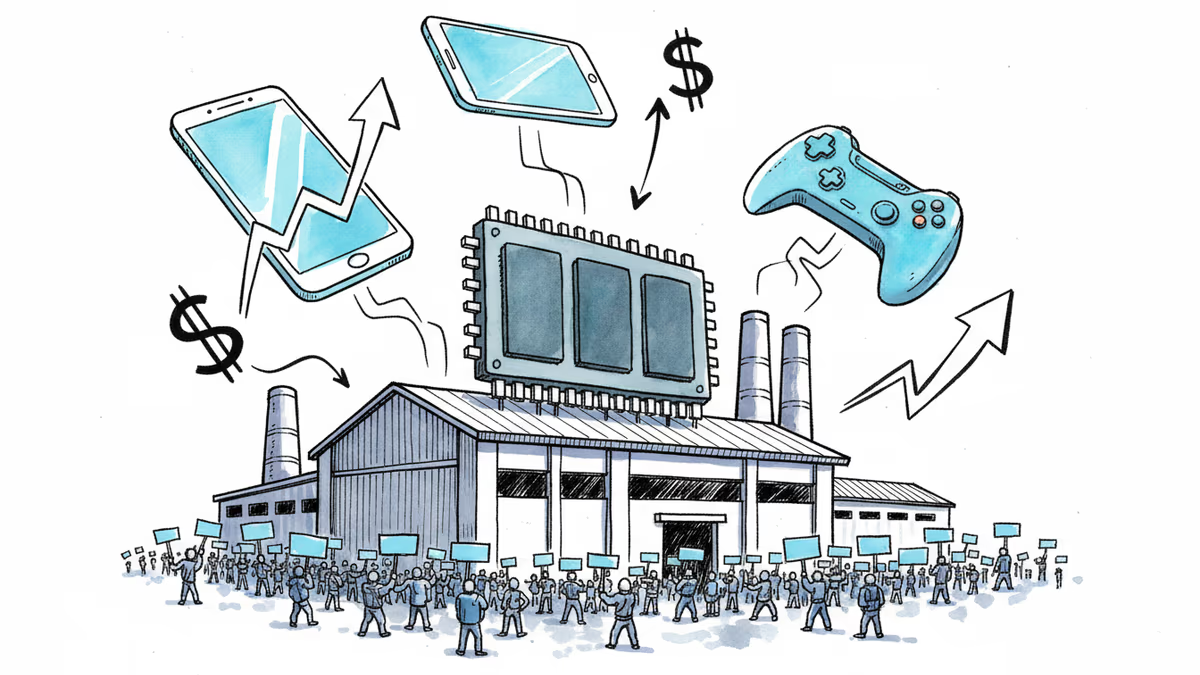
40,000 Samsung union workers rallied at its Pyeongtaek chip plant, threatening an 18-day strike over wages. With AI-driven RAM shortages already lifting consumer prices, the timing couldn't be worse.

Memory makers can't build fabs fast enough. By end of 2027, supply will cover just 60% of demand. Here's why the shortage could last until 2030—and what it means for AI, your devices, and the chip industry.
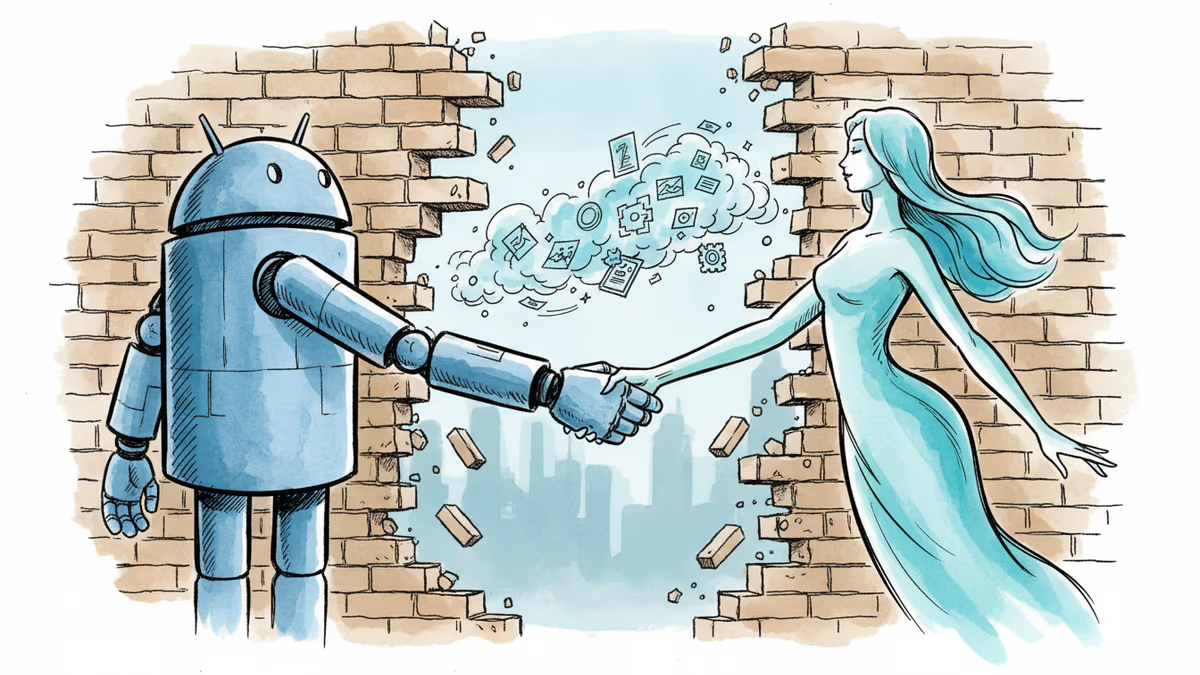
Samsung's Galaxy S26 now supports AirDrop through Quick Share, making cross-platform file sharing seamless. What does it mean when Android starts dismantling one of Apple's most beloved moats?
Samsung and SK unveiled a chip and AI investment package worth thousands of trillions of won on June 29. The headline number swings wildly by outlet, but the real contest isn't capital — it's water and power.
40,000 Samsung union workers rallied at its Pyeongtaek chip plant, threatening an 18-day strike over wages. With AI-driven RAM shortages already lifting consumer prices, the timing couldn't be worse.
Memory makers can't build fabs fast enough. By end of 2027, supply will cover just 60% of demand. Here's why the shortage could last until 2030—and what it means for AI, your devices, and the chip industry.
Samsung's Galaxy S26 now supports AirDrop through Quick Share, making cross-platform file sharing seamless. What does it mean when Android starts dismantling one of Apple's most beloved moats?
Thoughts
Share your thoughts on this article
Sign in to join the conversation