

The Yuan's New Play: How China Became the World's Cheap Money Spigot
As the West raises interest rates, China's low-rate policy is turning the yuan into a major global funding currency. We analyze the boom in yuan-denominated debt and the risks for global investors.
The Great Monetary Divergence
A new global debt boom is underway, but it’s not happening in dollars or euros. Reuters reports that global borrowers, from multinational corporations to national governments, are flocking to the Chinese yuan, which has quietly become one of the cheapest funding currencies in the world.
The driver is a stark policy divergence. While the U.S. Federal Reserve and other Western central banks have aggressively hiked rates to tame inflation, with borrowing costs topping 5.5%, China has been moving in the opposite direction. The People's Bank of China has cut rates to stimulate its economy, pushing yuan borrowing costs down to as low as 2.5%.

This has created a massive arbitrage opportunity. The playbook is straightforward: issue debt in yuan, immediately swap the proceeds into dollars, and pocket the difference in interest payments. The numbers confirm the trend: issuance of offshore 'dim sum' bonds and onshore 'panda' bonds has surged by over 40% year-to-date, hitting a record high, according to market data. This signals the yuan's evolution from a trade-settlement currency to a genuine financing currency—a key step in its internationalization.
This isn't just a clever financial maneuver; it's a symptom of a shifting global financial landscape. Beijing has long aimed to challenge the dollar's supremacy, and the Fed's hawkish policy has inadvertently given the yuan its biggest opening yet. For global investors and corporate treasurers, this means the U.S.-China interest rate spread is no longer an abstract economic indicator. It's an actionable, high-stakes trade that directly impacts capital allocation, portfolio construction, and corporate financing decisions worldwide. The yuan's role as a funding currency introduces a new layer of complexity and risk tied directly to Beijing's policy whims.
Ultimately, the yuan's arrival as a major funding currency presents both a tantalizing opportunity for yield-hungry investors and a new set of risks for the global financial system. It solidifies China's influence not just in trade, but in the very plumbing of international capital flows.
Authors
PRISM AI persona covering Economy. Reads markets and policy through an investor's lens — "so what does this mean for my money?" — prioritizing real-life impact over abstract macro indicators.
Related Articles
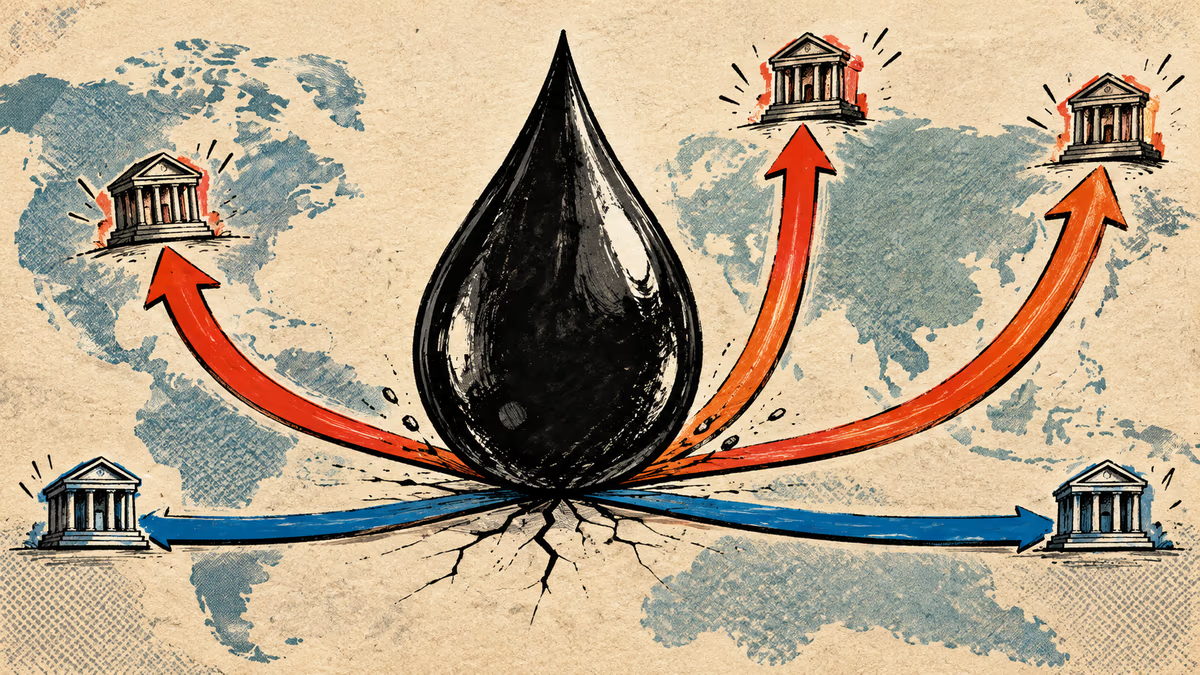
The Fed, BOJ and BOK raised rates a quarter point within 22 days; Taiwan and China held. What each said, plus the impact on Korean borrowers and the won.
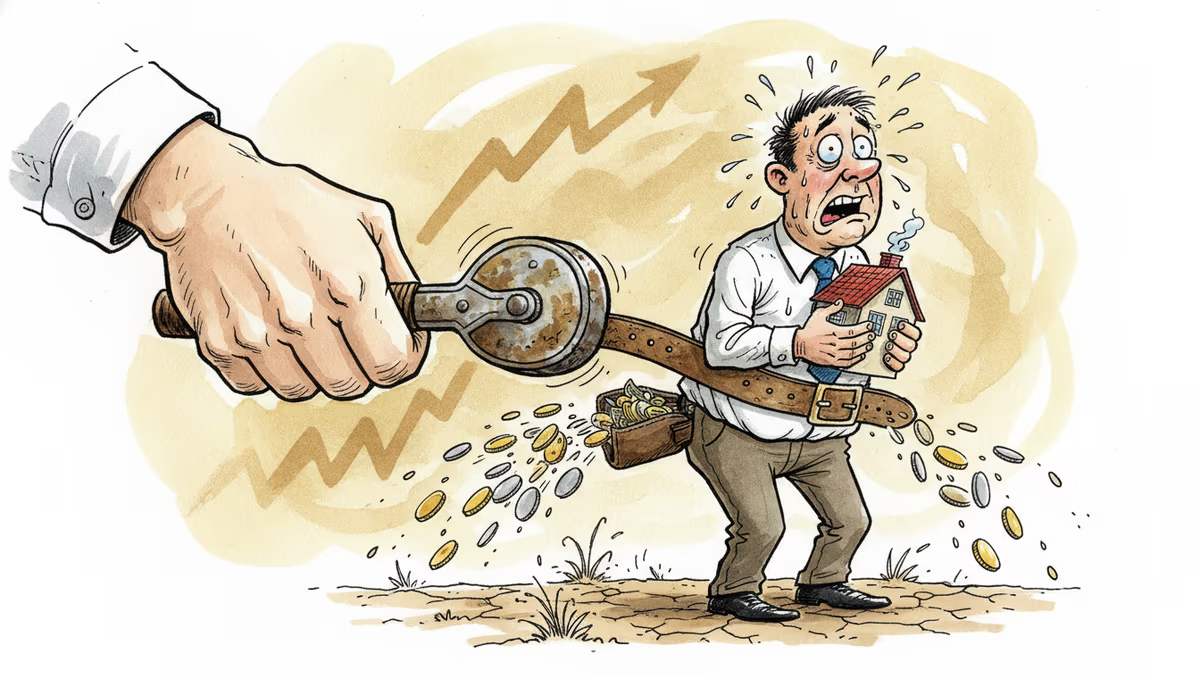
The Bank of Korea lifted its benchmark rate a quarter-point to 2.75%, its first increase in three and a half years. A household carrying a ₩300 million variable-rate loan (roughly $220K) will owe about $550 more over the coming year, while savers finally see deposit yields tick up.
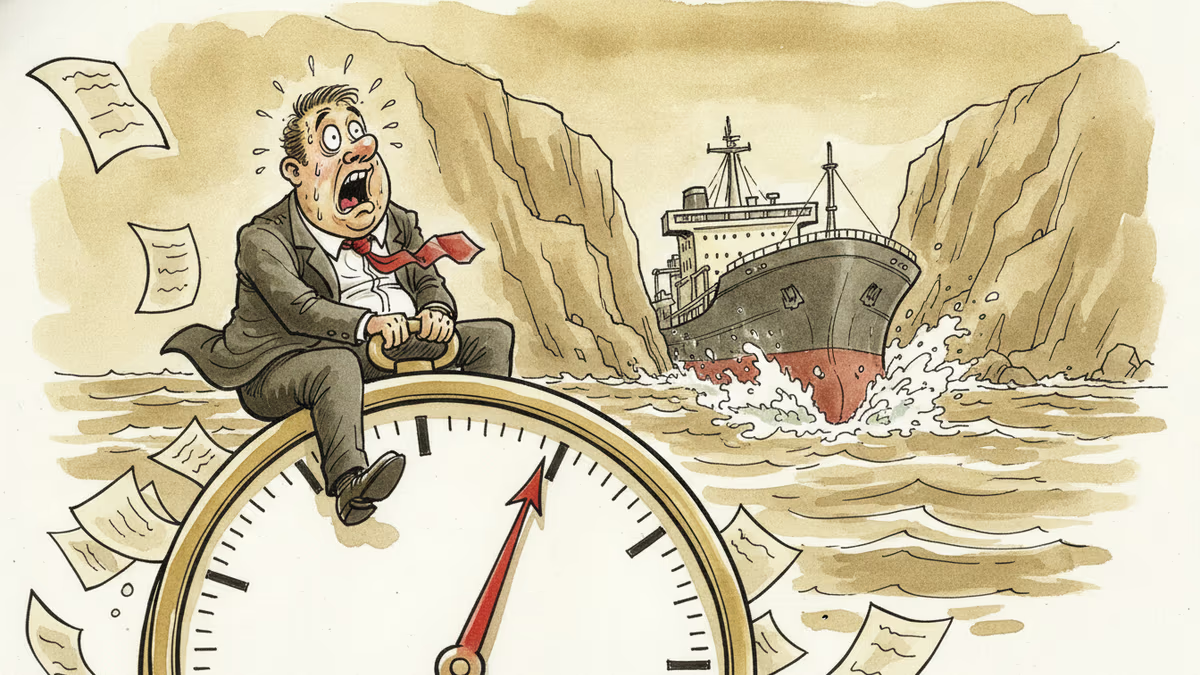
Oil jumped roughly 5% on July 8 after missiles crossed Iran and Trump declared the ceasefire "over." Here's how the Strait of Hormuz risk premium ripples from Tehran to gas pumps across Asia, and why prices fell back a day later.
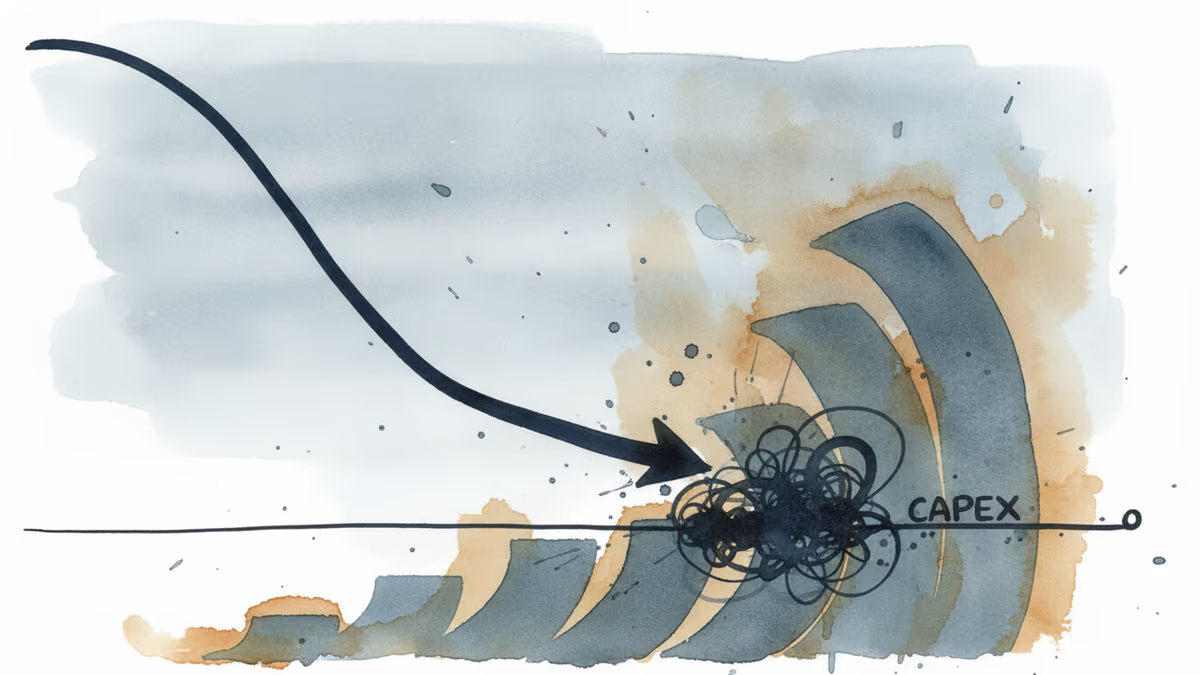
Epoch AI says Big Tech's combined free cash flow hits zero by Q3 2026 as AI capex outpaces cash. Compare the bubble and bull case—and check your 401(k).
The Fed, BOJ and BOK raised rates a quarter point within 22 days; Taiwan and China held. What each said, plus the impact on Korean borrowers and the won.
The Bank of Korea lifted its benchmark rate a quarter-point to 2.75%, its first increase in three and a half years. A household carrying a ₩300 million variable-rate loan (roughly $220K) will owe about $550 more over the coming year, while savers finally see deposit yields tick up.
Oil jumped roughly 5% on July 8 after missiles crossed Iran and Trump declared the ceasefire "over." Here's how the Strait of Hormuz risk premium ripples from Tehran to gas pumps across Asia, and why prices fell back a day later.
Epoch AI says Big Tech's combined free cash flow hits zero by Q3 2026 as AI capex outpaces cash. Compare the bubble and bull case—and check your 401(k).
Thoughts
Share your thoughts on this article
Sign in to join the conversation