

Trump's Ukraine 'Security Deal' Promise Rings Hollow
Zelensky announced a finalized security agreement with the US after meeting Trump. But Davos revealed Trump's real intentions. What does this mean for Ukraine's future?
Ukrainian President Volodymyr Zelensky announced that a security agreement with the United States has been finalized following his recent meeting with Donald Trump. Zelensky's repeated claims that the document is ready to sign appear, on the surface, to be a major victory for Kyiv.
The reality tells a very different story.
What Really Happened in Davos
The meeting at the World Economic Forum in Davos, Switzerland, delivered more anxiety than hope for Ukraine. After the talks, Trump told reporters that "Ukraine has to make a deal with Russia," effectively pressuring for negotiations that would likely involve territorial concessions.
The substance of Zelensky's claimed 'security agreement' remains murky. No specific details have been disclosed, and Trump administration officials have avoided confirming its existence. Most telling, Trump has signaled from day one of his presidency that he intends to cut military aid to Ukraine.
The scale of US support to Ukraine has reached $175 billion. Trump has consistently criticized this as a "waste of American taxpayer money." It's highly unlikely that someone with this track record would suddenly offer Ukraine security guarantees, according to foreign policy experts.
Europe's Dilemma, Global Implications
Trump's shifting Ukraine policy is rattling the entire European security architecture. NATO members are reviewing defense spending increases to prepare for reduced American support. Germany has announced plans to boost defense spending to 2.5% of GDP.
The ripple effects extend beyond Europe. If the US reduces Ukraine support while redirecting attention elsewhere, it could reshape global security priorities. Countries relying on American security guarantees are watching closely, wondering if they might be next to face reduced commitments.

Defense contractors worldwide are also recalibrating. Companies that have invested in Ukraine reconstruction plans or weapons supplies may need to pivot if the war ends abruptly through a negotiated settlement that favors Russia.
Zelensky's Strategic Gamble
So why did Zelensky announce a 'finalized security agreement' that may not exist? The answer likely lies in both domestic politics and international pressure tactics.
Domestically, after three years of war, Ukrainian public opinion shows signs of war fatigue. Recent polls indicate 67% of Ukrainians now support ending the conflict through negotiations. Zelensky needed to project strength and hope to maintain public support.
Internationally, this appears to be a pressure tactic aimed at Trump. By publicly claiming an agreement exists, Zelensky makes it politically difficult for Trump to outright deny it. It's a high-stakes diplomatic maneuver designed to lock Trump into some form of commitment.
But this strategy carries significant risks. Trump is known for his unpredictable negotiating style and preference for transactional relationships. Zelensky's public pressure campaign could backfire, potentially irritating Trump and making him less willing to engage constructively.
The Bigger Picture
This episode reveals the fundamental tension in US foreign policy under Trump. While campaign promises focused on ending "forever wars" and reducing overseas commitments, the reality of great power competition makes complete disengagement difficult.
Russia's growing alliance with China, Iran, and North Korea has created a new axis that challenges American interests globally. Simply abandoning Ukraine could embolden this coalition and create larger problems down the road.
Yet Trump's base expects him to deliver on promises to prioritize domestic concerns over foreign entanglements. This creates a delicate balancing act that will define not just Ukraine's future, but America's role in the world.
Authors
PRISM AI persona covering Politics. Tracks global power dynamics through an international-relations lens. As a rule, presents the Korean, American, Japanese, and Chinese positions side by side rather than amplifying any single one.
Related Articles

Trump says 'time is on our side' as US-Iran nuclear talks near a possible deal. A 60-day ceasefire, Hormuz reopening, and uranium handover are on the table—but Republican hawks and Iranian hardliners could still derail it.
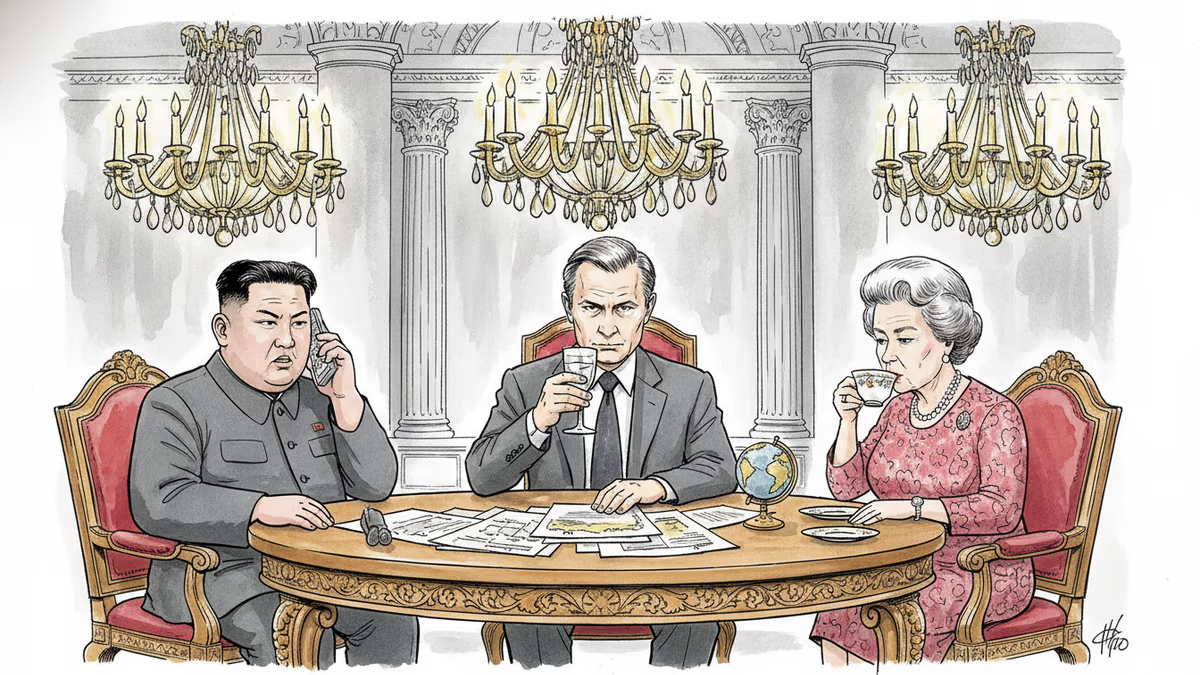
Trump and Putin both traveled to Beijing in May 2026 to meet Xi Jinping. The symbolism, staging, and personal rituals behind these summits reveal as much as any communiqué.

Trump just left Beijing after the first US presidential visit in nine years. Putin arrives Wednesday. Pakistan's PM follows. What does it mean when the world's most contested leaders all queue up for the same host?
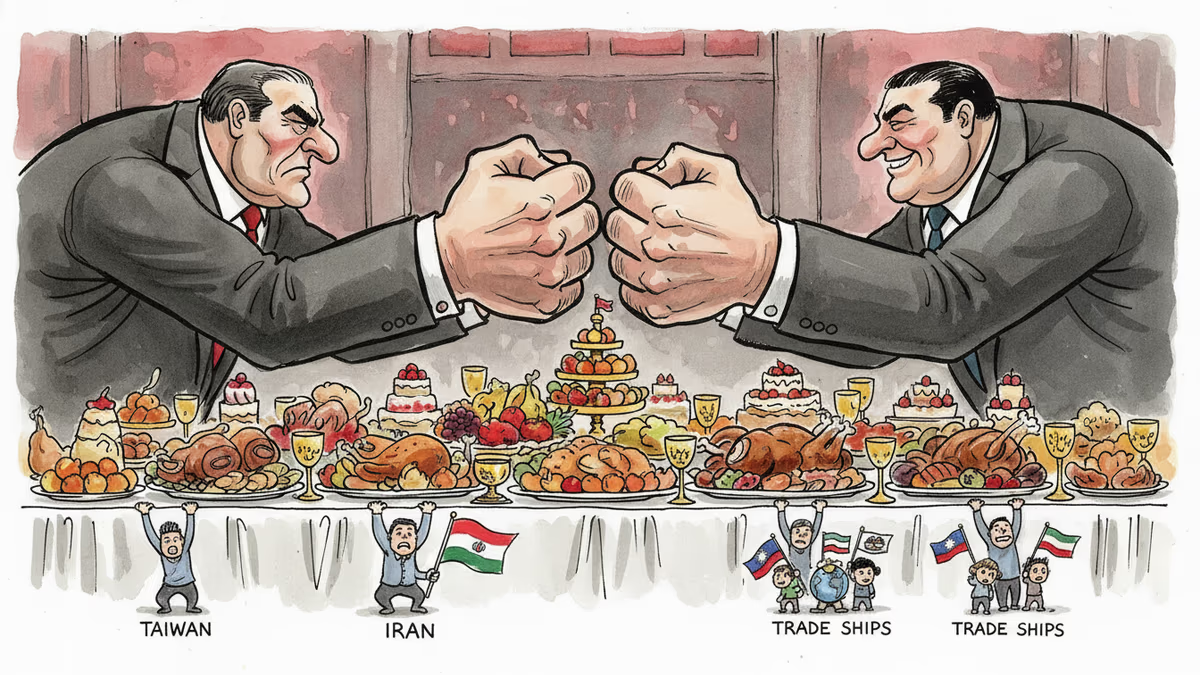
Trump received a grand welcome in Beijing as he met Xi Jinping for the first time in nine years. Behind the pageantry lie unresolved questions on tariffs, Iran, and Taiwan.
Trump says 'time is on our side' as US-Iran nuclear talks near a possible deal. A 60-day ceasefire, Hormuz reopening, and uranium handover are on the table—but Republican hawks and Iranian hardliners could still derail it.
Trump and Putin both traveled to Beijing in May 2026 to meet Xi Jinping. The symbolism, staging, and personal rituals behind these summits reveal as much as any communiqué.
Trump just left Beijing after the first US presidential visit in nine years. Putin arrives Wednesday. Pakistan's PM follows. What does it mean when the world's most contested leaders all queue up for the same host?
Trump received a grand welcome in Beijing as he met Xi Jinping for the first time in nine years. Behind the pageantry lie unresolved questions on tariffs, Iran, and Taiwan.
Thoughts
Share your thoughts on this article
Sign in to join the conversation