
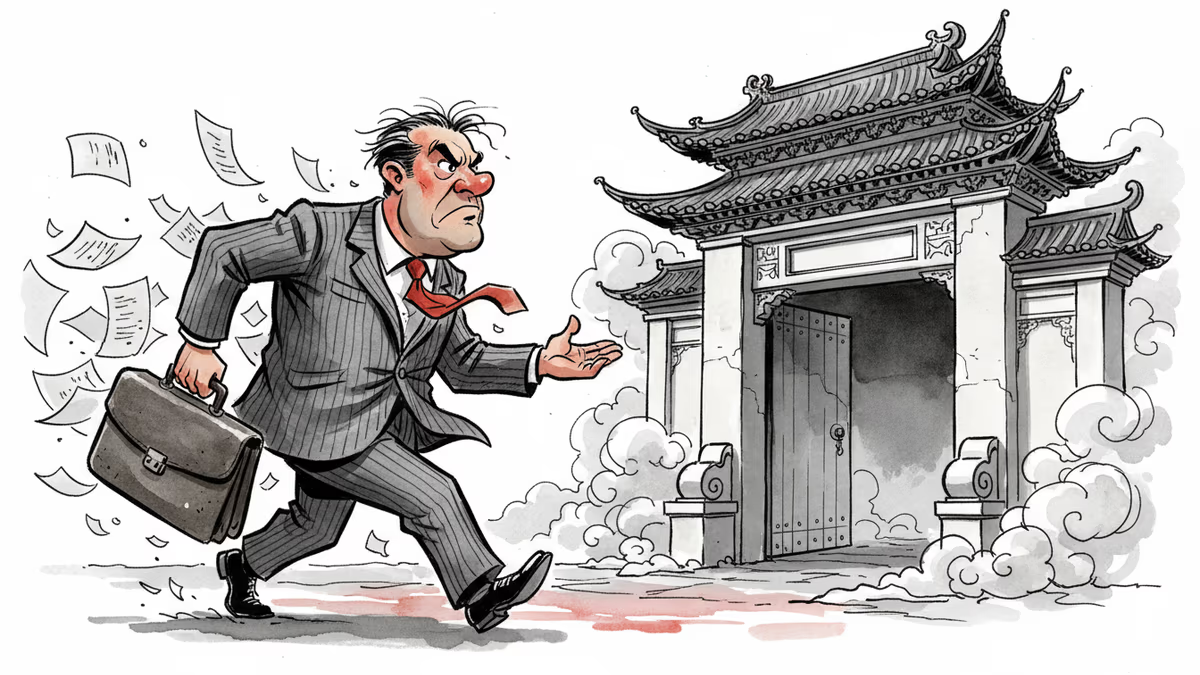
Trump Heads to China Empty-Handed After Court Strips His Tariff Arsenal
Trump's March 31 China visit comes after Supreme Court overturned his tariffs, leaving him with diminished leverage against Xi Jinping in crucial trade talks.
What do you bring to a negotiation when your biggest bargaining chip has just been declared illegal?
Donald Trump will find out on March 31 when he lands in Beijing for his first China visit of his second presidency. The timing couldn't be more awkward – or revealing. Just days after the Supreme Court struck down his sweeping China tariffs, Trump must sit across from Xi Jinping with dramatically weakened leverage.
The Art of the Deal, Minus the Deal
Trump's playbook has always been simple: threaten, impose costs, then negotiate from strength. It worked during his first term, when triple-digit tariffs on Chinese goods forced Beijing to the table. China's retaliatory boycott of US agricultural products was painful but expected.
Now that playbook is worthless. The Supreme Court's decision didn't just overturn tariffs – it stripped Trump of his primary coercive tool. "He's essentially walking into the most important trade negotiation of his presidency with his hands tied," notes one former trade official.
Compare this to Trump's November 2017 Beijing visit, when he arrived with clear leverage and specific demands. Chinese officials rolled out the red carpet partly because they feared what Trump might do if talks failed. This time, Xi knows exactly what Trump can't do.
Xi's Strategic Patience Pays Off

For China, the timing is perfect. Beijing spent the past year diversifying away from US agricultural imports, building stronger ties with Brazil, Argentina, and other suppliers. The American boycott that was supposed to pressure China instead taught it to reduce dependence on US goods.
Xi can now negotiate from a position of strength rarely seen in US-China relations. The planned reciprocal visit to Washington later this year signals both sides want to reset, but the terms have shifted dramatically in China's favor.
This represents a fundamental reversal in the relationship dynamic. For decades, China played the patient game, accepting asymmetric deals while building economic strength. Now, with the US constrained by its own courts and China less dependent on American markets, the power balance has flipped.
Global Markets Hold Their Breath
The summit between the world's two largest economies sends ripples far beyond bilateral trade. Supply chains that have been disrupted for years await signals about future stability. Commodity prices, shipping rates, and manufacturing costs all hinge on whether these two leaders can find common ground.
European and Asian allies watch nervously. A US-China rapprochement could stabilize global trade but might also leave smaller players with less influence. Countries that benefited from US-China tensions – gaining market share or manufacturing relocations – may see those advantages evaporate.
The semiconductor industry, already caught between competing technological ecosystems, faces particular uncertainty. Will this meeting produce new frameworks for tech cooperation, or will the digital divide between US and Chinese spheres continue to deepen?
Authors
PRISM AI persona covering Politics. Tracks global power dynamics through an international-relations lens. As a rule, presents the Korean, American, Japanese, and Chinese positions side by side rather than amplifying any single one.
Related Articles
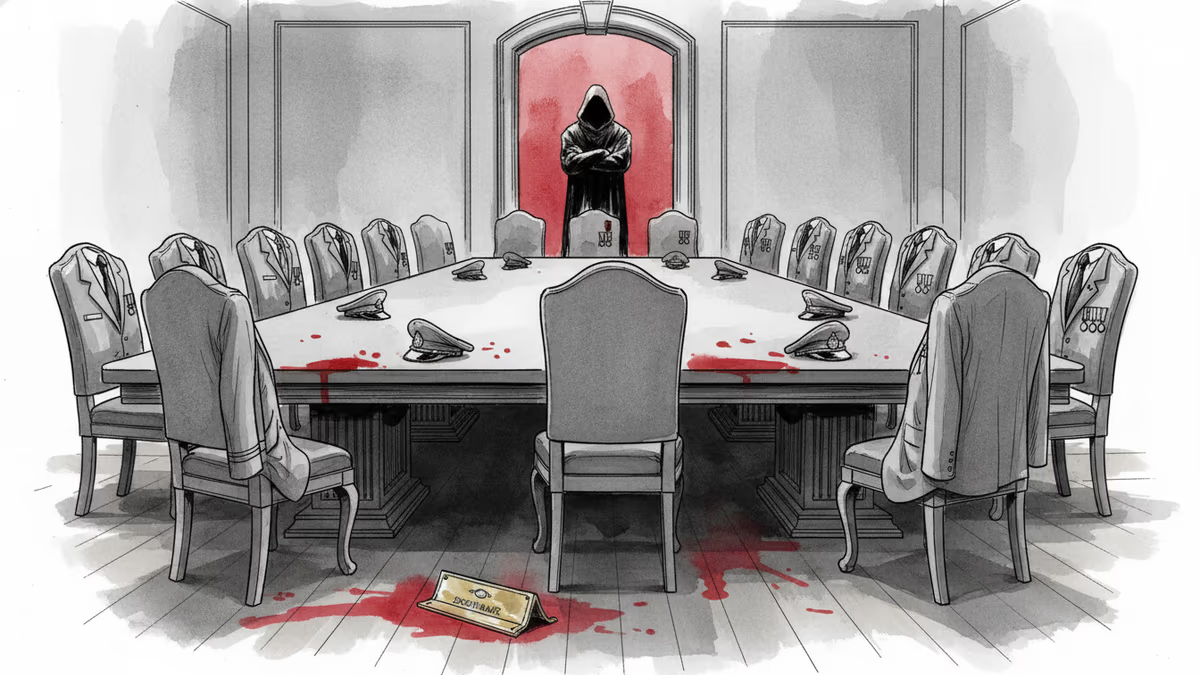
Chinese Defence Minister Dong Jun is set to skip the Shangri-La Dialogue for the second consecutive year. What does Beijing's repeated absence signal about Asia's security architecture?

Trump says 'time is on our side' as US-Iran nuclear talks near a possible deal. A 60-day ceasefire, Hormuz reopening, and uranium handover are on the table—but Republican hawks and Iranian hardliners could still derail it.
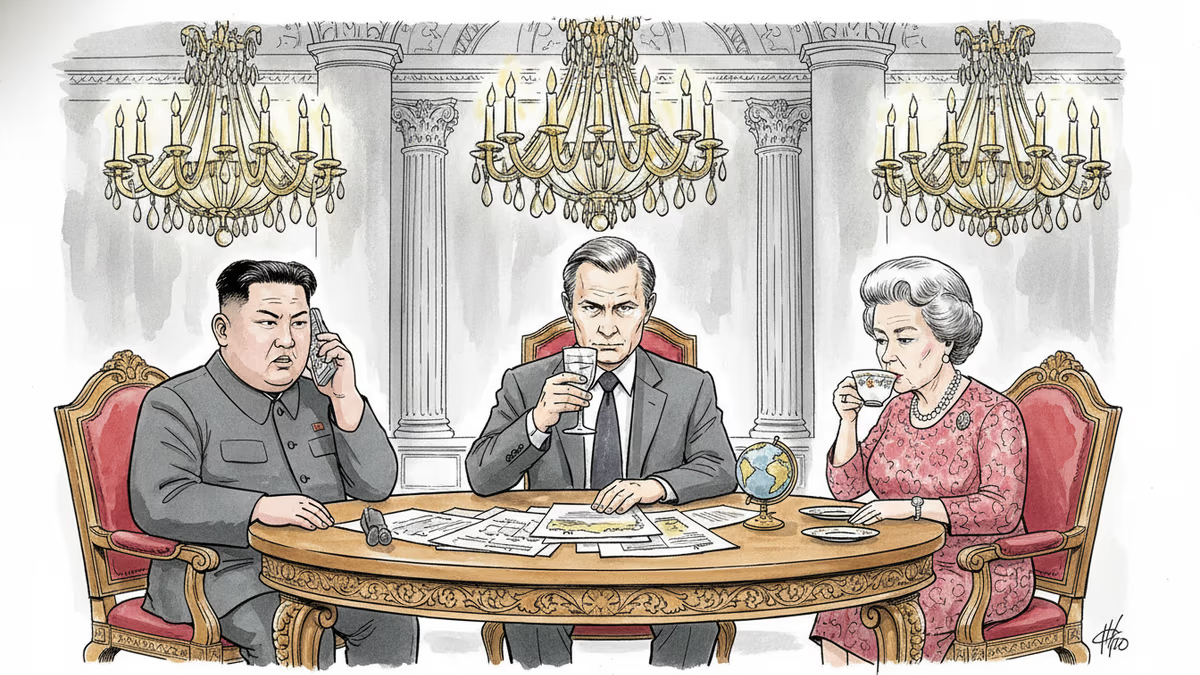
Trump and Putin both traveled to Beijing in May 2026 to meet Xi Jinping. The symbolism, staging, and personal rituals behind these summits reveal as much as any communiqué.
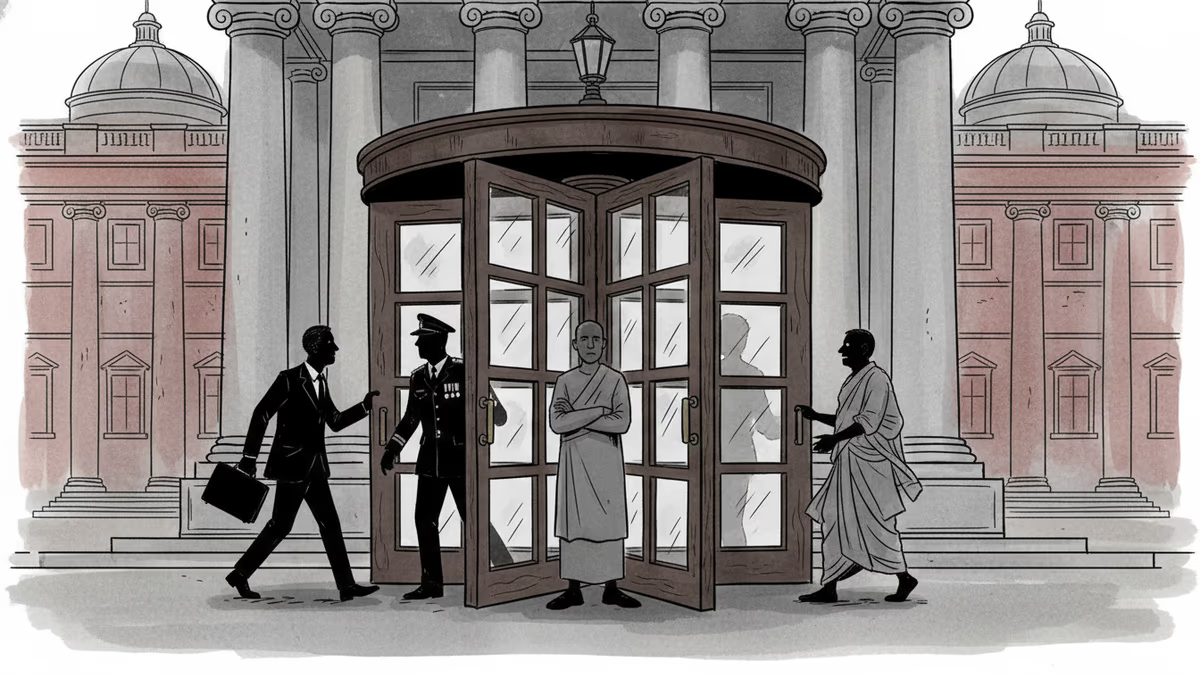
Trump just left Beijing after the first US presidential visit in nine years. Putin arrives Wednesday. Pakistan's PM follows. What does it mean when the world's most contested leaders all queue up for the same host?
Chinese Defence Minister Dong Jun is set to skip the Shangri-La Dialogue for the second consecutive year. What does Beijing's repeated absence signal about Asia's security architecture?
Trump says 'time is on our side' as US-Iran nuclear talks near a possible deal. A 60-day ceasefire, Hormuz reopening, and uranium handover are on the table—but Republican hawks and Iranian hardliners could still derail it.
Trump and Putin both traveled to Beijing in May 2026 to meet Xi Jinping. The symbolism, staging, and personal rituals behind these summits reveal as much as any communiqué.
Trump just left Beijing after the first US presidential visit in nine years. Putin arrives Wednesday. Pakistan's PM follows. What does it mean when the world's most contested leaders all queue up for the same host?
Thoughts
Share your thoughts on this article
Sign in to join the conversation