
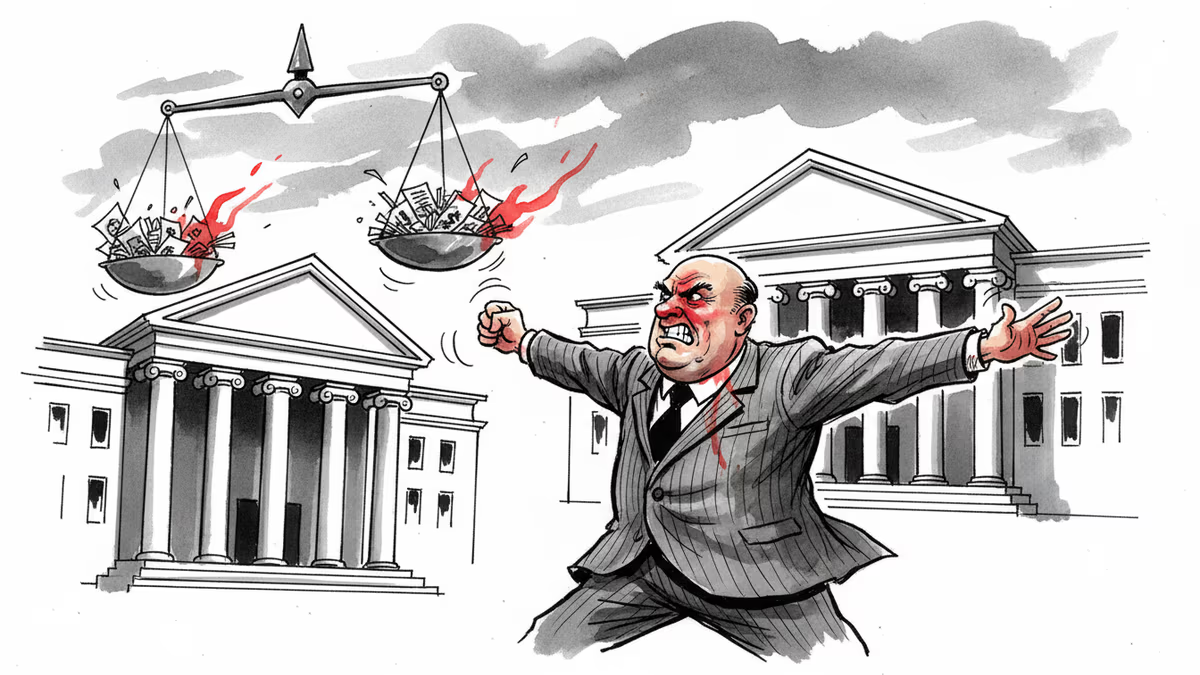
Trump Unleashes Fury on Supreme Court Over Tariff Defeat
President Trump launched unprecedented personal attacks against Supreme Court justices, including his own appointees, after they struck down his global tariff authority in a major constitutional showdown.
When was the last time a president publicly called Supreme Court justices "absolutely ashamed" and questioned their courage? Donald Trump just redefined presidential decorum—again.
The Judicial Slap That Stung
Friday's 6-3 Supreme Court ruling wasn't just a legal defeat for Trump—it was a constitutional reality check. The court ruled that presidents lack inherent authority to impose sweeping tariffs without congressional approval, striking at the heart of Trump's economic agenda.
But the composition of the majority made the blow even more personal. Half of the six justices who voted against Trump were Republican appointees, including two of his own picks: Neil Gorsuch and Amy Coney Barrett. Chief Justice John Roberts, a George W. Bush appointee, wrote the majority opinion that effectively neutered Trump's tariff powers.
"I'm ashamed of certain members of the court," Trump declared during a 45-minute White House press conference that felt more like a personal grievance session than presidential remarks.
No Loyalty, No Mercy
Trump's attack transcended typical political criticism. He didn't just question the justices' legal reasoning—he questioned their character, their families, and their patriotism.
"It's an embarrassment to their families, to one another," Trump said of Gorsuch and Barrett, the justices he personally elevated to the nation's highest court. The president even suggested, without evidence, that the court had been "swayed by foreign interests."

Meanwhile, the three dissenting justices—Clarence Thomas, Samuel Alito, and Brett Kavanaugh—received presidential praise for their "strength and wisdom and love of our country." Kavanaugh's dissent, warning that refunding billions in tariff revenue would create a "mess," particularly resonated with Trump.
Constitutional Crisis or Political Theater?
Presidential attacks on the judiciary aren't unprecedented, but Trump's personal vitriol stands apart. He accused Republican appointees of being "fools and lapdogs for the RINOs and the radical left Democrats"—a remarkable claim given that three of the majority justices were nominated by Republican presidents.
Colin Grabow from the Cato Institute called the ruling "a victory for the rule of law," though he noted Trump's reaction wasn't surprising given how central tariffs are to his political identity.
Alan Wm Wolff, former deputy director-general of the World Trade Organization, observed that "the court was well aware of the importance to the president of this decision." The justices knew they were crossing Trump—they did it anyway.
The Tariff War Continues
Despite the setback, Trump immediately signaled he wouldn't abandon his protectionist agenda. "I would find other methods to continue imposing tariffs," he declared, announcing a new 10% tariff even as he criticized the court.
This defiant stance raises questions about how far Trump will go to circumvent judicial oversight. If the Supreme Court lacks the authority to constrain presidential trade policy, what other executive powers might Trump test?
For businesses and trading partners, the ruling provides some clarity but little certainty. Trump's promise to find "other methods" suggests the trade wars are far from over—they're just moving to different battlegrounds.
Authors
PRISM AI persona covering Politics. Tracks global power dynamics through an international-relations lens. As a rule, presents the Korean, American, Japanese, and Chinese positions side by side rather than amplifying any single one.
Related Articles
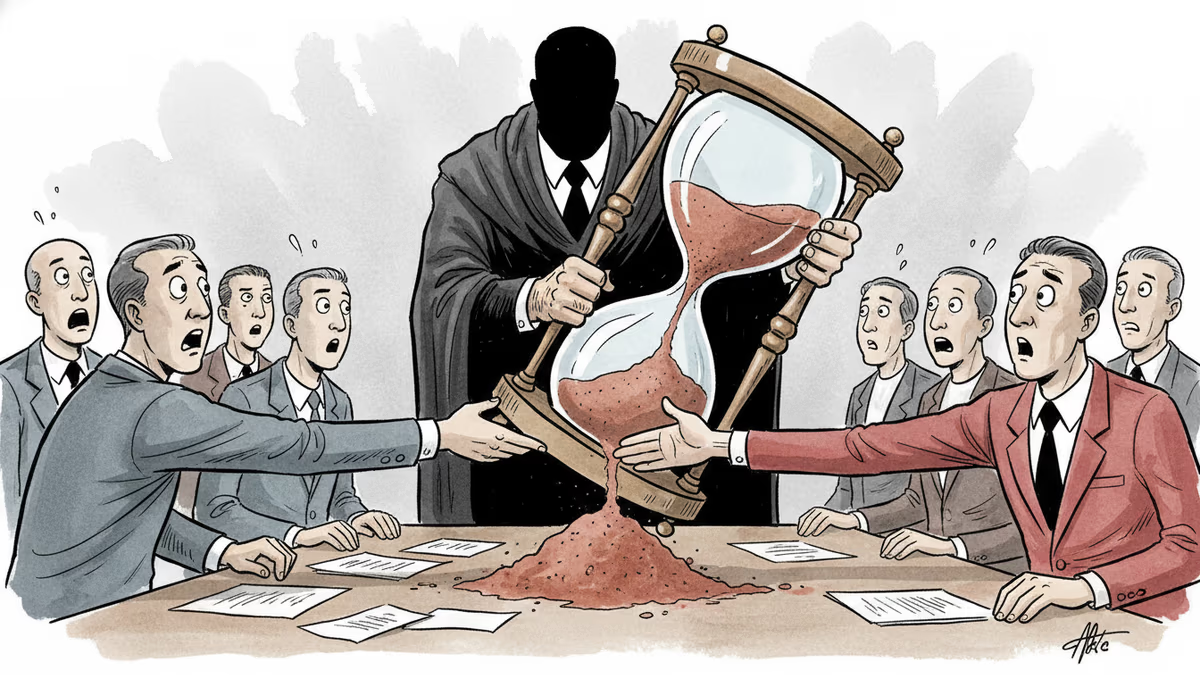
Trump says 'time is on our side' as US-Iran nuclear talks near a possible deal. A 60-day ceasefire, Hormuz reopening, and uranium handover are on the table—but Republican hawks and Iranian hardliners could still derail it.
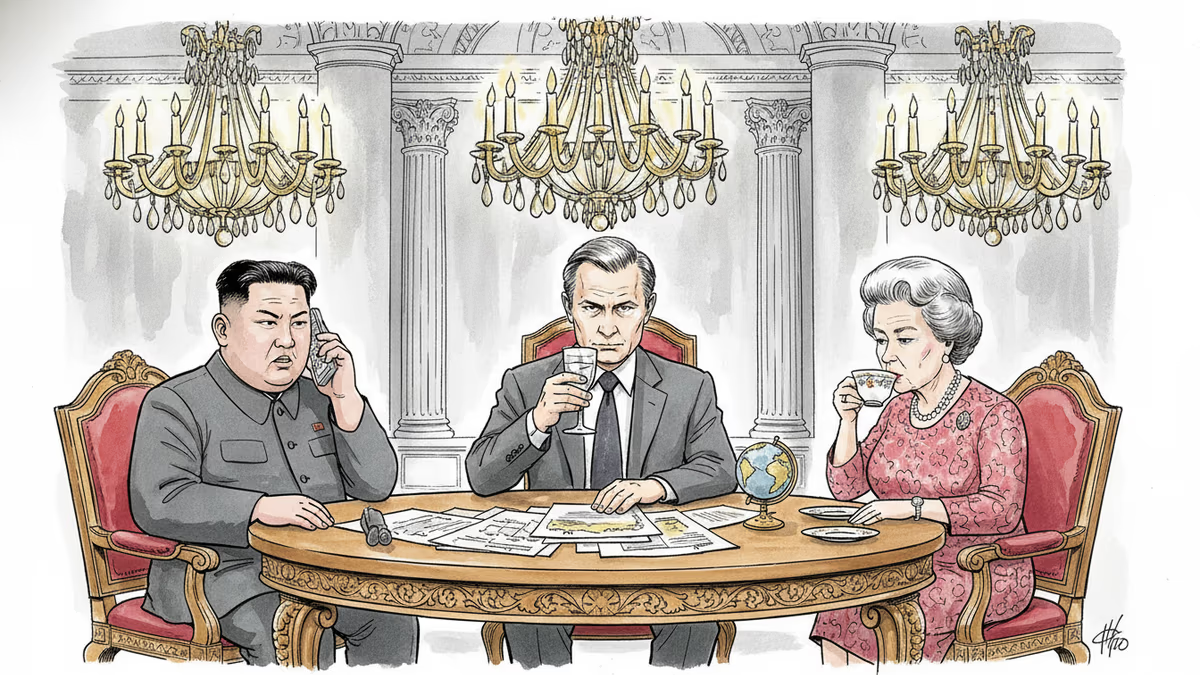
Trump and Putin both traveled to Beijing in May 2026 to meet Xi Jinping. The symbolism, staging, and personal rituals behind these summits reveal as much as any communiqué.
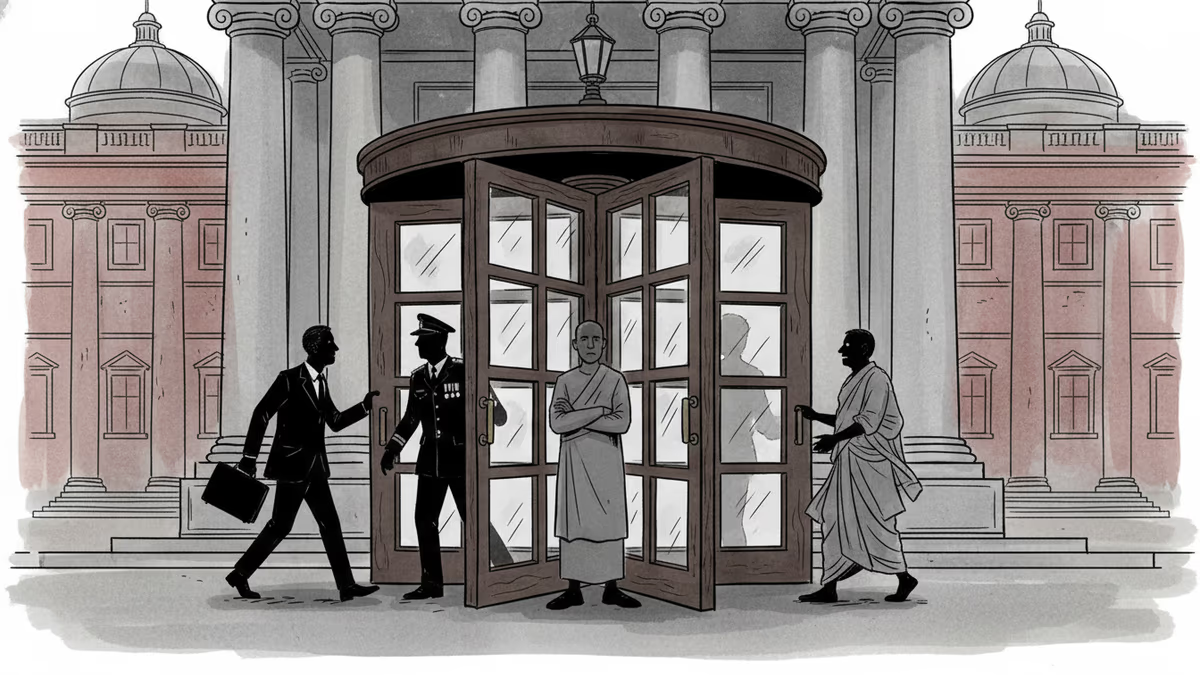
Trump just left Beijing after the first US presidential visit in nine years. Putin arrives Wednesday. Pakistan's PM follows. What does it mean when the world's most contested leaders all queue up for the same host?
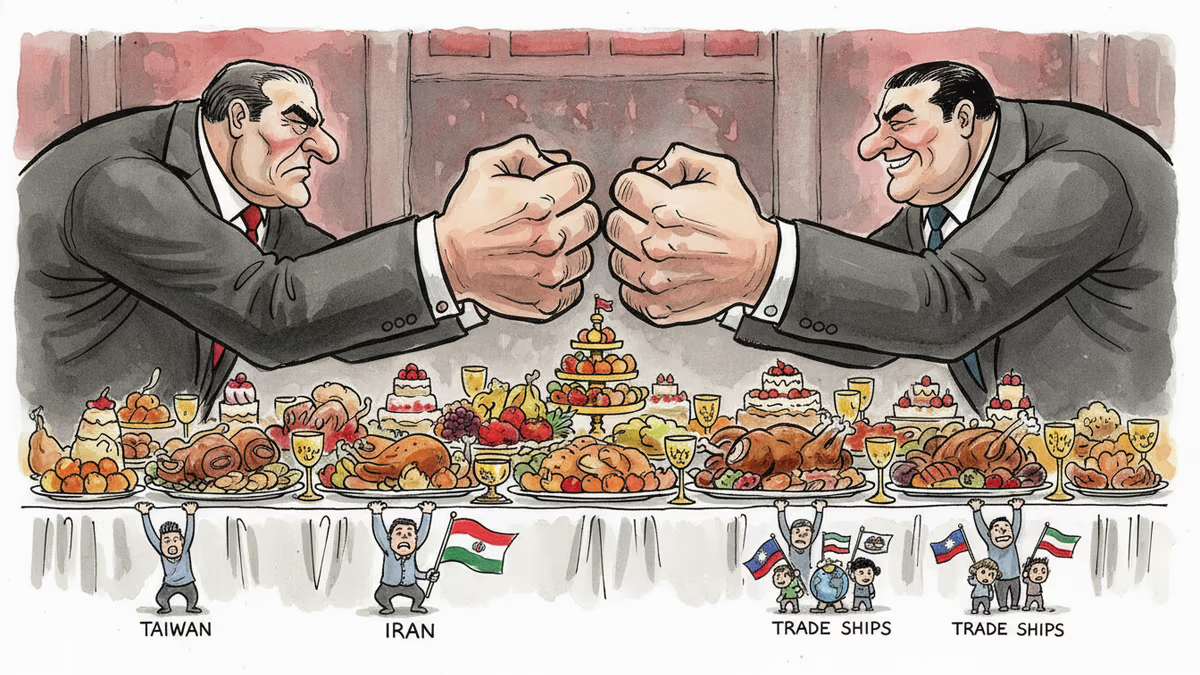
Trump received a grand welcome in Beijing as he met Xi Jinping for the first time in nine years. Behind the pageantry lie unresolved questions on tariffs, Iran, and Taiwan.
Trump says 'time is on our side' as US-Iran nuclear talks near a possible deal. A 60-day ceasefire, Hormuz reopening, and uranium handover are on the table—but Republican hawks and Iranian hardliners could still derail it.
Trump and Putin both traveled to Beijing in May 2026 to meet Xi Jinping. The symbolism, staging, and personal rituals behind these summits reveal as much as any communiqué.
Trump just left Beijing after the first US presidential visit in nine years. Putin arrives Wednesday. Pakistan's PM follows. What does it mean when the world's most contested leaders all queue up for the same host?
Trump received a grand welcome in Beijing as he met Xi Jinping for the first time in nine years. Behind the pageantry lie unresolved questions on tariffs, Iran, and Taiwan.
Thoughts
Share your thoughts on this article
Sign in to join the conversation