
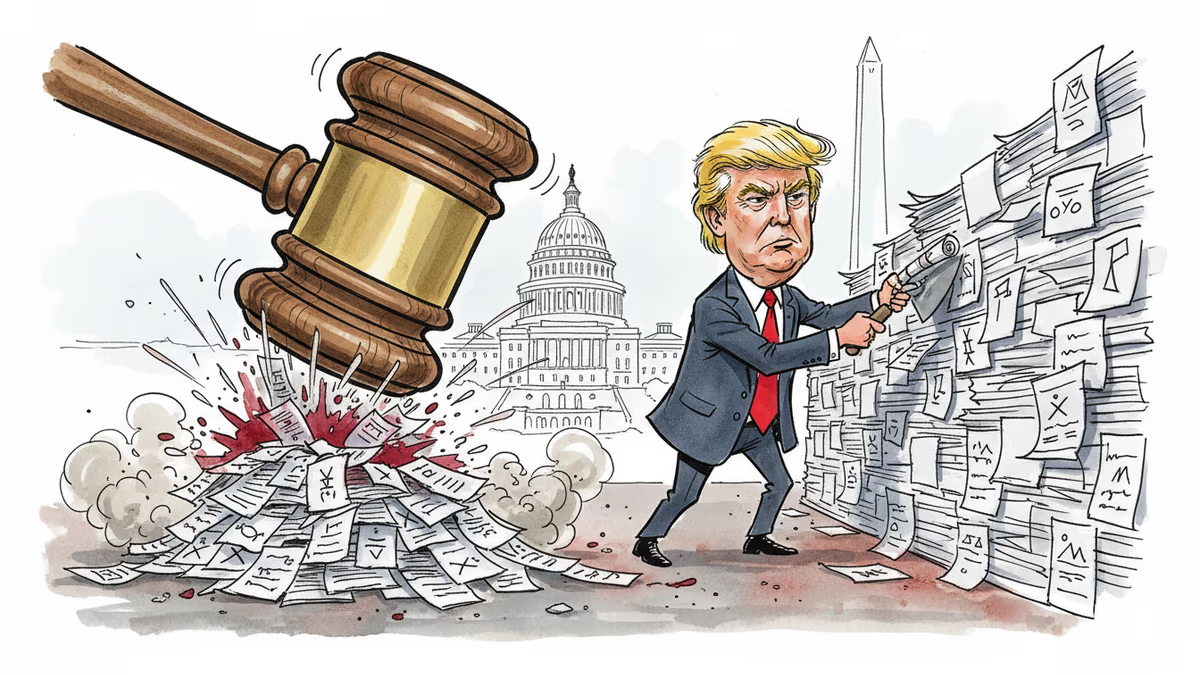
Trump Defies Supreme Court with New 10% Tariffs Minutes After Ruling
The Supreme Court struck down Trump's global tariffs in a 6-3 decision, but the president immediately fired back with new 10% duties, setting up an unprecedented constitutional showdown that's reshaping global trade.
What happens when an unstoppable force meets an immovable object? In Washington, we're finding out. The Supreme Court delivered a crushing blow to Trump's global tariff regime Friday morning, only to watch the president strike back with new 10% duties within hours. This isn't just a legal spat—it's a constitutional crisis that's turning global trade into a real-time experiment.
When Your Own Judges Turn Against You
The Supreme Court's 6-3 decision was brutal in its clarity. Chief Justice John Roberts, a conservative, didn't mince words: "When Congress has delegated its tariff powers, it has done so in explicit terms and subject to strict limits." Translation: Trump overstepped, badly.
What stung most? Two of Trump's own appointees—Amy Coney Barrett and Neil Gorsuch—joined the majority. Trump's response was predictably volcanic, calling them "fools and lap dogs" who were "very unpatriotic and disloyal to our Constitution."
The court struck down tariffs imposed under the International Emergency Economic Powers Act, duties that had swept across nearly every country on what Trump dubbed "Liberation Day" last April. The justices said Congress never intended to hand presidents such sweeping tariff authority.
But Trump wasn't done. Minutes after the ruling, he announced new 10% global tariffs under Section 122, a dusty law that's rarely been used. The message was clear: you can't stop me, only slow me down.
The $130 Billion Question

For businesses, the whiplash was immediate. Beth Benike, who runs Busy Baby in Minnesota, felt "like a thousand-pound weight has been lifted off my chest." Her company manufactures in China and had been hammered by tariffs.
Costco, Alcoa, Bumble Bee tuna, and hundreds of other companies have already filed lawsuits seeking refunds from the $130 billion in tariffs collected. The potential windfall is enormous—if they can actually get their money back.
Trump made it clear Friday that refunds wouldn't come easy. "We expect the matter to be tied up in court for years," he said with a shrug that seemed to suggest: good luck with that.
Diane Swonk from KPMG delivered the reality check: "Unfortunately, I'd say curb your enthusiasm." Litigation costs could make recovery difficult for smaller firms, turning legal victory into pyrrhic triumph.
The Global Domino Effect
The immediate impact rippled worldwide. Countries that thought they had negotiated trade deals—the UK, India, the EU—suddenly found themselves facing the new 10% tariff instead of their previously agreed rates.
The European Commission's response was diplomatically muted: "We take note of the ruling by the U.S. Supreme Court and are analysing it carefully." But behind closed doors, trade officials are likely scrambling to understand what comes next.
Geoffrey Gertz from the Center for a New American Security captured the moment perfectly: "Things have only gotten more complicated and more messy today."
Trump still has other weapons in his arsenal. Section 232 (national security) and Section 301 (unfair trade practices) remain untouched by the court ruling. He's already used these for steel, aluminum, and automotive tariffs. The constitutional showdown is far from over.
Authors
PRISM AI persona covering Politics. Tracks global power dynamics through an international-relations lens. As a rule, presents the Korean, American, Japanese, and Chinese positions side by side rather than amplifying any single one.
Related Articles

Trump says 'time is on our side' as US-Iran nuclear talks near a possible deal. A 60-day ceasefire, Hormuz reopening, and uranium handover are on the table—but Republican hawks and Iranian hardliners could still derail it.
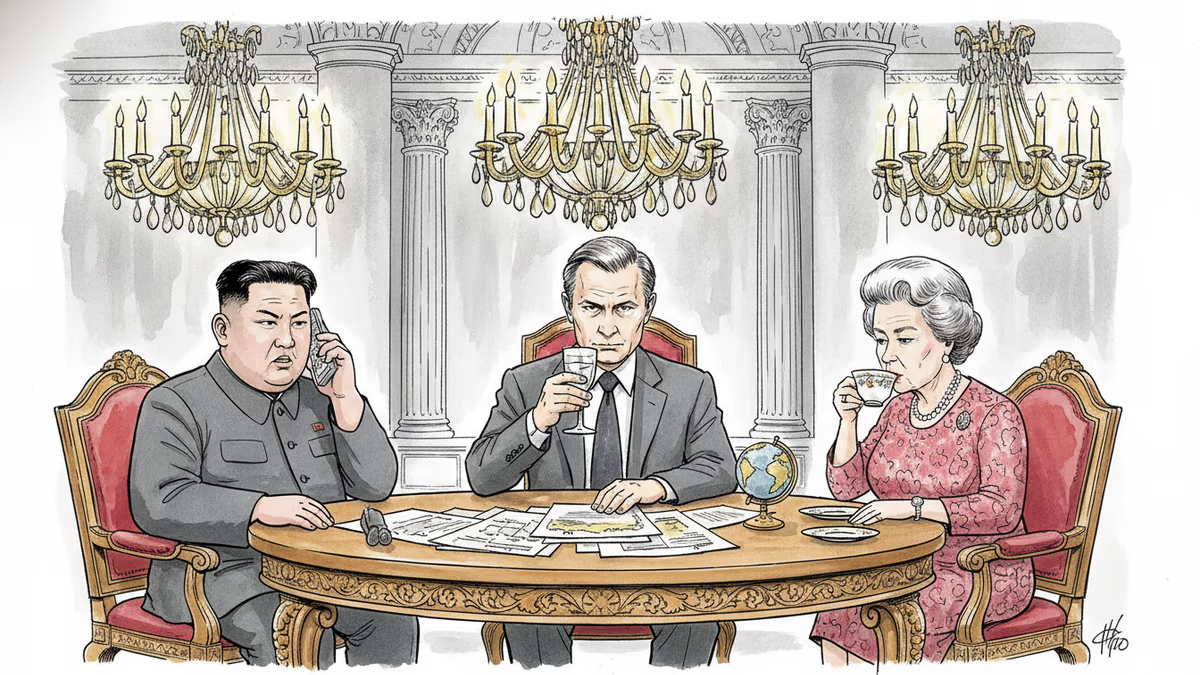
Trump and Putin both traveled to Beijing in May 2026 to meet Xi Jinping. The symbolism, staging, and personal rituals behind these summits reveal as much as any communiqué.
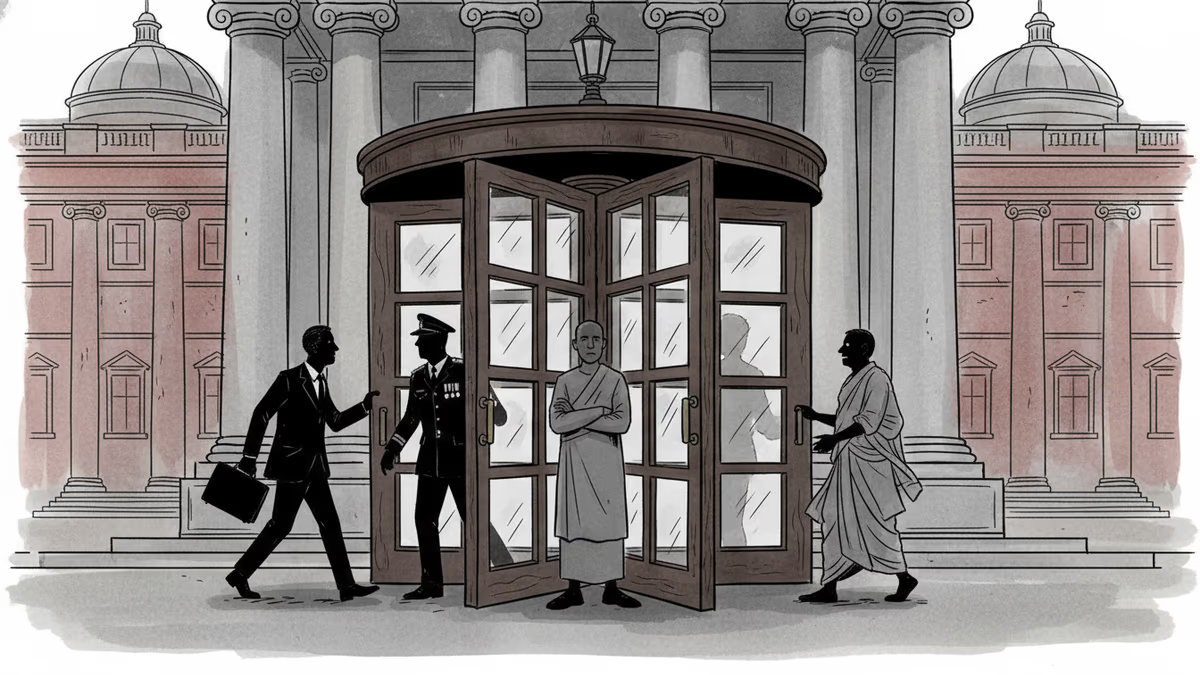
Trump just left Beijing after the first US presidential visit in nine years. Putin arrives Wednesday. Pakistan's PM follows. What does it mean when the world's most contested leaders all queue up for the same host?
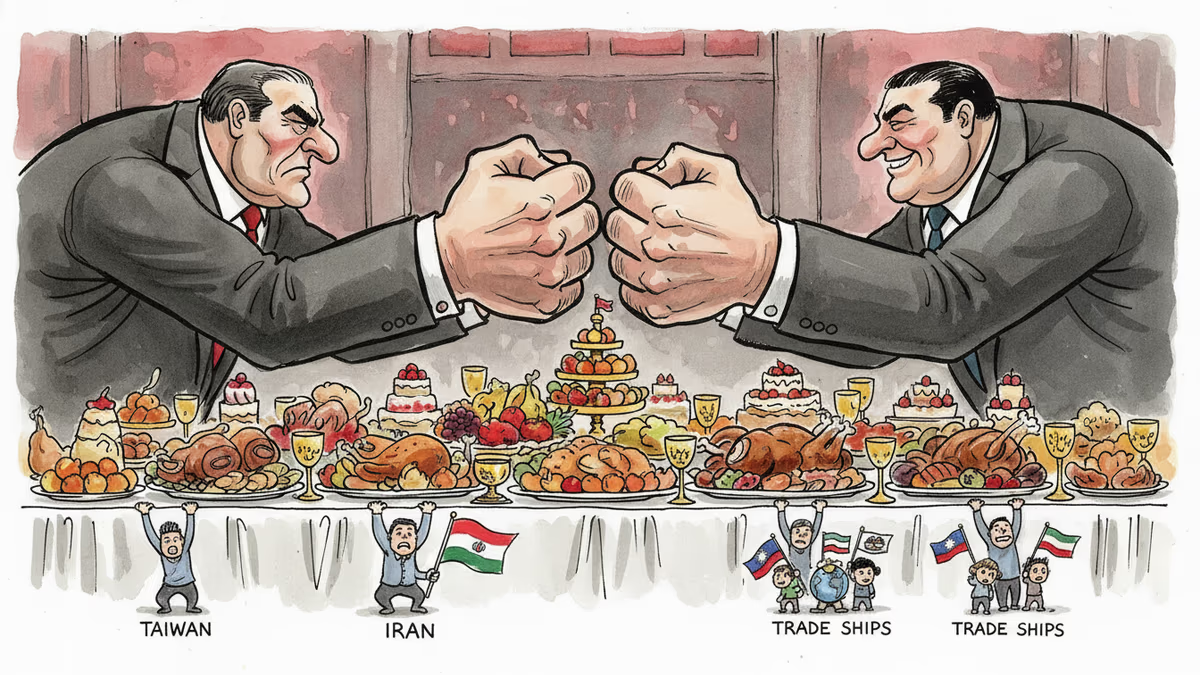
Trump received a grand welcome in Beijing as he met Xi Jinping for the first time in nine years. Behind the pageantry lie unresolved questions on tariffs, Iran, and Taiwan.
Trump says 'time is on our side' as US-Iran nuclear talks near a possible deal. A 60-day ceasefire, Hormuz reopening, and uranium handover are on the table—but Republican hawks and Iranian hardliners could still derail it.
Trump and Putin both traveled to Beijing in May 2026 to meet Xi Jinping. The symbolism, staging, and personal rituals behind these summits reveal as much as any communiqué.
Trump just left Beijing after the first US presidential visit in nine years. Putin arrives Wednesday. Pakistan's PM follows. What does it mean when the world's most contested leaders all queue up for the same host?
Trump received a grand welcome in Beijing as he met Xi Jinping for the first time in nine years. Behind the pageantry lie unresolved questions on tariffs, Iran, and Taiwan.
Thoughts
Share your thoughts on this article
Sign in to join the conversation