
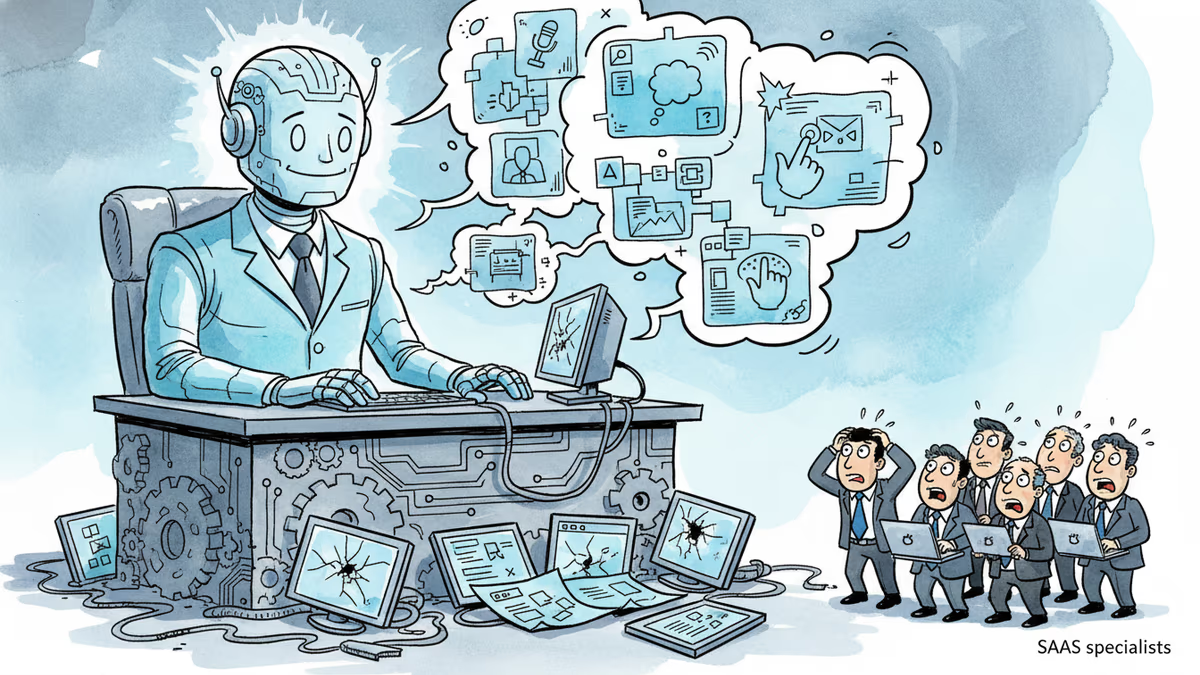
SaaS vs AI: The $5.4B Battle for Enterprise Software's Soul
Databricks hits $5.4B revenue as AI transforms SaaS interfaces. Are specialized software skills becoming obsolete, or is this just the beginning of enterprise evolution?
The Day SaaS Learned to Speak
Databricks just dropped a number that should make every enterprise software CEO pause: $5.4 billion in revenue run rate, growing 65% year-over-year. But here's the kicker—over $1.4 billion came from AI products alone. CEO Ali Ghodsi isn't just celebrating growth; he's declaring war on a narrative that AI will kill SaaS businesses.
Instead, he's arguing the opposite: AI is turbocharging traditional software companies, but only for those smart enough to embrace the shift. The question isn't whether AI will disrupt SaaS—it's whether SaaS companies will disrupt themselves first.
The Interface Revolution Nobody Saw Coming
For decades, enterprise software success meant one thing: getting users hooked on your interface. Salesforce specialists, ServiceNow experts, SAP wizards—entire careers built around mastering complex dashboards and workflows.
Databricks' breakout AI product, Genie, is quietly dismantling this model. Instead of learning query languages or building custom reports, users simply ask: "Why did warehouse usage spike on Tuesday?" The AI handles the rest.
"Millions of people around the world got trained on those user interfaces. And so that was the biggest moat that those businesses have," Ghodsi warns. That moat? It's evaporating faster than venture capital in a bear market.
The Great Unbundling Begins
Here's where it gets interesting. Ghodsi doesn't see AI replacing enterprise "systems of record"—the databases storing critical business data. "Why would you move your system of record? It's hard to move it," he points out.

The real threat is subtler and more profound: AI is making software invisible. When interfaces become conversational, products become commoditized. The specialized knowledge that created vendor lock-in disappears overnight.
This opens the door for AI-native competitors. Databricks' new Lakebase database, designed specifically for AI agents, has already generated twice the revenue in eight months compared to their traditional data warehouse at the same stage. "This is a toddler that's twice as big," Ghodsi notes.
The $134 Billion Insurance Policy
Databricks just closed a massive $5 billion funding round at a $134 billion valuation, plus a $2 billion loan facility. But don't expect an IPO anytime soon. "Now is not a great time to go public," Ghodsi admits.
The timing reveals strategic thinking beyond growth metrics. With $7 billion in total firepower, Databricks is building a war chest for the inevitable market downturn. "It protects us, gives us many, many years of runway," he explains.
This isn't just about surviving—it's about thriving while competitors scramble for capital in a tougher funding environment.
The Enterprise Crossroads
Traditional SaaS companies face a brutal choice: embrace AI interfaces and risk commoditization, or stick with complex workflows and watch AI-native competitors steal market share.
Early adopters like Databricks are proving the former strategy can work—if you move fast enough. But the window is closing. Every month of delay gives AI-first startups more time to build better, more intuitive alternatives.
The irony? The very complexity that created SaaS moats is now their biggest vulnerability. In an AI world, the simplest interface wins.
Authors
Related Articles
SpaceX's IPO filing puts AI at the center, claiming a $26.5 trillion market opportunity. But can Grok compete with OpenAI and Anthropic for enterprise customers?
AI is everywhere now—but is it helping or hurting? MIT Technology Review diagnoses a new mood: not excitement, not panic, just a creeping, uncomfortable uncertainty.
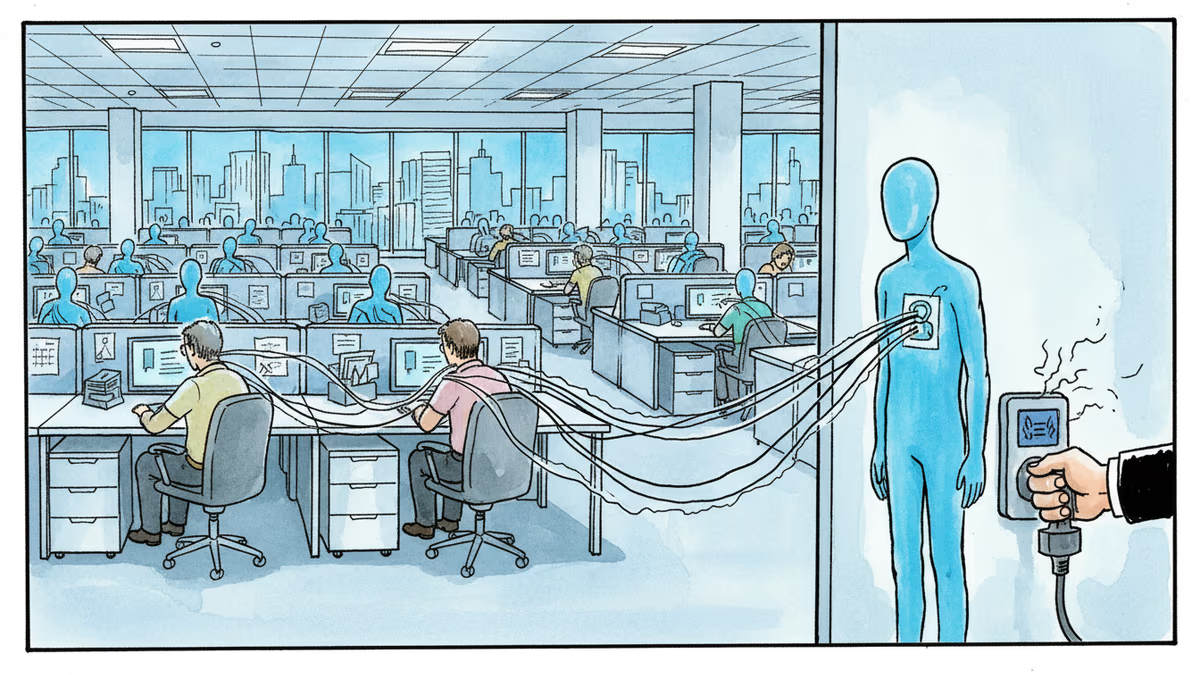
Okta CEO Todd McKinnon on why AI agents need identity management, the SaaSpocalypse threat, and why the kill switch might be the most important button in enterprise tech.

ByteDance's Seedance 2.0 is shocking China's creative industry, but Hollywood studios are fighting back with cease-and-desist letters. What's driving this cultural divide?
SpaceX's IPO filing puts AI at the center, claiming a $26.5 trillion market opportunity. But can Grok compete with OpenAI and Anthropic for enterprise customers?
AI is everywhere now—but is it helping or hurting? MIT Technology Review diagnoses a new mood: not excitement, not panic, just a creeping, uncomfortable uncertainty.
Okta CEO Todd McKinnon on why AI agents need identity management, the SaaSpocalypse threat, and why the kill switch might be the most important button in enterprise tech.
ByteDance's Seedance 2.0 is shocking China's creative industry, but Hollywood studios are fighting back with cease-and-desist letters. What's driving this cultural divide?
Thoughts
Share your thoughts on this article
Sign in to join the conversation