
Canva's $4B Revenue Reveals the New Creative Economy
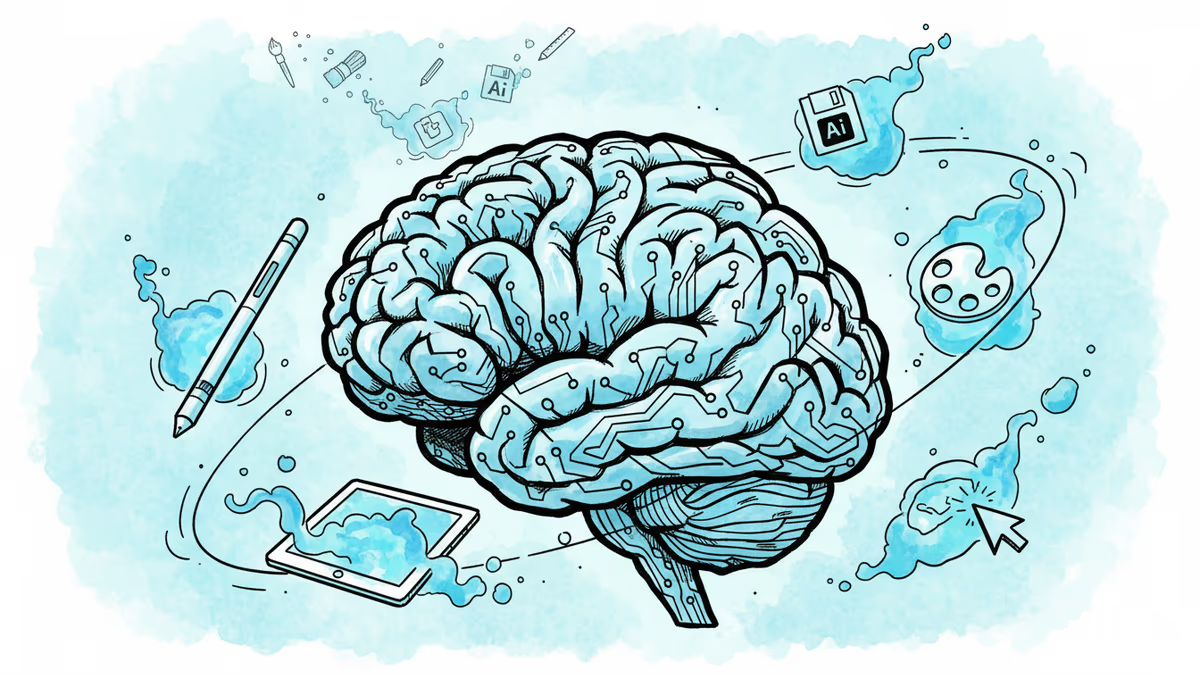
Canva's 2025 performance shows how AI is reshaping creative tools. The shift from design platform to AI platform signals a fundamental change in how we create.
When a Design Company Becomes an AI Company
Canva closed 2025 with $4 billion in annual recurring revenue. 265 million monthly active users, 31 million paid subscribers. The numbers tell a growth story, but the real narrative lies elsewhere.
Co-founder Cliff Obrecht's statement cuts to the core: "We're inverting that now. We're becoming an AI platform with a bunch of design tools."
This isn't just corporate speak. It's a fundamental shift that could redefine creative work itself.
The Evidence Is in the Numbers
AI investments are paying off concretely. The AI-powered mini app and website creation tool launched last year now has 10 million monthly active users. Users had 26 million conversations with Canva's app on ChatGPT, making Canva one of the top 10 referred domains from the platform.
The B2B segment grew 100% to $500 million ARR, driven by enterprise clients with 25+ seats. Meanwhile, Canva expanded internationally with lower-priced subscriptions in Pakistan, Uruguay, Morocco, and Jamaica.
The Competition Heats Up

Adobe, Freepik, and surprisingly, Apple are all vying for creative professionals' attention. Apple's $12.99/month Creator Studio bundles Final Cut Pro, Logic Pro, and other tools into a comprehensive creator package.
But Canva's response is different. Instead of matching features, they're repositioning as a "design agency in your pocket" with AI at the center. Obrecht calls it "a cursor for design."
From Search to Conversation
Canva's growth engine is evolving. The company that mastered Google SEO is now optimizing for LLM search results. "We really see ChatGPT or any of the LLMs as top of the funnel acquisition platforms," Obrecht explains.
LLM referral traffic is already in double-digit percentages—a significant shift from traditional search-driven growth. The company is actively integrating with chatbots like ChatGPT and Claude, treating them as new distribution channels.
The Bigger Picture: Creative Democratization 2.0
Canva's transformation reflects a broader trend. The first wave of creative democratization gave everyone access to design tools. The second wave, powered by AI, is giving everyone access to creative expertise.
But this raises questions about the creative industry itself. If AI can handle complex design tasks, what happens to professional designers? Are we witnessing the emergence of a new creative middle class, or the hollowing out of creative professions?
Canva, valued at $42 billion, plans to go public within a "couple of years." The market will ultimately judge whether this AI-first transformation resonates with creators—or if it alienates the designers who built the platform's early success.
Authors
Related Articles
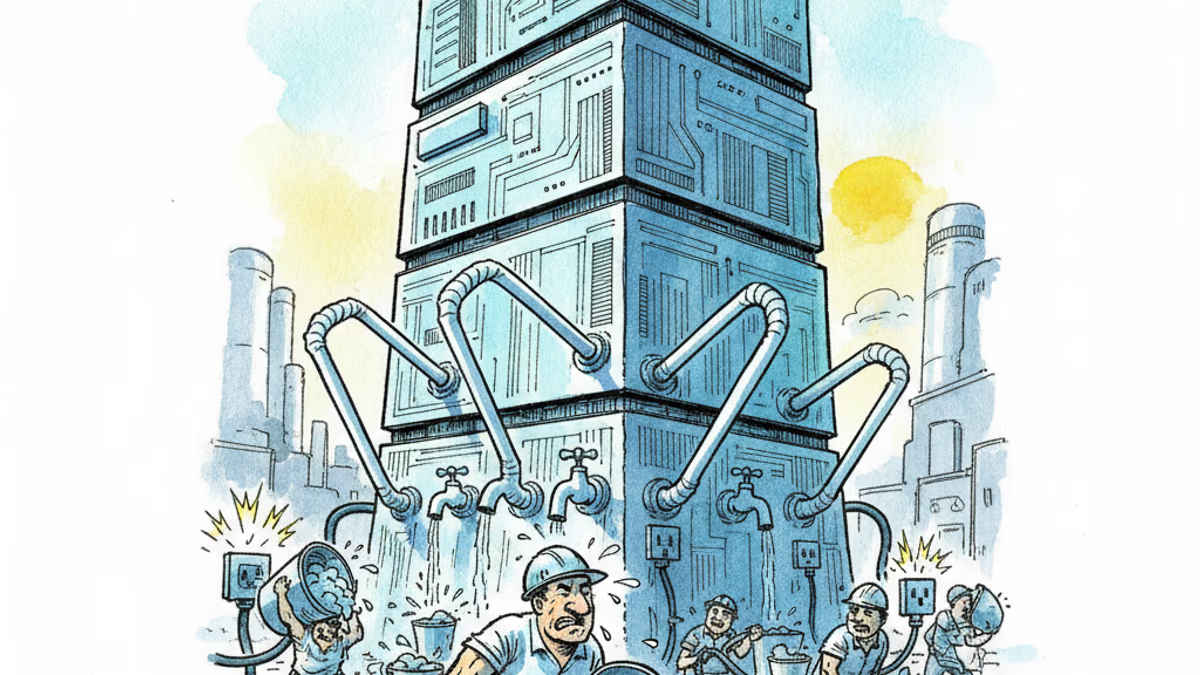
Samsung and SK unveiled a chip and AI investment package worth thousands of trillions of won on June 29. The headline number swings wildly by outlet, but the real contest isn't capital — it's water and power.
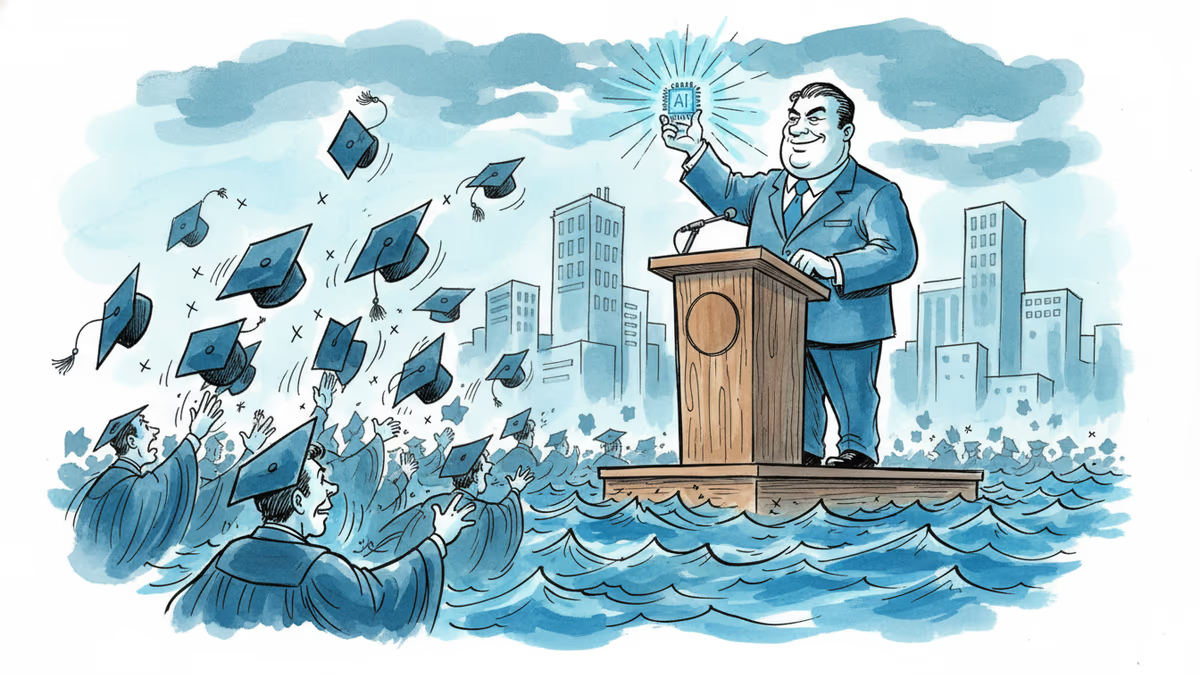
Viral videos show 2026 graduates jeering executives who praise AI at commencement ceremonies. It's not just rudeness — it's a signal about who pays for technological optimism.
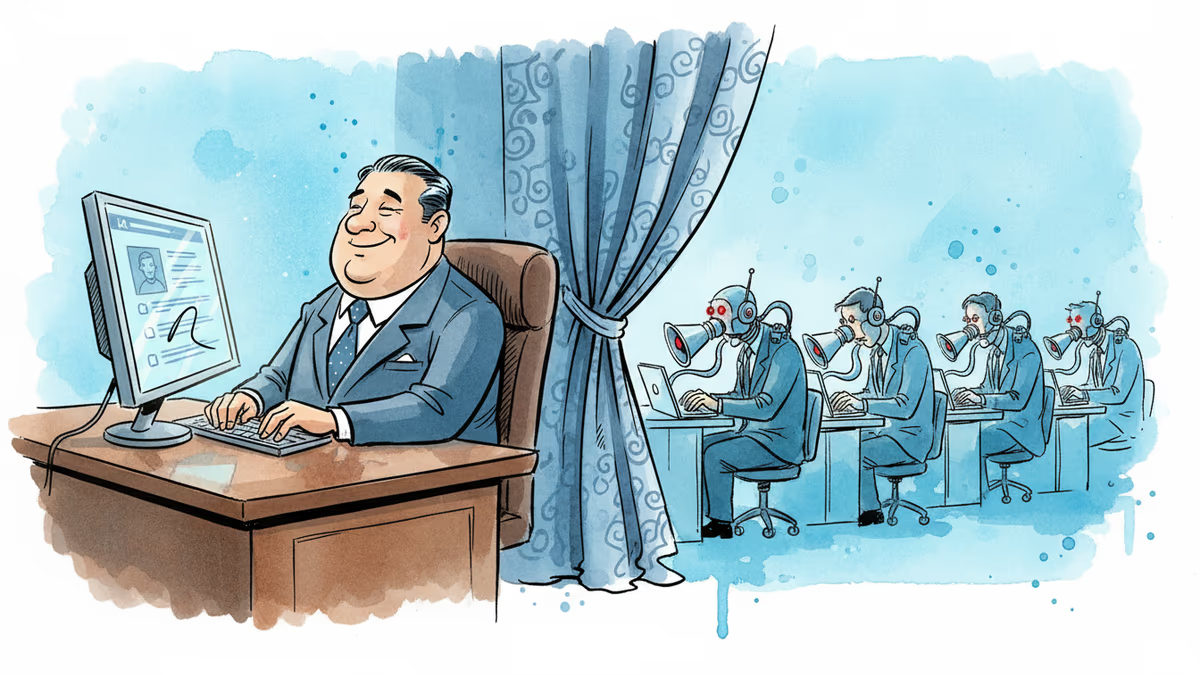
Filipino virtual assistants using AI to ghost-manage LinkedIn profiles for executives is now a structured industry. 30 comments a day, fake engagement rings, and a platform struggling to tell real from fabricated.
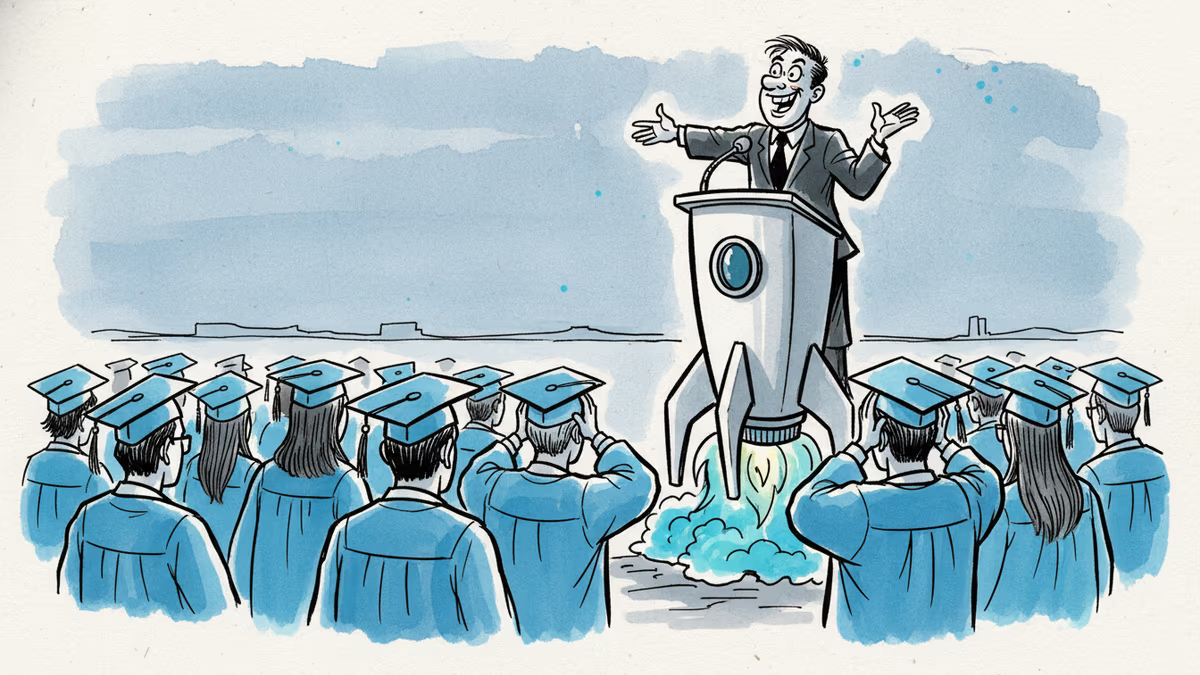
Two commencement speakers learned the hard way that AI enthusiasm doesn't land well with today's graduates. The backlash reveals a widening gap between tech optimism and Gen Z's economic reality.
Samsung and SK unveiled a chip and AI investment package worth thousands of trillions of won on June 29. The headline number swings wildly by outlet, but the real contest isn't capital — it's water and power.
Viral videos show 2026 graduates jeering executives who praise AI at commencement ceremonies. It's not just rudeness — it's a signal about who pays for technological optimism.
Filipino virtual assistants using AI to ghost-manage LinkedIn profiles for executives is now a structured industry. 30 comments a day, fake engagement rings, and a platform struggling to tell real from fabricated.
Two commencement speakers learned the hard way that AI enthusiasm doesn't land well with today's graduates. The backlash reveals a widening gap between tech optimism and Gen Z's economic reality.
Thoughts
Share your thoughts on this article
Sign in to join the conversation