
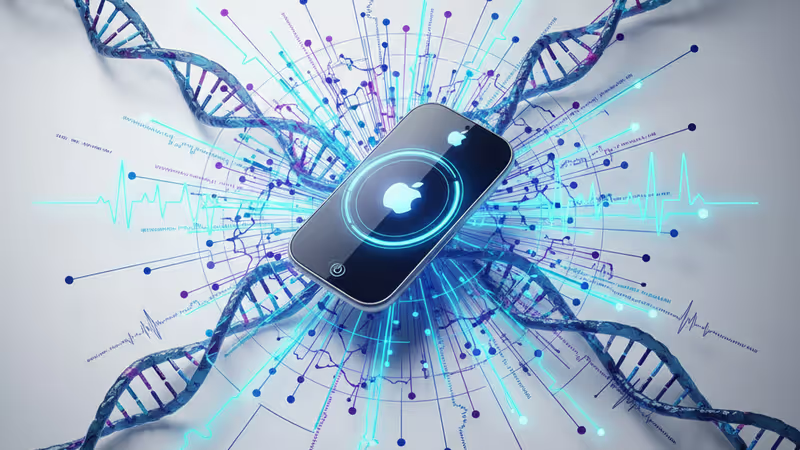
In 2026, AI Will Predict When You'll Get Sick: The Dawn of Precision Medical Forecasting
In 2026, the convergence of AI and aging science will enable 'precision medical forecasting' to predict the onset of major diseases like cancer and Alzheimer's. Discover how your health data could prevent illness.
What if an AI could forecast your risk of cancer or Alzheimer's decades in advance—and even pinpoint when it might begin? According to WIRED's annual trends briefing, 2026 is set to be the year we see the beginning of "precision medical forecasting." Just as large language models have transformed weather forecasting, they're now poised to predict an individual's future health.
How AI Moves Beyond Weather to Forecast Disease
Major age-related diseases like cancer, cardiovascular disease, and neurodegenerative conditions share a common trait: a long incubation period, often two decades or more, before symptoms appear. They also share biological roots in 'immunosenescence' (an aging, less effective immune system) and 'inflammaging' (the resulting chronic, low-grade inflammation).
Advances in the science of aging now allow us to track these processes using body-wide and organ-specific 'clocks' and protein biomarkers. When combined with new AI algorithms, the system becomes incredibly powerful. AI can interpret medical images like retinal scans to spot things human experts can't, accurately predicting disease risk years before it manifests.
The Data Behind Your Personal Health Roadmap

Precision medical forecasting integrates an unprecedented depth of personal data: electronic medical records, genetic results, wearable sensor data, and even environmental information. This goes far beyond a 'polygenic risk score,' which simply identifies a predisposition to a disease. The crucial difference is the addition of the temporal arc—the 'when' factor.
When all this data is analyzed by large reasoning models, it can pinpoint a person's specific vulnerabilities. This enables the creation of an individualized, aggressive preventive program, shifting medicine from a reactive to a proactive model.
From Prediction to Proactive Prevention
Armed with knowledge of their specific risks, individuals are far more likely to adopt lifestyle changes like an anti-inflammatory diet, regular exercise, and better sleep. This can be supplemented by medications designed to bolster the immune system and reduce inflammation. GLP-1 medicines are already emerging as a front-runner, with many more reported to be in the pipeline.
This potential must be validated through clinical trials. For instance, a person with a high risk of Alzheimer's, identified by a blood test like p-tau217, could show a measurable reduction in that biomarker after implementing lifestyle changes. This new frontier in medicine, a convergence of AI and aging science, represents an unparalleled opportunity to prevent major diseases before they start.
Authors
Related Articles
Samsung and SK unveiled a chip and AI investment package worth thousands of trillions of won on June 29. The headline number swings wildly by outlet, but the real contest isn't capital — it's water and power.
Viral videos show 2026 graduates jeering executives who praise AI at commencement ceremonies. It's not just rudeness — it's a signal about who pays for technological optimism.
Filipino virtual assistants using AI to ghost-manage LinkedIn profiles for executives is now a structured industry. 30 comments a day, fake engagement rings, and a platform struggling to tell real from fabricated.
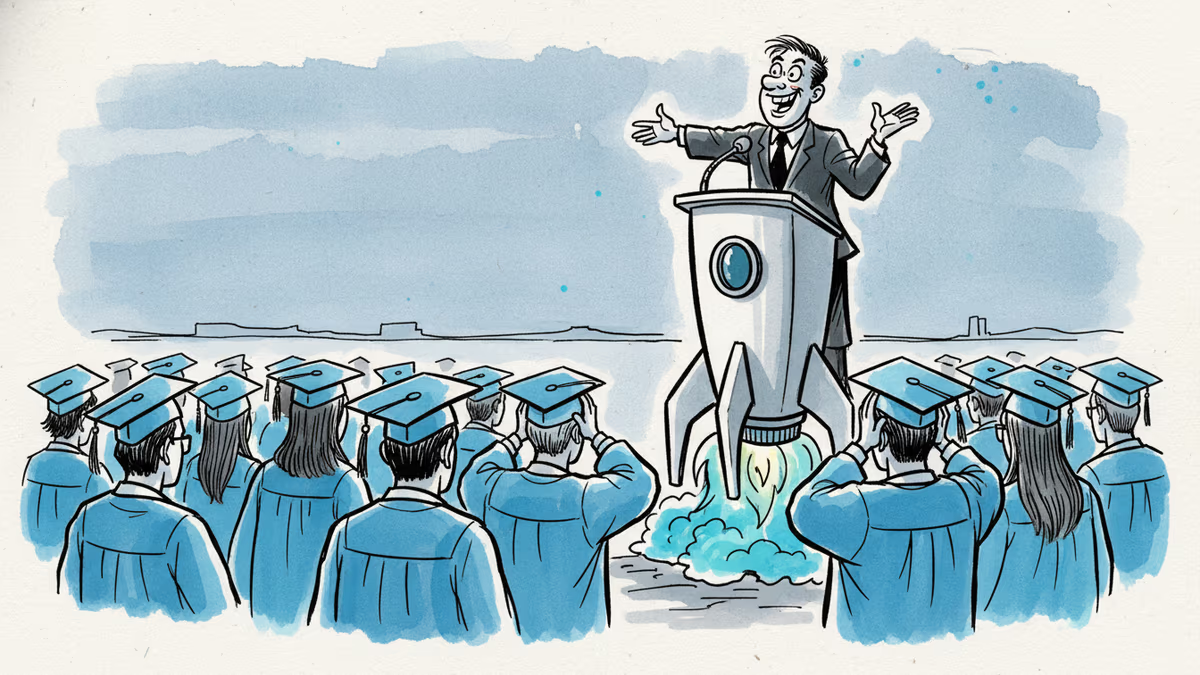
Two commencement speakers learned the hard way that AI enthusiasm doesn't land well with today's graduates. The backlash reveals a widening gap between tech optimism and Gen Z's economic reality.
Samsung and SK unveiled a chip and AI investment package worth thousands of trillions of won on June 29. The headline number swings wildly by outlet, but the real contest isn't capital — it's water and power.
Viral videos show 2026 graduates jeering executives who praise AI at commencement ceremonies. It's not just rudeness — it's a signal about who pays for technological optimism.
Filipino virtual assistants using AI to ghost-manage LinkedIn profiles for executives is now a structured industry. 30 comments a day, fake engagement rings, and a platform struggling to tell real from fabricated.
Two commencement speakers learned the hard way that AI enthusiasm doesn't land well with today's graduates. The backlash reveals a widening gap between tech optimism and Gen Z's economic reality.
Thoughts
Share your thoughts on this article
Sign in to join the conversation