
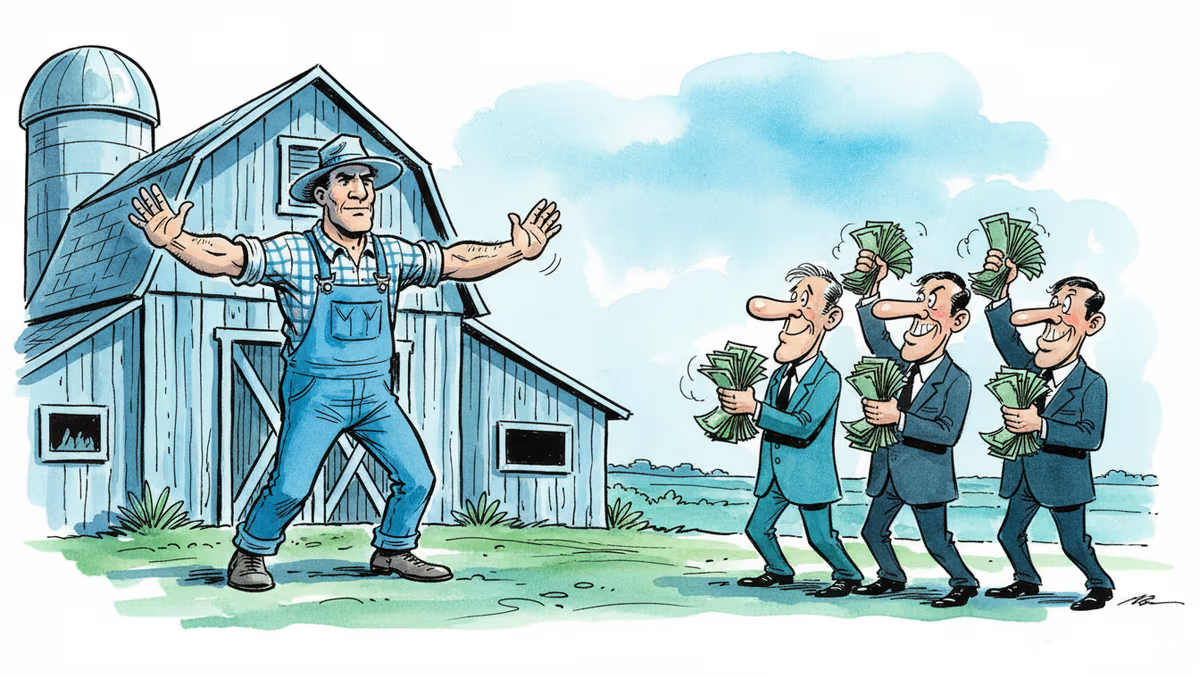
Why Farmers Are Rejecting Tens of Millions for Their Land
American farmers are turning down massive offers from tech giants seeking rural land for data centers, disrupting Big Tech's expansion plans and revealing deeper questions about value and progress.
Imagine turning down $40 million for your family farm. Across America, that's exactly what farmers are doing, leaving tech giants scrambling for alternatives as their data center dreams hit an unexpected wall: human attachment to land.
The rejections are piling up from coast to coast, frustrating expansion plans by Google, Amazon, Meta, and others who assumed everything had a price. They were wrong.
When Money Isn't Enough
The Guardian's Monday report revealed a pattern emerging nationwide. Tech companies are offering 10 to 20 times the assessed value of rural properties, sometimes reaching tens of millions per farm. Yet farmers are saying no with surprising consistency.
"This land isn't just an asset," explains Tom Wilson, a third-generation Ohio farmer who rejected a $25 million offer. "It's our family's story. My great-grandfather planted that oak tree in 1875—it's still standing."
The math seems simple: rural land costs a fraction of urban real estate, power is cheaper, and cooling systems are easier to build. What tech executives didn't calculate was the emotional equation.
The AI Gold Rush Meets Rural Reality
The surge in AI computing has created an insatiable hunger for data center space. OpenAI's ChatGPT alone requires massive server farms running 24/7. Urban data centers cost $1,000 per square foot; rural alternatives cost $100.
But there's a problem with the "rational actor" assumption. American farmers, especially those running family operations spanning generations, don't view land as a commodity. It's identity, legacy, and livelihood rolled into one.

Three Sides to Every Story
Corporate perspective: These are generous offers creating win-win scenarios. Data centers bring jobs, tax revenue, and economic development to struggling rural communities. It's progress.
Farmers' view: "They think everything's for sale," says Mary Johnson, an Iowa farmer who turned down $40 million. "Some things matter more than money." For many, selling feels like betraying ancestors who built these operations from nothing.
Community divide: Rural towns are split. Younger residents often support development for economic opportunities, while older generations worry about losing agricultural heritage. Local governments face pressure from both sides.
The Bigger Infrastructure Question
This standoff reveals a deeper tension in America's digital transformation. As AI reshapes the economy, the physical infrastructure supporting it must go somewhere. Tech companies need massive facilities—some data centers consume as much electricity as small cities.
The resistance also highlights changing rural economics. Many farms struggle financially, making these offers tempting. Yet cultural attachment often trumps economic logic, creating unexpected friction in tech's expansion.
What Happens Next?
Some companies are pivoting to industrial sites or partnering with willing farmers for long-term leases instead of purchases. Others are looking internationally, where land rights and cultural attachments may differ.
The rejections aren't universal—some farmers are selling, especially those facing financial pressure or lacking family successors. But enough are saying no to force tech giants to rethink their rural strategies.
Authors
Related Articles
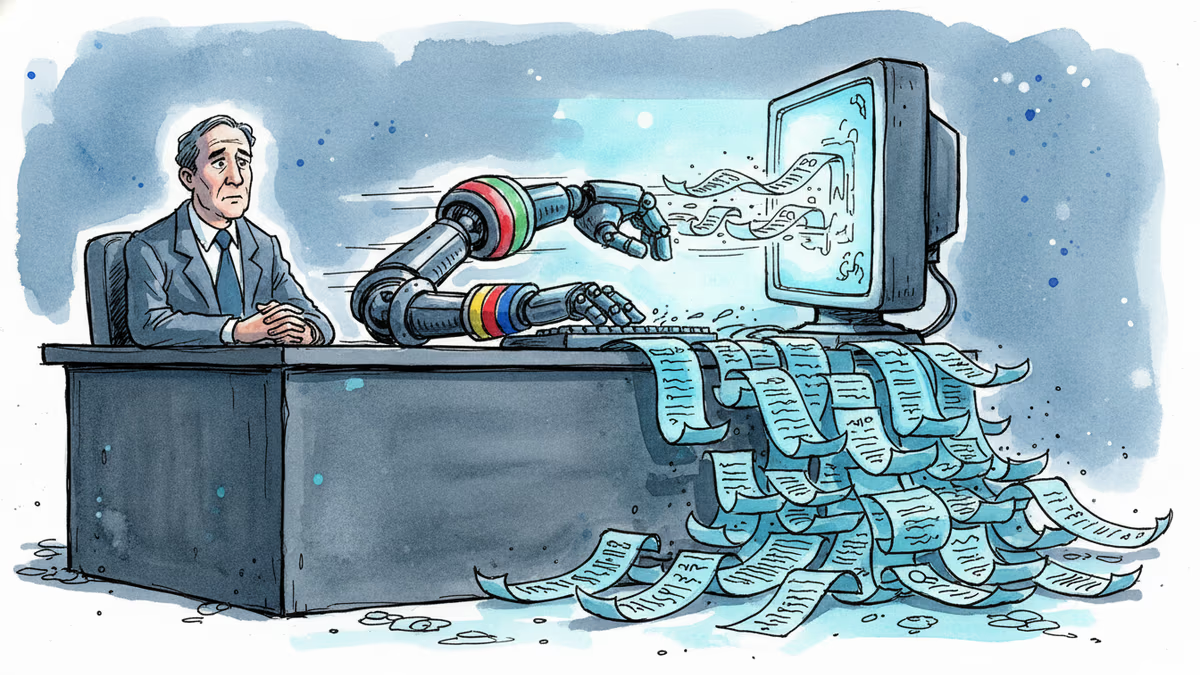
Google is building AI agents that search the web proactively, without user prompting. That's not just a product update — it's a fundamental shift in who controls the information you receive.
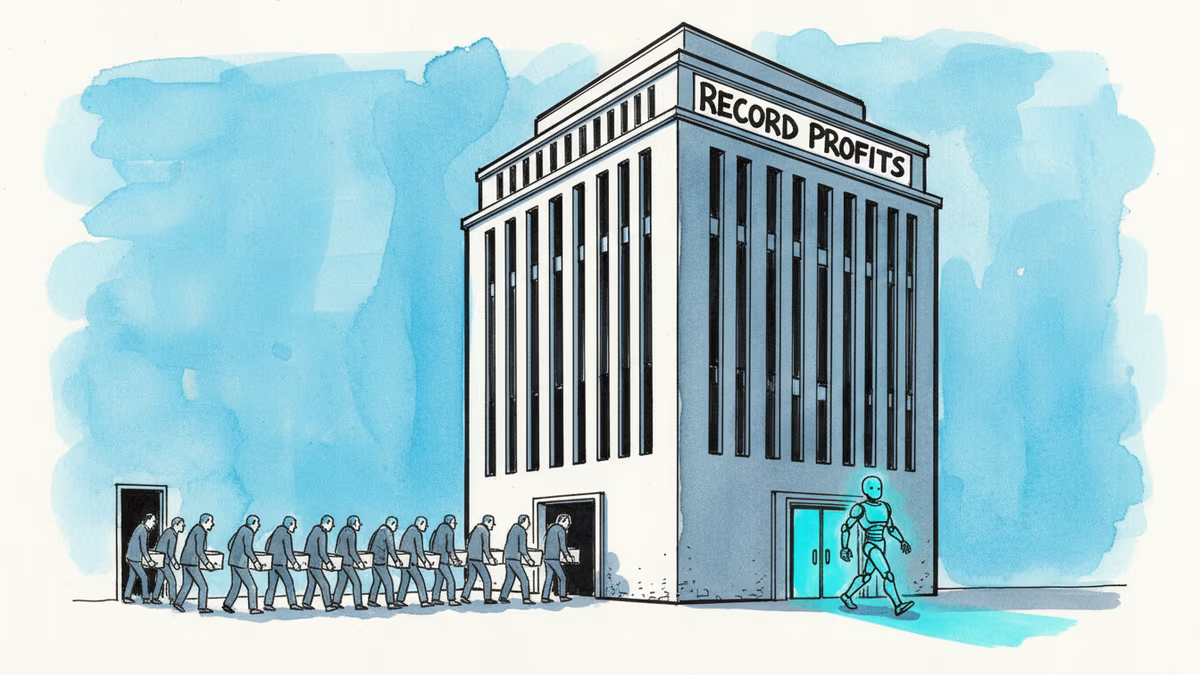
Cisco just posted record quarterly revenue and cut 4,000 jobs on the same day. It's not a contradiction — it's a template spreading across Big Tech.
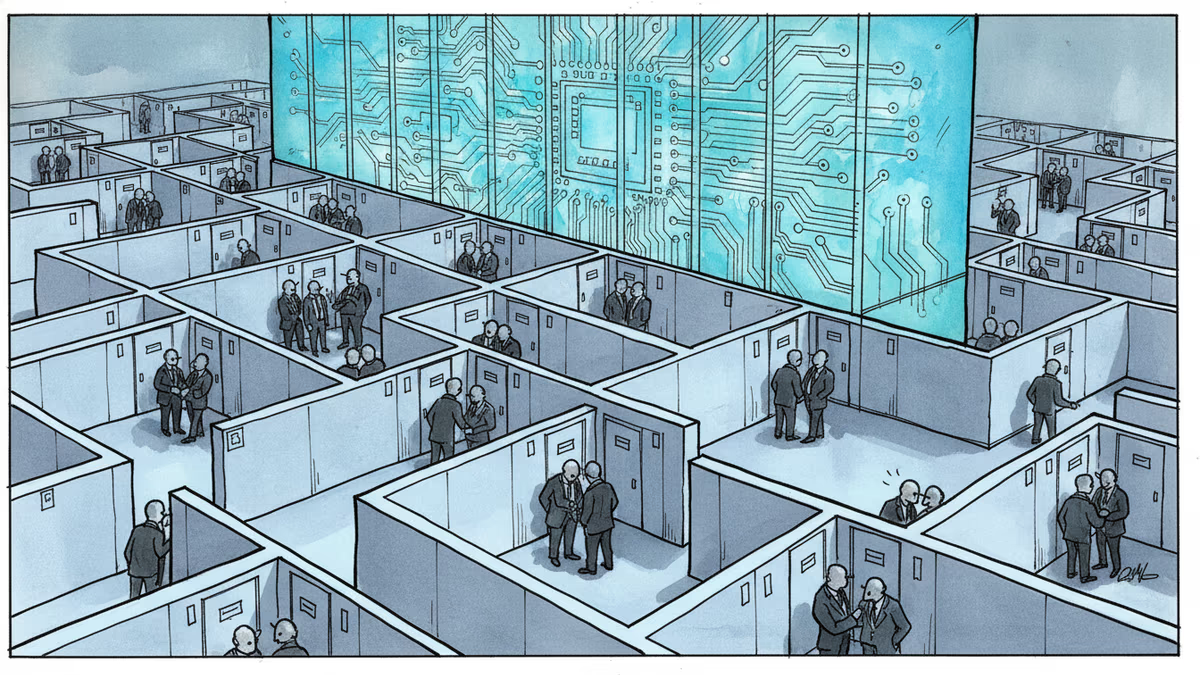
Behind every congressional hearing on Big Tech, there's a quieter room where the real rules get negotiated. As AI regulation, antitrust battles, and privacy law converge on Capitol Hill in 2026, the stakes have never been higher.
Meta acquired humanoid robotics startup ARI, adding to a Big Tech arms race in physical AI. The real prize isn't a robot product — it's a new way to train intelligence.
Google is building AI agents that search the web proactively, without user prompting. That's not just a product update — it's a fundamental shift in who controls the information you receive.
Cisco just posted record quarterly revenue and cut 4,000 jobs on the same day. It's not a contradiction — it's a template spreading across Big Tech.
Behind every congressional hearing on Big Tech, there's a quieter room where the real rules get negotiated. As AI regulation, antitrust battles, and privacy law converge on Capitol Hill in 2026, the stakes have never been higher.
Meta acquired humanoid robotics startup ARI, adding to a Big Tech arms race in physical AI. The real prize isn't a robot product — it's a new way to train intelligence.
Thoughts
Share your thoughts on this article
Sign in to join the conversation