
Cuba's 16-Hour Blackouts Cancel Military Drills
Venezuela's oil supply cut after Maduro's removal leaves Cuba facing total collapse as power outages and water shortages paralyze daily life.
Father and Son Hold Hands in the Dark
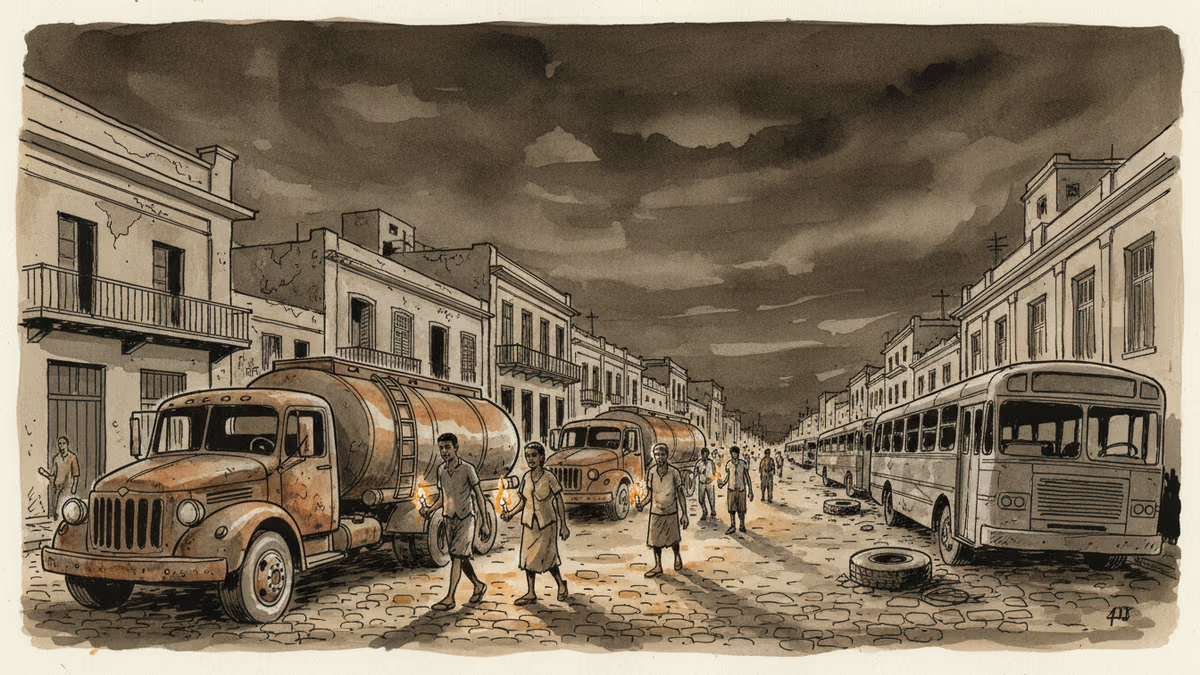
It's 5:30 AM in Arroyo Naranjo, south of Old Havana. Javier, 27, and his father Elías, 64, can't remember the last time they walked hand in hand. Now they're taking short steps side by side through pre-dawn darkness so thick they can barely see their hands in front of them.
They haven't showered in over a day. Their house has been without electricity for more than 16 hours. The power outage coincided with the day water pumps were supposed to fill the neighborhood tanks—so those are empty too. They're hungry, thirsty, and exhausted from sleeping in sweltering heat next to overflowing garbage containers that now block traffic.
They built a makeshift charcoal stove on their roof using stones and wood boards. Gas tanks haven't been refilled in this municipality for a month. The chicken and last two sausages from their refrigerator had to feed four people before they rotted.
Javier and Elías were heading to mandatory military exercises as reserve members of Cuba's Revolutionary Armed Forces. At 6:30 AM, 30 minutes after their scheduled bus should have arrived, they gave up and walked home. The transport never came—there wasn't enough fuel to run it.
Venezuela's Oil Lifeline Severed
This scene unfolded in January, two Sundays after the US removed Nicolás Maduro from power in Venezuela. Trump's aggressive rhetoric ("Cuba looks like it's ready to fall") has forced the regime into "state of war" preparations with general population mobilization—a strategy used since the 1980s against external threats.
The numbers tell the story of collapse. Cuba has 16 thermoelectric power plants, but six are out of service—including the two largest generators. Since early 2025, 9.7 million Cubans endure 12-20 hour daily blackouts. The economy has contracted over 15 percent since 2020.

Venezuela supplied more than 50 percent of Cuba's oil needs in recent years—about 30,000 barrels per day by late 2025. The last Venezuelan oil ship arrived in December 2025 with 598,000 barrels. Mexico's Pemex sent 84,900 barrels after Maduro's capture, but President Claudia Sheinbaum has promised only food and medicine going forward, not crude oil, after Trump's pressure.
Internet or Food: An Impossible Choice
Energy isn't Cuba's only crisis. If the regime negotiates with Trump, internet access will be a key battleground—one the administration anticipated in a June 2025 fact sheet promising "expansion of internet services, free press, free enterprise."
The internet transformed Cuba after 2015, breaking the Communist Party's information monopoly for the first time. Social media empowered dissidents, artists, and independent media. By 2021, the opposition was strong enough to stage nationwide protests demanding freedom and an end to dictatorship. The regime responded with violence: one death, over 1,000 political prisoners, forced exile, and tightened internet surveillance.
Today, state telecom company ETECSA uses pricing to reduce usage. Monthly data costs 360 Cuban pesos (about $1.25) for 6 gigabytes. Want more? Pay 3,360 pesos (about $7.55) for 3 additional gigabytes—more than a retiree's monthly pension of 2,075 pesos ($4.65) and over half the average state worker's salary of 6,506 pesos ($14.60).
Before rate increases, average monthly consumption was 10 gigabytes. Now people can't afford what they used to consume.
One Cuban mother wrote to her son in Barcelona: "It's not that I don't want to write to you, son, it's just that the money isn't enough to pay for food and the internet. It's one or the other."
Digital Panopticon
Pricing is just one tool. Prisoners Defenders documented Cuba's "panoptic social control ecosystem" designed for "neutralization of dissent, inhibition of public debate, and dismantling of independent social, civic, and political networks."
88 percent of surveyed Cubans said authorities cited their digital activities during interrogations. Most independent media outlets are blocked. Digital surveillance has become routine.
Authors
Related Articles
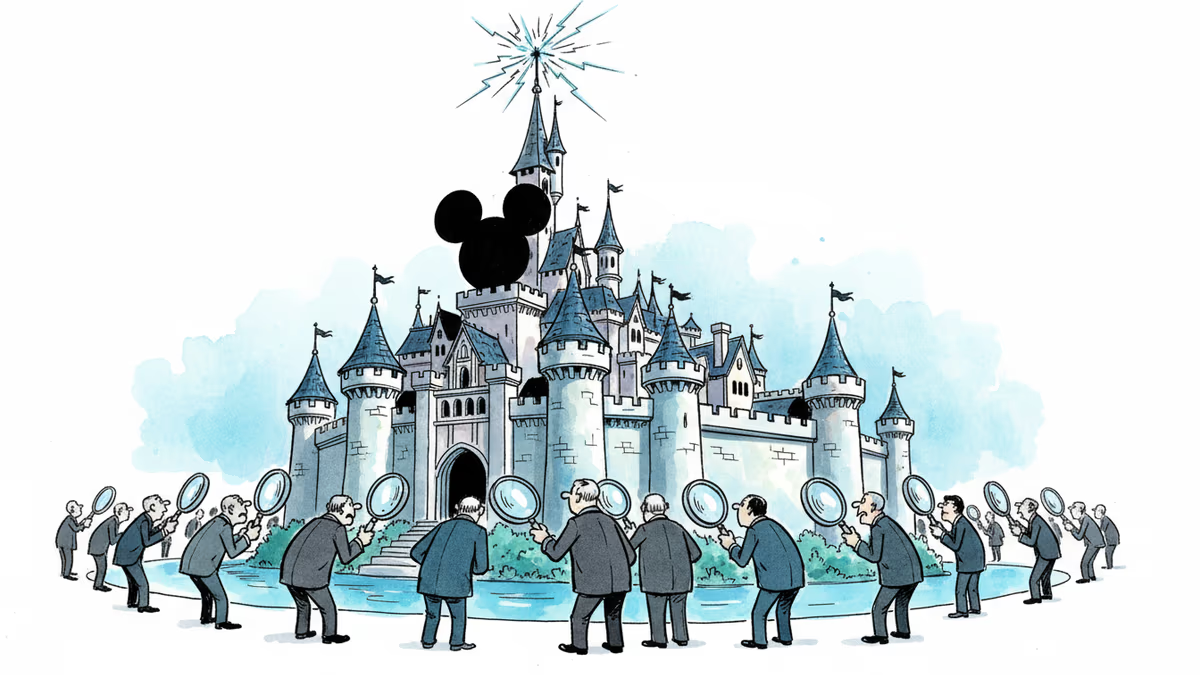
Josh D'Amaro took over Disney with a bold Disney Plus vision. Days later, he's in a First Amendment fight with the Trump administration over The View. What does this mean for media freedom?
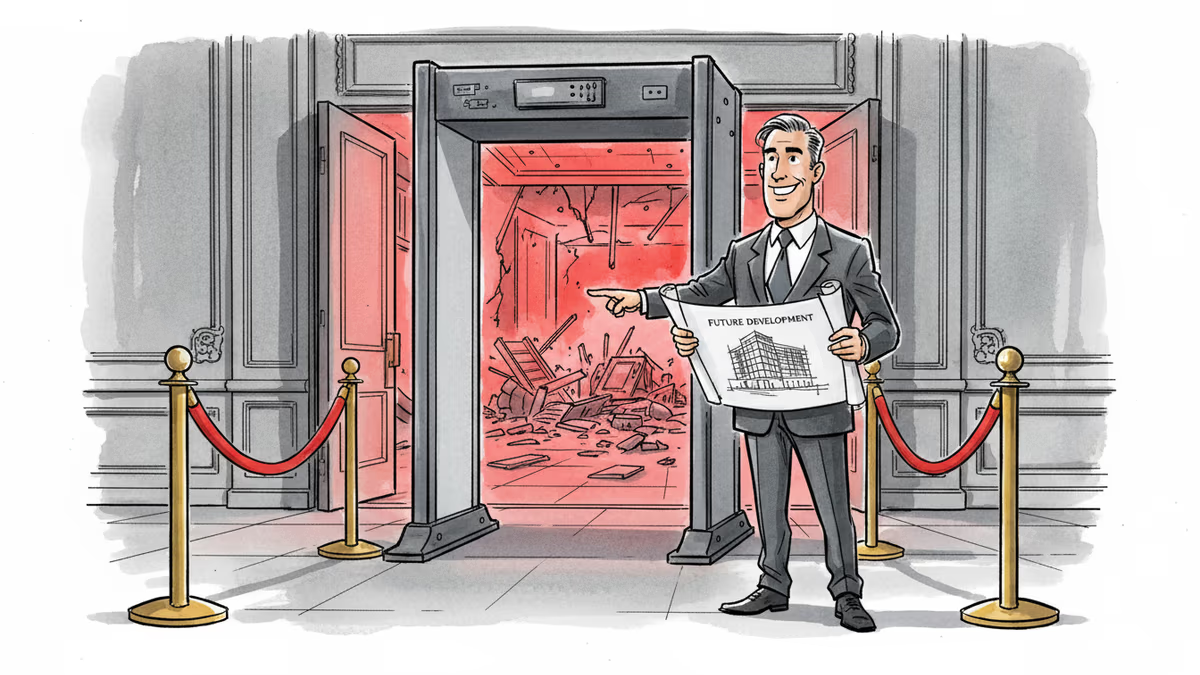
A gunman attacked a Secret Service checkpoint at the White House Correspondents' Dinner. Trump's first public reaction wasn't about security. It was about his $400M ballroom project.
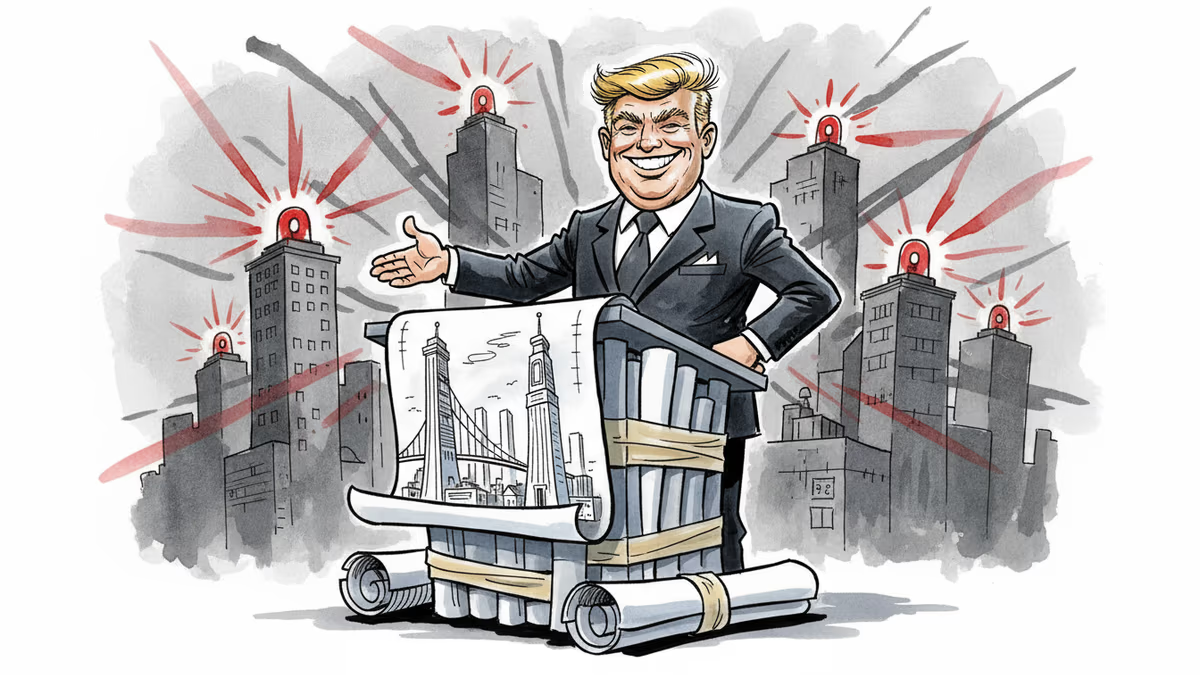
Hours after an armed suspect attempted to breach the White House Correspondents Dinner, Trump used the security scare to publicly defend his White House ballroom project. What does that tell us?
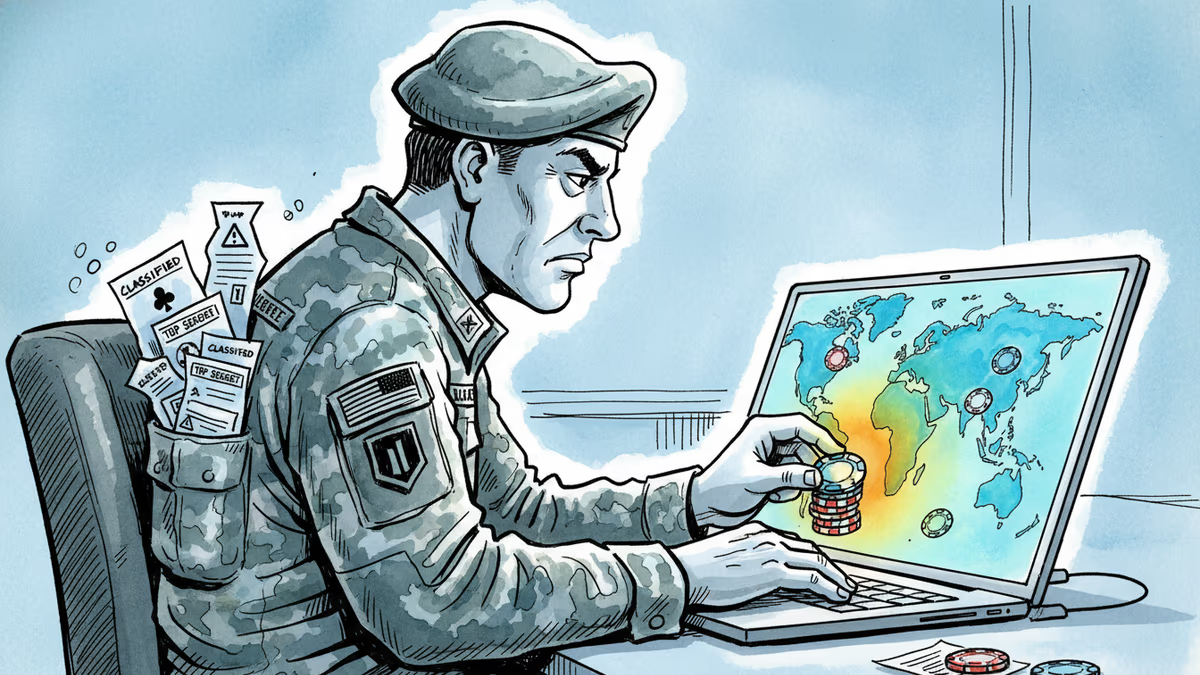
A US special forces soldier involved in the operation that captured Venezuela's Maduro allegedly used classified intel to bet on Polymarket, pocketing over $400,000. The case exposes a gaping hole in how prediction markets are regulated.
Josh D'Amaro took over Disney with a bold Disney Plus vision. Days later, he's in a First Amendment fight with the Trump administration over The View. What does this mean for media freedom?
A gunman attacked a Secret Service checkpoint at the White House Correspondents' Dinner. Trump's first public reaction wasn't about security. It was about his $400M ballroom project.
Hours after an armed suspect attempted to breach the White House Correspondents Dinner, Trump used the security scare to publicly defend his White House ballroom project. What does that tell us?
A US special forces soldier involved in the operation that captured Venezuela's Maduro allegedly used classified intel to bet on Polymarket, pocketing over $400,000. The case exposes a gaping hole in how prediction markets are regulated.
Thoughts
Share your thoughts on this article
Sign in to join the conversation