
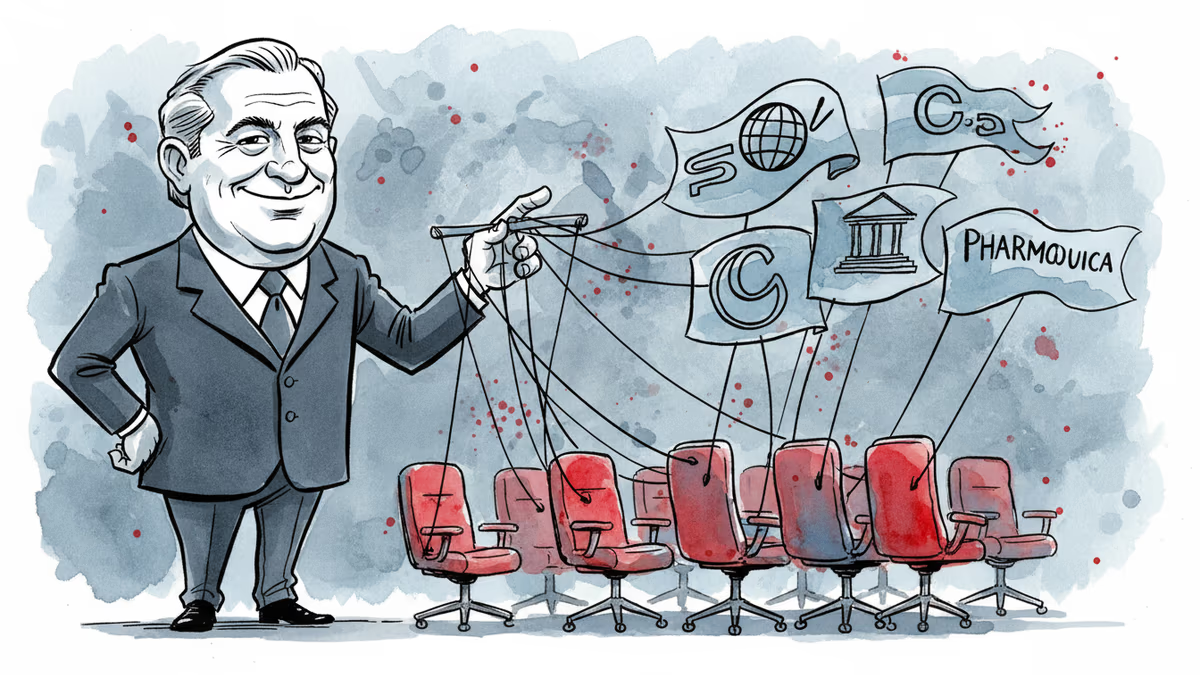
Trump's Netflix Ultimatum Reveals the New Rules of Corporate Power
Trump's demand to fire Netflix board member Susan Rice isn't just political theater—it's a calculated move targeting the Warner Bros merger approval. A new era of corporate governance?
A $247 billion company's board member just became the target of a sitting U.S. President's public ultimatum.
Donald Trump's Saturday social media post demanding Netflix fire Susan Rice "IMMEDIATELY, or pay the consequences" marks more than political grandstanding. It signals a new playbook where corporate governance decisions become government pressure points—and Netflix has billions riding on the outcome.
The Podcast Comment That Triggered Presidential Rage
The spark came from Rice's appearance on Preet Bharara's "Stay Tuned" podcast, where the Netflix board member since 2018 issued her own warning. Corporations that "take a knee" to Trump, she predicted, will face accountability when Democrats return to power.
"If these corporations think that the Democrats, when they come back in power, are going to play by the old rules and say, 'Oh, never mind. We'll forgive you for all the people you fired, all the policies and principles you've violated,'" Rice said, "I think they've got another thing coming."
Rice isn't just any board member. The former UN Ambassador who held key diplomatic roles in both Obama and Biden administrations represents the Democratic establishment's voice on Netflix's board. Her comments read less like personal opinion and more like strategic signaling.
Trump's response was swift and specific: "Netflix should fire racist, Trump Deranged Susan Rice, IMMEDIATELY, or pay the consequences. She's got no talent or skills – Purely a political hack!"
The Real Target: Warner Bros Merger Approval
But Trump's ultimatum carries weight beyond Twitter theater. Netflix's massive Warner Bros acquisition requires federal regulatory approval—and the President controls those levers.
Trump's post included a screenshot from far-right activist Laura Loomer claiming the "Netflix-Warner Bros merger would result in a streaming monopoly, which the Obamas will have a significant stake in" through their Higher Ground production deal.
The timing isn't coincidental. Netflix co-CEO Ted Sarandos reportedly met with Trump before announcing the deal, with Trump subsequently noting that while Netflix is a "great company," it represents "a lot of market share, so we'll have to see what happens."

That's regulatory approval language wrapped in conversational tone.
Corporate America's New Dilemma
This episode exposes the impossible position facing American corporations. Having politically diverse leadership—once considered good governance—now invites government pressure.
Microsoft offers a telling comparison. Trump made similar demands last fall to fire President of Global Affairs Lisa Monaco, another Loomer target. Microsoft ignored the pressure. Monaco remains in her role.
But Microsoft doesn't have a multi-billion dollar merger pending federal approval.
Netflix faces a starker choice: defend board independence or protect shareholder value through regulatory compliance. The company's silence since Trump's post suggests they're calculating which path costs more.
The Politicization Precedent
This marks a dangerous precedent for corporate governance. When board composition becomes a political weapon, companies must weigh every appointment against potential government retaliation.
International companies operating in the U.S. face particular vulnerability. Samsung, Toyota, or any foreign corporation with significant American operations must now consider whether their leadership choices could trigger regulatory backlash.
The implications extend beyond individual companies. If board diversity becomes politically risky, corporate America might retreat into ideological homogeneity—exactly the opposite of what good governance requires.
The Streaming Stakes
Netflix's predicament reflects broader questions about media consolidation and political influence. The Warner Bros merger would create unprecedented streaming market concentration, giving Netflix enormous cultural and economic power.
Trump's pressure on Rice serves multiple purposes: weakening Democratic voices in corporate leadership, demonstrating presidential power over business decisions, and potentially extracting concessions on the merger terms.
For Netflix shareholders, the calculation is stark. Is keeping Rice worth risking a deal that could define the company's next decade?
Authors
Related Articles
Josh D'Amaro took over Disney with a bold Disney Plus vision. Days later, he's in a First Amendment fight with the Trump administration over The View. What does this mean for media freedom?
A gunman attacked a Secret Service checkpoint at the White House Correspondents' Dinner. Trump's first public reaction wasn't about security. It was about his $400M ballroom project.
Hours after an armed suspect attempted to breach the White House Correspondents Dinner, Trump used the security scare to publicly defend his White House ballroom project. What does that tell us?
As Washington D.C. enters another political spring, the battle over Big Tech regulation is heating up — and the stakes extend far beyond Silicon Valley.
Josh D'Amaro took over Disney with a bold Disney Plus vision. Days later, he's in a First Amendment fight with the Trump administration over The View. What does this mean for media freedom?
A gunman attacked a Secret Service checkpoint at the White House Correspondents' Dinner. Trump's first public reaction wasn't about security. It was about his $400M ballroom project.
Hours after an armed suspect attempted to breach the White House Correspondents Dinner, Trump used the security scare to publicly defend his White House ballroom project. What does that tell us?
As Washington D.C. enters another political spring, the battle over Big Tech regulation is heating up — and the stakes extend far beyond Silicon Valley.
Thoughts
Share your thoughts on this article
Sign in to join the conversation