
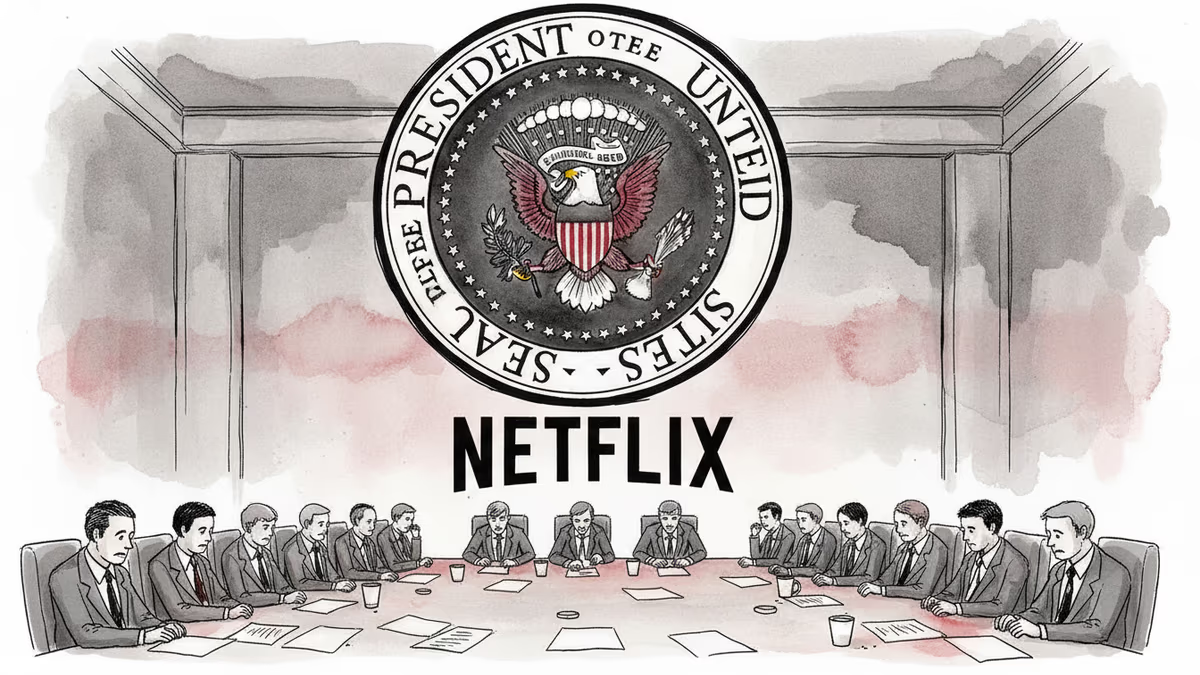
When Presidents Threaten Streaming Giants: The Netflix-Trump Standoff
Trump's threat against Netflix over board member Susan Rice reveals a new battleground where corporate governance meets political warfare
"There Will Be Consequences" - A Direct Presidential Threat
Donald Trump just issued a direct warning to Netflix: fire board member Susan Rice or face "consequences." This isn't typical political rhetoric. It's a stark example of how corporate governance has become a new battlefield in America's political warfare.
Rice, who served in both the Obama and Biden administrations, recently appeared on Preet Bharara's podcast where she warned that corporations "take a knee to Trump" would be "caught with more than their pants down" and "held accountable."
The threat came within 48 hours of Rice's comments going viral on social media.
The Right-Wing Response Machine
Right-wing influencer Laura Loomer immediately seized on Rice's appearance, accusing her of "threatening half the country with weaponized government and political retribution." Loomer also highlighted Netflix's pursuit of government contracts, suggesting a conflict of interest that could make the streaming giant vulnerable to political pressure.
This rapid-fire response reveals how quickly corporate board members' political statements can become corporate liabilities. What was once considered private political opinion is now front-page business news.

Corporate America's Impossible Choice
Netflix finds itself in an impossible position. Fire Rice, and the company appears to bow to political intimidation. Keep her, and risk potential regulatory retaliation from the incoming Trump administration.
This dilemma extends far beyond one streaming company. Major corporations from Apple to Disney have faced similar pressures to take political stances or face consequences from both sides of the aisle.
The New Rules of Corporate Governance
Traditionally, corporate boards focused on shareholder value and fiduciary duty. But the Rice-Netflix controversy highlights how board composition itself has become politically charged. Should companies consider the political views of potential board members? Or does political diversity strengthen corporate decision-making?
Some governance experts argue that politically diverse boards provide better oversight and risk management. Others warn that mixing corporate governance with political activism creates unnecessary volatility for shareholders.
Beyond Netflix: A Pattern Emerges
This isn't an isolated incident. Trump has previously targeted companies over their executives' political statements or business decisions. The pattern suggests a more systematic approach to using presidential influence to shape corporate behavior.
For multinational corporations, this creates a complex calculus: How do you operate in markets where political neutrality itself has become a political statement?
Authors
Related Articles
Josh D'Amaro took over Disney with a bold Disney Plus vision. Days later, he's in a First Amendment fight with the Trump administration over The View. What does this mean for media freedom?
A gunman attacked a Secret Service checkpoint at the White House Correspondents' Dinner. Trump's first public reaction wasn't about security. It was about his $400M ballroom project.
Hours after an armed suspect attempted to breach the White House Correspondents Dinner, Trump used the security scare to publicly defend his White House ballroom project. What does that tell us?
As Washington D.C. enters another political spring, the battle over Big Tech regulation is heating up — and the stakes extend far beyond Silicon Valley.
Josh D'Amaro took over Disney with a bold Disney Plus vision. Days later, he's in a First Amendment fight with the Trump administration over The View. What does this mean for media freedom?
A gunman attacked a Secret Service checkpoint at the White House Correspondents' Dinner. Trump's first public reaction wasn't about security. It was about his $400M ballroom project.
Hours after an armed suspect attempted to breach the White House Correspondents Dinner, Trump used the security scare to publicly defend his White House ballroom project. What does that tell us?
As Washington D.C. enters another political spring, the battle over Big Tech regulation is heating up — and the stakes extend far beyond Silicon Valley.
Thoughts
Share your thoughts on this article
Sign in to join the conversation