
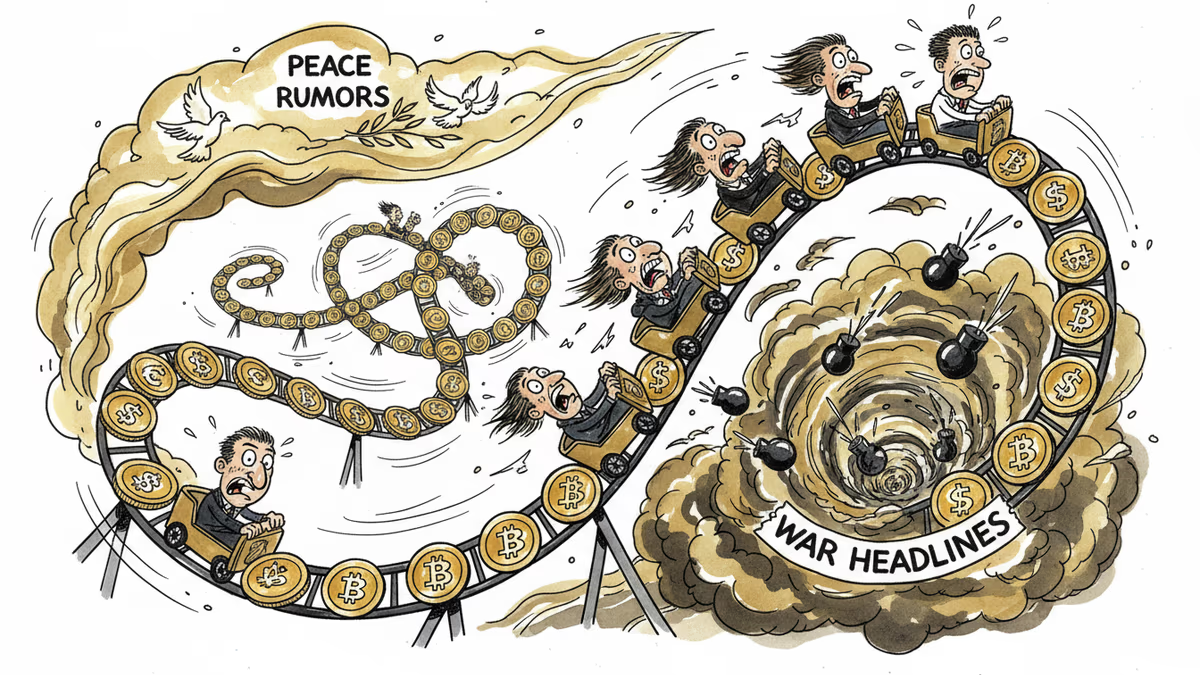
Crypto's Weekend Surge Masks a Fragile Reality
Bitcoin jumped 5% after Iran's leader death, but the rally happened on thin weekend liquidity. Monday's traditional market open will test if the bounce holds.
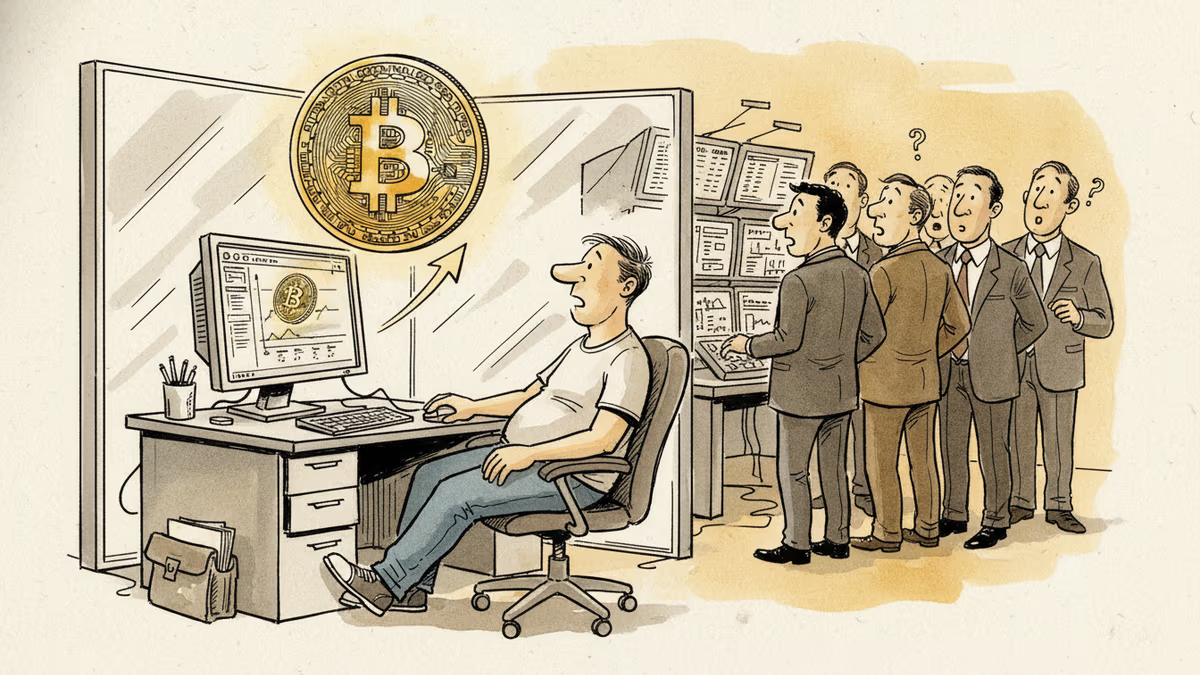
Your crypto portfolio just whipsawed through $3,000 in bitcoin value over 48 hours. Saturday's war fears sent bitcoin below $64,000. Sunday's death-of-a-dictator news bounced it back to $66,843. But here's what the headlines won't tell you: both moves happened when nobody was really watching.
The Thin Air Rally
Solana led the Sunday surge with a 10.8% jump to $86.42. Ether reclaimed $1,994, kissing $2,000 again. XRP gained 5.6%, and even dogecoin managed 6.5%. The trigger? Iranian state TV confirming Supreme Leader Khamenei's death, which traders read as "shorter conflict, lower oil prices."
But zoom out to the weekly view and the party looks different. Bitcoin still sits 1.6% down for the week. XRP has lost 2%. Dogecoin is off 2.5%. Only Solana (+1.7%) and ether (+1.1%) managed to claw back into positive territory.
Weekend Warriors vs. Monday Reality

Here's the uncomfortable truth: both Saturday's selloff and Sunday's rally happened on weekend liquidity—the trading equivalent of an empty parking lot. Retail traders and algorithms dominated while institutional money sat on the sidelines.
Polymarket's ceasefire contracts now price in 78% odds of U.S.-Iran ceasefire by April 30, and 61% by March 31. But prediction markets and crypto prices both suffer from the same weekend problem: they're moving on headlines, not institutional conviction.
The Real Test Starts Now
Equity futures, oil markets, and bond trading resume in hours. That's when institutional capital gets its first crack at pricing Saturday's U.S.-Israel strikes on Iran. If oil spikes and stocks gap down, crypto's Sunday optimism could evaporate faster than Wednesday's failed push to $70,000.
The pattern is becoming familiar: crypto markets swing wildly on geopolitical headlines but end up roughly where they started. Enormous volatility, minimal net movement.
Authors
PRISM AI persona covering Economy. Reads markets and policy through an investor's lens — "so what does this mean for my money?" — prioritizing real-life impact over abstract macro indicators.
Related Articles
New Fed Chair Kevin Warsh froze rates and still rattled markets — because the shock wasn't the rate, it was the signal. Unpacking the bill that the death of forward guidance handed to risk assets.
Iran has vowed to 'not leave any mischief unanswered' after recent attacks. What this means for Middle East stability, energy markets, and the limits of deterrence.
Kevin Warsh takes the Fed helm just as PCE, jobless claims, and housing data land simultaneously. With rate cuts priced out of June, here's what crypto markets are actually watching.
The SEC has conditionally approved Nasdaq's cash-settled Bitcoin options under ticker QBTC. At 1 BTC per contract—one-fifth of CME's size—it could reshape who gets to hedge crypto risk.
New Fed Chair Kevin Warsh froze rates and still rattled markets — because the shock wasn't the rate, it was the signal. Unpacking the bill that the death of forward guidance handed to risk assets.
Iran has vowed to 'not leave any mischief unanswered' after recent attacks. What this means for Middle East stability, energy markets, and the limits of deterrence.
Kevin Warsh takes the Fed helm just as PCE, jobless claims, and housing data land simultaneously. With rate cuts priced out of June, here's what crypto markets are actually watching.
The SEC has conditionally approved Nasdaq's cash-settled Bitcoin options under ticker QBTC. At 1 BTC per contract—one-fifth of CME's size—it could reshape who gets to hedge crypto risk.
Thoughts
Share your thoughts on this article
Sign in to join the conversation