

162 NY Companies Filed Mass Layoffs. Zero Blamed AI
New York became the first state requiring companies to report AI-driven layoffs. After 11 months and 28,300 job cuts, not one employer checked the AI box. Are they hiding something?
Zero. That's how many companies in New York state have officially blamed AI for their mass layoffs, despite 162 employers cutting 28,300 jobs since the state began asking the question 11 months ago. Among those filing? Goldman Sachs (4,100 workers affected), Amazon (660 workers), and Morgan Stanley (260 workers)—all companies publicly embracing AI automation.
The World's First AI Transparency Experiment
Last March, New York became the first state to add "technological innovation or automation" as an option on mandatory Worker Adjustment and Retraining Notification (WARN) filings. Companies with 50+ employees must check one of 17 reasons when announcing significant job cuts, from bankruptcy to relocation to—now—AI replacement.
Governor Kathy Hochul's goal was simple: get real data on whether AI is actually displacing workers. The results? 750 notices spanning 162 employers, and not one AI checkbox marked.
What Companies Say Behind Closed Doors
The disconnect is striking. Internally, these same companies tell a different story. Goldman Sachs linked last year's layoffs to AI's "significant productivity gains." Amazon warned that AI benefits would drive cuts across its 30,000 global layoffs. An unnamed Morgan Stanley source told Bloomberg that "a small portion" of their cuts reflected AI and automation.
Yet on official paperwork, Amazon cited "economic" reasons. Goldman Sachs stayed silent. Morgan Stanley declined comment.
"AI is not the reason behind the vast majority" of cuts, Amazon spokesperson Kelly Nantel insists, claiming the goal is "reducing layers, increasing ownership, and helping reduce bureaucracy."
The Reputation Risk Calculation

Here's the paradox: job search firm Challenger, Gray & Christmas found nearly 55,000 US companies attributed job cuts to AI adoption last year—in public statements. But zero in official state filings.
This suggests companies face a calculated choice. Publicly, they celebrate AI's efficiency gains to impress investors. Privately, they avoid the "robot took my job" narrative that could damage their employer brand and invite regulatory scrutiny.
New York's Department of Labor follows up with every employer to verify filing accuracy, according to spokesperson Kristin Devoe. "It is crucial for employers to answer questions in WARN frankly and honestly so New York State can support displaced workers to the greatest extent possible," she emphasized.
Labor Fights Back
The New York State AFL-CIO applauds Hochul's transparency push but wants more teeth. "We must establish specific regulations that mandate employer accountability and transparency in AI deployment," says federation president Mario Cilento.
State lawmaker Harry Bronson is pushing further. His two bills would require companies with 100+ employees to file annual estimates of unfilled roles due to AI, and mandate broader reporting when businesses hand jobs to computers. The kicker? Companies that don't comply could lose state grants and tax breaks—real consequences for dodging the AI question.
The Measurement Problem
Cornell labor economist Erica Groshen points to a deeper challenge: employers genuinely struggle to isolate AI's impact from normal business evolution. "Frankly, do we really care if someone is displaced by AI, or just the normal competitive marketplace?" she asks.
Groshen suggests requiring companies to share detailed data on how skills and occupations evolve, rather than forcing them to guess at AI causation. "Give people the information they need to make the right transitions."
Authors
Related Articles
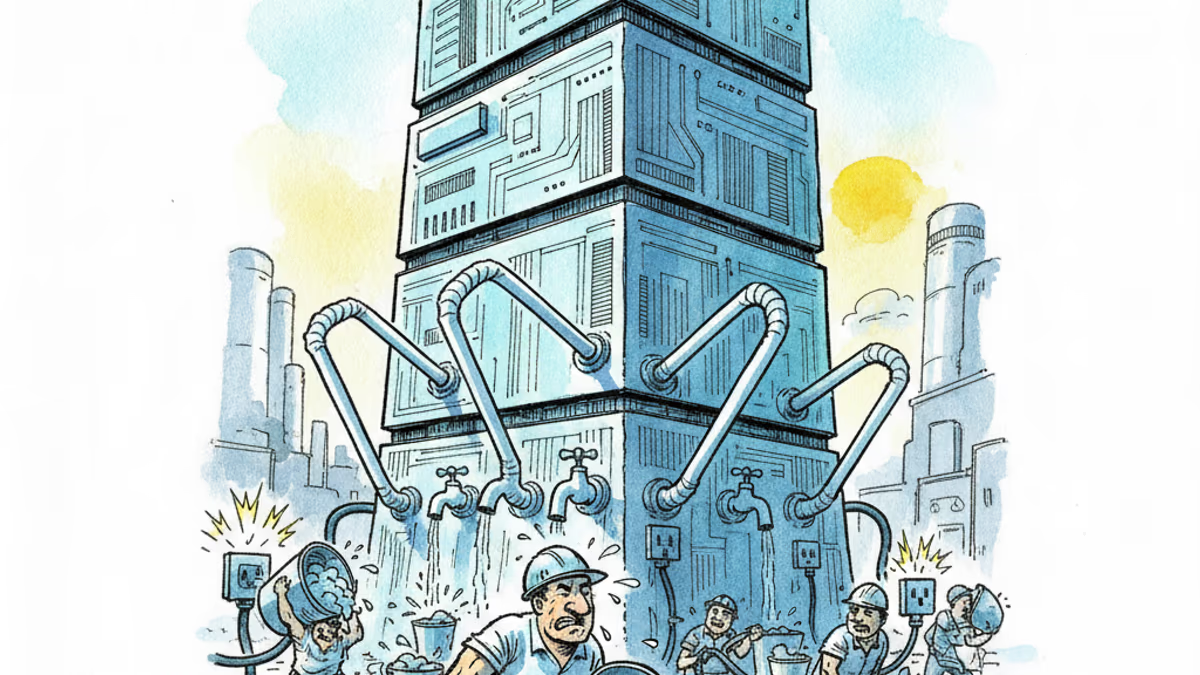
Samsung and SK unveiled a chip and AI investment package worth thousands of trillions of won on June 29. The headline number swings wildly by outlet, but the real contest isn't capital — it's water and power.
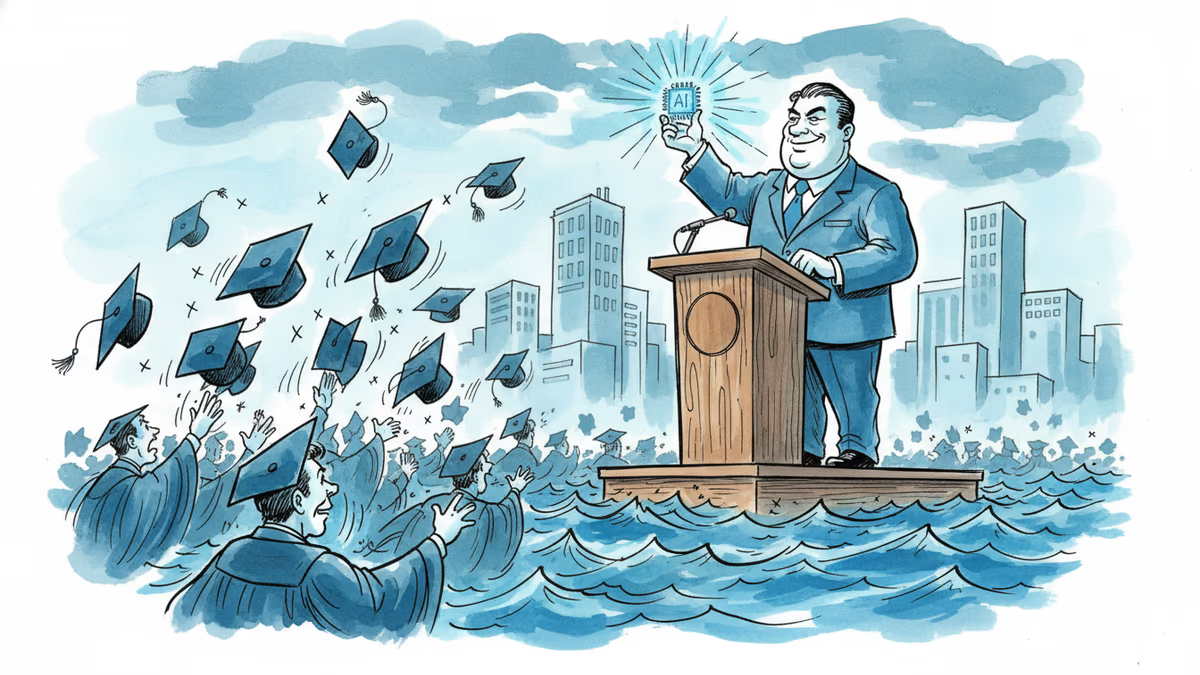
Viral videos show 2026 graduates jeering executives who praise AI at commencement ceremonies. It's not just rudeness — it's a signal about who pays for technological optimism.
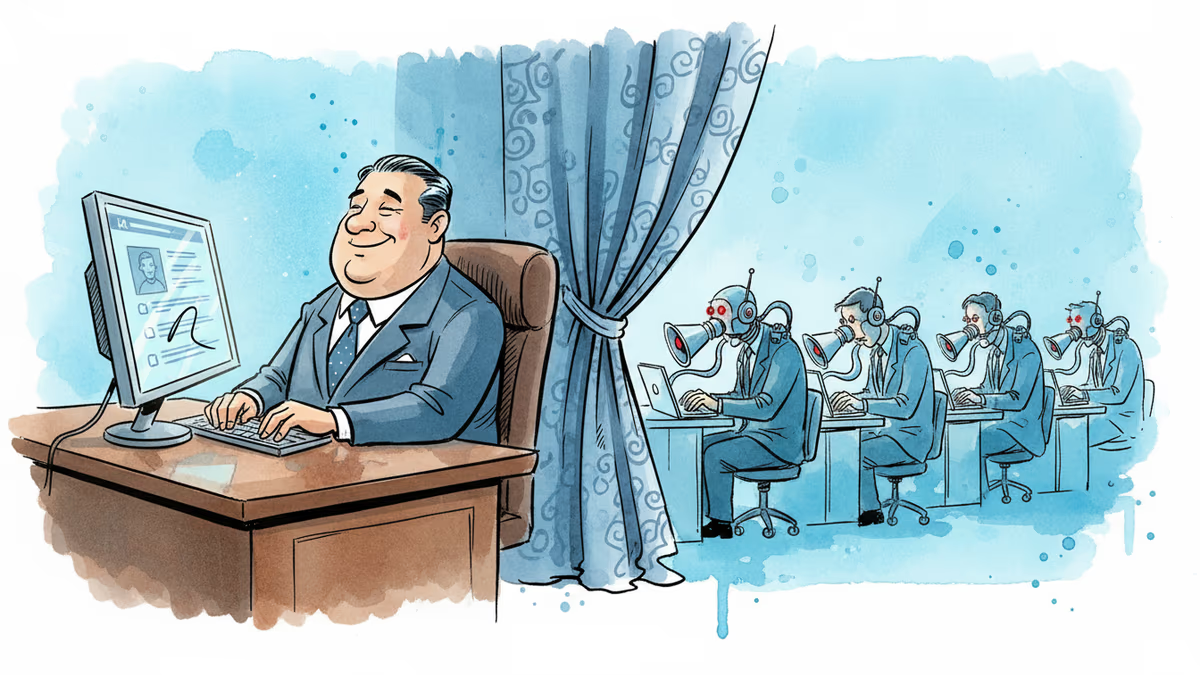
Filipino virtual assistants using AI to ghost-manage LinkedIn profiles for executives is now a structured industry. 30 comments a day, fake engagement rings, and a platform struggling to tell real from fabricated.
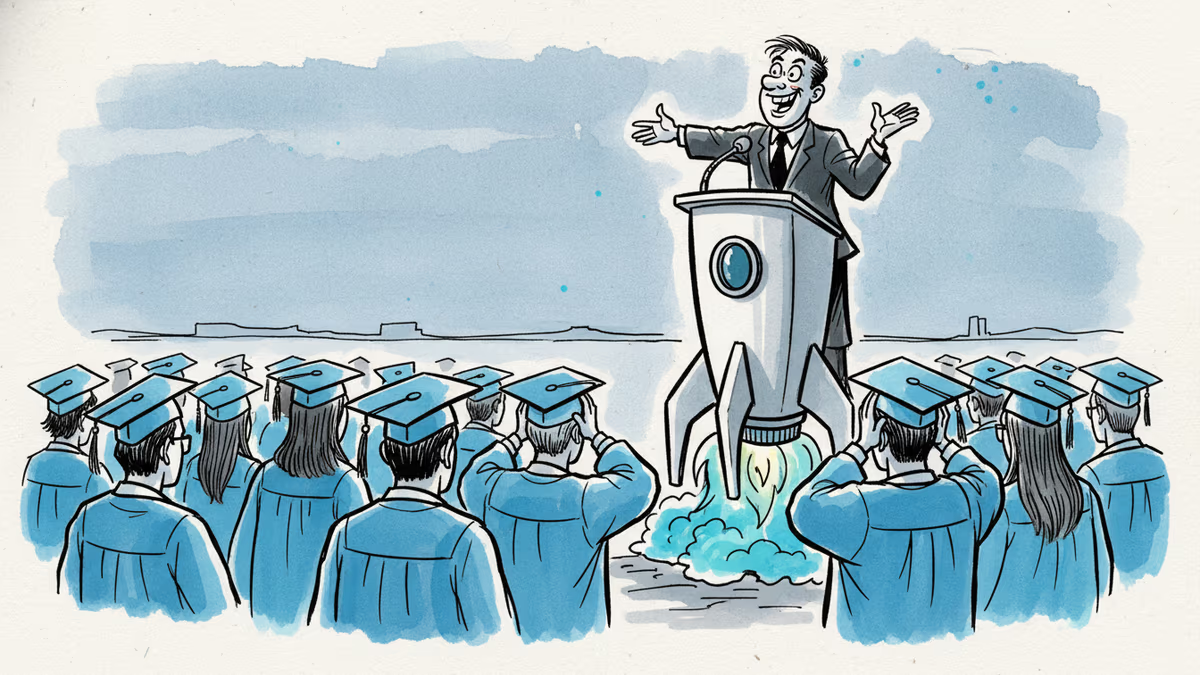
Two commencement speakers learned the hard way that AI enthusiasm doesn't land well with today's graduates. The backlash reveals a widening gap between tech optimism and Gen Z's economic reality.
Samsung and SK unveiled a chip and AI investment package worth thousands of trillions of won on June 29. The headline number swings wildly by outlet, but the real contest isn't capital — it's water and power.
Viral videos show 2026 graduates jeering executives who praise AI at commencement ceremonies. It's not just rudeness — it's a signal about who pays for technological optimism.
Filipino virtual assistants using AI to ghost-manage LinkedIn profiles for executives is now a structured industry. 30 comments a day, fake engagement rings, and a platform struggling to tell real from fabricated.
Two commencement speakers learned the hard way that AI enthusiasm doesn't land well with today's graduates. The backlash reveals a widening gap between tech optimism and Gen Z's economic reality.
Thoughts
Share your thoughts on this article
Sign in to join the conversation