
Why Silicon Valley Spent $10 Million to Stop One Politician
Former Palantir employee Alex Bores faces unprecedented Big Tech spending after passing AI transparency law. What this means for democracy and regulation.
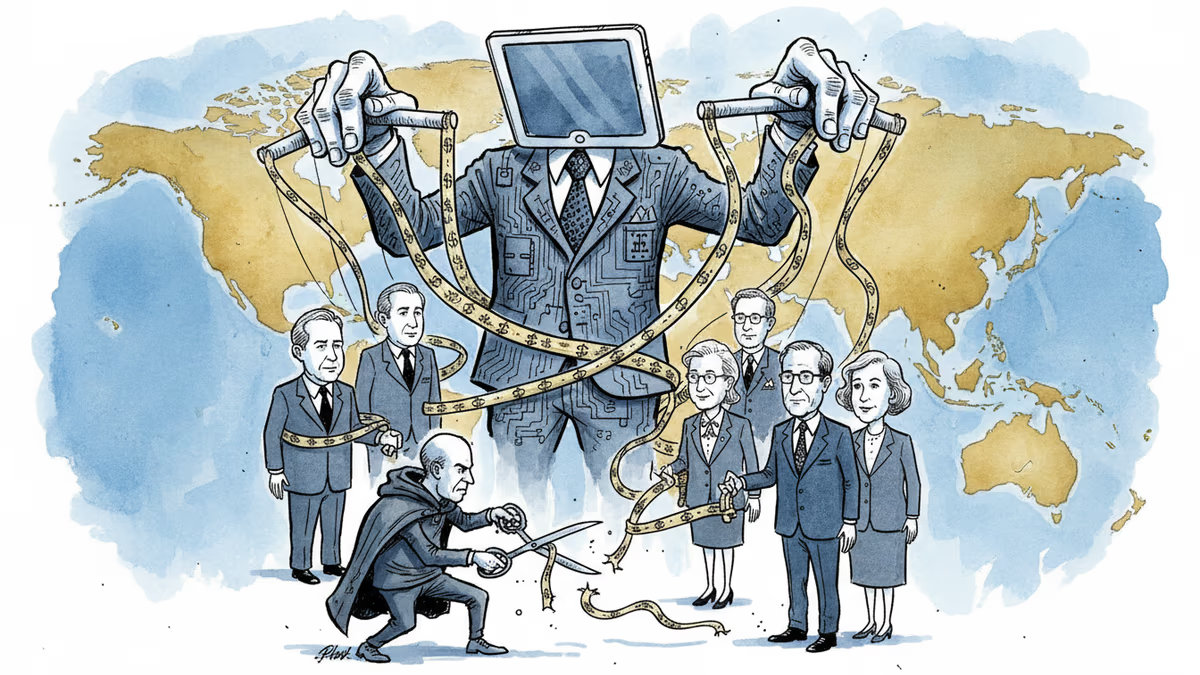
$10 million versus $100,000. That's the spending gap between what Silicon Valley giants plan to pour into defeating one New York assemblyman and what a typical state race costs. It's not just disproportionate—it's a 100-to-1 ratio that reveals how seriously Big Tech takes even modest AI oversight.
The target? Alex Bores, a former Palantir employee who committed the ultimate Silicon Valley sin: he actually regulated the industry he once served.
The Insider Who Became the Enemy
Bores isn't your typical tech critic. He worked at Palantir, built startups, and holds a computer science degree—credentials that make him harder to dismiss as a technophobe. That expertise is precisely why he's become enemy number one.
His crime? Sponsoring New York's RAISE Act, signed into law in December. The legislation requires AI companies making over $500 million in revenue to publish safety plans and report catastrophic incidents. By regulatory standards, it's remarkably light-touch—more disclosure than oversight.
Yet Leading the Future, a super PAC backed by Palantir co-founder Joe Lonsdale, OpenAI President Greg Brockman, Andreessen Horowitz, and Perplexity, has committed $10 million to stop him. The PAC has raised $125 million total to target state-level AI regulation.
Meta's $65 Million State Strategy
Bores isn't facing this alone. Meta has deployed $65 million across two super PACs—American Technology Excellence Project and Mobilizing Economic Transformation Across California—to elect tech-friendly state candidates. Combined with other AI industry spending, companies and executives donated at least $83 million to federal campaigns in 2025.
"This isn't 'We want a piece of the conversation,'" Bores told TechCrunch. "This is: 'We want to intimidate elected officials and browbeat anyone who doesn't agree with us.'"

The scale is unprecedented. "The average assembly race in New York raises maybe $100,000 total," Bores noted. "For one company to be spending $65 million on state races—it's tough for people to understand how much that is above the norm."
The Ironic Alliance
In a twist of Silicon Valley politics, Bores has backing from Public First Action, an Anthropic-funded PAC spending $450,000 on his behalf. Both PACs claim to be "pro-AI," but with vastly different visions: one emphasizes transparency and safety, the other opposes virtually any regulation.
Even more telling: Bores draws support from tech workers at the very companies whose leaders want to defeat him. This grassroots organizing within Big Tech suggests internal disagreement about AI deployment and governance.
The Federal Preemption Play
The timing isn't coincidental. In December, President Trump signed an executive order directing federal agencies to challenge "onerous" state AI laws like Bores's RAISE Act. The strategy appears coordinated: use federal preemption to block state regulation while ensuring federal oversight remains minimal.
"They don't want to see any AI regulation unless it's at the federal level," Bores said, "where they have more influence."
This represents a broader pattern. Over the past year, states have fought to protect their regulatory authority in the absence of federal AI standards. The industry's response? Spend unprecedented sums to capture state-level politics while lobbying for federal preemption.
The Democracy Question
Bores believes most Americans occupy a middle ground: they use AI and see its potential but worry about the pace of change and whether government can ensure broad benefits rather than concentrated gains.
"They wonder if the government is up to the task of ensuring we have a future that benefits the many instead of the few," he said.
The spending disparity raises fundamental questions about democratic governance. When a single industry can outspend typical political processes by 100-to-1, who really sets policy?
Authors
Related Articles
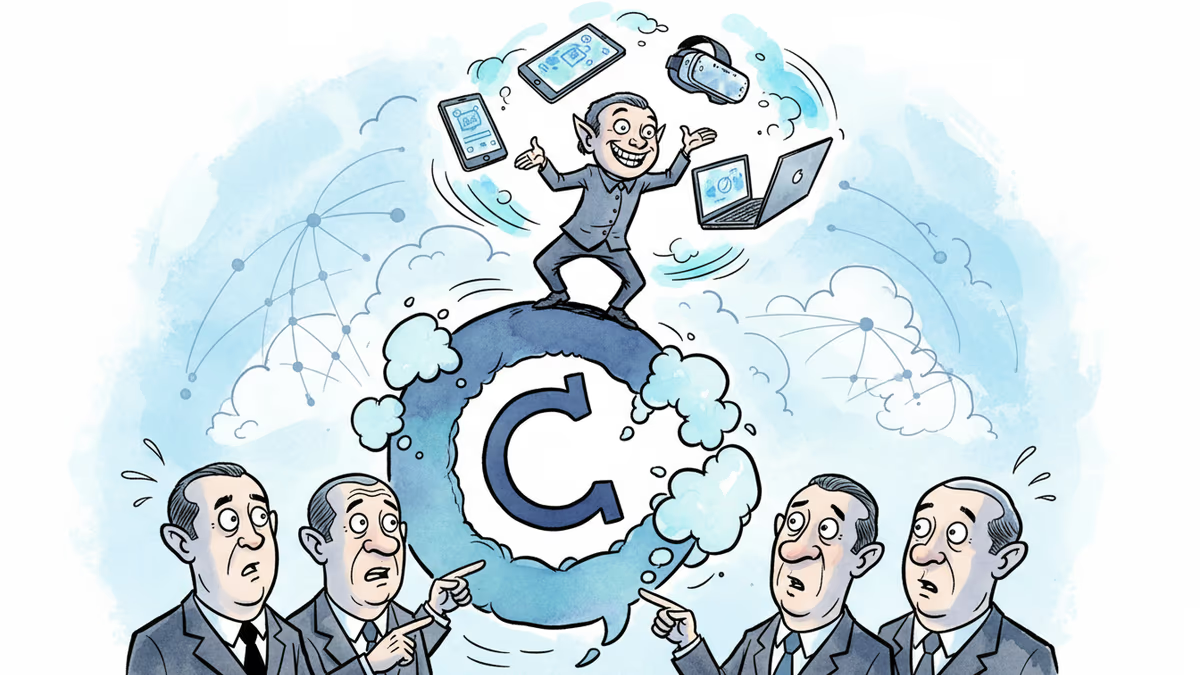
Riley Walz, creator of viral web stunts, joins OpenAI to reinvent human-AI interaction. What this hiring reveals about the next phase of AI competition.
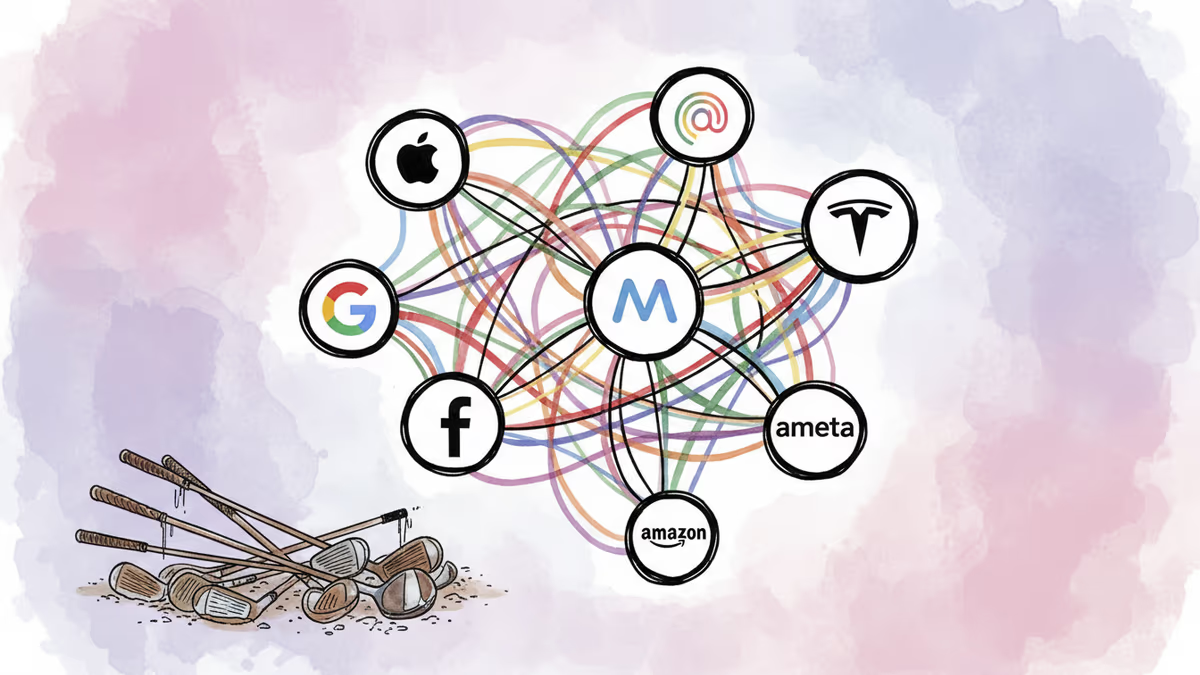
Wired investigation reveals powerful gay male network in tech through 51 interviews. Mutual support or new power structure?
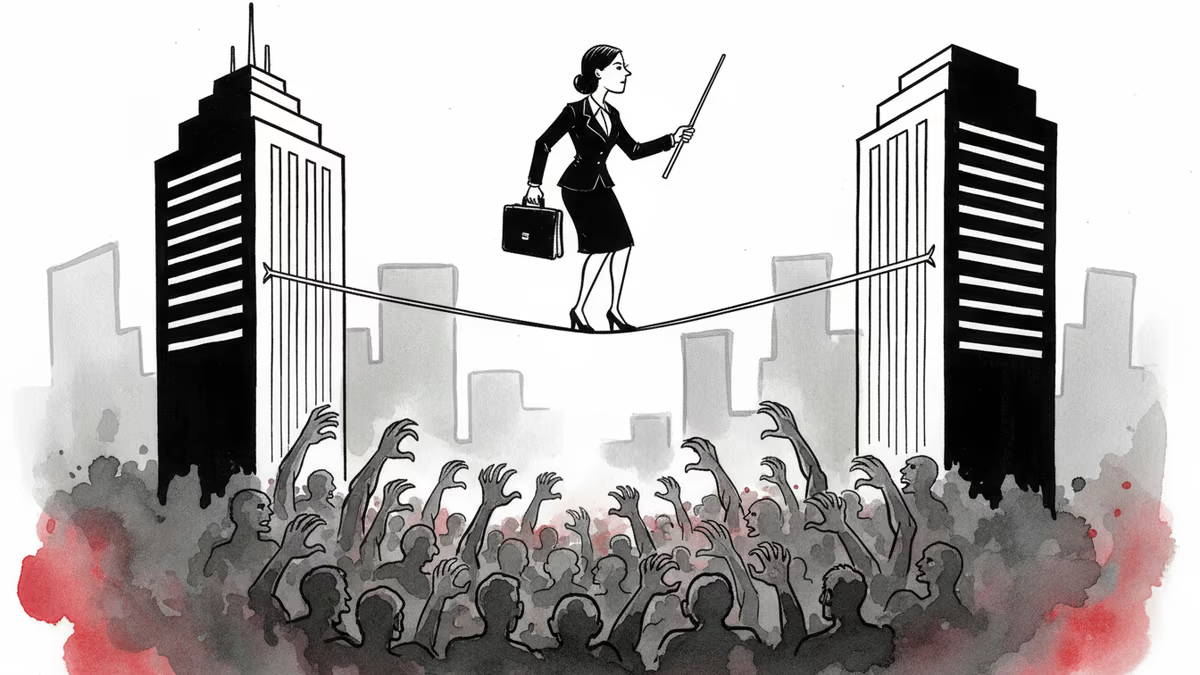
VC Masha Bucher's ties to Jeffrey Epstein expose the dark side of Silicon Valley networking culture. Her apology raises questions about due diligence and moral responsibility in venture capital.

Keith Rabois's support for ICE shooting sparks unprecedented public rift within Khosla Ventures, exposing deep political divisions in venture capital
Riley Walz, creator of viral web stunts, joins OpenAI to reinvent human-AI interaction. What this hiring reveals about the next phase of AI competition.
Wired investigation reveals powerful gay male network in tech through 51 interviews. Mutual support or new power structure?
VC Masha Bucher's ties to Jeffrey Epstein expose the dark side of Silicon Valley networking culture. Her apology raises questions about due diligence and moral responsibility in venture capital.
Keith Rabois's support for ICE shooting sparks unprecedented public rift within Khosla Ventures, exposing deep political divisions in venture capital
Thoughts
Share your thoughts on this article
Sign in to join the conversation