
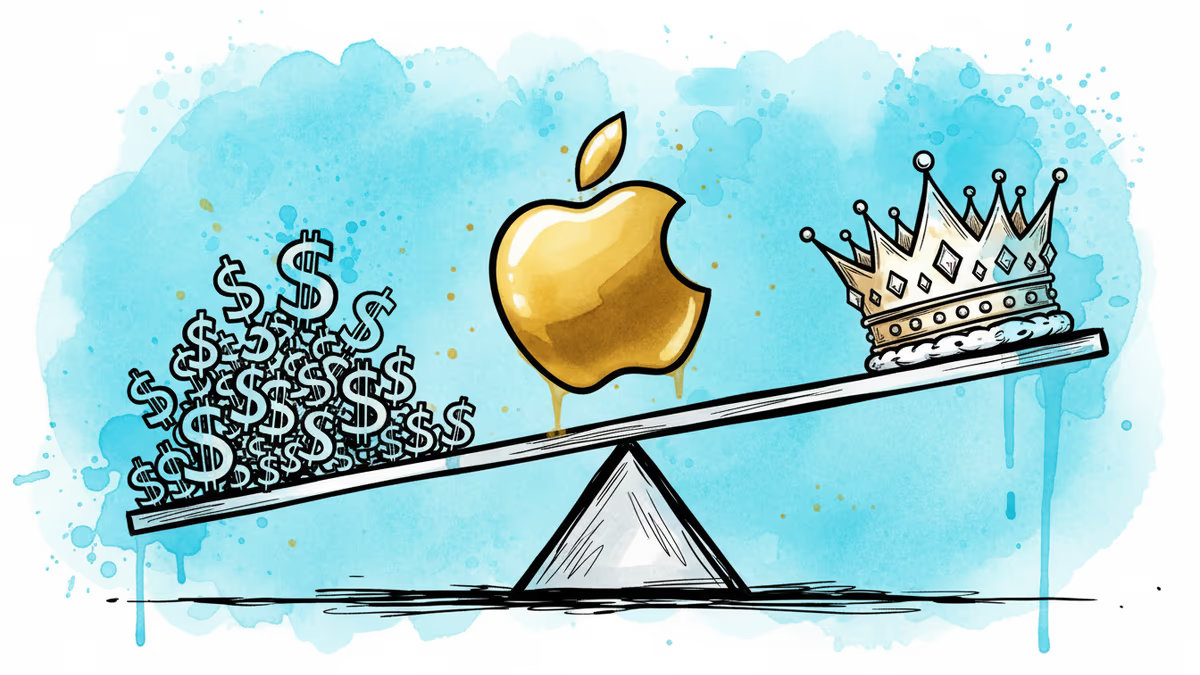
Apple Just Broke Its Own Pricing Rules With the $599 MacBook
Apple's cheapest MacBook ever uses iPhone chips and targets Chromebook territory. Why the premium brand is suddenly going budget.
$599. That's Apple's new floor for MacBooks—a $400 drop from the cheapest MacBook Air. The MacBook Neo, launching March 11, represents something unprecedented: Apple actively pursuing the budget laptop market. But why now?
An iPhone Chip in a MacBook Body
The biggest surprise isn't the price—it's what's inside. The MacBook Neo runs on the A18 Pro chip, the same processor powering the iPhone 16 Pro. While iPads have borrowed Mac chips before, this marks the first time a MacBook has adopted iPhone silicon.
Apple claims it outperforms the original M1 chip and delivers 50% faster performance than "bestselling PCs with Intel Core Ultra 5" in daily tasks. Battery life hits 16 hours—respectable, though less than pricier MacBooks.
The trade-offs are real, though. You get 8GB of unified memory with no upgrade path, support for just one external monitor, and a non-backlit keyboard. The mechanical trackpad replaces the haptic feedback system found in premium models.
Targeting Google's Territory
Apple's real target isn't Windows laptops—it's Chromebooks. The education pricing of $499 for students and teachers signals a direct assault on Google's 60%+ market share in schools.

Chromebooks succeeded by being simple, cheap, and manageable. Apple's counter-pitch: "What if you had all that simplicity, plus the full power of macOS when you need it?" It's positioning the Neo as a "souped-up Chromebook" that can handle both basic tasks and demanding applications.
The colorful design—Silver, Indigo, Blush, and Citrus—echoes the playful iBook G3 aesthetic, clearly targeting younger users who've grown up with Chromebooks.
The Ecosystem Gateway Strategy
But Apple's playing a longer game. The MacBook Neo serves as a gateway drug to the Apple ecosystem. Get someone using macOS, and they're more likely to upgrade to pricier MacBooks later. They'll experience seamless integration with iPhones, iPads, and Apple Watches. They might subscribe to Apple services.
This mirrors Apple's strategy with the base iPad—offer an affordable entry point, then upsell over time. The $500 price gap between the most expensive Neo and cheapest Air creates a natural upgrade path.
The Premium Brand Paradox
Here's where it gets interesting for Apple. The company built its fortune on premium pricing and exclusivity. Steve Jobs famously said Apple doesn't make "junk." Yet here's a MacBook that makes significant compromises to hit an aggressive price point.
Competitors are watching closely. If Apple can maintain quality at $599, what does that say about their previous pricing? Will consumers start questioning why they paid $1,099 for a MacBook Air?
The timing coincides with broader market pressure. PC makers like Lenovo and HP have been eating away at Apple's education market share with capable, affordable machines. Apple needed a response.
Authors
Related Articles
After 15 years of fragmented mobile messaging, Apple and Google are rolling out end-to-end encrypted RCS messaging between iPhones and Android devices. Here's what changed, why it took so long, and what it means for your privacy.
Apple agreed to pay $250 million to settle claims it misled iPhone 16 buyers about Apple Intelligence features. What this means for consumers, Big Tech marketing, and the AI industry.
Apple quietly removed the entry-level $599 Mac Mini, raising the starting price to $799 — just one day after Tim Cook warned of chip supply constraints on the earnings call.
Apple names John Ternus, its hardware engineering chief, as the next CEO. The shift from operator to product person signals where Apple thinks its next decade of growth will come from — and raises real questions about what comes next.
After 15 years of fragmented mobile messaging, Apple and Google are rolling out end-to-end encrypted RCS messaging between iPhones and Android devices. Here's what changed, why it took so long, and what it means for your privacy.
Apple agreed to pay $250 million to settle claims it misled iPhone 16 buyers about Apple Intelligence features. What this means for consumers, Big Tech marketing, and the AI industry.
Apple quietly removed the entry-level $599 Mac Mini, raising the starting price to $799 — just one day after Tim Cook warned of chip supply constraints on the earnings call.
Apple names John Ternus, its hardware engineering chief, as the next CEO. The shift from operator to product person signals where Apple thinks its next decade of growth will come from — and raises real questions about what comes next.
Thoughts
Share your thoughts on this article
Sign in to join the conversation