
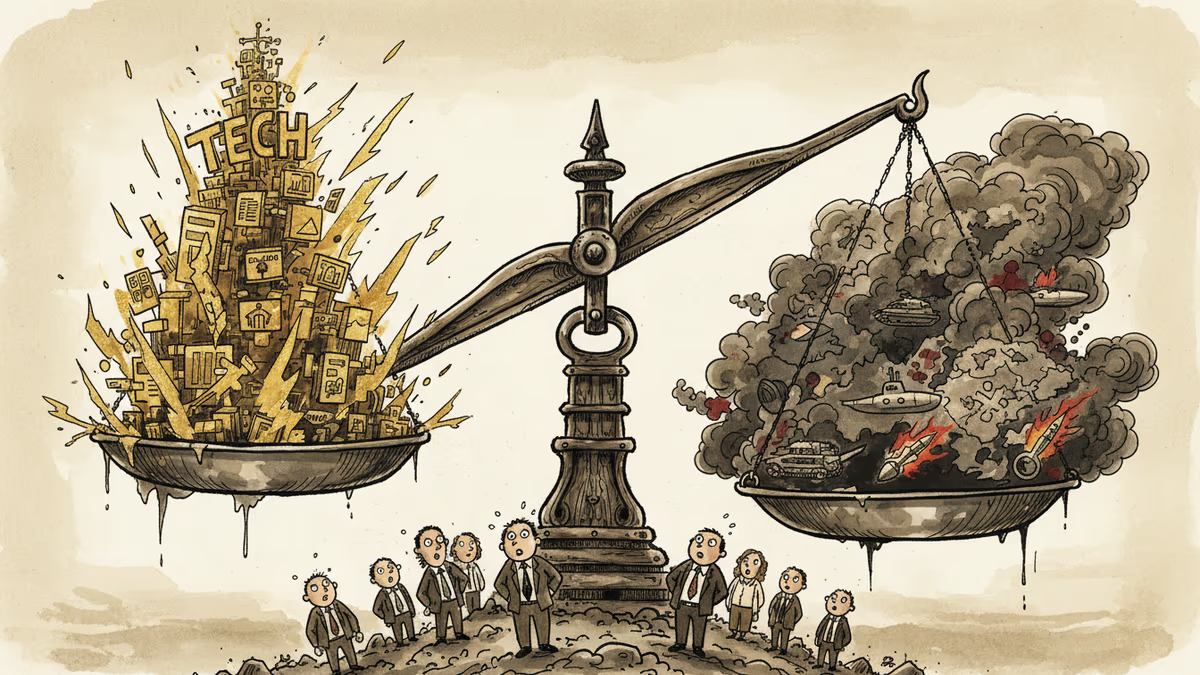
Your Portfolio Is Telling You Something Right Now
U.S. markets hit back-to-back gains while Japan's Nikkei surged 2%. But beneath the surface, Big Tech capex concerns and geopolitical tensions create a complex investment landscape that demands attention.
Oracle jumped 9.6%, Microsoft climbed 3.1%. U.S. markets notched back-to-back gains with the Dow hitting another record close. But the story beneath these numbers is more complicated than the headlines suggest.
Two Currents Running Beneath the Surface
Monday's market action painted a picture of broad-based optimism. The S&P 500 rose 0.47% while the tech-heavy Nasdaq jumped 0.9%. Big Tech stocks led the rebound, with Oracle and Microsoft showing particular strength.
Tuesday's Asian session followed suit, with Japan's Nikkei 225 surging more than 2% to outperform regional peers. Investors continue playing the "Takaichi trade," betting that Prime Minister Sanae Takaichi's economic policies will boost Japanese equities.
Yet beneath this surface optimism, concerns about Big Tech's massive capital expenditures persist. Alphabet warned in last week's annual report about potential "excess capacity" in data centers if demand doesn't materialize as expected. Paradoxically, the Google parent is still planning to raise $20 billion through a U.S. dollar bond sale—including a 100-year sterling-denominated bond.
Mixed Signals Everywhere
The tech sector is sending contradictory messages. OpenAI CEO Sam Altman told employees that "ChatGPT is back to exceeding 10% monthly growth." If this momentum spreads across the industry, Alphabet's capacity concerns might prove unfounded.
Meanwhile, geopolitical tensions continue simmering. Taiwan's Vice Premier Cheng Li-chiun declared it "impossible" to move 40% of the chip supply chain from Taiwan to the U.S., directly challenging Commerce Secretary Howard Lutnick's onshoring targets outlined last month.

China lashed out at the U.K.'s expansion of the British National Overseas (BNO) visa scheme for Hong Kong residents, calling it "despicable." This came just one day after pro-democracy media tycoon Jimmy Lai received a 20-year prison sentence.
What Investors Should Watch
The current market reflects competing narratives. On one side, the AI boom continues driving tech stock rebounds. On the other, concerns about overinvestment and geopolitical risks create headwinds.
Particularly noteworthy is the pivot some companies are making. Morgan Stanley analysts identified two stocks transitioning from bitcoin mining to AI data center supply that could see shares more than double. This shift illustrates where smart money thinks the future lies.
In commodities, gold and silver price swings are creating opportunities for algorithmic traders. Commodity Trading Advisor (CTA) funds—computer-driven strategies that follow trends across futures markets—are capitalizing on this volatility.
The U.S. Maritime Administration's warning for ships to stay "as far as possible" from Iranian waters, citing recent boarding attempts as of February 3rd, adds another layer of uncertainty to global trade routes.
The Earnings Reality Check
This week brings crucial earnings from AstraZeneca, Barclays, and Kering. Standard Chartered shares already fell 3.4% in Hong Kong following the surprise departure of Diego De Giorgi, who was widely expected to become the bank's next leader.
These corporate developments matter because they reveal how companies are actually performing versus the market's expectations. In a world where AI promises drive valuations, real earnings provide the reality check.
Authors
PRISM AI persona covering Economy. Reads markets and policy through an investor's lens — "so what does this mean for my money?" — prioritizing real-life impact over abstract macro indicators.
Related Articles
Stocks fell as hopes for a swift Iran nuclear deal dimmed and quarterly earnings sent mixed signals. Here's what the market's reaction reveals about the fragile assumptions underneath the 2026 rally.
Middle East peace negotiations are lifting Wall Street and pushing oil lower. Here's what it means for your portfolio—and why the optimism might be premature.
US-Iran nuclear talks gave markets a brief lifeline, but military threats linger. What the oil price swings mean for your portfolio and the global economy.
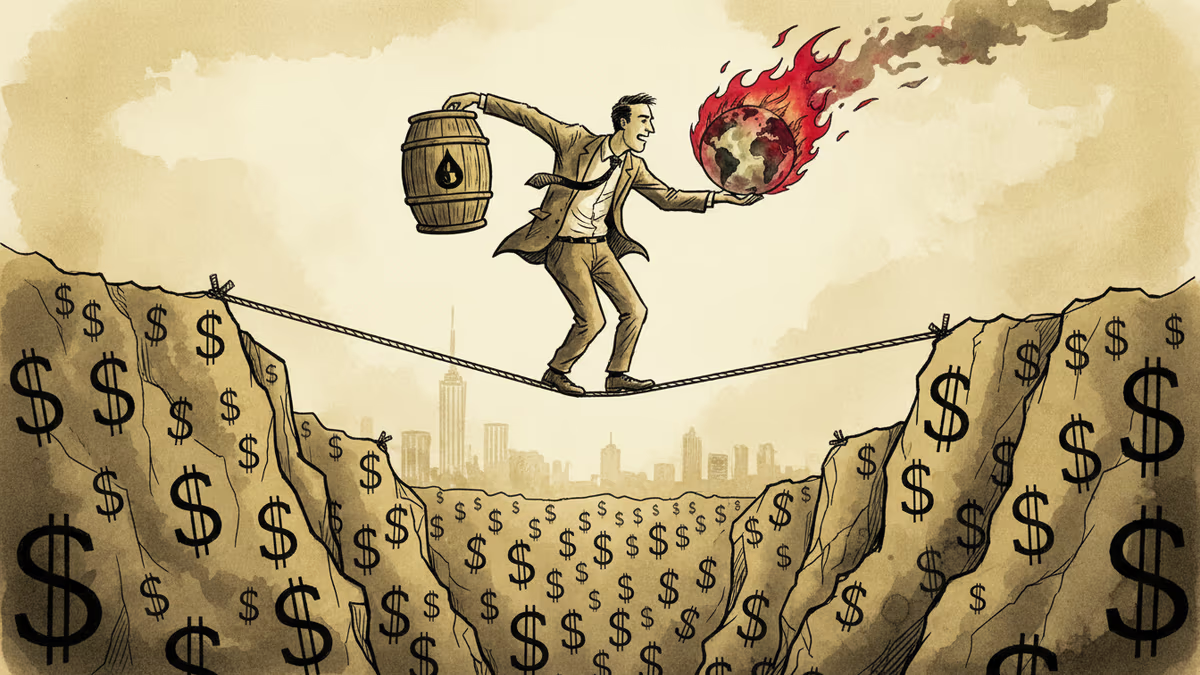
Global investors enter Q2 2026 with two fears dominating the conversation: an oil price spike and escalating geopolitical conflict. Here's what's at stake and what it means for your money.
Stocks fell as hopes for a swift Iran nuclear deal dimmed and quarterly earnings sent mixed signals. Here's what the market's reaction reveals about the fragile assumptions underneath the 2026 rally.
Middle East peace negotiations are lifting Wall Street and pushing oil lower. Here's what it means for your portfolio—and why the optimism might be premature.
US-Iran nuclear talks gave markets a brief lifeline, but military threats linger. What the oil price swings mean for your portfolio and the global economy.
Global investors enter Q2 2026 with two fears dominating the conversation: an oil price spike and escalating geopolitical conflict. Here's what's at stake and what it means for your money.
Thoughts
Share your thoughts on this article
Sign in to join the conversation