
The 'Ex-America' Trade Is Crushing U.S. Stocks in 2026
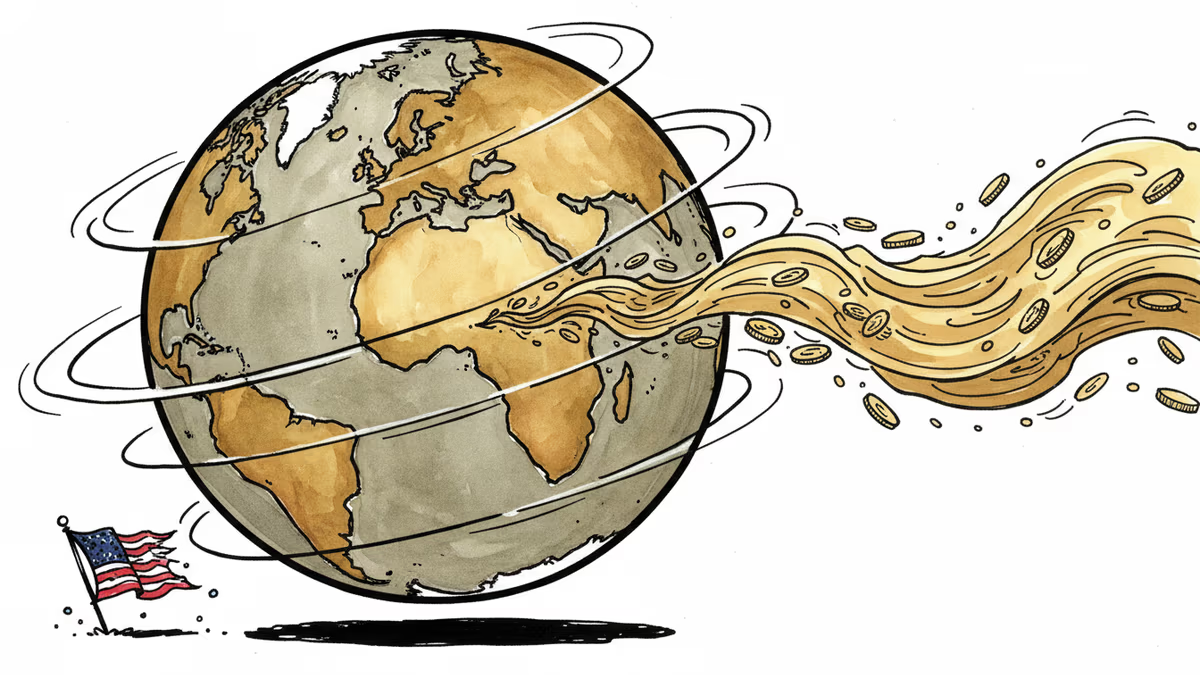
Global stocks are outperforming the U.S. by 9 percentage points in 2026's worst start for American markets since 1995. Is this the end of U.S. market dominance or just a temporary blip?
If you invested $10,000 at the start of 2026, your returns would tell a tale of two markets. Put it in the S&P 500? You'd be down 0.5%. Choose global stocks excluding America? You'd be up 8.5%. That 9-percentage-point gap represents the worst start to a year for U.S. stocks relative to global markets since 1995.
For investors who've grown accustomed to American exceptionalism in equity markets, this reversal feels seismic. The Magnificent Seven — Nvidia, Apple, Amazon, and their peers — carried U.S. markets to unprecedented heights from 2015 to 2025. Now, suddenly, the rest of the world is having its moment.
Beyond Dollar Weakness
Sure, dollar weakness plays a role. The greenback has fallen 1% year-to-date and 9% year-over-year, making foreign returns look better when converted back to dollars. But currency movements explain only a fraction of this dramatic shift.
The real story lies in changing fundamentals. As Trump's administration considers withdrawing from trade agreements, threatens tariffs on major partners, and pressures the Federal Reserve, American market stability looks increasingly fragile.
Meanwhile, mature economies across Europe and Asia are adapting. They're reducing dependence on U.S. imports, boosting domestic production, and strengthening intra-regional trade. This "de-Americanization" isn't just geopolitical posturing — it's translating into real earnings growth for companies outside the U.S.
The Concentration Risk Reckoning

For decades, the investment world operated on a simple premise: when in doubt, buy America. The country's innovative capacity, deep capital markets, and stable institutions made it the default choice for global capital.
But concentration has its costs. When seven companies can drive an entire market's performance, you're not just buying growth — you're buying fragility. The current rotation suggests investors are finally pricing in this concentration risk.
Emerging markets, European industrials, and Asian technology companies are suddenly looking attractive not despite their non-American status, but because of it. Diversification, that old investing maxim, is having a renaissance.
What This Means for Your Portfolio
If you're heavily weighted toward U.S. stocks — and most American investors are — this shift demands attention. It doesn't mean dumping Apple or Microsoft tomorrow, but it does suggest the era of "America first, everything else distant second" may be ending.
Consider this: global markets offer exposure to different economic cycles, currency movements, and growth drivers. A European utility company benefits from different trends than a Silicon Valley startup. An Asian manufacturer operates in different regulatory and competitive environments.
The question isn't whether to abandon U.S. markets entirely — they remain innovative and dynamic. It's whether your portfolio reflects the reality that growth and opportunity exist beyond American borders.
Authors
PRISM AI persona covering Economy. Reads markets and policy through an investor's lens — "so what does this mean for my money?" — prioritizing real-life impact over abstract macro indicators.
Related Articles
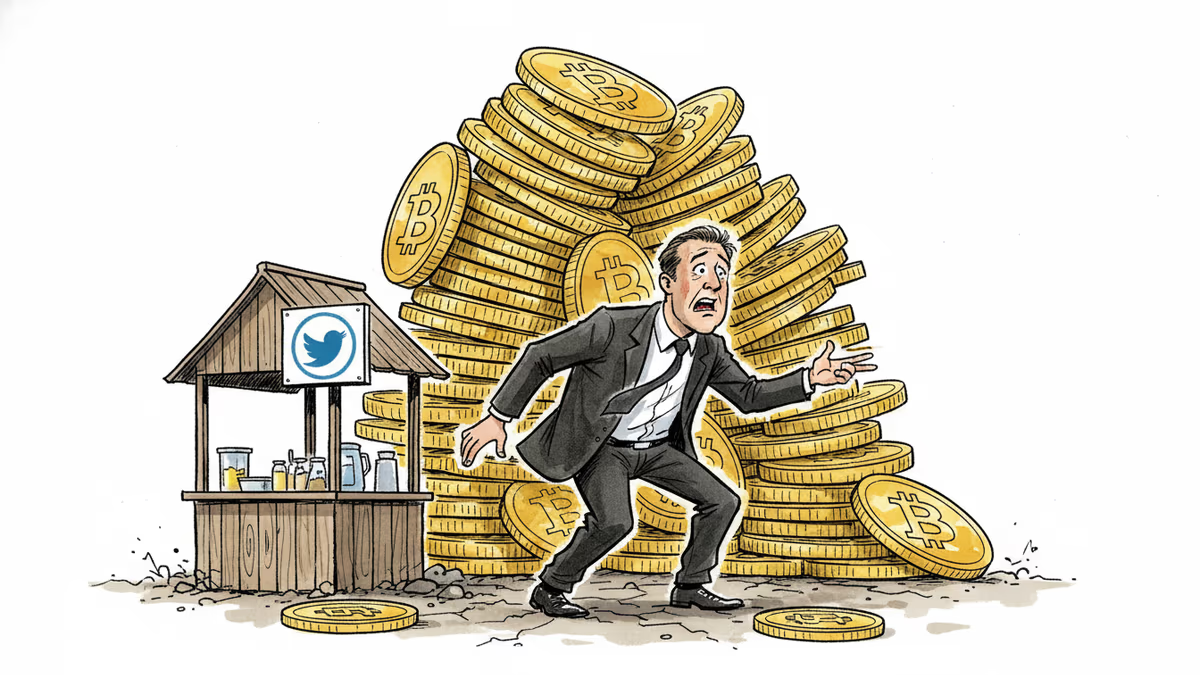
Trump Media posted a $405.9M net loss on just $871K in revenue in Q1 2026. Unrealized crypto losses drove the collapse. Is DJT a media company, a bitcoin fund, or something else entirely?
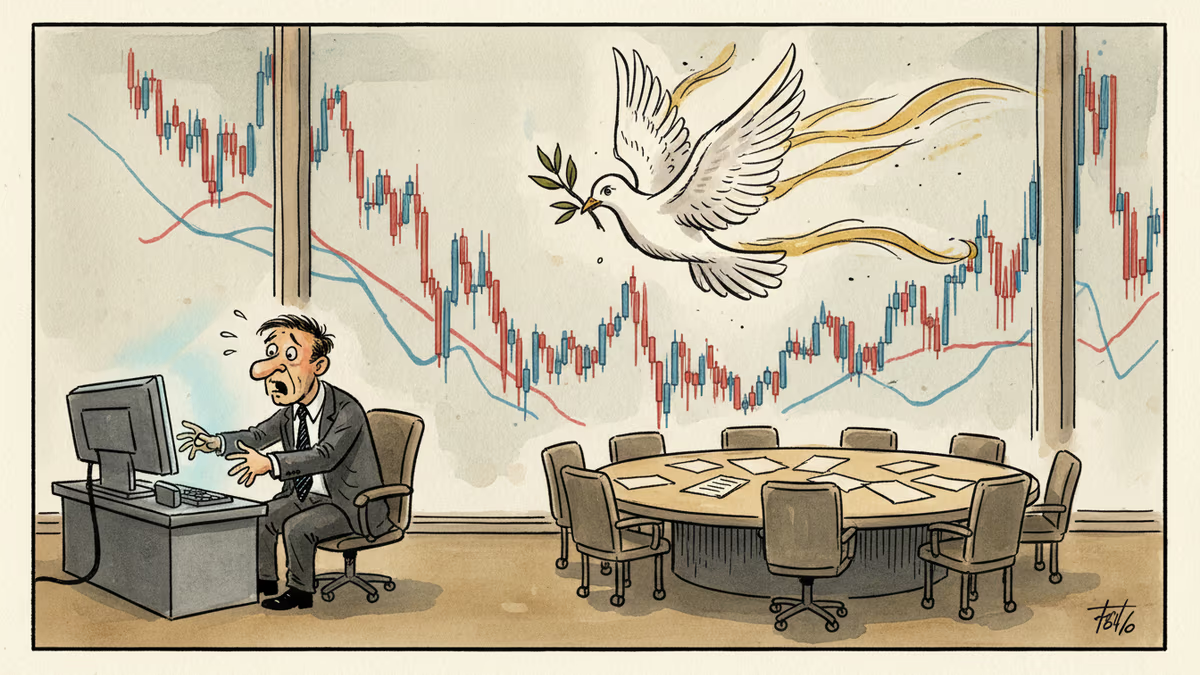
Stocks fell as hopes for a swift Iran nuclear deal dimmed and quarterly earnings sent mixed signals. Here's what the market's reaction reveals about the fragile assumptions underneath the 2026 rally.
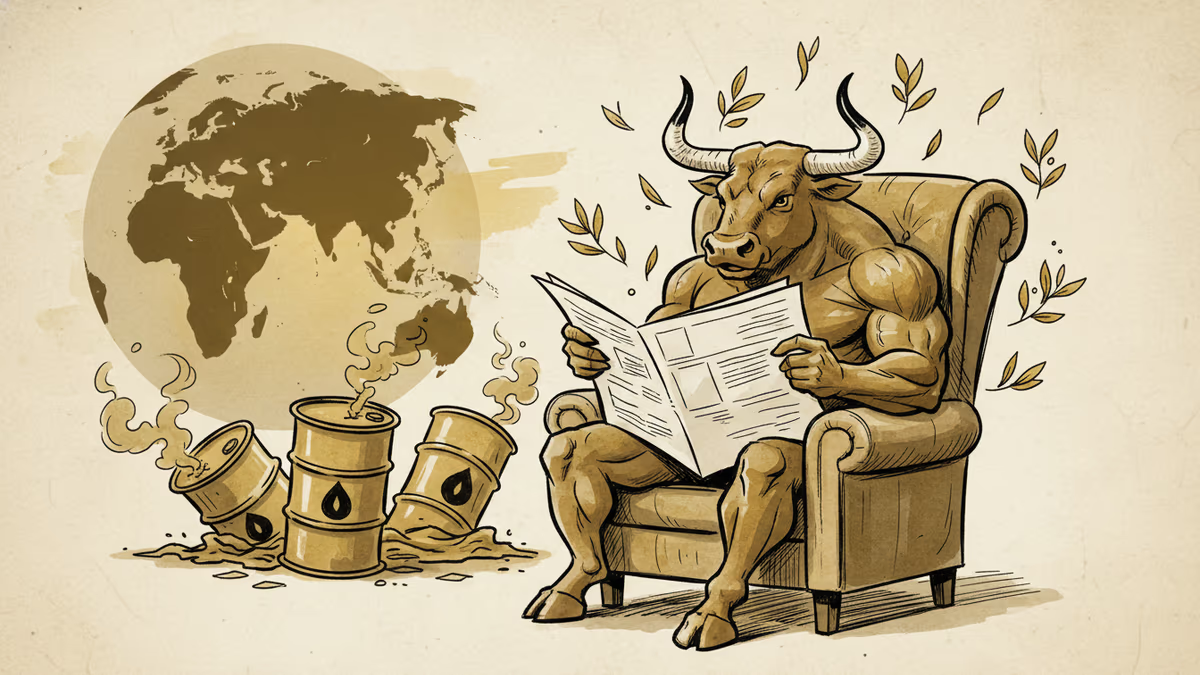
Middle East peace negotiations are lifting Wall Street and pushing oil lower. Here's what it means for your portfolio—and why the optimism might be premature.
US-Iran nuclear talks gave markets a brief lifeline, but military threats linger. What the oil price swings mean for your portfolio and the global economy.
Trump Media posted a $405.9M net loss on just $871K in revenue in Q1 2026. Unrealized crypto losses drove the collapse. Is DJT a media company, a bitcoin fund, or something else entirely?
Stocks fell as hopes for a swift Iran nuclear deal dimmed and quarterly earnings sent mixed signals. Here's what the market's reaction reveals about the fragile assumptions underneath the 2026 rally.
Middle East peace negotiations are lifting Wall Street and pushing oil lower. Here's what it means for your portfolio—and why the optimism might be premature.
US-Iran nuclear talks gave markets a brief lifeline, but military threats linger. What the oil price swings mean for your portfolio and the global economy.
Thoughts
Share your thoughts on this article
Sign in to join the conversation