

China Lithium Battery Recycling CO2 2026: 95% Efficiency with Water-Only Process
Chinese scientists achieve 95% lithium recovery from dead batteries using only CO2 and water. Discover the China lithium battery recycling CO2 2026 breakthrough.
95% efficiency in lithium recovery has been achieved using only water and carbon dioxide, eliminating the need for toxic chemicals. According to the South China Morning Post (SCMP), a Chinese research team has developed a cleaner way to recycle lithium batteries, offering a solution to the environmental toll of traditional recycling methods.
China Lithium Battery Recycling CO2 2026: The 'Three-in-One' Strategy
The team, hailing from the Chinese Academy of Sciences (CAS) and the Beijing Institute of Technology, published their findings in Nature Communications on January 10. Their innovative process employs a "three-in-one" strategy designed to maximize lithium recovery, upgrade transition metals like cobalt and nickel, and sequester carbon to prevent waste by-products.

Traditional recycling often relies on corrosive acids that generate hazardous wastewater. In contrast, this new method operates under ambient conditions without additional leaching agents. The research demonstrated that this clean approach can match the performance of legacy systems, hitting a leaching efficiency of over 95%.
Upcycling Spent Cathodes into Catalysts
A battery's cathode is its positive electrode, typically made from valuable metals. The scientists noted that their method doesn't just recover lithium; it upcycles spent cathode materials into valuable catalysts for other energy technologies. "This approach provides an efficient pathway for lithium recovery while supporting sustainable energy conversion," the team stated. As we enter 2026, this development could significantly lower the carbon footprint of the EV battery lifecycle.
Authors
Related Articles
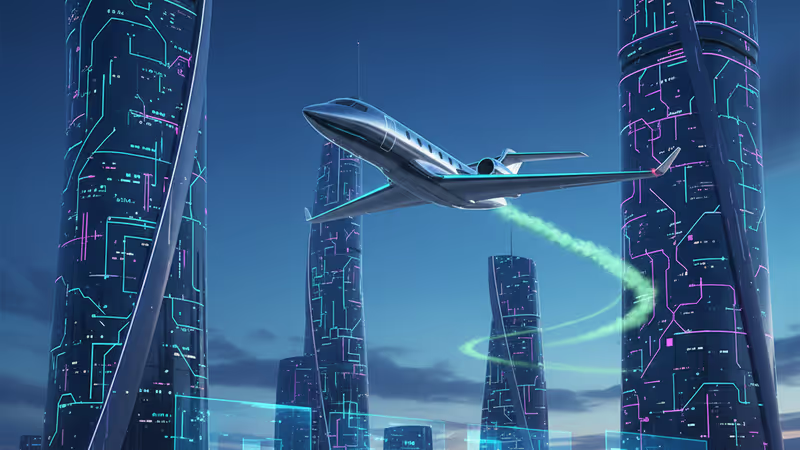
Honda Aircraft successfully completed a test flight of the next-gen HondaJet using 100% Sustainable Aviation Fuel (SAF), marking a major step toward carbon-neutral private aviation.
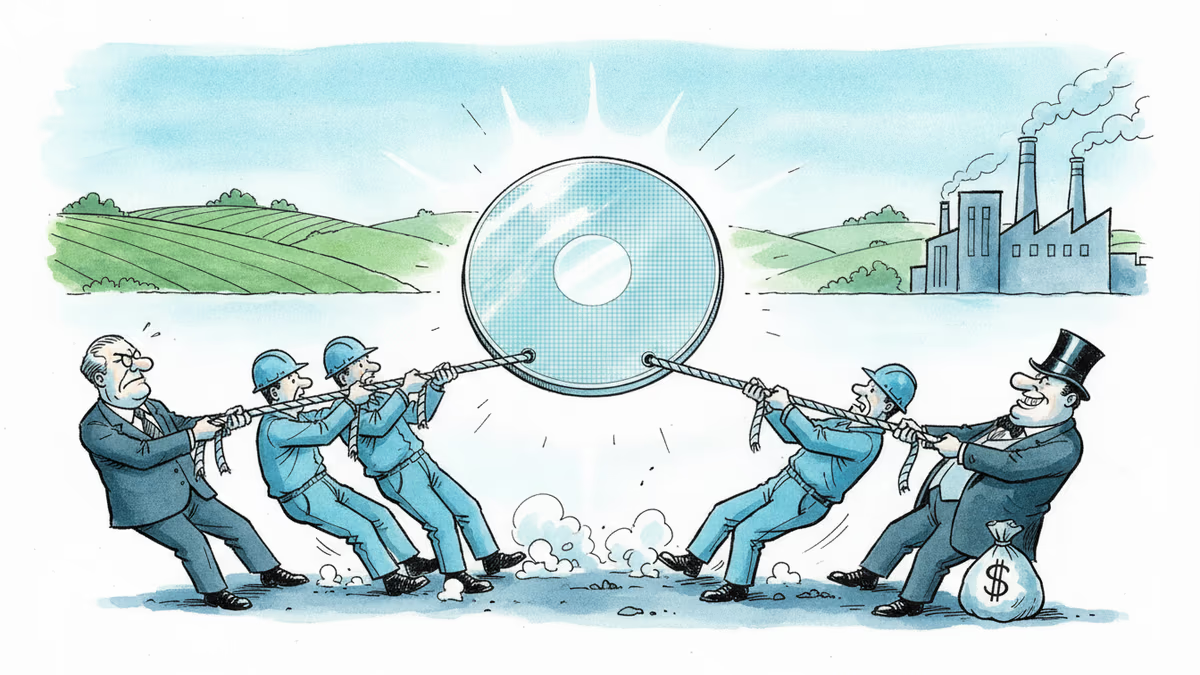
Samsung Electronics' union branch revealed that 84% of survey respondents oppose the government's roughly $290 billion (₩400 trillion) semiconductor megaproject in Gwangju. Government, management, the union and shareholders are all reading the same national project in sharply different ways.
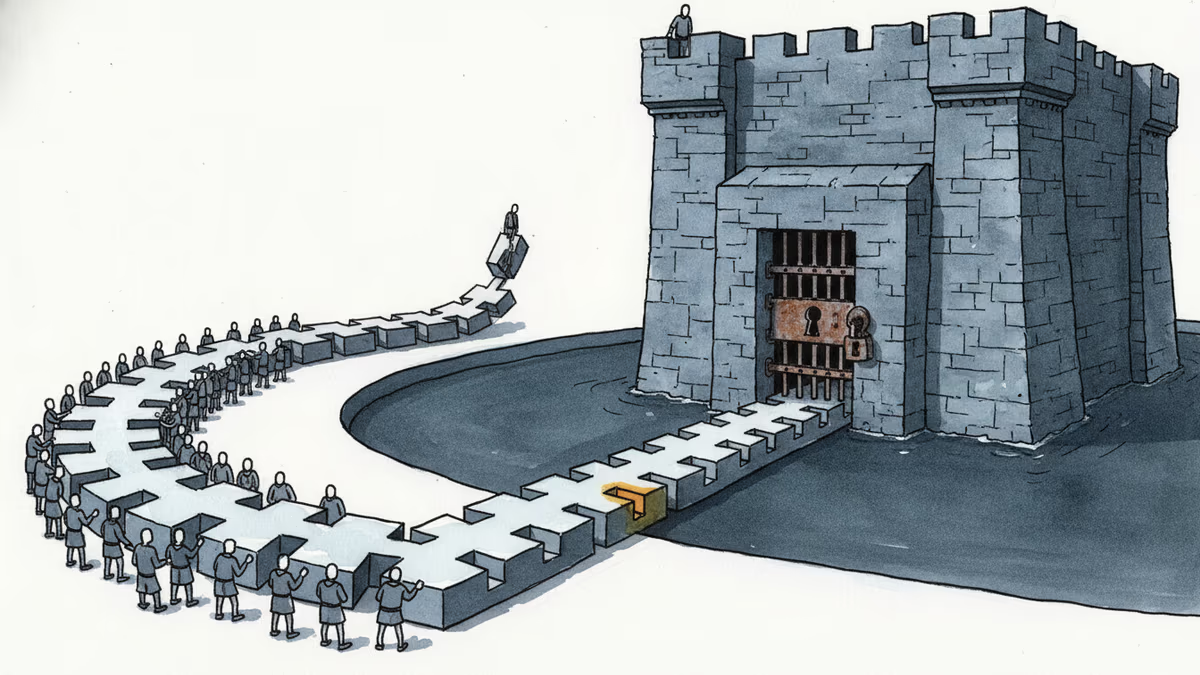
Nvidia shipped roughly a billion RISC-V cores in 2024, then announced it would run CUDA on the open standard. We break down how royalty-free instruction sets and open software stacks are trying to route around CUDA's lock-in. Part 2 of the Semiconductor Sovereignty series.
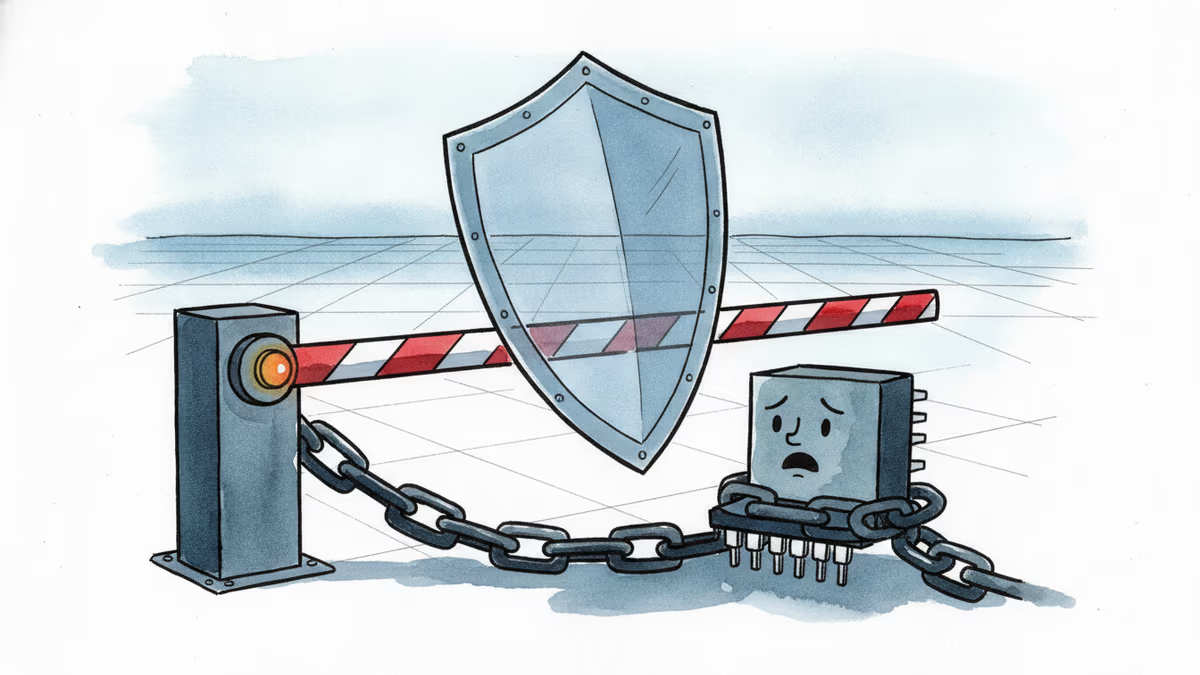
US AI-chip export controls split into three layers in the first half of 2026 — January easing, a May crackdown on circumvention, and a pending bill. Nvidia erased China from its guidance and still posted a record $81.6 billion quarter. A look at the export policy that both shields and cages it.
Honda Aircraft successfully completed a test flight of the next-gen HondaJet using 100% Sustainable Aviation Fuel (SAF), marking a major step toward carbon-neutral private aviation.
Samsung Electronics' union branch revealed that 84% of survey respondents oppose the government's roughly $290 billion (₩400 trillion) semiconductor megaproject in Gwangju. Government, management, the union and shareholders are all reading the same national project in sharply different ways.
Nvidia shipped roughly a billion RISC-V cores in 2024, then announced it would run CUDA on the open standard. We break down how royalty-free instruction sets and open software stacks are trying to route around CUDA's lock-in. Part 2 of the Semiconductor Sovereignty series.
US AI-chip export controls split into three layers in the first half of 2026 — January easing, a May crackdown on circumvention, and a pending bill. Nvidia erased China from its guidance and still posted a record $81.6 billion quarter. A look at the export policy that both shields and cages it.
Thoughts
Share your thoughts on this article
Sign in to join the conversation