
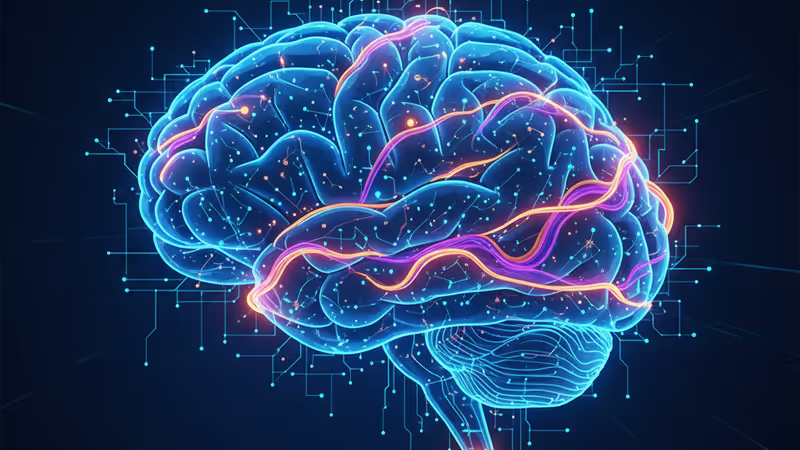
Brain Glucose: The New Frontier in Chinese Alzheimer’s Research 2026
Chinese researchers at the Kunming Institute of Zoology successfully reversed Alzheimer's symptoms in mice by restoring brain glucose levels via the GLUT1 protein.
Could a simple sugar be the missing piece in the Alzheimer’s puzzle? A team from the Kunming Institute of Zoology, under the Chinese Academy of Sciences, has reported a significant breakthrough. By focusing on glucose levels rather than just protein buildup, researchers managed to reverse memory loss in mice with late-stage symptoms.
Targeting GLUT1: Chinese Alzheimer’s Glucose Study Results
According to the study published in Advanced Science on December 8, 2025, the experimental treatment aims to restore the brain's energy supply. The researchers hypothesize that Alzheimer's may stem from an abnormally low supply of glucose, leading to a total collapse of brain energy metabolism.

The drug targets the GLUT1 glucose transport protein. In mice trials, the results were outstanding: memory loss was substantially reversed, and brain plaques were significantly reduced within weeks of treatment. This offers a fresh perspective on a disease that has long frustrated the global medical community.
Authors
Related Articles
CAR T cell therapy, proven in blood cancers, is now in hundreds of clinical trials for MS, lupus, and other autoimmune conditions. What the science shows—and what it doesn't yet.
R3 Bio wants to grow human bodies without brains as biological backups. The science is speculative. The ethics are explosive. And the legal framework doesn't exist yet.
Colossal Biosciences raised hundreds of millions to resurrect woolly mammoths and dire wolves. What they're actually doing is more complicated—and more interesting.
California startup R3 Bio quietly pitched investors on 'brainless human clones' as backup bodies—beyond its public story of nonsentient organ sacks for drug testing. A deep dive into biotech's most ethically charged frontier.
CAR T cell therapy, proven in blood cancers, is now in hundreds of clinical trials for MS, lupus, and other autoimmune conditions. What the science shows—and what it doesn't yet.
R3 Bio wants to grow human bodies without brains as biological backups. The science is speculative. The ethics are explosive. And the legal framework doesn't exist yet.
Colossal Biosciences raised hundreds of millions to resurrect woolly mammoths and dire wolves. What they're actually doing is more complicated—and more interesting.
California startup R3 Bio quietly pitched investors on 'brainless human clones' as backup bodies—beyond its public story of nonsentient organ sacks for drug testing. A deep dive into biotech's most ethically charged frontier.
Thoughts
Share your thoughts on this article
Sign in to join the conversation